Tuscany Cuisine · Culinary Academy · Ingredients Library · Professional cocoa and chocolate knowledge
Tuscany Cuisine · Cocoa & Chocolate Library
Cocoa & Chocolate
From the tropical fruit of Theobroma cacao to fermented beans, roasted nibs, cocoa liquor, cocoa butter and the finished chocolate bar—this page follows the ingredient from agriculture to professional pastry, savory cooking and modern chocolate design.
Botanical nameTheobroma cacao L. · tropical evergreen tree
Traditional typesCriollo · Forastero · Trinitario
Core productsNibs · cocoa liquor · cocoa butter · cocoa powder · chocolate
Professional usePastry, confectionery, sauces, desserts, beverages and selected savory dishes
Botany & Identity
Cacao Is a Fruit Before It Becomes Chocolate
The cocoa tree produces colorful pods directly from its trunk and branches. Inside each pod are seeds—commonly called cocoa or cacao beans—surrounded by a sweet, moist pulp.
Theobroma cacao
Cacao grows in humid tropical climates, generally within roughly 20 degrees north and south of the Equator. It performs best with warm temperatures, adequate rainfall, shelter from strong wind and some protection from intense direct sun.
Cacao vs. Cocoa
In modern culinary language, cacao often describes the tree, pods, beans and less-processed ingredients such as cacao nibs, while cocoa commonly describes fermented, dried or processed products such as cocoa powder. The words overlap in agriculture, trade and labeling.
Cocoa Diversity
Traditional Types and Modern Genetic Groups
The chocolate trade historically simplified cacao into three broad families, while modern genetic research recognizes much greater diversity.
Criollo
Historically associated with delicate, aromatic and fine-flavor cocoa. Pure Criollo material is rare and usually lower yielding and more vulnerable than many commercial hybrids.
Forastero
A broad historical category associated with most bulk cocoa production. Amelonado and Upper Amazon material have played major roles in commercial plantings, including West Africa.
Trinitario
A historic hybrid population linked to Trinidad and to crosses between Criollo and Amazonian cacao. Many Trinitario selections combine stronger agronomic performance with attractive flavor potential.
Modern classification: ICCO notes that a ten-group genetic framework—Amelonado, Criollo, Nacional, Contamana, Curaray, Guiana, Iquitos, Marañon, Nanay and Purús—better reflects cacao's genomic and geographic diversity. In professional purchasing, origin, genetics, fermentation and post-harvest handling all matter.
World Cultivation
Where Cocoa Is Grown Today
Cocoa is a global tropical crop, with West Africa producing most of the world's beans and Latin America remaining especially important for genetic diversity and many fine-flavor origins.
| Region / country | Modern production role | Culinary / flavor context |
|---|
| Côte d’Ivoire | The world's largest producer; ICCO estimated about 1.68 million tonnes for 2024/25. | Major source of mainstream cocoa used across global chocolate manufacturing. |
| Ghana | One of the world's leading producers; roughly 600,000 tonnes estimated for 2024/25. | Known for structured cocoa character and an established quality-control system. |
| Ecuador | Leading producer in the Americas; about 570,000 tonnes estimated for 2024/25. | Important home of Nacional heritage and fine-flavor cocoa as well as high-yield commercial material. |
| Nigeria & Cameroon | Major West/Central African origins with significant export production. | Cameroon is also known for cocoa powders with distinctive reddish color characteristics. |
| Brazil, Peru, Colombia & Dominican Republic | Important American producers with expanding specialty and fine-flavor markets. | Wide range of fruity, floral, nutty, earthy and fermented flavor profiles depending on genetics and processing. |
| Indonesia & Papua New Guinea | Important Asia-Pacific origins. | Profiles can range from robust bulk cocoa to distinctive specialty lots shaped by fermentation and drying practices. |
| Venezuela, Trinidad, Madagascar, Central America | Smaller global volumes but strong fine-flavor identity in selected regions. | Highly valued in origin-specific and craft chocolate markets. |
Fabrication
From Cocoa Pod to Chocolate
Chocolate quality is built in stages. Genetics and terroir matter, but fermentation, drying, roasting and factory processing are equally important.
Harvest the ripe podsPods are cut carefully from the tree so flower cushions are not damaged.
Open the fruitThe pod is split and the wet beans are removed with their sweet white pulp.
Ferment the beansMicrobial fermentation transforms the pulp and develops the chemical precursors required for chocolate aroma.
Dry the cocoaBeans are slowly dried to a safe storage moisture. Poor drying can create excessive acidity, mold or off-flavors.
Clean & sortForeign material and defective beans are removed before roasting and industrial processing.
RoastRoasting develops flavor and aroma. Roast style varies by origin, desired profile and manufacturer.
Crack & winnowThe roasted shell is separated from the edible cocoa nib.
Grind into cocoa liquorNibs are ground until their natural cocoa butter releases, creating a fluid cocoa mass or liquor with no alcohol.
Press for butter & cakeCocoa liquor may be pressed to separate cocoa butter from cocoa cake, which can be milled into cocoa powder.
Batch the chocolateCocoa liquor, cocoa butter, sugar and—when required—milk ingredients and flavor materials are combined to formula.
Refine & concheParticle size is reduced for smooth texture; conching develops texture, aroma and the final balance of volatile flavors.
Temper & moldControlled crystallization of cocoa butter gives finished chocolate its gloss, snap, stability and clean release from molds.
Chocolate Styles
White, Milk, Sweet, Semisweet and Dark Chocolate
Chocolate categories depend on formulation and legal standards, not color alone. Cocoa percentage, cocoa solids, cocoa butter, milk, sugar and manufacturing style all shape the finished product.
White Chocolate
Contains cocoa butter but no dark nonfat cocoa solids. In the United States, standardized white chocolate contains at least 20% cocoa butter plus milk ingredients and sweetener.
Milk Chocolate
Combines cocoa ingredients with milk solids and sugar. Cocoa percentage varies by manufacturer and market, producing styles from light and creamy to deeper high-cocoa milk chocolate.
Sweet Chocolate
A sweeter chocolate style with cocoa liquor, sugar and often added cocoa butter. In culinary use it may overlap with sweet dark or baking chocolate depending on the formula.
Semisweet Chocolate
Common in pastry, cookies, ganache and baking. Usually darker and less sweet than sweet chocolate, but exact cocoa percentage is not universal.
Dark / Bittersweet Chocolate
Built primarily from cocoa liquor, sugar and cocoa butter, normally without milk as a defining ingredient. High-cocoa versions emphasize roast, origin, bitterness, acidity and aromatic complexity.
Unsweetened / 100% Chocolate
Essentially cocoa mass with no added sugar in the conventional formula. Powerful, bitter and useful in professional pastry and savory sauces where the chef controls sweetness independently.
Ruby & Modern Specialty Styles
Modern processing can preserve or develop naturally pink, fruity cocoa profiles, while other specialty chocolates use white or milk chocolate bases with fruit, tea, spices, coffee or other flavors.
Colored Chocolate & Cocoa Butter
Professional confectioners often color white chocolate or cocoa butter because the pale base displays pigments clearly. Colored cocoa butter is especially important for bonbons, molded shells and decorative spray work.
Percentage Guide
What 90%, 80%, 70%, 60%, 50%, 40% and 20% Cocoa Mean
The percentage on a chocolate label generally describes the total cocoa-derived ingredients in the formula, commonly cocoa liquor plus cocoa butter. It does not by itself tell you the exact amount of sugar, cocoa solids, milk, flavorings or added cocoa butter.
90%Very high cocoa intensity. Usually low in added sugar, strongly bitter, roasted and origin-driven.
80%High-cocoa dark chocolate with pronounced cocoa, bitterness and long finish; useful for tasting and intense pastry.
70%A classic professional dark-chocolate zone balancing cocoa intensity, sweetness, fluidity and versatility.
60%Often a rounded dark or semisweet style with more sweetness while retaining clear cocoa character.
50%Can fall into sweet-dark or semisweet territory depending on the producer and market.
40%Common in deeper milk chocolate or sweeter dark-style formulations; category depends on recipe and local standard.
20%May appear in sweeter milk-style, white-chocolate cocoa-butter formulations or confectionery systems. Check the ingredient list and legal product name.
100%No added sugar in conventional unsweetened chocolate. Used where the chef wants complete control over sweetness and seasoning.
Chef purchasing note: compare cocoa percentage together with cocoa-butter content, sugar, milk ingredients, viscosity or fluidity, origin, roast profile and intended use. A 70% couverture designed for molding can perform very differently from a 70% bar designed for eating.
Modern Chocolate: Fruit, Flavor and Color
Contemporary chocolate makers and pastry chefs create an enormous range of flavor and visual styles. The best results still respect the crystallization and moisture sensitivity of cocoa butter.
Fruit powders & freeze-dried fruitRaspberry, strawberry, passion fruit, citrus and other low-moisture fruit ingredients can add color, acidity and concentrated aroma.
Natural & formulated flavorsVanilla, coffee, tea, herbs, spices, nuts, florals, citrus oils and food-grade flavor systems can be blended into chocolate or used in fillings and ganaches.
Fruit purées & ganacheFresh purée introduces water, so professional formulas normally place it in emulsified fillings rather than adding it casually to tempered chocolate.
Colored cocoa butterFat-compatible approved colors are dispersed into cocoa butter for molded bonbons, airbrushing, splatter, transfer sheets and decorative finishes.
White chocolate as a canvasIts pale color and cocoa-butter base make it ideal for vivid color and delicate flavors that would be hidden by dark cocoa solids.
Origin-led chocolateModern bean-to-bar production also celebrates natural fruit, floral, nut, spice and fermentation notes already present in carefully selected cocoa.
Professional Kitchen
Culinary Uses Beyond Candy
Chocolate is a pastry ingredient, but unsweetened and high-cocoa chocolate can also deepen savory sauces when used with restraint.
Pastry & Baking
Ganache, mousse, cakes, brownies, cookies, crémeux, glaze, ice cream, sorbet, sauces, soufflés and plated desserts.
Confectionery
Tempered bars, bonbons, pralines, truffles, molded shells, enrobed centers, gianduja, nut pastes and filled chocolates.
Savory Cooking
Small quantities of unsweetened dark chocolate can deepen game ragouts, chile sauces and long reductions without making the dish taste like dessert.
Tuscany Cuisine Recipe Connection
Dark Chocolate in a Savory Game Ragout
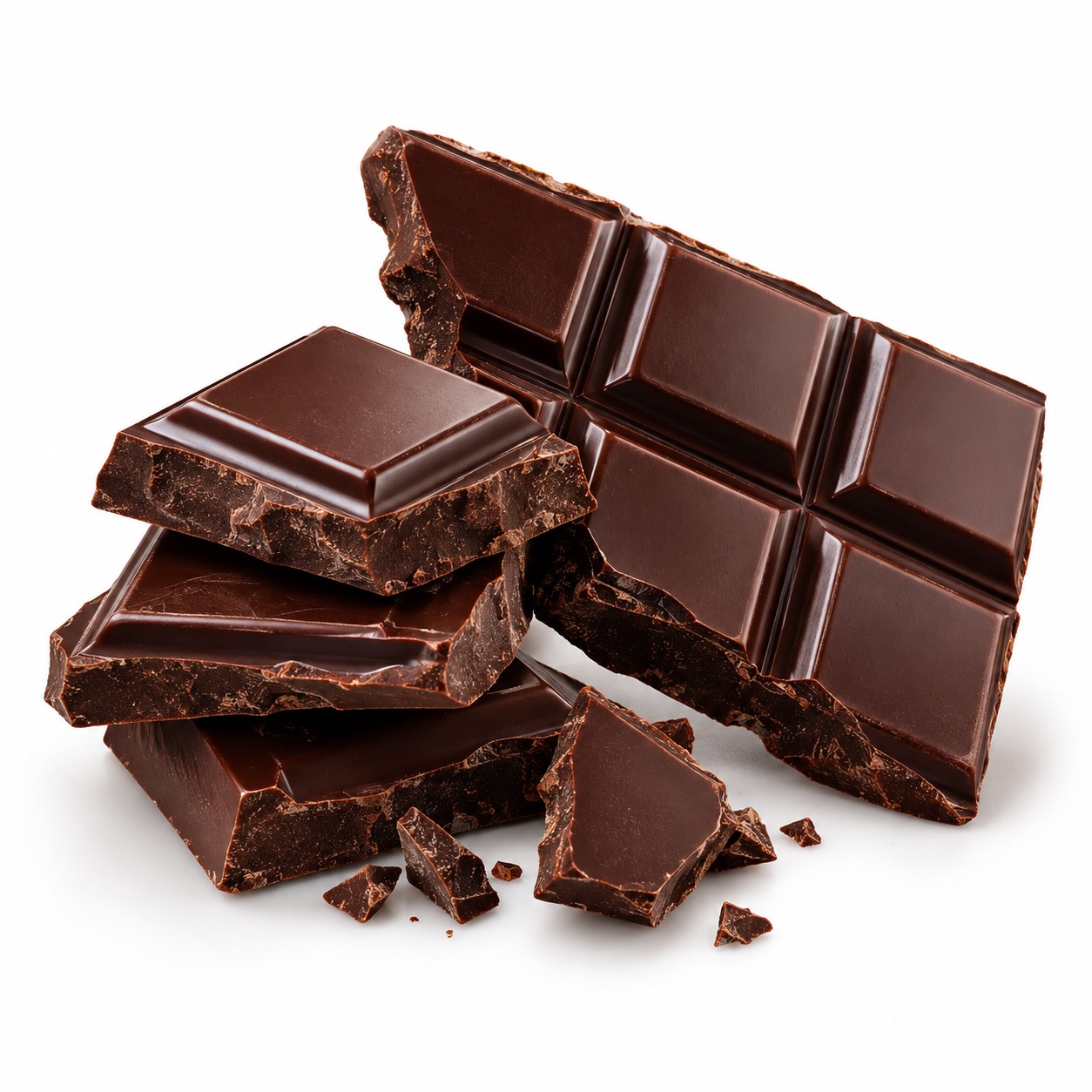
The new Chocolate.webp identity is connected to Recipe 232, where a small amount of 100% dark chocolate gives depth to the hare ragout.
White Truffle Pappardelle with Blue Hare Ragout
Recipe 232 combines fresh pappardelle, blue hare or wild rabbit, Burgundy red wine and fresh white truffle. The 100% unsweetened dark chocolate is added in a controlled quantity at the end of the ragout to deepen color, bitterness and roasted complexity without turning the sauce sweet.
Open Recipe 232 →
Professional References
Research & Industry Sources
Use these sources for deeper study of cocoa genetics, production, fine-flavor origins and chocolate manufacturing.
Tuscany Cuisine Cocoa and Chocolate Ingredient Library. Theobroma cacao, cacao fruit, cocoa pod, cocoa beans, Criollo, Forastero, Trinitario, Nacional, fine flavor cocoa, Côte d'Ivoire, Ghana, Ecuador, Nigeria, Cameroon, Brazil, Peru, Colombia, Dominican Republic, Indonesia, Papua New Guinea, Venezuela, Trinidad, Madagascar, cocoa fermentation, drying, roasting, nibs, winnowing, cocoa liquor, cocoa mass, cocoa butter, cocoa powder, refining, conching, tempering, molding, dark chocolate, semisweet chocolate, sweet chocolate, milk chocolate, white chocolate, unsweetened chocolate, 100 percent chocolate, 90 percent chocolate, 80 percent chocolate, 70 percent chocolate, 60 percent chocolate, 50 percent chocolate, 40 percent chocolate, 20 percent cocoa, fruit flavored chocolate, colored cocoa butter, bonbons, ganache, pastry, baking, confectionery, savory game ragout, Recipe 232.