Ingredient identity
Understanding Eggplant
Eggplant belongs to the same botanical family as tomato, pepper and potato, but its kitchen behavior is distinct because of its spongy flesh, seed structure and ability to absorb oil, sauces and aromatic seasonings.
Botanical identity
Common name: Eggplant
Italian: Melanzana
British/French usage: Aubergine
South Asian usage: Brinjal
Scientific name: Solanum melongena
Family: Solanaceae
Botanical type: Berry fruit
Culinary identity
Kitchen classification: Savory vegetable
Primary category: Produce
Subcategory: Fruiting Vegetables / Culinary Fruits
Base unit: g
Primary station: Produce / Pantry
Inventory ID: eggplant
Why it is stored in the Tuscany Cuisine fruit directory: eggplant is botanically a fruit, even though chefs use it as a vegetable. The page preserves that botanical distinction while keeping the operational inventory category under Produce.
History & domestication
From Asia to the Mediterranean
Eggplant has one of the most complex domestication stories among familiar vegetables. Modern research supports Asian origins and multiple domestication events rather than a single simple point of origin.
- Ancient Asia
Wild and semi-wild ancestors of common eggplant occur across tropical Asia. Kew describes the India–Myanmar–China region as central to domestication, while modern genomic work supports major domestication centers in the Indian subcontinent and Southeast Asia.
- ~2,000 years ago
Sanskrit and Chinese agricultural literature documents eggplant cultivation and use. Chinese records describe the crop by the first century BCE, while evidence from South Asia points to very early use and selection.
- 7th–8th c. CE
Eggplant moved westward through trade and Islamic expansion into Persia, North Africa and the Mediterranean basin. It was not a familiar crop of classical Greek and Roman agriculture.
- Medieval–Renaissance Europe
Regional forms became established around the Mediterranean, including Italy, Spain and the eastern Mediterranean, producing the diverse purple, striped, white and round types familiar today.
- Modern era
Eggplant is cultivated worldwide in tropical, subtropical and temperate production systems, from open fields to protected greenhouse culture.
Global cultivation
Eggplant Production Around the World
Eggplant is now a major global vegetable crop, especially across Asia and the Mediterranean. Recent scientific literature citing FAO data places worldwide output above 59 million tonnes, with China and India the leading producers.
Asia
China and India dominate global production. Bangladesh, the Philippines, Thailand, Vietnam, Japan and other Asian countries maintain strong local traditions and extensive diversity in shapes, colors and culinary uses.
Mediterranean
Eggplant is deeply established in Italy, Türkiye, Egypt, Greece, Spain, the Levant and North Africa. Recent crop-genomics literature identifies Egypt, Türkiye and Italy among leading Mediterranean producers.
Americas & beyond
Commercial production also occurs across the United States, Mexico, Central and South America, Australia and greenhouse industries in cooler regions. Local preferences influence cultivar choice.
Production data note: FAOSTAT is revised annually. For permanent website content, Tuscany Cuisine identifies the leading production regions rather than freezing one year's tonnage into the page. The current FAOSTAT crop-production dataset extends through 2024.
Harvest calendar
Seasonality & Market Availability
Eggplant is a heat-loving crop. In temperate regions, field-grown fruit is strongest in summer and early fall, while greenhouse production and global sourcing make it commercially available through much of the year.
| Period | Typical market pattern | Chef purchasing note |
|---|---|---|
| Winter | Imported and greenhouse supply is most important in cooler climates. | Check firmness, stem freshness and cold damage; avoid dull, pitted or brown fruit. |
| Spring | Availability builds as warm-region and protected crops expand. | Good time to watch for specialty Asian and Mediterranean cultivars. |
| Summer | Peak field season in many temperate markets. | Excellent quality, variety selection and local-market availability. |
| Early fall | Field harvest remains strong until temperatures decline. | Often one of the best periods for mature flavor and abundant local supply. |
USDA SNAP-Ed identifies summer as the principal eggplant season. Exact months vary by latitude, cultivar, weather and production system.
Global diversity
Eggplant Varieties Around the World
The species contains exceptional diversity in size, shape, color, skin thickness, seed density and bitterness. These differences matter in professional cooking because they change how the fruit absorbs oil, holds shape, grills, fries and braises.
Globe Eggplant
Large, dark purple and oval to pear-shaped. Meaty flesh works well for roasting, grilling, breading, casseroles, purees and large-scale production.
Italian Eggplant
Generally smaller than globe types with tender flesh and rich purple skin. Excellent for parmigiana, caponata, pasta sauces, frying and roasting.
Rosa Bianca & Striped Types
Round to oval fruit with pale lavender, pink, cream or striped skin. Often prized for tender texture and elegant presentation.
Japanese Eggplant
Long, slender, thin-skinned and tender with fewer noticeable seeds. Cooks quickly and is excellent grilled, glazed, roasted or stir-fried.
Chinese Eggplant
Long and narrow, commonly lighter purple than Japanese types. Delicate flesh is ideal for stir-fries, braises and steaming.
Indian / Brinjal Types
Extremely diverse, from small round purple fruit to green, striped and elongated cultivars. Used in curries, bharta, frying, stuffing and pickles.
Thai Eggplant
Small round fruit, often green and white. Firmer, seedier and sometimes slightly bitter; commonly cooked in curries or eaten with spicy preparations.
White Eggplant
Ivory-skinned cultivars illustrate the origin of the English name “eggplant,” which was historically associated with small white egg-shaped forms.
African Eggplants
Related cultivated species such as scarlet and gboma eggplants belong to distinct species but are important in African cuisines and global eggplant diversity.
Professional cooking
Culinary Uses & Technique
Eggplant can move from crisp to creamy depending on cut size, salt, oil, heat and moisture. The chef's main challenge is controlling water and oil absorption while developing flavor and texture.
Roast
Whole, halved or cubed eggplant becomes soft and concentrated. High heat promotes browning while the center turns silky.
Grill
Slices or halves take smoke and char well. Oil lightly and cook until fully tender rather than stopping when only the exterior is browned.
Fry
Salt or pre-treat when useful, control oil temperature and avoid crowding. Breading creates a crisp barrier for croquettes and cutlets.
Braise
The flesh absorbs tomato, stock, soy, miso, wine, aromatics and spices, making eggplant particularly effective in stews and composed sauces.
Italian & Mediterranean applications
- Melanzane alla Parmigiana
- Caponata
- Pasta alla Norma
- Grilled marinated eggplant
- Stuffed eggplant
- Ratatouille and Provençal preparations
- Moussaka
- Baba ganoush and roasted purees
Global applications
- Indian baingan bharta and curries
- Chinese garlic eggplant and braises
- Japanese miso-glazed nasu
- Thai curries
- Turkish imam bayildi and stuffed preparations
- Pickles, relishes and chutneys
- Tempura, fritters and croquettes
About salting: salting is not mandatory for every modern eggplant. Use it strategically to season, reduce surface moisture, moderate bitterness in mature fruit or improve frying behavior. Rinse or wipe as appropriate and dry thoroughly before high-heat cooking.
Nutrition reference
Nutrition Facts
Raw eggplant is low in calories and fat and provides dietary fiber. The values below are USDA reference values per 100 g edible portion.
Nutrition Facts
Reference amount100 g raw
Calories25
Total fat0.18 g
Carbohydrate5.88 g
Dietary fiber3.0 g
Sugars3.53 g
Protein0.98 g
Potassium229 mg
Magnesium14 mg
Folate22 µg
Vitamin C2.2 mg
Sodium2 mg
Raw eggplant is more than 90% water by weight, which contributes to its low energy density and its dramatic texture change during cooking.
About 3 g fiber per 100 g raw eggplant supports its role as a fiber-containing vegetable in balanced menus.
Dark purple cultivars contain anthocyanin pigments in the skin. Color concentration varies with cultivar and growing conditions.
Eggplant readily absorbs oil. Fried or heavily oiled preparations can contain far more calories than the raw ingredient, so recipe nutrition should be calculated from the finished method.
Nutrition policy: Tuscany Cuisine uses ingredient nutrition as an educational reference, not as medical advice. Recipe-level nutrition should reflect the exact edible yield, oil absorption, breading, sauces and serving size.
Quality control
Selection, Purchasing, Storage & Preparation
Freshness is easier to judge from skin, weight and calyx condition than from size alone.
Choose
- Glossy, taut skin appropriate to the cultivar
- Fruit that feels heavy for its size
- Firm flesh with slight resilience
- Fresh green calyx and stem
- No deep bruising, soft collapse or mold
Store
- Keep cool but avoid prolonged exposure to excessively cold temperatures
- Do not wash until close to preparation
- Protect from crushing and dehydration
- Use FIFO rotation
- Record received date, supplier and origin
Prepare
- Trim stem and calyx carefully
- Peel only when the recipe benefits from a smoother texture
- Cut shortly before use to limit oxidation
- Salt when appropriate to technique
- Dry well before grilling, frying or breading
Tuscany Cuisine usage record
Recipes Using Eggplant
The ingredient page connects education to actual recipe production. Each recipe should reference the same eggplant identity, ingredient icon and page path.
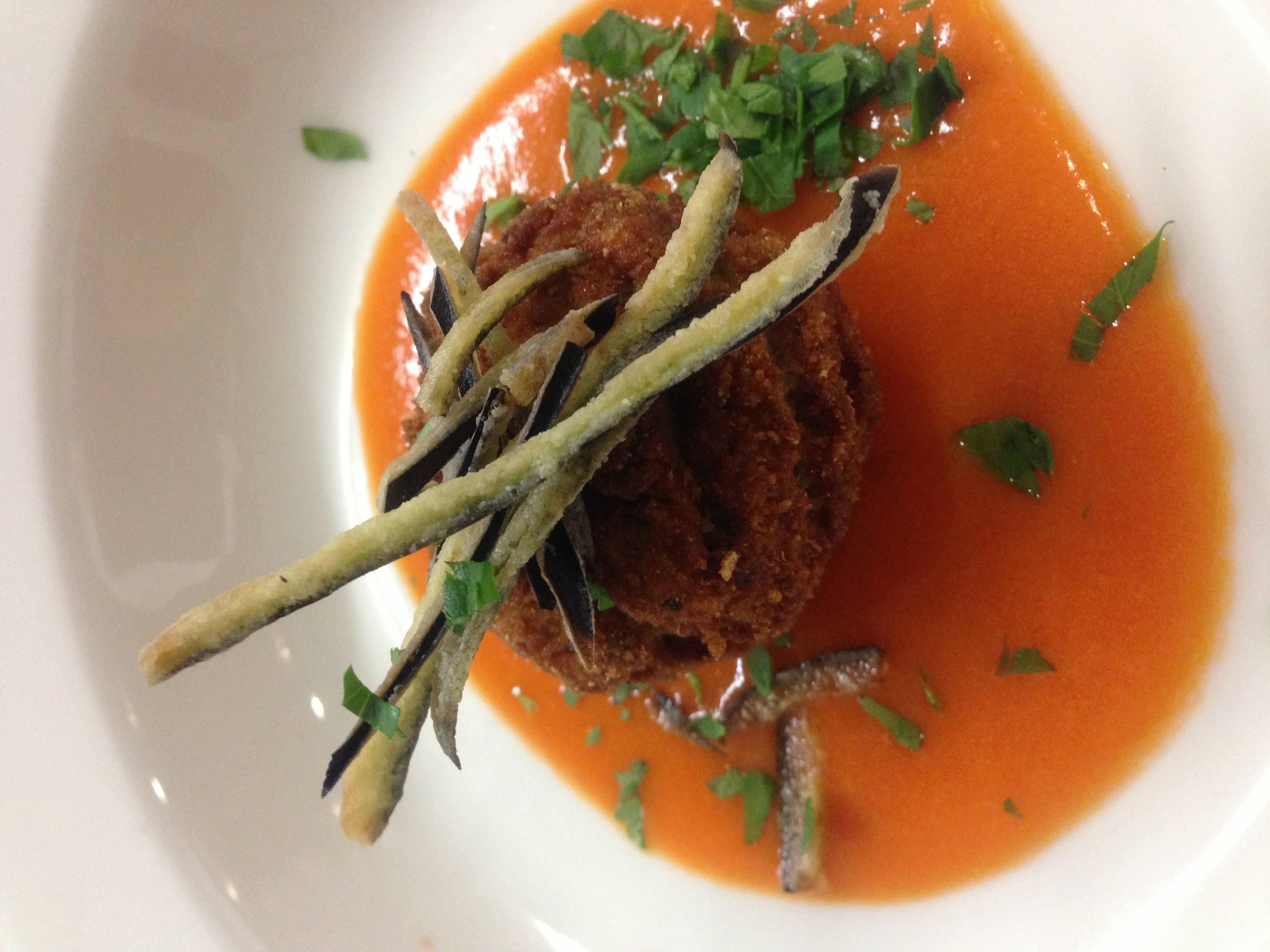
Eggplant Croquette
Current connected recipe record: eggplant is cooked until tender, drained and mashed, combined with Pecorino Romano, raisins, egg yolk, flour and seasonings, shaped into croquettes, breaded through flour, egg wash and Panko or fine breadcrumbs, then fried and served with red bell pepper coulis.
Base recipe usage: 900 g eggplant for 4 servings.
Open Eggplant CroquetteOne ingredient · one identity
Eggplant Ingredient Record for the Tuscany Cuisine Platform
This page publishes the operational identity that recipes, live inventory, Menu Builder, production, purchasing and future AI culinary tools can reuse.
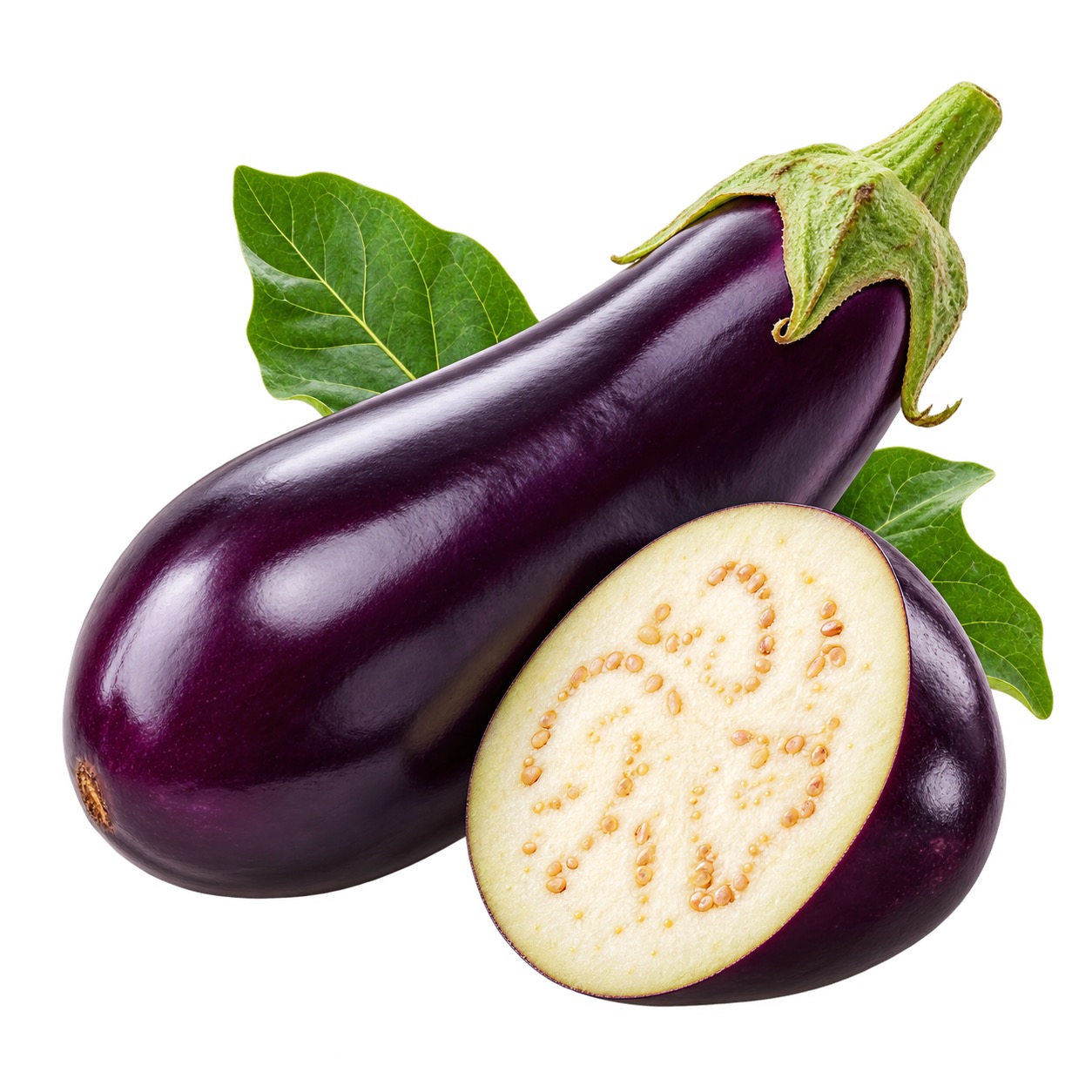
Eggplant
inventory_id: eggplant
- Scientific nameSolanum melongena
- Italian nameMelanzana
- CategoryProduce
- SubcategoryFruiting Vegetables / Culinary Fruits
- Base unitg
- Storage zoneRefrigerated Produce
- Icon/academy/ibrary/fruit/eggplant.png
- Ingredient page/academy/ibrary/fruit/eggplant.html
- Connected recipeEggplant Croquette
Eggplant ingredient identity is published and ready for Master Ingredient Registry synchronization.
eggplant rather than creating recipe-specific aliases.Current usage count: 1 confirmed connected Tuscany Cuisine recipe in this page record. Future recipes can be added without changing the ingredient identity.
Professional FAQ
Common Eggplant Questions
Is eggplant a fruit or a vegetable?
Botanically it is a berry fruit because it develops from the flower and contains seeds. Culinary practice treats eggplant as a savory vegetable, which is why Tuscany Cuisine records both the botanical and kitchen classifications.
Should eggplant be peeled?
Not always. Tender-skinned young or slender Asian cultivars are commonly cooked with the skin. Large mature globe fruit can be peeled when a silky puree, croquette mixture or delicate texture is desired.
Why does eggplant absorb so much oil?
Its flesh contains a network of air spaces and cell structures that readily take up fat as cooking begins. Good heat control, salting when useful, pre-roasting, breading or controlled oil application can help manage absorption.
Why does cut eggplant brown?
Once cut, exposed flesh can oxidize and darken. Prepare close to cooking time or use the recipe's acid, salt or cooking step promptly when appearance matters.
Research references
Sources & Further Study
The historical, botanical, production and nutrition sections are grounded in botanical institutions, agricultural statistics and nutrition references.
- Royal Botanic Gardens, Kew — Solanum melongena / aubergine profile
- Kew — Aubergine plant profile and domestication overview
- Genomic analysis of more than 3,400 worldwide eggplant accessions and domestication centers
- World Vegetable Center eggplant collection, origin, diversity and breeding review
- FAOSTAT — Crop production, yield and harvested area dataset
- USDA FoodData Central — food composition database
- USDA SR28 — Eggplant, raw, NDB 11209 nutrient reference
- USDA SNAP-Ed — Eggplant seasonality and culinary preparation