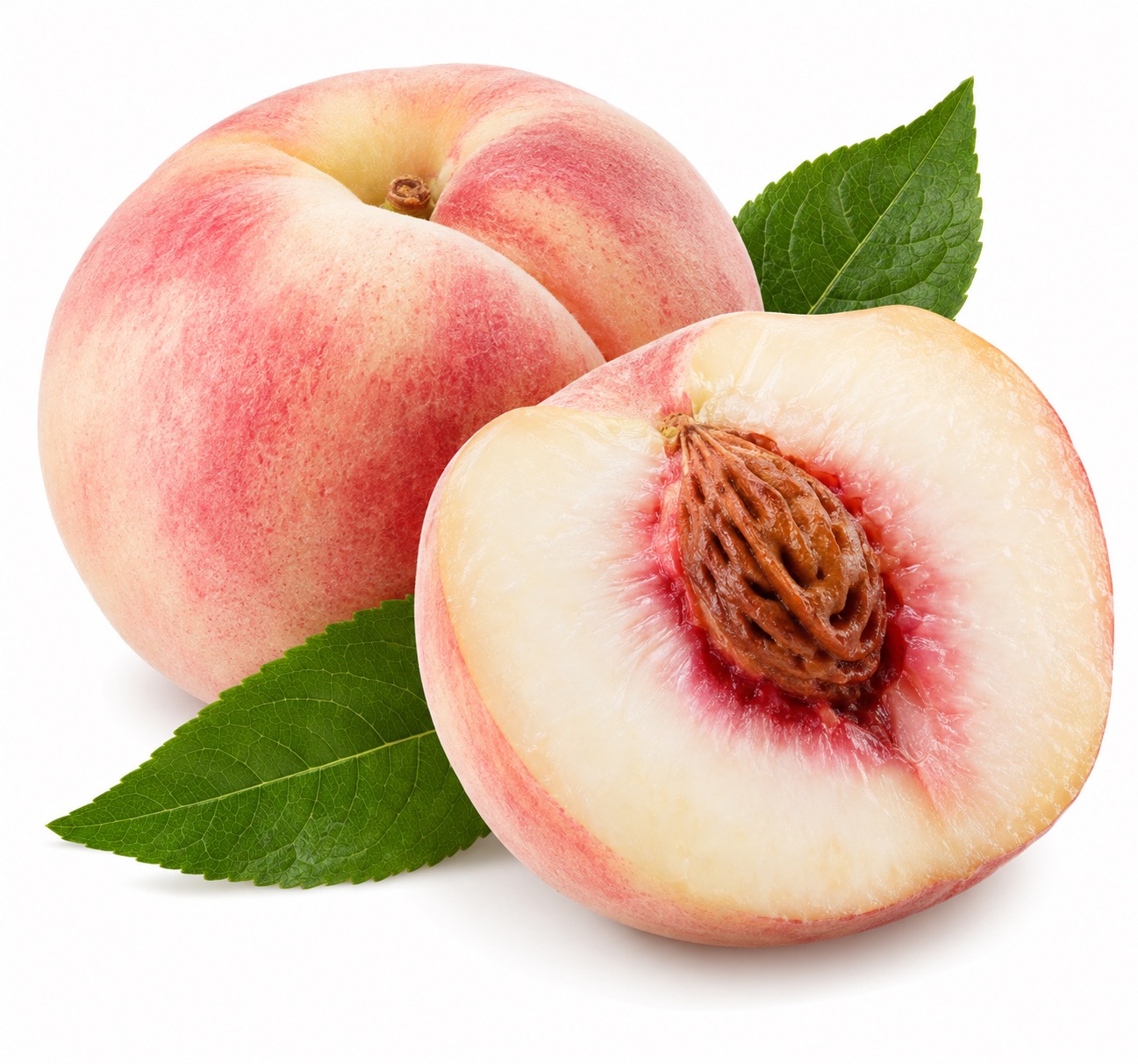
Peaches are aromatic drupes valued for perfume, juiciness, sweetness, acidity, texture and remarkable culinary range. This library centers the White Peach as the Tuscany Cuisine shared ingredient identity while documenting the major culinary peach types chefs encounter in professional markets.
Stone FruitSummer ProduceFresh MarketSalad StationPastry
Botanical OriginAncient Chinese cultigen; Kew places the native-range context in north-central China.
Peak Fresh SeasonLate spring through summer; cultivar and region determine the exact window.
White Peach StyleFloral, juicy, honeyed and typically lower-acid than classic yellow peaches.
Platform IDwhite_peach
Origin & History
The peach is not Persian in origin despite the scientific name Prunus persica. Kew treats the species as a cultigen from north-central China, and archaeological research places peach cultivation in China thousands of years ago.
Ancient China. Peaches were selected and cultivated for desirable fruit traits long before they reached the Mediterranean world.
Trade routes west. Cultivated peaches moved through Persia and India and eventually into the Mediterranean basin, which helps explain the historical “Persian” association in the botanical name.
Greek and Roman worlds. Peaches became established in Mediterranean horticulture and were then spread through western Europe.
Americas. Spanish colonists introduced peaches to North America in the sixteenth century; commercial U.S. peach culture expanded dramatically in the nineteenth century.
Culinary lesson: the peach is a true stone fruit, or drupe. Its edible flesh surrounds a hard endocarp—the “stone” or pit. That pit relationship becomes important in the kitchen because peaches may be clingstone or freestone.
Major Peach Types · Flavor & Season Cards
These cards describe the peach classifications chefs most often encounter. They are educational type records, not separate Tuscany Cuisine inventory identities.
Platform Identity
White-Flesh Peach
June–August peak
Flavor: Floral, honeyed, juicy and often lower in acidity than classic yellow peaches.
Culinary use: Raw salads, cheese plates, crudo accompaniments, desserts, chilled soups and elegant garnishes.
The Tuscany Cuisine permanent shared record on this page.
Classic Fresh Market
Yellow-Flesh Peach
May–September
Flavor: Rich peach aroma with a more pronounced sweet-tart balance and lively acidity.
Common in U.S. fresh markets; many cultivars have melting flesh.
Flat Peach
Donut / Saturn Peach
June–August
Flavor: Typically very sweet, fragrant and low-acid, with delicate white or yellow flesh.
Culinary use: Fresh eating, composed salads, fruit platters, pastry garnish and quick desserts.
A naturally flat peach form; also known historically as pan tao / peento.
Fuzzless Peach
Nectarine
May–September
Flavor: Bright, aromatic and juicy; white types are often sweeter and lower-acid, yellow types more tangy.
Culinary use: Raw slicing, grilling, pastry, salads, salsas, chutneys and fruit-forward sauces.
Botanically the same species as peach; the smooth skin comes from a natural mutation.
Pit Relationship
Clingstone Peach
Late May–August
Flavor: Firm, dense and dependable; often selected for processing and canning.
Culinary use: Canning, preserves, compotes, baking, cooked fruit preparations and foodservice production.
The flesh adheres to the stone; California processing peaches are strongly associated with non-melting clingstone types.
Pit Relationship
Freestone Peach
June–September
Flavor: Juicy, aromatic and commonly melting-textured when ripe.
Culinary use: Fresh service, wedges, salads, home preserving, grilling, pastry and plated desserts.
The flesh separates easily from the stone, making fabrication faster.
White Peach Flavor Profile
White peaches are prized for perfume more than aggressive acidity. At ideal ripeness the flesh should be juicy and tender, with floral aroma, honeyed sweetness and delicate stone-fruit character. Their softness makes careful handling essential in garde manger and pastry production.
Sweetness
5/5
Juiciness
5/5
Floral aroma
4/5
Acidity
2/5
Firmness
2/5
Tannin
0/5
Pairing logic: white peach works beautifully with tomato, grilled onion, fennel, arugula, burrata, ricotta, Parmigiano, prosciutto, almonds, pistachios, mint, basil, thyme, lemon, white balsamic, champagne vinegar, EVOO, seafood, sparkling wine, rosato and aromatic whites.
Seasonality & Market Calendar
Period
Fresh-Market Context
April
Very early warm-region fruit may begin
May
Early yellow, nectarine and California season begins
June
Strong fresh-market availability; white peaches become important
July
Peak summer diversity and flavor
August
Peak-to-late season; excellent for many freestone cultivars
September
Late cultivars in suitable regions
October–March
Domestic fresh supply limited; imported fruit may appear depending on market
California cling-peach industry reports show commercial harvest activity beginning in late May and running through August in recent seasons. Fresh-market peach timing is broader and varies by cultivar, growing region, chill accumulation and weather.
Nutrition · Raw Peach per 100 g
Peaches are mostly water, low in energy, and contribute vitamin C, potassium, carotenoids and fiber. Values vary by cultivar and analytical source; the figures below are representative USDA-style values for raw peach.
Nutrient
Approximate Amount
Energy
39 kcal
Water
88.9 g
Carbohydrate
9.5 g
Dietary fiber
1.5 g
Total sugars
8.4 g
Protein
0.9 g
Total fat
0.3 g
Vitamin C
6.6 mg
Potassium
190 mg
Calcium
6 mg
Iron
0.25 mg
Professional Culinary Uses
Raw & chilled
Slice into wedges or thin crescents for salads, burrata plates, prosciutto pairings, crudo accompaniments, chilled soups, fruit carpaccio and tasting-menu garnishes. Acid should be controlled so the peach remains the aromatic focus.
Grilling & roasting
High heat caramelizes the fruit's natural sugars and adds smoke. Slightly firm yellow or freestone peaches are often easiest to handle on a grill, while delicate white peaches require gentler timing.
Pastry & dessert
Use for galettes, tarts, cobblers, panna cotta garnishes, semifreddo, sorbet, gelato, compotes, jams, preserves and poached-fruit presentations.
Savory sauces & preserves
Peach can become chutney, mostarda-style condiment, hot sauce, vinaigrette, gastric, glaze, salsa or barbecue component. Ginger, chile, mustard, vinegar and herbs help balance sweetness.
Beverage & wine applications
Peach purée is classically associated with sparkling-wine preparations and works well in shrubs, non-alcoholic spritzes, iced tea, lemonades and seasonal beverage programs.
Selection, Ripening & Storage
Aroma: ripe fruit should smell clearly peach-like at the stem end.
Touch: fruit for immediate service should yield gently without feeling mushy.
Skin: avoid deep bruises, leaking juice, shriveled shoulders and large pressure marks.
Ripening: hold firm fruit at room temperature until aromatic and slightly yielding.
Cold storage: once ripe, refrigerate and use promptly. Excessive or improper cold storage can contribute to chilling injury and mealy texture in susceptible cultivars.
Production: cut close to service for best aroma, texture and appearance.
Peach and White Peach Ingredient Library. Prunus persica. Rosaceae. Stone fruit. Drupe.
White peach, white summer peach, white-fleshed peach, yellow peach, donut peach, Saturn peach, pan tao, peento, nectarine, clingstone peach, freestone peach.
Peach origins China. Peach history Silk Road, Persia, Mediterranean, Rome, Europe and North America.
White peach flavor profile floral honeyed juicy sweet low acid delicate.
Yellow peach flavor profile sweet tart aromatic acidic juicy.
Nectarine is a fuzzless peach of the same species.
Donut peach is a naturally flat peach form.
Peach season late spring summer early fall; peak summer.
Culinary uses raw salads, grilling, roasting, poaching, pastry, sorbet, gelato, jam, compote, chutney, salsa, vinaigrette and beverages.
Connected recipe Peach Salad with Grilled Onions Recipe 367.
Platform ingredient code TC-FRUIT-PEACH-WHITE-001. Ingredient ID white_peach. Inventory ID white_peach. Recipe alias white_summer_peach.