Absorption Method
Rinse, combine with measured stock or water, bring to a boil, then simmer until tender. Rest briefly. Excellent for batch production and side dishes.
From the first farming civilizations of the Fertile Crescent to Roman grain culture, Tuscan mills, Farro della Garfagnana, modern farrotto, composed salads and the traditional marriage of farro with beans, this ancient wheat remains one of Italy's most expressive grains.
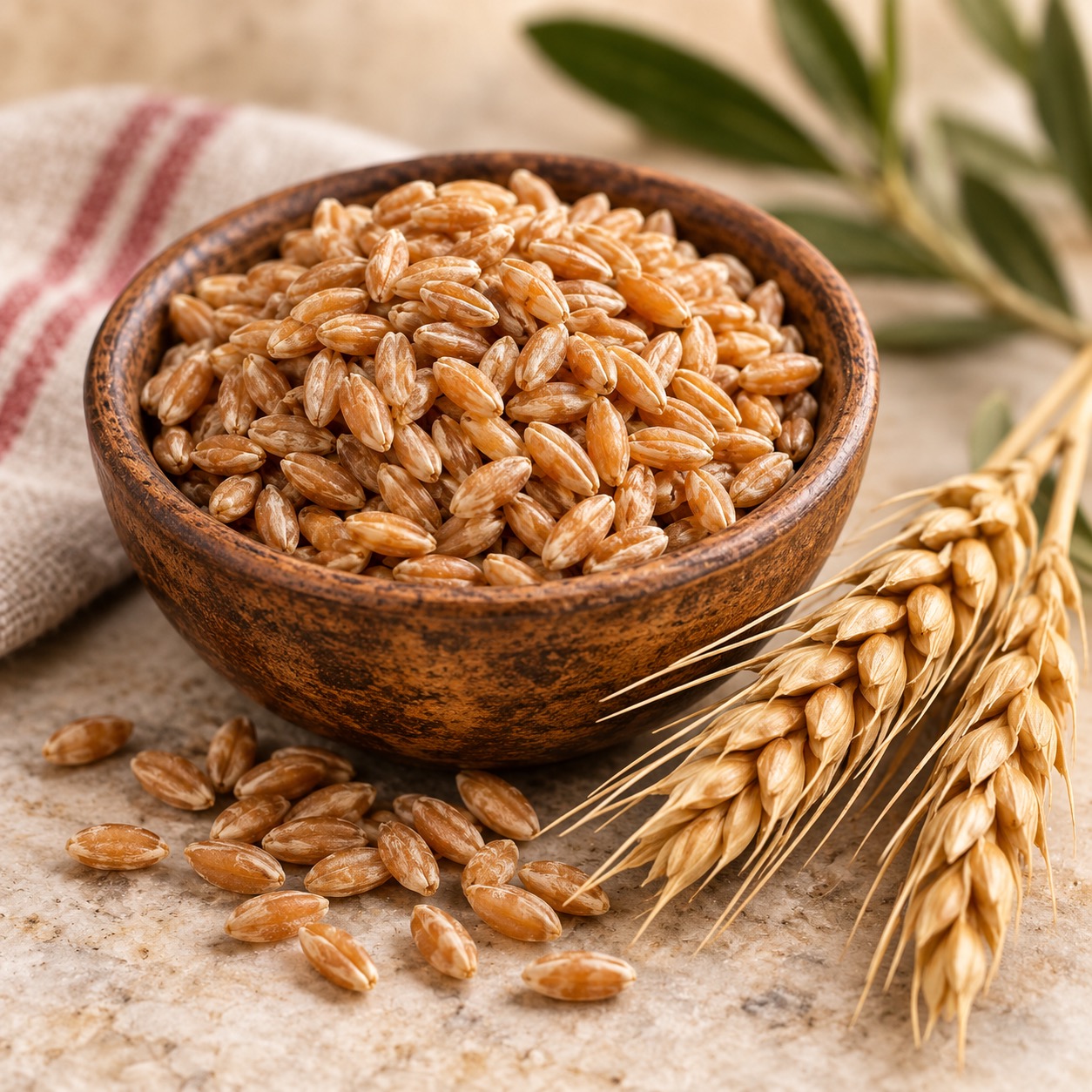
Farro is an ancient wheat with a firm, chewy grain and a warm, nutty flavor. In the modern culinary world it works in many places where a chef might otherwise use rice, barley or another whole grain—but farro brings its own wheat aroma, texture and historical identity.
In Italy the word farro can describe several hulled ancient wheats. Farro medio is emmer wheat; farro piccolo is einkorn; and farro grande is spelt. The distinction matters for purchasing, cooking time, texture and ingredient-registry accuracy.
Farro did not appear through one single “discovery.” Ancient farming communities gradually selected, cultivated and preserved useful wheats over generations. Emmer became one of the early domesticated cereals of the Fertile Crescent and later moved through the food cultures of the Mediterranean.
Emmer/farro belongs to the first great wave of domesticated cereals associated with the Fertile Crescent. Grain cultivation gave communities a dry staple that could be stored, transported and replanted.
Grain was boiled into porridges, cracked or ground into meal, and eventually transformed into increasingly refined flours for breads and other cereal foods.
Before mechanical mills, cereals were crushed between stones. Classical Greek hopper mills made grinding more efficient by using shaped stones, a feed cavity and a handle.
Cereals formed a major part of Roman food culture. Milling advanced from hand grinding to rotary, animal-driven and water-powered systems, allowing much greater flour production.
Farro remained especially meaningful in central Italy. Tuscany's Garfagnana preserved a strong cultivation and soup tradition even as other cereals became more dominant.
Farro — From Ancient Grain to the Tuscan Table is the Tuscany Cuisine educational film following this ancient wheat from early Mediterranean agriculture and milling through Tuscany, Farro della Garfagnana, professional cooking methods, modern farrotto and the traditional Farro & Borlotti Bean Soup.
Hulled ancient wheats require an additional processing step because the edible kernel remains enclosed by protective glumes after threshing. Removing those coverings exposes the grain so it can be cooked whole, polished, cracked or milled.
Mature heads are harvested and dried for storage and processing.
Grain is separated from plant material and the persistent husk or glume is removed.
Whole grain may be simmered directly or cracked into smaller particles for porridges and meal.
Stone or mechanical milling reduces cleaned grain into flour for breads, pasta and specialty baking.
The earliest household method was direct stone grinding: a hand stone worked against a larger stone surface. Greek hopper mills improved efficiency, while Roman rotary mills, animal power and water power increased flour production dramatically.
Farro can still be milled into flour. Its flavor is more distinctive than neutral refined wheat flour, making it useful for rustic breads, specialty pasta, crackers, focaccia-style doughs and composite flour blends. Garfagnana tradition also preserves the use of farro flour in regional bread.
The mountainous Garfagnana area in the province of Lucca is one of Tuscany's most important farro landscapes. Farro della Garfagnana PGI is based on emmer wheat, Triticum dicoccum, and the grain is processed locally after harvest to remove its outer coverings.
The grain is valued for its size and ability to hold structure during cooking. Traditional Garfagnana cooking naturally combines farro with legumes, vegetables and extra-virgin olive oil. Farro soup is among the area's defining preparations, and the grain can also be milled for regional bread.
| Type | Identity | Character | Kitchen Note |
|---|---|---|---|
| Farro Piccolo | Einkorn · Triticum monococcum | Small ancient wheat | Separate grain identity; do not assume identical cooking to emmer. |
| Farro Medio | Emmer · Triticum dicoccum | Classic central-Italian farro identity | Excellent for soups, salads, sides and farrotto. |
| Farro Grande | Spelt | Larger ancient wheat | Related but separate purchasing and cooking identity. |
Market processing is as important as botanical type. Whole farro keeps its bran and generally needs the longest cooking. Semi-pearled farro has some outer bran removed, while pearled farro is more polished and cooks faster. If whole-grain status matters, look specifically for “whole farro.”
A reliable starting point for whole farro is approximately 1 part dry farro to 2.5 parts water or broth, simmered until tender and pleasantly chewy. A general cooking range is 25–40 minutes, but variety, age, pearling and pre-soaking change the timing.
Rinse, combine with measured stock or water, bring to a boil, then simmer until tender. Rest briefly. Excellent for batch production and side dishes.
Simmer in abundant salted water or stock until the desired texture is reached, then drain. Ideal for salads or farro that will later be added to soup.
Toast the grain lightly with olive oil or butter and aromatics, then add hot stock gradually as in risotto. Finish with cheese, butter, olive oil or vegetable purée.
Cook farro separately when precise texture is important, then fold it into the finished soup base. This keeps the broth from becoming excessively thick during service.
Soaking is most useful with whole farro. Letting the grain sit in water for several hours or overnight begins hydration before heat is applied, which can shorten cooking time and help the kernel cook more evenly from surface to center.
| Farro Form | Soaking Strategy | Cooking Approach | Best Professional Use |
|---|---|---|---|
| Whole farro | Useful: several hours to overnight | Start near 2.5 parts liquid; simmer until tender | Soup, farrotto, premium salads, make-ahead production |
| Semi-pearled | Optional | Check earlier than whole farro | Restaurant prep, salads, sides |
| Pearled | Usually unnecessary | Faster cooking; monitor texture closely | Quick service and banquet production |
Soak whole farro under refrigeration when using a long soak. Drain and rinse, then cook in fresh seasoned water or stock. If producing ahead, cool rapidly, refrigerate under food-safe controls and reheat with stock, soup base or olive oil so the grain does not dry out.
Modern chefs use farro as a bridge between rice and whole wheat: it absorbs flavor, remains structured after cooking and moves easily from rustic food to refined plated cuisine.
Farrotto replaces risotto rice with farro and uses the same basic restaurant logic: aromatics, gradual stock addition, reduction and a rich finish. The result remains chewier and nuttier than classic risotto. Excellent partners include porcini, pumpkin, artichokes, asparagus, radicchio, seafood, braised vegetables and aged cheese.
Farro is excellent in salads because its chew remains pleasant after chilling. Dress it while slightly warm so vinaigrette penetrates the grain. Pair with roasted vegetables, tomatoes, herbs, arugula, fennel, citrus, olives, capers, legumes, goat cheese, Parmigiano, seafood or grilled poultry.
Use farro as a warm contorno finished with extra-virgin olive oil and herbs, as a base under braised meat or fish, or as a structured grain component in contemporary bowls. Its texture is valuable in banquet production because it holds well.
Farro contributes both substance and gentle starch to soups. It works with mushrooms, cavolo nero, root vegetables, tomatoes, lentils and beans. In Tuscany, its connection with beans is especially important.
One of the strongest Tuscany Cuisine connections for farro is the traditional combination with borlotti beans. Farro provides chew and body; borlotti beans bring creaminess, earthy sweetness and plant protein. Onion, celery, carrot, tomato, herbs and extra-virgin olive oil complete the Tuscan flavor structure.
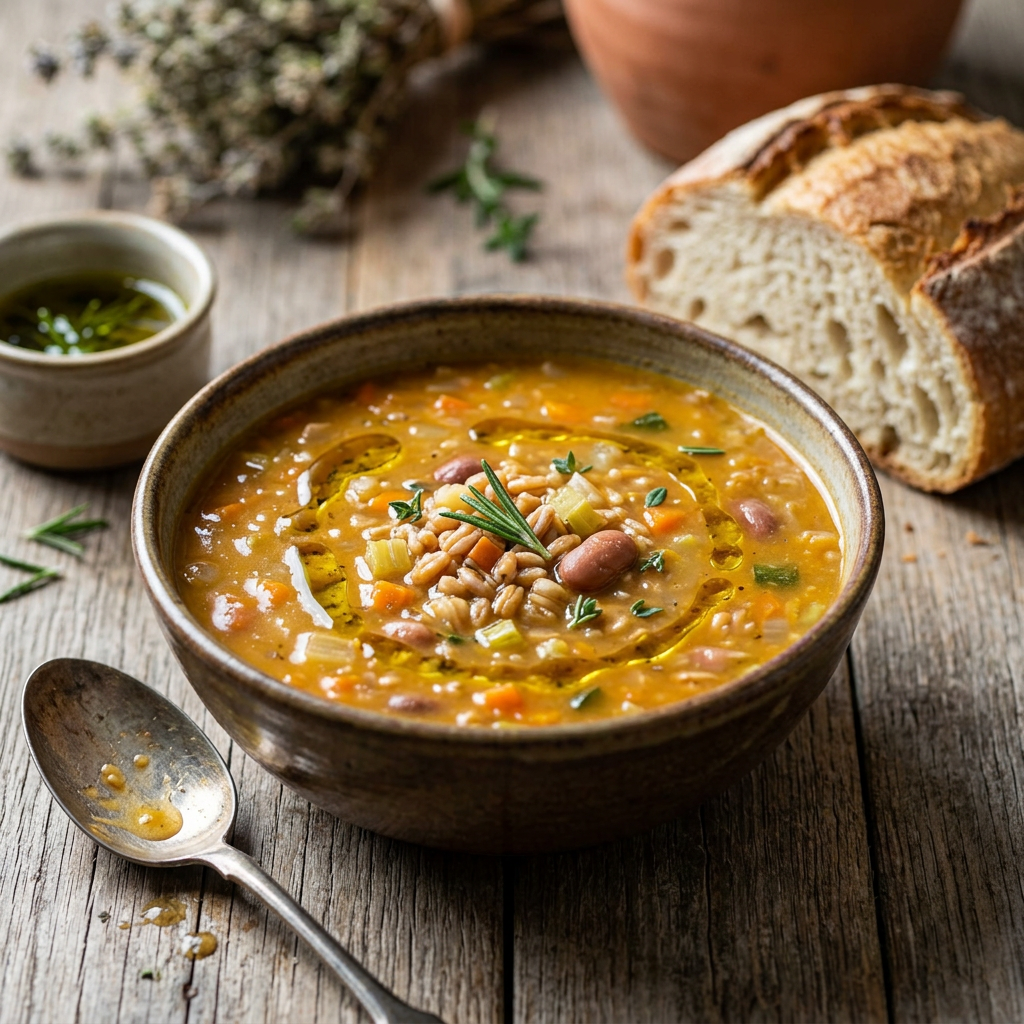
The ingredient identity on this page connects directly to the Soup Station recipe, Live Inventory mapping, Menu Builder and recipe search system.
Open Farro Soup Recipe →For the deepest texture, part of the beans can be blended into the soup base while another portion remains whole. Cooked farro is folded into the finished base so the soup stays creamy while the grain keeps its identity. Finish with herb-scented extra-virgin olive oil.
| Field | Professional Record |
|---|---|
| Ingredient Code | TC-GRAIN-FARRO-001 |
| Primary Name | Farro |
| Primary Botanical Identity | Emmer wheat · Triticum turgidum subsp. dicoccum / Triticum dicoccum |
| Platform Category | Grains & Ancient Wheats |
| Inventory Key | farro_italian |
| Recipe Alias | italian_farro |
| Published Icon | farrowheat.webp |
| Flavor | Nutty, toasty, earthy, lightly sweet |
| Texture | Firm, pleasantly chewy; softens while retaining structure |
| Primary Forms | Whole, semi-pearled, pearled, flour |
| Core Stations | Zuppa, Primi, Salad, Banquet, Bakery / R&D |
| Allergen | Wheat · Gluten |
| Storage | Cool, dry, airtight, pest-protected; cooked farro refrigerated promptly |
| Connected Recipe | Traditional Tuscan Farro Soup with Borlotti Beans |
Not always. In Italian culinary language farro can refer to a family of ancient wheats. Farro medio is emmer, farro piccolo is einkorn, and farro grande is spelt.
No. Farro is wheat and contains gluten.
Not necessarily, but whole farro benefits most from pre-soaking. Several hours or overnight can shorten cooking and promote more even hydration.
Yes. Farrotto uses a risotto-style technique but produces a nuttier, chewier grain than traditional risotto rice.
Farro soup is a classic Garfagnana preparation, and farro pairs especially well with beans and legumes. Tuscany Cuisine connects this identity directly to Traditional Tuscan Farro Soup with Borlotti Beans.