
Raw and young
Very young beans are tender enough for simple antipasti. The outer pod is discarded; refined preparations may also remove the pale skin around each bean.
Tuscany Cuisine Ingredient Knowledge System
Fave · Tuscan “baccelli”
A spring legume with a tender green center, a gently grassy sweetness, and a special place beside young Pecorino in the Tuscan countryside.
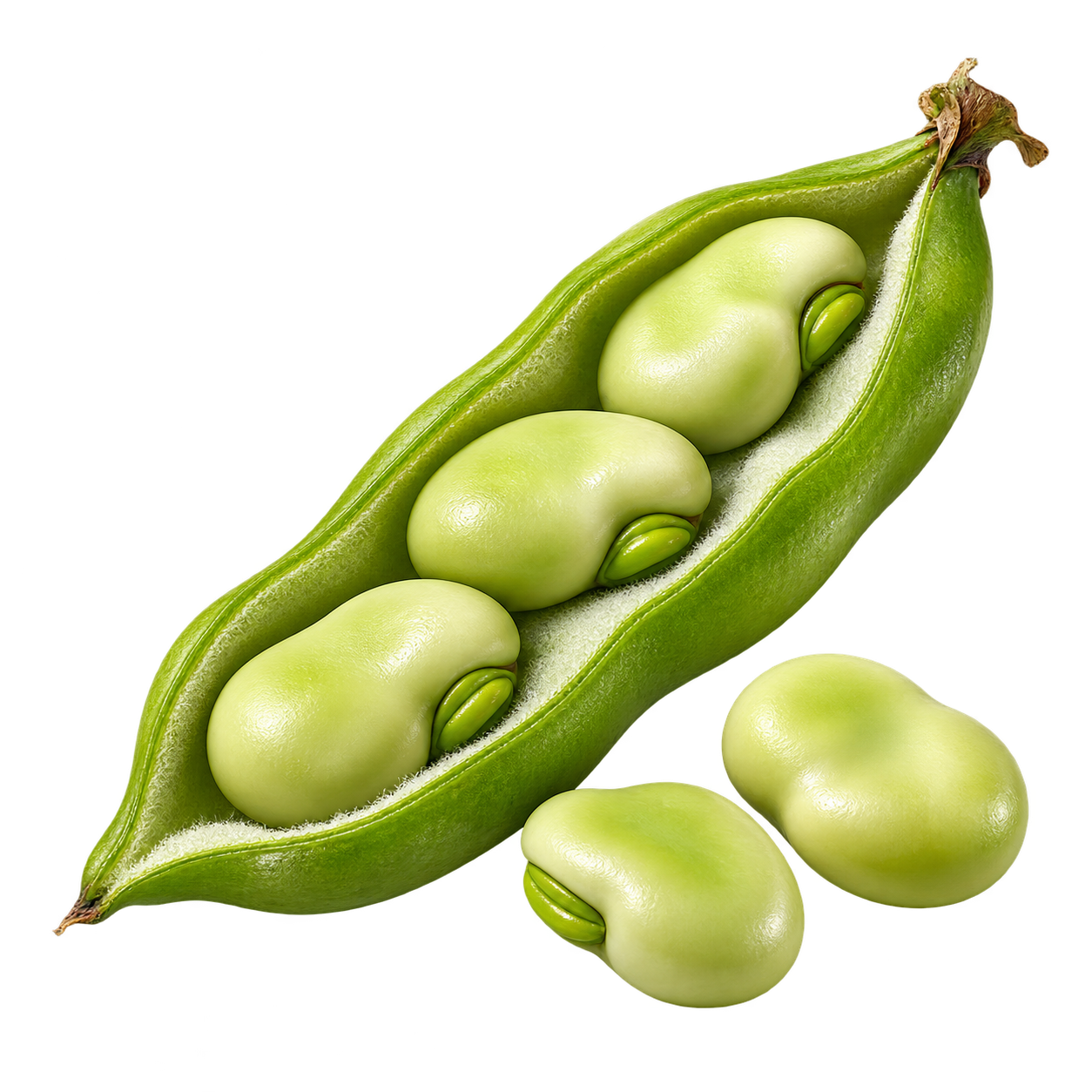
Tuscan table
In Tuscany, fresh fava pods are commonly called baccelli. Their arrival announces spring, when young beans can be shelled at the table and eaten with fresh or lightly aged Pecorino Toscano, unsalted Tuscan bread, and extra virgin olive oil.
Very young beans are tender enough for simple antipasti. The outer pod is discarded; refined preparations may also remove the pale skin around each bean.
The sweetness of the bean balances the salt and milk richness of sheep’s-milk cheese. The combination is seasonal, rustic, and deeply associated with Tuscan spring.
More mature beans are blanched, braised, puréed, dried, frozen, milled into flour, or packed for year-round kitchen use.
History & cultivation
Vicia faba is among the Old World’s long-cultivated food crops. Archaeological research places early faba-bean farming in the Southern Levant during the Neolithic, long before the crop became established across Mediterranean agriculture.
Early cultivated faba beans appear in archaeological sites in the Southern Levant.
Beans became part of Mediterranean farming, foodways, ritual, and household storage.
Fresh spring pods paired naturally with new-season sheep’s cheese and unsalted bread.
Chefs use fresh, frozen, dried, split, canned, puréed, and milled forms across seasonal and plant-forward menus.
Receiving & purchasing
Tuscan timing varies with weather and elevation, but fresh local beans are strongly associated with April and May. Buy pods that feel full, cool, and crisp, with bright color and minimal spotting.
| Checkpoint | What to look for | Kitchen meaning |
|---|---|---|
| Pod | Bright green, firm, not leathery or heavily blemished | Better sweetness and a cleaner fresh aroma |
| Size | Small to medium beans for raw service; larger beans for cooking | Maturity changes tenderness and skin toughness |
| Weight | Pods feel full for their size | Indicates developed beans without severe dehydration |
| Storage | Refrigerate unwashed pods in breathable packaging | Shell close to service; quality declines after shelling |
| Yield | Whole pods produce a much smaller weight of shelled beans | Cost recipes by usable yield, not purchased pod weight |
Professional preparation
Derived products & kitchen forms
Fava beans reach professional kitchens in multiple forms. Each form has a different yield, texture, preparation time, storage method, and best culinary use.
Sold in-shell for maximum freshness; ideal for baccelli and Pecorino service.
Convenient but perishable; use for salads, sautés, soups, and garnishes.
Useful year-round with reliable yield; usually best cooked rather than served raw.
Require soaking and cooking; suited to soups, stews, purées, and rustic dishes.
Cook more quickly and break down readily for smooth purées and thick soups.
Adds legume flavor and protein to pasta, batters, breads, and plant-based formulations.
Ready-to-use pantry form; rinse when appropriate and account for packing liquid and sodium.
A finished or semi-finished base for crostini, vegetable plates, sauces, and spreads.
Commercial fava fractions may be used in plant-based foods; formulation and allergen specifications depend on the supplier.
Nutrition & benefits
Cooked mature fava beans are a low-fat legume that contributes plant protein, complex carbohydrate, dietary fiber, folate, and minerals. Values vary by variety, maturity, cooking method, drained weight, and database entry.
Approximate values per 100 g cooked mature broad/fava beans without added salt, based on USDA FoodData Central legacy data. Use the exact supplier product and cooked yield for menu nutrition calculations.
Protein and fiber can help make a legume-based dish more satisfying within a balanced eating pattern.
Fava beans contribute folate, a nutrient involved in normal cell division and blood formation.
They add body and protein to vegetable dishes while remaining naturally low in fat before dressing or cheese is added.
Food safety & medical cautions
Fava beans can trigger hemolysis in susceptible people with glucose-6-phosphate dehydrogenase deficiency, a reaction known as favism. People with G6PD deficiency should follow the advice of their qualified healthcare professional and avoid exposure when instructed. This warning applies even though fava beans are not one of the standard EU/UK 14 declarable allergens.
Individual allergy to fava beans or other legumes is possible. Maintain accurate ingredient records, retain supplier labels, and prevent cross-contact when a guest reports an allergy.
Cook mature fresh or dried beans appropriately. Cool cooked beans rapidly, refrigerate at 41°F / 5°C or below, label, date, and follow the operation’s approved food-safety plan.
Educational information only; it does not replace medical advice or the food-safety rules that apply to your jurisdiction and operation.
Related Tuscan legume tradition
Lupini are sometimes discussed beside fava beans because both are Mediterranean legumes and both can appear as snacks or aperitivo foods. Botanically and operationally, however, they are separate ingredients.
| Record | Fava beans | Lupini |
|---|---|---|
| Botanical identity | Vicia faba | Lupinus species, including Lupinus albus |
| Common Italian name | Fave; fresh Tuscan pods called baccelli | Lupini; singular lupino |
| Tuscan example | Fresh baccelli with young Pecorino | Lupino dolce di Grosseto, associated with Maremma |
| Typical snack form | Young beans shelled fresh; may be raw or lightly prepared | Debittered, boiled, and held in brine; sold in pouches, tubs, or jars |
| Allergen system | Not one of the standard EU/UK 14, but individual allergy and G6PD risk require attention | Lupin is a separately declarable allergen under EU/UK-style rules |
The Tuscany Region records this rounded yellow lupin as a traditional product of the Province of Grosseto, especially around Magliano in Toscana. It is eaten with aperitivi or as a stuzzichino. Commercial snack lupini are commonly processed to remove bitterness, cooked, and packaged with brine. They should be presented as a related Tuscan legume product—not as something obtained from fava beans.
Connected recipe system
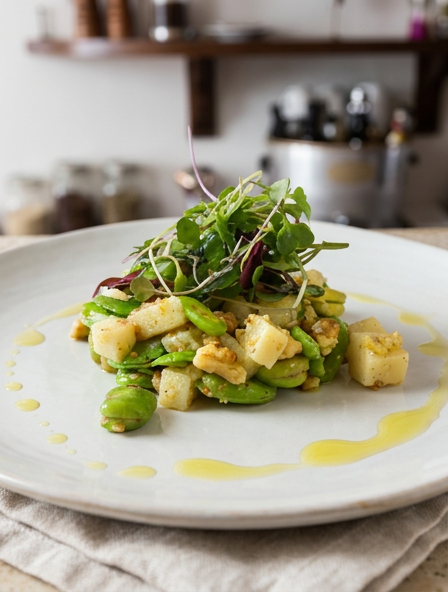
Fresh double-peeled fava beans, diced Tuscan Pecorino, toasted walnuts, extra virgin olive oil, salt, and freshly ground black pepper.
Open connected recipeExplore Tuscan cheeses, including styles of Pecorino suited to fresh spring beans.
Open the extra virgin olive oil guide for finishing intensity, storage, and purchasing.
Return to the Ingredients Library to browse connected food records.
Research sources