Sweetness
Low-medium in leaves; slightly stronger in fleshy stems after cooking.
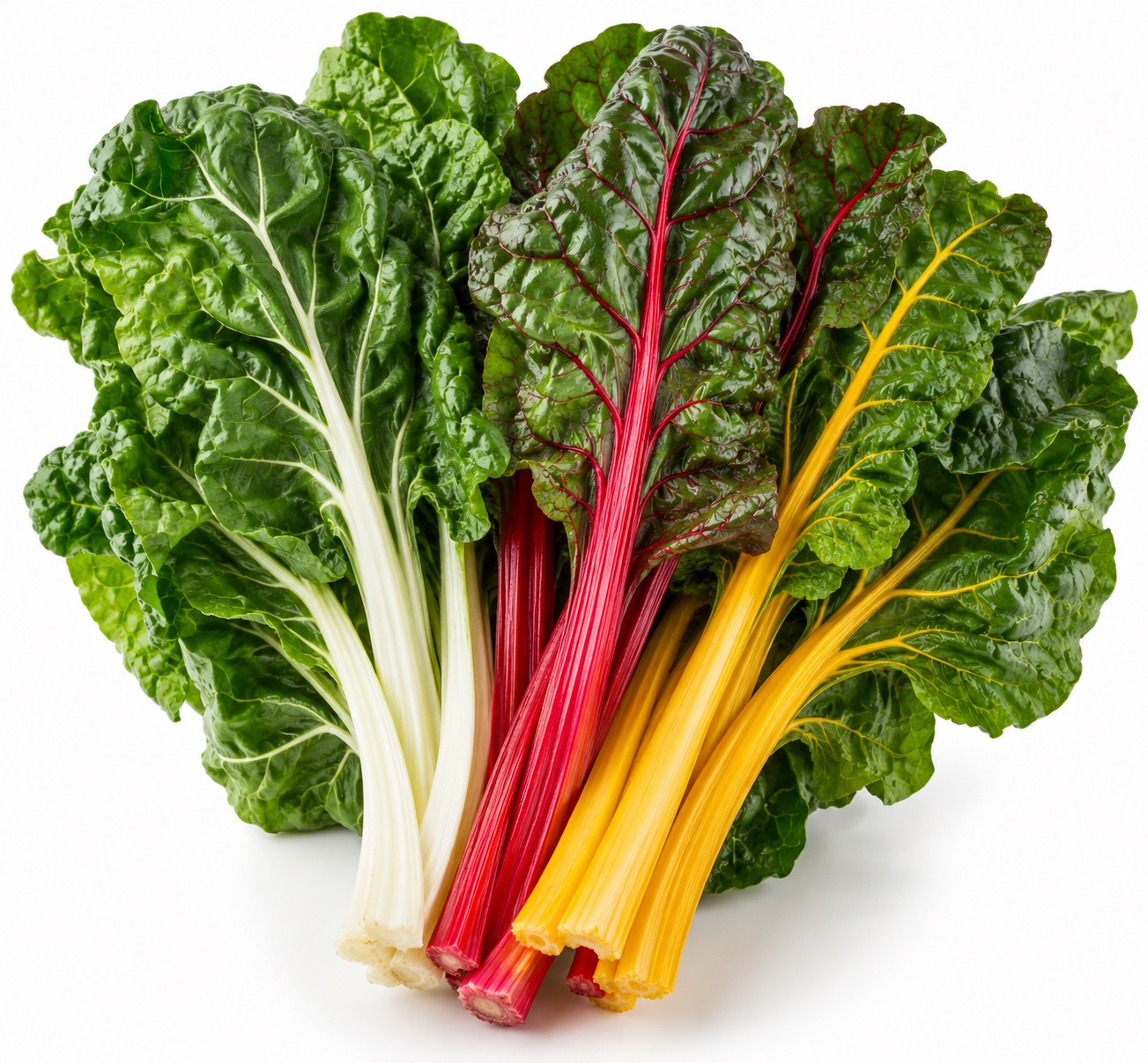
Swiss chard is a Mediterranean leaf-beet selected for lush edible leaves and colorful, succulent stems rather than a swollen root. From Tuscan soups and savory pies to French gratins and modern rainbow-chard plates, it is one of the kitchen’s most versatile leafy greens.
Swiss chard belongs to Beta vulgaris, the same species complex that also produced beetroot, sugar beet and fodder beet. Kew recognizes Beta vulgaris subsp. vulgaris as the accepted taxon and treats names such as Beta vulgaris var. cicla as synonyms within that cultivated lineage.
The ancestry of the beet complex is tied to wild sea beet and Mediterranean-European coastal populations. Kew notes that cultivated Beta vulgaris forms have been developed for many centuries, with the leaf-beet group selected for large leaves and petioles instead of a swollen storage root.
Horticultural sources describe chard as a Mediterranean vegetable known before the Roman era. In culinary use, leaves and ribs gradually became treated as two related but distinct textures: the leaf cooks like spinach, while the broad rib can be handled more like a tender stalk vegetable.
Low-medium in leaves; slightly stronger in fleshy stems after cooking.
Medium, with beet-family mineral notes that become rounder with fat and heat.
Low-medium; older leaves and high heat during growth can increase bitterness.
Fresh, leafy and vegetal, especially when quickly blanched or sautéed.
Crisp and juicy, with enough structure for pickling, grilling or separate braising.
Tender and silky, similar to spinach but with more body and a slightly earthier finish.
The professional advantage of chard is its two-part anatomy: cook the stems first when they are thick, then add the leaves later. This preserves texture, color and flavor instead of overcooking the greens.
Bietole are used in minestre, vegetable soups, torte salate, ravioli and tortelli fillings, frittate, gratins, contorni, and simple garlic-and-olive-oil sautés. In Tuscany they fit naturally into rustic bean and vegetable cookery.
Blettes or bettes are braised, gratinéed, baked into tarts, folded into vegetable farces, and cooked with cream, stock, cheese or tomato. The ribs may be treated separately from the leaves.
Chard appears in Alpine and home-style vegetable dishes, gratins, soups, tarts and mixed greens. The modern English name 'Swiss chard' helped distinguish it from other plants called chard.
Across Mediterranean kitchens, chard is simmered with olive oil, garlic, lemon, tomato, legumes and grains. Its leaves behave like spinach while the stems can be braised more like celery.
Chard is used in soups, lentil dishes, stuffed preparations, pies, rice dishes and sautéed greens, often with lemon, garlic, olive oil and warm spices.
Leafy chard is used in pies, savory pastries, braises, rice dishes, soups and mixed wild-green preparations with herbs and cheese.
Chard is cooked in soups, stews, bean dishes, potato preparations and vegetable sautés. The broad ribs can be battered, braised or gratinéed.
Common professional uses include sautéed greens, rainbow-chard garnishes, grain bowls, soups, vegetable sides, pasta fillings, brunch dishes and farm-to-table plates.
Leaves can be wilted, blanched, dehydrated or puréed; stems can be pickled, glazed, braised, grilled or cut into colorful batons for composed vegetable dishes.
Clean outer leaves and trimmed stems can contribute vegetable character to broths and braises, while colorful stems are excellent for pickles and garnishes instead of being discarded.
USDA SR Legacy / FoodData Central record 169991 identifies raw Swiss chard as a very low-energy leafy green with notable vitamin K, vitamin A carotenoids, vitamin C, magnesium and potassium.
Culinary nutrition reference only. Nutrient values vary by cultivar, growing conditions, edible portion and cooking method.
A cool-season leafy beet grown for its leaves and petioles rather than a swollen root.
Utah State notes best quality when temperatures stay below about 75°F / 24°C.
Seed can be sown before the last frost once soil reaches about 40°F / 4°C.
For autumn harvest, early cultivars can be planted roughly 50–75 days before maturity is needed.
Young plants tolerate light frost; temperatures around 32°F / 0°C generally do not seriously damage them.
Leaves can be harvested young or full-size; repeated outer-leaf harvests allow the center to keep producing.
Purchase bunches with crisp stems, glossy leaves and no slimy or blackened tissue. Rainbow types naturally show red, yellow, pink, orange or white petioles; color is a cultivar trait, not a sign of ripeness.
Unlike commodities such as spinach, cabbage or onions, FAOSTAT does not provide a clean, globally harmonized Swiss-chard-only crop series. Chard can be reported inside broader leafy-green, beet or vegetable categories depending on the country, so presenting a numeric “top producer” ranking would create false precision.
Italy, Spain and France have long culinary and horticultural traditions around chard and related leaf-beet forms.
Commercial Swiss chard production is established in California; University of California has dedicated commercial production guidance for beet and Swiss chard growers.
Chard is included among crops covered by the California Leafy Greens Marketing Agreement, reflecting its place in the western U.S. leafy-greens sector.
Kew records Beta vulgaris cultivation broadly across Europe and North America, while chard itself is widely grown in temperate and Mediterranean-style climates.
Some countries classify chard with beets, some with leafy vegetables, and some do not publish it separately, making international comparison difficult.
This page therefore reports verified cultivation regions rather than inventing a Swiss-chard production league table from incompatible datasets.
Statistical note: FAOSTAT’s crop production dataset currently runs through 2024, but Swiss chard is not a separate globally standardized commodity in that dataset.
/academy/ibrary/lettuces/Swiss-Chard.webp
Traditional Tuscan Minestrone Soup uses 200 g Swiss chard in the current 8-serving base recipe. This page establishes the same identity for the recipe page, Zuppa Station, Live Inventory, purchasing, search and future menu-cost systems.
For mature chard, slice stems and leaves separately. Start stems first because they require more cooking time.
Garlic, olive oil and a little acid highlight the mineral-green flavor without masking it.
Quick blanching sets texture and reduces raw bitterness before gratins, fillings or final sautéing.
Slow braising with stock, tomato, beans or cured meat gives both stems and leaves a silky texture.
Red, yellow and white stems make excellent acidic garnishes and reduce trim waste.
Add chard later than hard vegetables so the leaf stays green and tender while still integrating into the broth.
Not necessarily. Chard belongs to the Beta vulgaris crop complex with Mediterranean ancestry. The English name 'Swiss chard' became useful for distinguishing it from other plants called chard.
Yes. Both leaves and stems are edible. Thick stems usually need more cooking time than the leaves and can be braised, sautéed, grilled, pickled or cooked separately.
They are closely related forms of Beta vulgaris. Swiss chard was selected for large leaves and petioles rather than for a swollen edible root.
Swiss chard is a cool-season crop. Spring and fall are especially favorable in temperate climates, although it can produce for a long season where temperatures are mild.
There is no clean FAOSTAT commodity series for Swiss chard alone, so a reliable country-by-country world production ranking is not currently available. Commercial production is established across Mediterranean Europe and North America, including California.