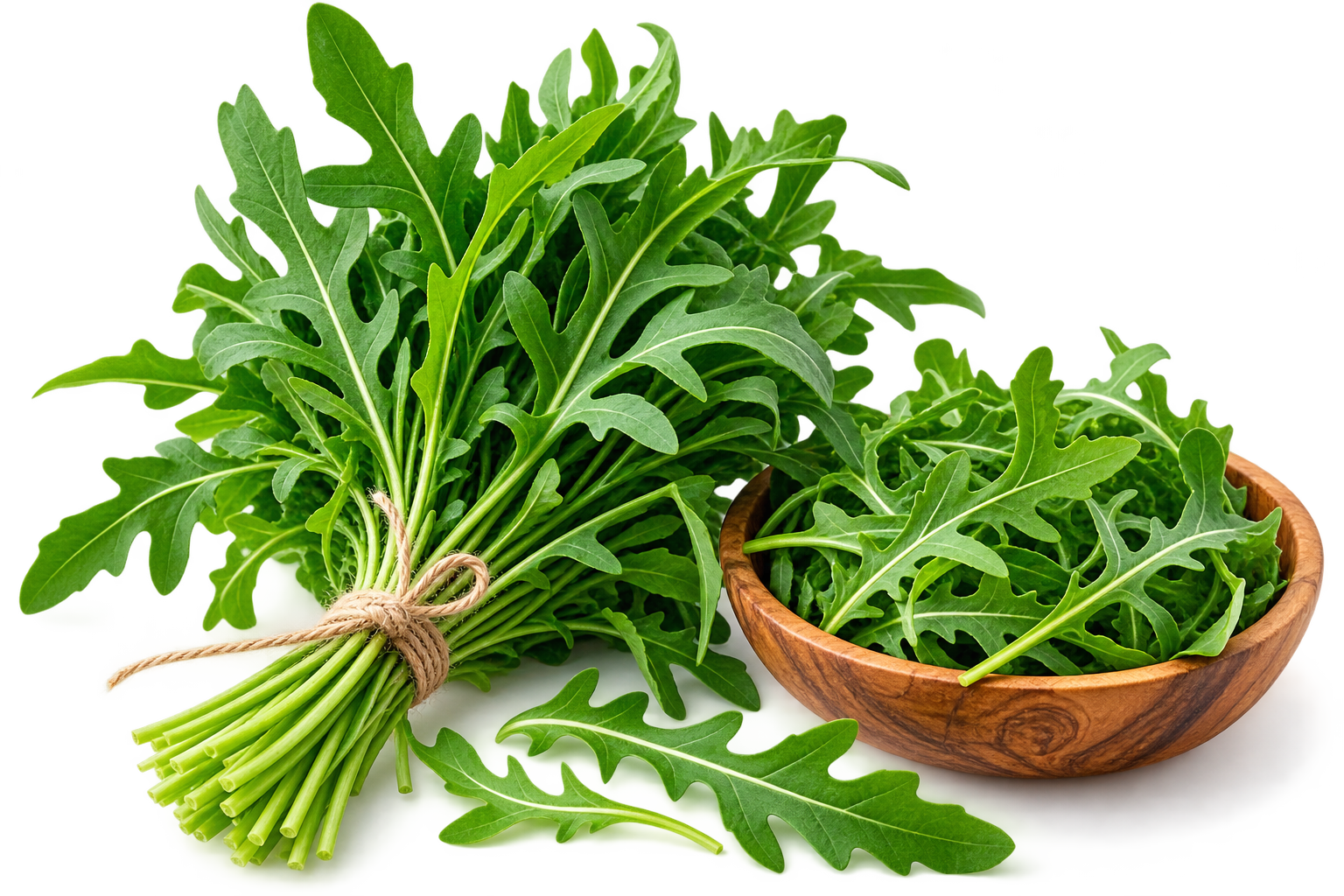
What Is Arugula?
Arugula is a leafy green from the mustard family with a peppery, slightly bitter and nutty flavor. In Italy it is widely known as rucola. The leaves can range from broad and mild to deeply lobed, thin and intensely pungent depending on species, growing conditions and maturity.
History & Mediterranean Origins
Arugula has long been associated with Mediterranean cooking. Its peppery flavor made it useful both as a salad green and as an aromatic leaf alongside olive oil, cheese, cured meats and grilled foods. Modern cultivation has expanded its availability far beyond the Mediterranean, but it remains strongly tied to Italian culinary identity.
Wild vs Cultivated Arugula
| Type | Typical Character | Best Use |
|---|---|---|
| Wild Arugula | More deeply lobed leaves, stronger peppery bite, firmer texture. | Carpaccio, composed salads, pizza finishing, pasta garnish. |
| Cultivated / Salad Arugula | Broader leaves, usually milder and more tender. | Salads, sandwiches, light garnishes, mixed greens. |
| Baby Arugula | Young, tender leaves with gentler pungency. | Delicate salads and plating. |
Seasonality, Selection & Storage
- Choose crisp green leaves without yellowing, slime or excessive bruising.
- Smaller young leaves are generally more tender; mature leaves often have a stronger bite.
- Store refrigerated, dry and loosely protected from crushing.
- Wash shortly before use when possible and dry thoroughly for better dressing adhesion.
- Use quickly after opening or washing because tender greens lose quality rapidly.
Flavor & Culinary Uses
- Raw salads with lemon, olive oil, Parmigiano, nuts or fruit.
- Beef carpaccio and bresaola.
- Pizza added after baking.
- Pasta, risotto and grain dishes as a finishing green.
- Sandwiches, panini and focaccia.
- Pesto-style preparations blended with nuts, cheese and olive oil.
- Seafood and cured-meat plates where bitterness balances richness.
Nutrition
Arugula is naturally low in calories and provides water, fiber, vitamin K, folate and carotenoid pigments. Like other leafy greens, its exact nutrient values vary with serving size and growing conditions.
Food Safety & Handling
- Receive refrigerated greens in clean, intact packaging.
- Keep raw greens separated from raw animal proteins during storage and preparation.
- Use clean sinks, containers and utensils for washing and drying.
- Maintain refrigeration after preparation and minimize unnecessary room-temperature holding.
- Discard leaves showing decay, slime or objectionable odor.
Tuscany Cuisine Recipe Connection
The first recipe connected to this ingredient record is Beef Carpaccio with Parmesan Basket, where wild arugula provides freshness and peppery contrast to raw beef, Parmigiano Reggiano, lemon and extra virgin olive oil.