Origin & History
The avocado, Persea americana, belongs to the Lauraceae family. Kew Science identifies its native range from central Mexico through Costa Rica. Archaeological evidence shows avocado use in Mexico thousands of years before the modern culinary-oil industry.
The fruit itself is ancient; premium culinary avocado oil is comparatively modern. Industrial methods for producing edible extra-virgin avocado oil developed much more recently, using technology similar to modern olive-oil extraction.
How Avocado Oil Is Made
High-quality culinary avocado oil is typically produced mechanically from ripe fruit. The process resembles olive-oil production more than conventional seed-oil manufacturing.
Flavor Profile
Extra Virgin / Unrefined
Buttery, green, soft, slightly grassy, sometimes nutty or artichoke-like, with a gentle avocado finish. Color may range from golden-green to deeper emerald depending on fruit and processing.
Refined
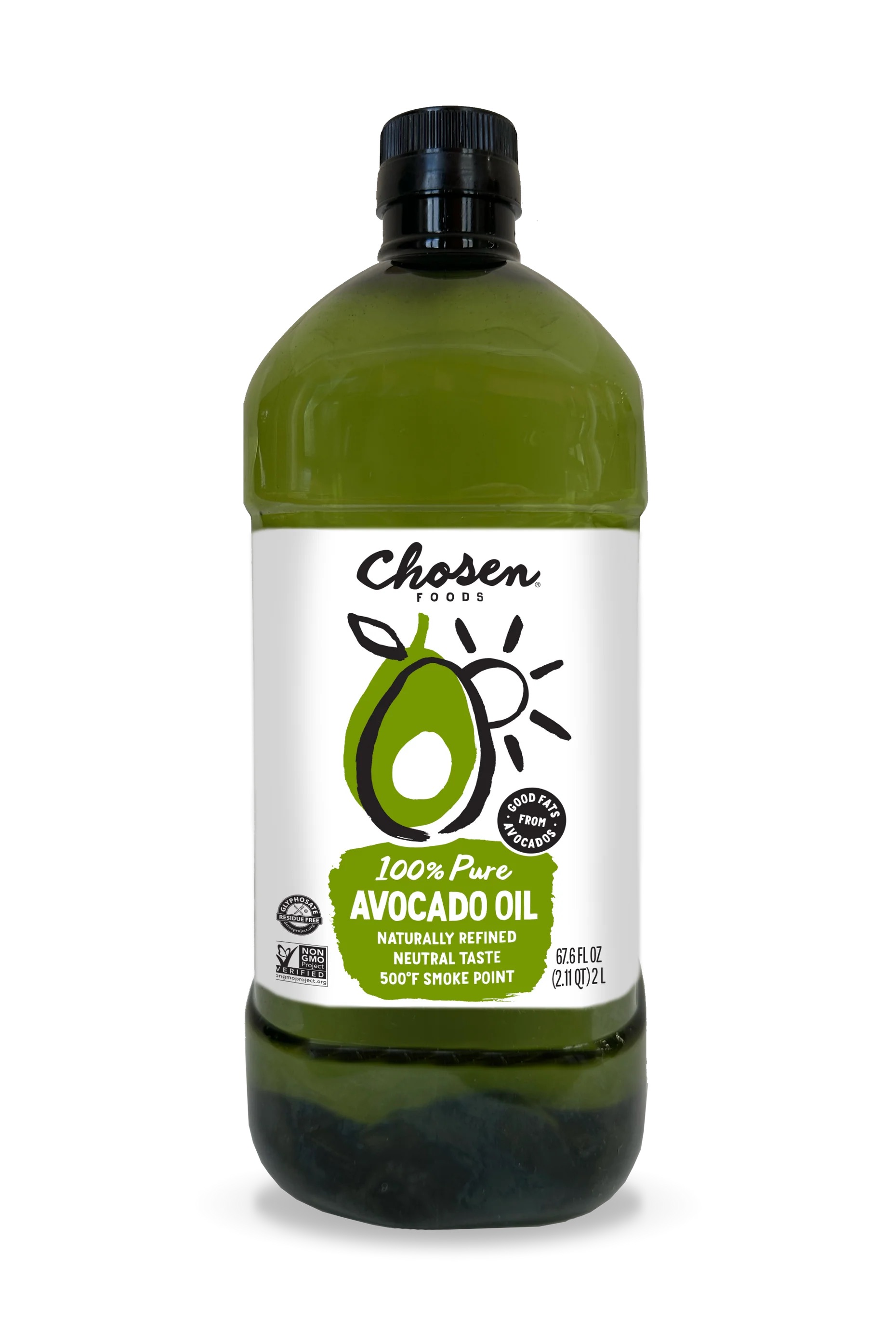
Much lighter in color and considerably more neutral in aroma and taste. This style is useful when a chef wants the functional properties of avocado oil without a strong oil flavor.
Nutrition & Fat Profile
Avocado oil is predominantly unsaturated fat and is especially known for monounsaturated fatty acids, principally oleic acid. Exact composition varies with cultivar, geography, harvest maturity, extraction, refining and storage.
| Component | Professional Nutrition Note |
|---|---|
| Energy | Like all culinary oils, avocado oil is energy-dense at roughly 9 kcal per gram of fat. |
| Monounsaturated fat | Usually the dominant fat class; oleic acid is the principal MUFA. |
| Polyunsaturated fat | Present in smaller amounts, including linoleic acid. |
| Saturated fat | Lower than total unsaturated fat; palmitic acid is a major saturated component. |
| Vitamin E | Can contribute tocopherols, though concentration varies by grade, fruit and processing. |
| Carbohydrate / protein | Essentially absent in the finished oil. |
| Sodium | Naturally negligible unless other ingredients are added. |
Representative commercial extra-virgin avocado oil data can provide about 120 kcal and approximately 14 g fat per tablespoon, but nutrition labels vary by brand and serving definition.
Allergy & Cross-Reactivity
For professional kitchens, a person with a known avocado allergy should be treated seriously even when the ingredient is an oil. Refining can reduce protein content, but the amount of residual protein can depend on processing, and cold-pressed or minimally refined oils should not be assumed to be safe for an avocado-allergic guest without appropriate medical guidance.
Always verify the exact supplier specification and allergen statement, and maintain the same cross-contact discipline used for other ingredients with known food-allergy potential.
Culinary Uses
| Application | Best Style | Chef Notes |
|---|---|---|
| Vinaigrettes & dressings | Refined or mild extra virgin | Excellent when a neutral oil is desired so vinegar, citrus, mustard or herbs remain dominant. |
| Mayonnaise & emulsions | Refined | Clean flavor and fluid texture make it useful in cold emulsions. |
| Sautéing | Refined or stable extra virgin | Useful for vegetables, fish and proteins; follow the producer's heat guidance. |
| Roasting & grilling | Refined | Neutral profile supports browning without adding a strong olive flavor. |
| Baking | Refined | Useful where a neutral liquid fat is required. |
| Finishing oil | Premium extra virgin | Best when the green, buttery character is intentionally part of the dish. |
| Salad-station prep | Refined / neutral | Especially useful in house dressings such as Tuscany Cuisine Balsamic Vinaigrette, where strong EVOO could overpower the acid profile. |
Avocado Oil vs. Other Culinary Oils
| Oil | Flavor | Fat Profile | Best Professional Use |
|---|---|---|---|
| Extra Virgin Avocado Oil | Buttery, green, mild vegetal | MUFA-forward | Dressings, finishing, sautéing, premium cold applications |
| Refined Avocado Oil | Neutral | MUFA-forward | High-heat line cooking, dressings, mayonnaise, baking |
| Extra Virgin Olive Oil | Fruity, grassy, peppery; intensity varies | MUFA-forward with characteristic phenolic compounds | Finishing, vinaigrettes, sautéing, Mediterranean flavor applications |
| Canola Oil | Neutral | Mixed MUFA/PUFA | General production, baking, frying, dressings |
| Grapeseed Oil | Neutral to faintly nutty | PUFA-forward | Vinaigrettes, sautéing and neutral-flavor applications |
| High-Oleic Sunflower Oil | Neutral | High-oleic formulations are MUFA-forward | High-volume neutral cooking and frying |
Quality, Purity & Purchasing
Avocado oil requires more purchasing discipline than the label alone suggests. UC Davis research has repeatedly documented commercial samples that were stale, mislabeled or mixed with other oils. Low price increased the risk of adulteration in one private-label study, but high price did not guarantee quality.
- Buy from a traceable producer or importer with transparent origin and lot identification.
- For extra virgin oil, look for mechanical extraction and a clearly stated production method.
- Prefer recently produced oil with a realistic best-before date; avocado oil does not improve with age.
- Protect oil from light, oxygen and excessive heat; dark glass, tins or otherwise light-protective packaging are preferable.
- Ask for third-party purity testing, fatty-acid/sterol verification or supplier certificates when buying for professional volume.
- Evaluate smell and taste: rancid, waxy, paint-like or stale aromas are defects.
- Do not assume “pure,” “extra virgin,” organic, or premium pricing alone proves authenticity.
Where Is the Best Avocado Oil Produced?
There is no authoritative international ranking that establishes one country or company as the single “best” avocado-oil producer. Quality is ultimately a function of fruit condition, cultivar, harvest timing, extraction, oxidation control, storage, traceability and purity.
The global leader in avocado production and export, with deep agricultural heritage and access to large Hass-avocado supply. Mexico also has award-winning premium avocado-oil producers.
Highly influential in the modern premium extra-virgin avocado-oil industry. New Zealand producers helped develop mechanical cold-extraction methods, and New Zealand oils continue to receive international tasting recognition.
An important growing source of avocado oil, including organic and Fairtrade production tied to international extra-virgin avocado-oil companies and smallholder farming networks.
Storage & Shelf Management
Store sealed avocado oil away from direct light, excessive heat and oxygen exposure. Keep bulk oil in clean food-safe containers, minimize headspace during long holding, and use FIFO rotation. Once opened, monitor aroma and flavor rather than relying on the printed date alone.
For restaurant inventory, record supplier, lot, received date, opened date, grade (extra virgin / refined), pack size and intended station use.
Sources & Professional References
- Kew Science — Plants of the World Online: Persea americana
- American Oil Chemists' Society — Extra Virgin Cold-Pressed Avocado Oil
- UC Davis Food Quality — Avocado Oil Quality & Authenticity Research
- UC Davis — Private Label Avocado Oil Purity & Quality Study
- AAAAI — Latex Allergy and Food Cross-Reactivity
- Anaphylaxis UK — Latex-Food Syndrome
- FAO AGRIS — Mexico and Global Avocado Production