💧
Water + Oil
Lecithin can help organize the interface between aqueous and fat phases, supporting emulsions and smoother dispersion.
A phospholipid-rich, surface-active ingredient used by food manufacturers and modern chefs to manage the boundary between water, oil and air. In the professional kitchen it is especially valuable for light culinary airs, delicate foams, emulsification support and refined plating that delivers aroma and flavor without heaviness.
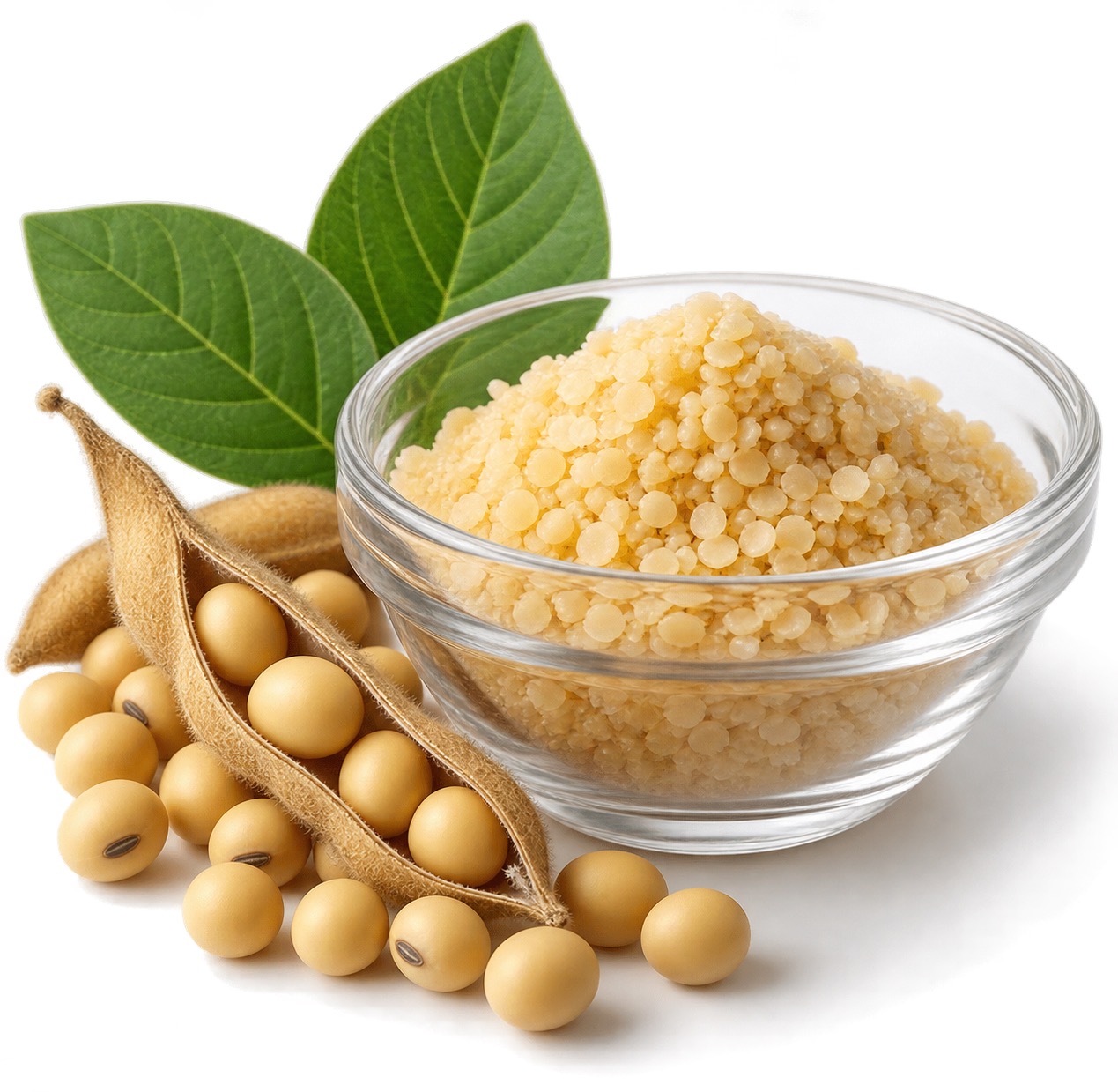
/academy/ibrary/pantry/hydrocolloids/Soyl.webp
Ingredient identity
Commercial soy lecithin is a mixture rich in phospholipids, commonly including phosphatidylcholine, phosphatidylethanolamine and phosphatidylinositol. These molecules are amphiphilic: one region interacts favorably with water while another interacts with fat. At an oil-water or air-water interface, that structure helps lower interfacial tension and makes lecithin useful as a culinary surface-active ingredient.
Lecithin can help organize the interface between aqueous and fat phases, supporting emulsions and smoother dispersion.
At the liquid surface, lecithin helps stabilize thin bubble films long enough to create a light culinary “air.”
Chefs use airs to place aroma and a small amount of liquid flavor on a plate without adding a dense sauce or cream.
From egg yolk chemistry to the modern pantry
Lecithin was understood scientifically before soy lecithin became a large commercial food ingredient. Its history moves from nineteenth-century egg-yolk chemistry into twentieth-century soybean processing, chocolate, bakery, margarine and industrial food emulsions — and later into the modern chef’s pantry.
French chemist Théodore Gobley isolated phosphorous-containing material from egg yolk and in 1850 named it “lecithin,” from the Greek word associated with egg yolk.
Commercial soy lecithin entered technical literature and patents as processors developed ways to recover phosphatides from soybean oil and use them to improve food systems.
Commercial soy lecithin production became established in the United States as soybean crushing and oil-processing technology expanded.
Lecithin is used across chocolate, bakery, sauces, dressings, confectionery, frozen foods and modern restaurant techniques such as culinary airs and delicate foams.
Professional chef formula
For a light surface foam or culinary “air,” a practical professional starting point is 0.6% soy lecithin by liquid weight. A broader working range of roughly 0.25% to 1.0% is commonly used depending on the liquid, flavor load, product format and desired bubble structure. Start low, evaluate, and adjust only as needed.
Lecithin grams = liquid grams × dosage % ÷ 100
For water-like broths, juices and infusions, 1 mL is approximately 1 g. When the liquid contains significant sugar, alcohol, dissolved solids or fat, weigh it instead of assuming the density.
| Water-like liquid | Liquid mass approx. | 0.6% lecithin | Chef use |
|---|---|---|---|
| 100 mL | 100 g | 0.6 g | Small plating test |
| 200 mL | 200 g | 1.2 g | 4–6 plate test batch |
| 250 mL | 250 g | 1.5 g | Small service batch |
| 500 mL | 500 g | 3.0 g | Station mise en place |
| 750 mL | 750 g | 4.5 g | Medium service batch |
| 1,000 mL | 1,000 g | 6.0 g | 1-liter production base |
Technique
The goal is not to whip the entire liquid into a dense foam. The goal is to create bubbles at the surface, skim those bubbles, and place them precisely on the plate.
Use a broth, juice, tea, herb infusion, mushroom liquor, shellfish broth or other flavorful aqueous base. Strain it very well so particles do not interfere with a clean surface foam.
Start at 0.6% by weight. For 500 g liquid, begin with 3 g soy lecithin.
Sprinkle in the lecithin while blending. If your product hydrates better with a short rest, allow several minutes before final aeration.
A broad surface gives the blender access to more air. A very deep, narrow container makes surface aeration harder.
Tilt the immersion blender so the spinning blade pulls air into the liquid. You should see a layer of fine bubbles accumulating on top.
Allow the bubble layer to settle for a few seconds. Lift only the foam with a spoon or small perforated spoon.
Lecithin airs are intentionally delicate. They are best created at the station close to service and placed on the dish at the final moment.
Beyond foam
Lecithin’s value extends well beyond modern plating. The food industry uses lecithin for emulsification, wetting, viscosity management, release, texture support and other functional purposes. Professional chefs can borrow these principles on a smaller scale.
Transform concentrated broth, juice, herb tea or mushroom liquid into a light aromatic garnish that dissolves quickly on the palate.
Lecithin can support oil-water emulsions. Liquid lecithin is often the more convenient format for dressings; one Modernist Cuisine guideline uses about 1–2% of the oil weight.
Commercial chocolate uses lecithin to help manage flow and viscosity, allowing manufacturers to improve processing with small amounts.
Its emulsifying and wetting behavior can support dough handling, fat distribution, softness and product consistency depending on the formula.
Lecithin can assist the integration of small fat phases into water-rich sauces, though it should not be expected to replace a true thickener.
Chefs use air as a precise flavor accent: mushroom over asparagus, citrus over seafood, herb infusion over vegetables or shellfish essence over a composed plate.
Modern chef workflow
Modern technique works best when it supports the ingredient rather than becoming the reason for the dish. Lecithin is most effective when the air has a clear culinary purpose: aroma, contrast, acidity, earthiness, salinity or a visual lift that strengthens the plate.
Build a liquid that already tastes complete. Lecithin creates structure; it does not create flavor.
Pair a very light air against a dense purée, roasted protein, crisp garnish or warm soup to create textural contrast.
Hold the flavored base ready, then aerate near pickup instead of trying to store a fragile foam for long periods.
Document liquid weight, lecithin percentage, temperature, blender method and service life so the technique is repeatable by the station.
Production control
| Problem | Likely cause | Chef correction |
|---|---|---|
| No bubble layer | Blender fully submerged or insufficient surface agitation | Use a wider container and keep part of the blender guard at the surface so it pulls in air. |
| Weak, very short-lived air | Very low dose, difficult liquid composition or insufficient dispersion | Verify the product, disperse completely and move upward gradually within the working range. |
| Heavy or unpleasant mouthfeel | Too much lecithin | Reduce the percentage. The goal is the minimum amount needed to achieve the desired bubbles. |
| Large coarse bubbles | Aeration too aggressive or collection too early | Adjust blender angle and allow a brief settling period before skimming. |
| Foam disappears on the plate | Normal delicacy, warm surface, sauce contact or delayed service | Create the air at pickup and plate it last. Treat it as a final garnish, not a holdable sauce. |
| Inconsistent results | Different lecithin format, unrecorded ratio or changing liquid composition | Record supplier, format, batch ratio, liquid weight, temperature and technique. |
Food safety & labeling
Soybeans are one of the major food allergens recognized in U.S. food labeling law. FDA examples specifically show the declaration “lecithin (soy)”. In a professional kitchen, soy lecithin must therefore remain visible in recipe documentation, allergen communication, storage and cross-contact controls.
Contains or is derived from soy. Keep the ingredient visible in recipe records and guest-facing allergen procedures.
Check the exact product label and supplier allergen statement. Do not assume every lecithin source is soy; sunflower and other sources also exist.
Include scoops, containers, prep surfaces and storage bins in the kitchen’s allergen-control procedure.
Connected Tuscany Cuisine system
The first confirmed Tuscany Cuisine recipe connection uses soy lecithin to create a porcini air for a refined asparagus soup. This is a strong example of modern technique serving flavor: porcini aroma reaches the diner immediately while the soup remains clean and vegetable-forward.
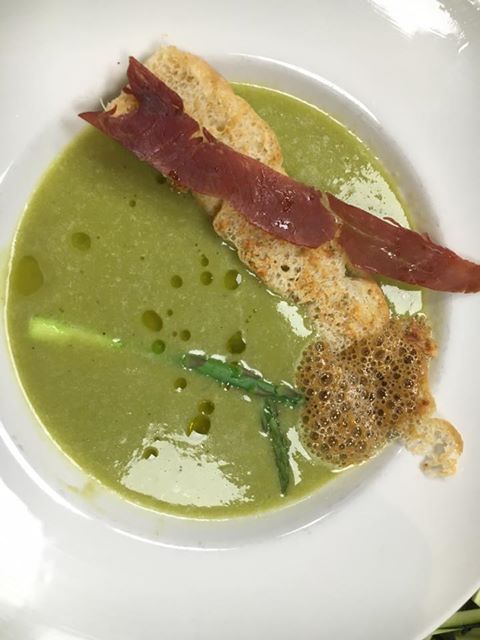
Recipe use: 3 g soy lecithin with porcini liquid to create a final surface air. The air is plated at pickup with focaccia croutons and crisp prosciutto.
Station: Zuppa Station · Inventory ID: soy_lecithin · Technique: surface aeration
Open the Soup Recipe →Purchasing, receiving & storage
Specify powder, granules, de-oiled powder or liquid lecithin. Record the supplier because dispersion and performance can differ.
Verify the lot, best-use date, intact moisture barrier, allergen statement, ingredient source and technical sheet.
Keep tightly sealed in a cool, dry, dark pantry away from humidity, heat, strong odors and contamination. Follow the manufacturer label.
Ingredient system record
This record gives Soy Lecithin one permanent identity that can be shared by recipe ingredients, Menu Builder, production stations, Live Inventory, vendor purchasing, receiving and search.
Technical references
Culinary dosage should always be validated against the exact supplier product. These references support the history, phospholipid chemistry, food functions, allergen guidance and modern chef technique summarized on this page.