Naturally present in plants
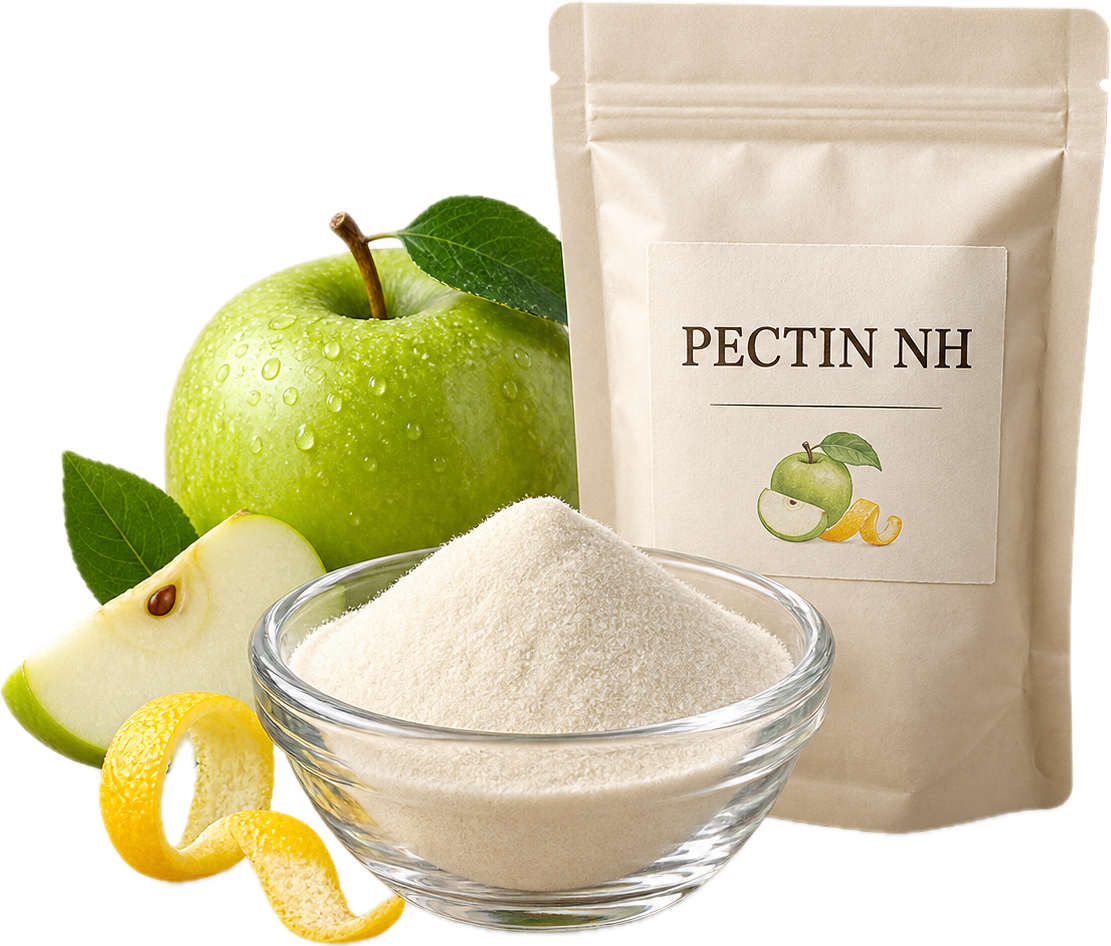
Pectin helps form the structural network of plant cell walls. Apples and citrus fruits are especially important commercial sources.
Hydrocolloids · Gelling agents
A plant-derived culinary hydrocolloid used to gel, thicken and stabilize. This record focuses on NH/nappage pectin for professional glazes, fruit preparations and the Tuscany Cuisine Balsamic Jelly recipe.
/academy/ibrary/pantry/hydrocolloids/pectinnh.pngIngredient identity
Pectins are complex, high-molecular-weight plant polysaccharides composed chiefly of partially methylated polygalacturonic-acid units. Commercial food pectin is commonly extracted from citrus peel and apple pomace and functions as a gelling agent, thickener, stabilizer and emulsifier.
Pectin helps form the structural network of plant cell walls. Apples and citrus fruits are especially important commercial sources.
Depending on its chemistry and formula, pectin can create gels, add viscosity, stabilize acidic protein drinks and improve mouthfeel.
Sugar or total soluble solids, acidity, calcium, temperature, hydration and the pectin grade all influence the final set.
From fruit preserve to precision ingredient
Fruit cooks used naturally pectin-rich apples, quinces and currants long before pectin was isolated. Commercial production later transformed a traditional preservation effect into a standardized professional ingredient.
Published jelly recipes documented the use of naturally pectin-rich fruits.
Pectin was isolated and identified as the key substance responsible for fruit-jelly setting.
The first recorded commercial liquid pectin production began in Germany.
Apple pomace and citrus peel from juice production supply much of the world’s commercial pectin.
Choose the correct gelling system
Degree of esterification and amidation change how a pectin reacts to sugar, acid and calcium. Product technical sheets remain authoritative for dosage and processing.
Traditional jam and confectionery pectin. It generally forms heat-stable gels when the pH is low and soluble solids are high.
Designed for lower-sugar systems. Gelation depends strongly on calcium availability and the specific pectin’s calcium reactivity.
A low-methoxyl pectin in which some groups are converted to amides. It offers greater calcium tolerance and is often thermoreversible.
A supplier-specific pectin preparation intended especially for toppings and glazes. A representative professional grade is thermoreversible, freeze-stable and suited to acidic, sweet systems.
Commercial production
Commercial production recovers pectin from edible plant materials, commonly citrus peel or apple pomace. The controlled process determines the degree of esterification, setting behavior and finished product specifications.
Citrus peel or apple pomace is selected, cleaned and prepared.
Hot, dilute acid releases pectin from the plant material into an aqueous extract.
Insoluble plant solids are removed and the pectin-rich liquid is clarified.
Pectin is purified and recovered, commonly through alcohol precipitation, then dried.
The powder is milled and standardized for gel strength, pH, viscosity and setting behavior.
Professional technique
Correct dispersion is the first control point. The final texture then depends on the product grade, concentration, acidity, soluble solids, calcium, heat treatment and cooling conditions.
Usually caused by adding dry pectin directly to liquid or insufficient agitation. Preblend with sugar and rain it in.
Check pectin type, dose, hydration, pH, soluble solids, calcium and whether the activation temperature was reached.
Acid or calcium may have been added too early, or the batch cooled before molding.
Record brand, lot and technical specifications. “Pectin” is a family, not a single interchangeable powder.
Culinary applications
The correct pectin creates clean flavor release and controlled texture without animal gelatin. Suitability still depends on the full commercial blend and supplier declarations.
Shiny fruit glazes, pastry finishes and thermoreversible coatings that can be warmed and reused according to supplier instructions.
HM grades for traditional high-sugar preserves; LM or amidated grades for reduced-sugar fruit systems.
Cuttable gels, pâte de fruit, dessert inserts and savory-acid gels with controlled texture and clean flavor release.
Stable fruit layers, toppings and bake-resistant preparations when the correct pectin is selected.
Specific pectins can stabilize acidified protein drinks and improve mouthfeel in beverages and cultured products.
Pectin can replace animal gelatin in suitable formulas, but the texture, process and heat behavior are different.
Connected culinary system
This record starts with the confirmed Balsamic Jelly recipe and can automatically discover future recipes that use the same permanent ingredient code or inventory identity.
Canonical inventory ID: pectin_nh · ingredient code synchronized
TC_INGREDIENT_LIBRARY_V1 ↔ TC_RECIPE_INGREDIENT_CATALOG_V1Regulation, purchasing and storage
Buy by functional specification, not by the word “pectin” alone. Record the supplier, product name, lot, gel system, dosage range, storage requirements and technical sheet.
U.S. regulations describe high-ester, low-ester and amidated pectins and recognize their use under current good manufacturing practice. JECFA identifies pectin as INS 440.
Confirm the exact NH/nappage grade, intact moisture barrier, lot code, expiration or best-use date, allergen statement and technical data sheet.
Keep tightly closed in a cool, dry, dark pantry. Protect from moisture, heat, light, contamination and strong odors; follow the manufacturer label.
Technical references
Use supplier-specific technical sheets for production decisions. These sources support the regulatory identity, raw materials, pectin classifications and general functional guidance presented here.
Identity, commercial extraction and conditions of food use.
Definition, functional uses and purity specifications.
History, apple and citrus sources, and commercial development.
HM/LM classifications, degree of esterification, applications and process overview.
Representative dosage, thermoreversibility, freeze stability and dry predispersion.
Food chemistry and texture-function research summary.