Overview
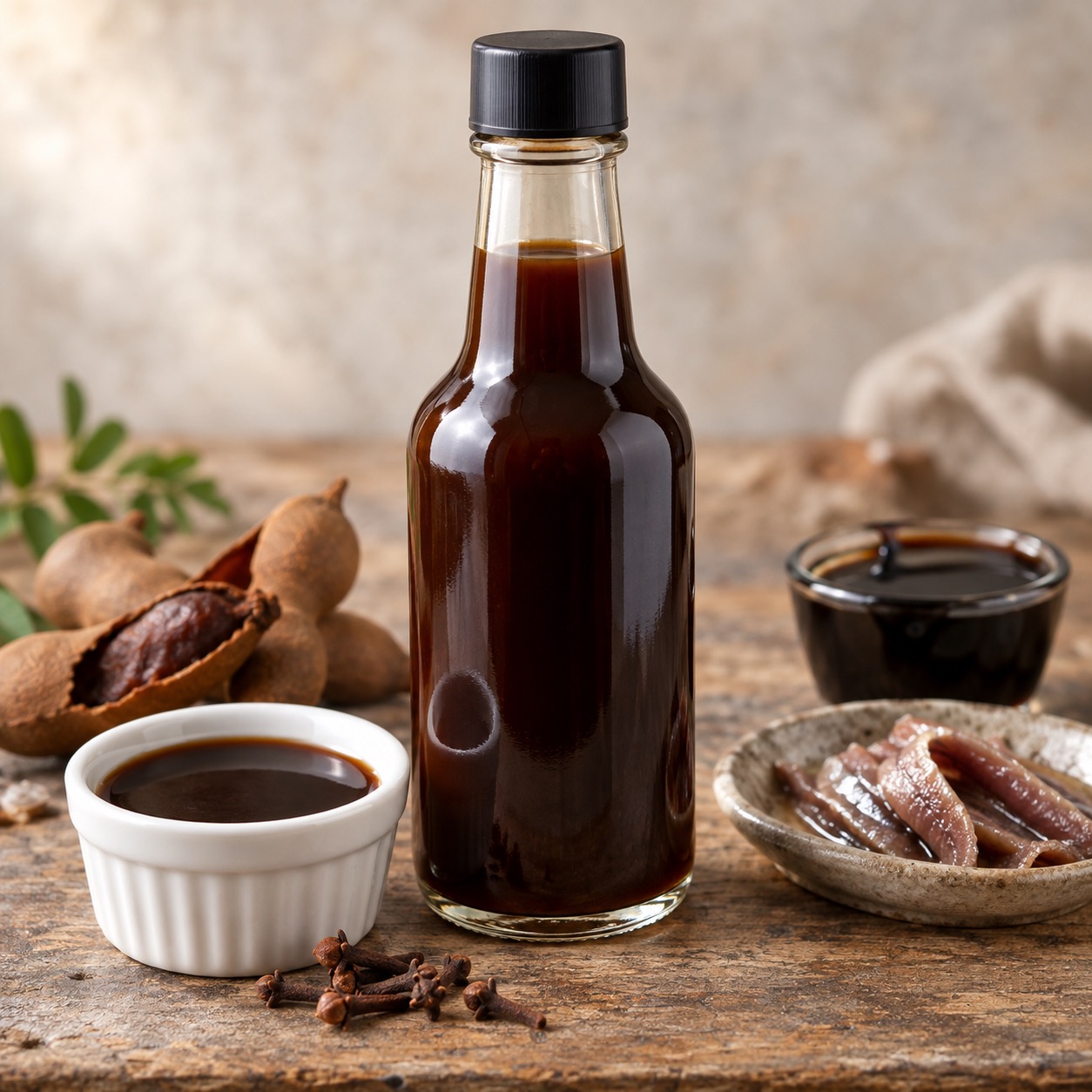
Worcestershire sauce is one of the great all-purpose savory condiments of the professional kitchen. It contributes brightness, depth, salt, sweetness, acidity, and a distinctive umami backbone. Even in small amounts it can strengthen broths, braises, marinades, meat dishes, dressings, cocktail mixes, and finishing sauces.
History & Origins
Worcestershire sauce is closely associated with the city of Worcester in England. The best-known historical account credits the commercial version to chemists John Wheeley Lea and William Henry Perrins, who developed and sold the sauce in the nineteenth century from their Worcester business.
According to the traditional story, a nobleman—often identified as Lord Sandys—asked the chemists to recreate a sauce inspired by flavors he had encountered in India. The first batch was reportedly harsh and disappointing, but after being stored and forgotten for a period of time, the sauce matured, softened, and developed the balanced character that made it famous. Whether every detail of that story is exact or partly legendary, the commercial identity of Worcestershire sauce remains tied to Lea & Perrins and to Worcester itself.
The sauce became important because it offered something kitchens value enormously: a compact bottle of complexity. It could season meats, sharpen gravies, enliven fish preparations, and enrich table service without requiring a long reduction or elaborate finishing technique every time.
Who Created It and Why
The sauce is traditionally credited to John Wheeley Lea and William Henry Perrins, two chemists working in Worcester, England. Their goal was to produce a distinctive condiment with broad culinary appeal—one capable of delivering an exotic, layered savoriness that echoed the complexity of seasoned sauces from the wider British trading world.
Why did it matter? In practical kitchen terms, Worcestershire sauce answered a real need: it gave cooks a convenient seasoning tool that added acidity, sweetness, spice, and umami all at once. That made it useful for broths, game, grilled meats, oysters, dressings, sandwiches, and bar preparations such as the Bloody Mary.
Traditional Fabrication
Classic Worcestershire-style sauce is built from a dark, aromatic base that may include vinegar, molasses or sugar, tamarind, anchovies, salt, onions, garlic, and spices. The exact formula varies by producer, but its identity depends on both ingredient layering and maturation.
General production logic
- Base blending: acidic, sweet, salty, and aromatic components are combined into a concentrated seasoning base.
- Maceration / infusion: spices and aromatics release flavor gradually into the liquid.
- Maturation: the sauce is rested so sharp edges soften and the flavors integrate.
- Clarification / straining: solids are removed for a smoother finished liquid.
- Bottling: the mature sauce is portioned into shelf-stable containers for professional and retail use.
Culinary Usage
Worcestershire sauce is used across classic European, American, and international cooking wherever a dark savory note is needed. It is especially valuable when a recipe tastes flat and needs a small, strategic correction.
- Stocks and soups: reinforces consommés, beef broth, onion soup, and savory reductions.
- Meat dishes: useful in meatloaf, burgers, steak finishing butter, braises, and pan sauces.
- Marinades: adds depth to beef, lamb, pork, and grilled poultry.
- Dressings and condiments: excellent in Caesar dressing, cocktail sauce, deviled eggs, and sandwich spreads.
- Vegetable cookery: strengthens mushroom dishes, braised greens, roasted onions, and legumes.
- Bar use: a standard seasoning component in a Bloody Mary and other savory cocktails.
Storage & Service
Store unopened bottles in a cool, dry pantry. After opening, many kitchens keep Worcestershire sauce refrigerated for quality retention, though commercial packaging directions may vary by producer. Protect it from contamination during line service by using clean pour spouts or controlled bottle tops.
Because the sauce is concentrated, it is best treated as a seasoning agent rather than a bulk liquid ingredient. Add it gradually, taste, and adjust.
Nutrition & Allergen Notes
| Topic | Practical Note |
|---|---|
| Calories | Usually low per serving because recipes often use only a few milliliters. |
| Sodium | Moderate to high depending on brand; taste before adding extra salt. |
| Sugar | Often contains molasses, sugar, or similar sweeteners. |
| Fish allergen | Traditional versions may contain anchovies or other fish-derived ingredients. |
| Gluten note | Some brands may vary; always confirm the label for guest dietary needs. |
| Vegan suitability | Traditional Worcestershire is often not vegan because of anchovies. |