White and golden sesame
The most familiar culinary form. Hulled white seeds are pale and delicate; unhulled seeds retain more seed coat, color and a slightly firmer texture.
Sesame seeds are small, oil-rich seeds valued for delicate crunch, nutty aroma and global versatility. They may be used raw, toasted, hulled, unhulled, ground into tahini or pressed for oil, making them important in breads, pastries, sauces, garnishes, spice blends and savory cooking.
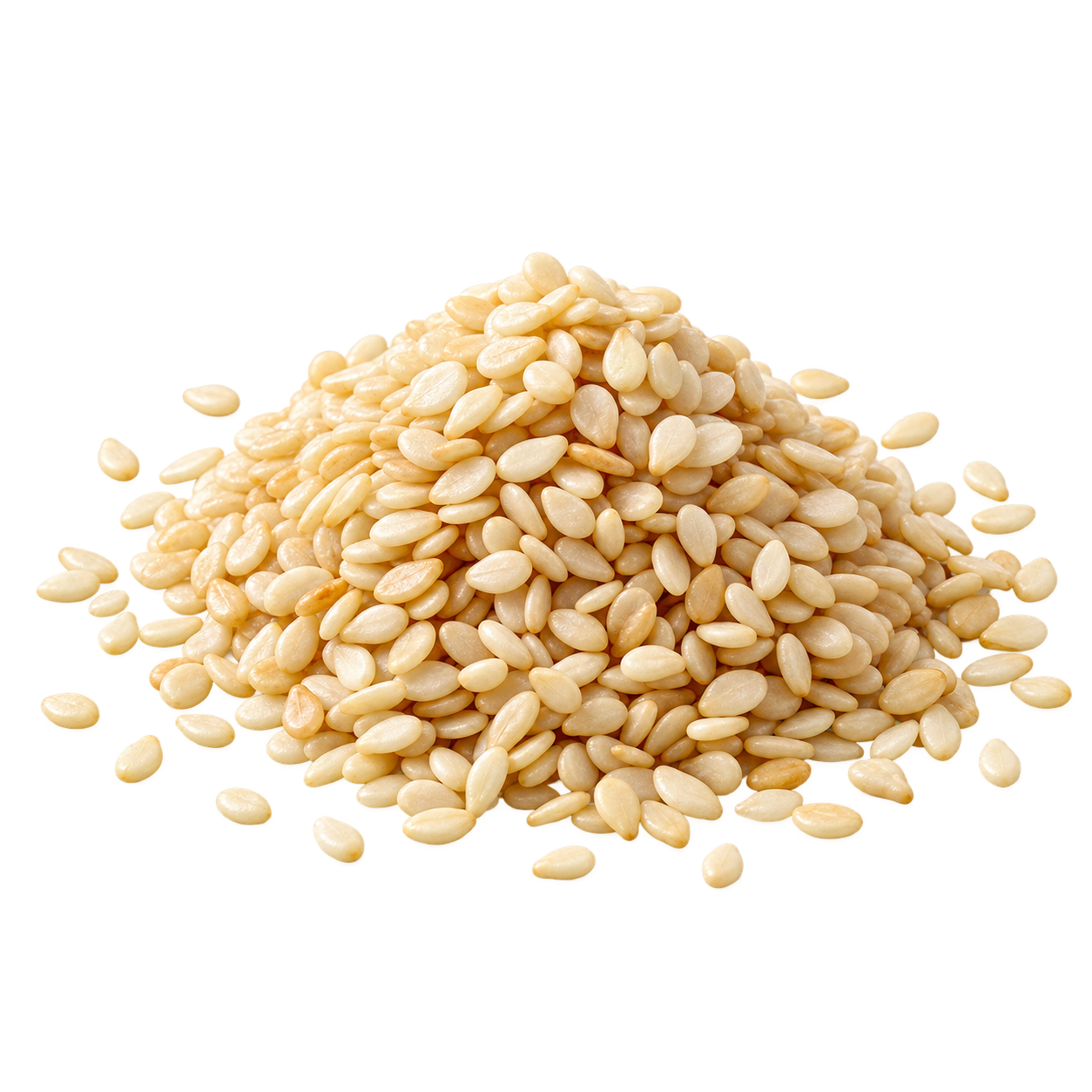
Sesame seeds come from Sesamum indicum, an annual flowering plant in the Pedaliaceae family. Kew Science lists the accepted species as native to the Indian Subcontinent and adapted to seasonally dry tropical conditions. Sesame has been cultivated for thousands of years and is widely recognized as one of the oldest oilseed crops used for food.
Common name: Sesame Seeds
Scientific name: Sesamum indicum
Botanical family: Pedaliaceae
Plant type: Annual flowering oilseed crop
Category: Dry Goods
Subcategory: Seeds
Primary station: Pantry
Base unit: grams
Allergen: Sesame
The most familiar culinary form. Hulled white seeds are pale and delicate; unhulled seeds retain more seed coat, color and a slightly firmer texture.
Darker seeds with a more pronounced roasted, earthy and slightly bitter character. Used in Asian sweets, coatings, rice dishes, pastes and visual garnishes.
Sesame may be sold raw, dry-toasted, oil-roasted, ground into tahini, blended into seasoning pastes, pressed for oil or incorporated into flour and meal.
| Form | Characteristics | Professional use |
|---|---|---|
| Hulled white | Clean pale color, tender bite, mild flavor | Breads, pastries, garnishes, sauces and confectionery |
| Unhulled | Seed coat retained; firmer and more robust | Whole-grain applications, crusts, blends and tahini styles |
| Toasted | Deeper aroma, golden color and crisp texture | Finishing, salads, rice, noodles, vegetables and plated dishes |
| Black sesame | Dark color, stronger roasted-earthy profile | Desserts, pastes, sauces, rice and high-contrast garnish |
| Tahini / sesame paste | Ground seed paste with concentrated richness | Hummus, sauces, dressings, desserts and emulsions |
Flavor: Raw white sesame is mild, gently nutty and slightly sweet with a delicate crunch. Toasting intensifies aroma, creates a deeper roasted flavor and adds crispness. Black sesame is often more earthy and assertive.
Subtle aroma, light nuttiness and a small, firm bite. Best when freshness and a pale appearance matter.
Warm, roasted and aromatic with more pronounced nuttiness. Seeds become crisp and fragrant but can turn bitter if over-darkened.
Grinding releases oil and transforms the seeds into a rich paste. Flavor becomes fuller, smoother and more persistent.
Record supplier, origin, lot number, package size, sesame form, allergen status, received date and cost per kilogram so recipe costing, traceability and purchasing remain accurate.
Chef control point: Sesame seeds can move from aromatic and golden to bitter and scorched quickly. Remove them from the hot pan or tray as soon as the desired aroma and color develop.
Allergen notice: Since January 1, 2023, sesame has been recognized in U.S. federal law as the ninth major food allergen. Recipes and packaged foods containing sesame require accurate allergen identification and cross-contact controls.
The values below describe whole, dried sesame seeds per 100 g. Hulled, unhulled, toasted and processed sesame products can differ, so use the exact supplier or USDA record when calculating a recipe.
| Nutrient | Approximate amount per 100 g |
|---|---|
| Energy | 573 kcal |
| Protein | 17.7 g |
| Total fat | 49.7 g |
| Carbohydrates | 23.4 g |
| Dietary fiber | 11.8 g |
| Calcium | 975 mg |
| Iron | 14.6 mg |
| Magnesium | 351 mg |
The general Sesame Seeds record supports raw and toasted forms. The featured appetizer uses the prepared identity SEED-SESAME-TOASTED-001 while retaining this page and icon as its educational source.
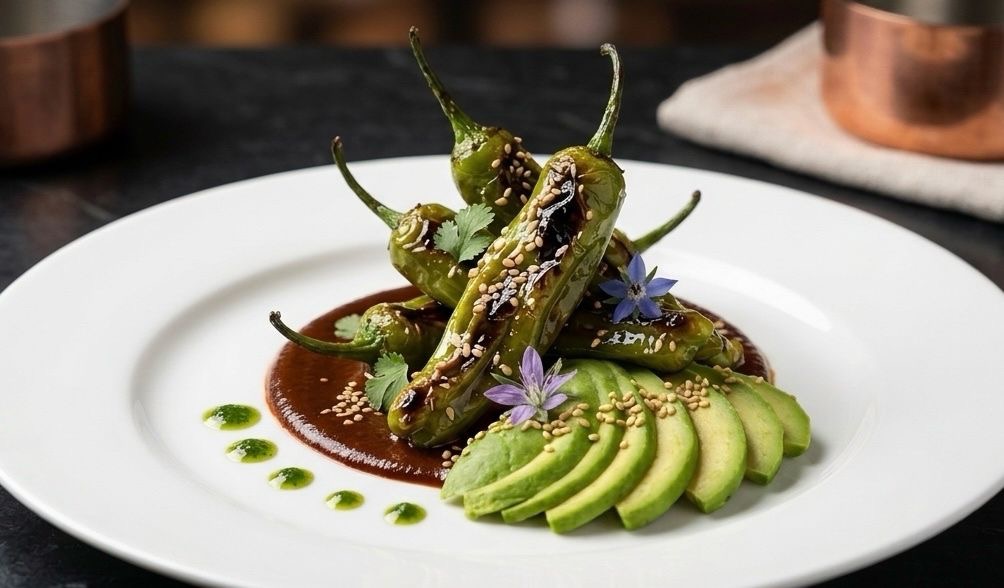
Five grams of toasted sesame seeds finish the avocado and add nutty aroma, delicate crunch and visual contrast to the smoky shishito peppers and rich mole sauce.
Open the Shishito Pepper RecipeThe sesami.png graphic identifies sesame seeds throughout Tuscany Cuisine. The primary ingredient record and the toasted prepared-form record share the same icon and educational page while keeping separate inventory identities.
Code: DRY-SEED-SESAME-001
Inventory ID: sesame_seeds
Icon ID: TC-ICON-SESAME-SEEDS
Base unit: g
Code: SEED-SESAME-TOASTED-001
Inventory ID: toasted_sesame_seeds
Parent: DRY-SEED-SESAME-001
Preparation: toasted
Sesame Seeds ingredient records are ready.