Receive & clean
Starch potatoes are inspected, washed and cleared of soil, stones and field material.
Pantry · Starches & thickeners
A fine, neutral-tasting starch separated from potato tubers and used for high-viscosity thickening, smooth sauces, crisp coatings, tender baking and controlled water binding.
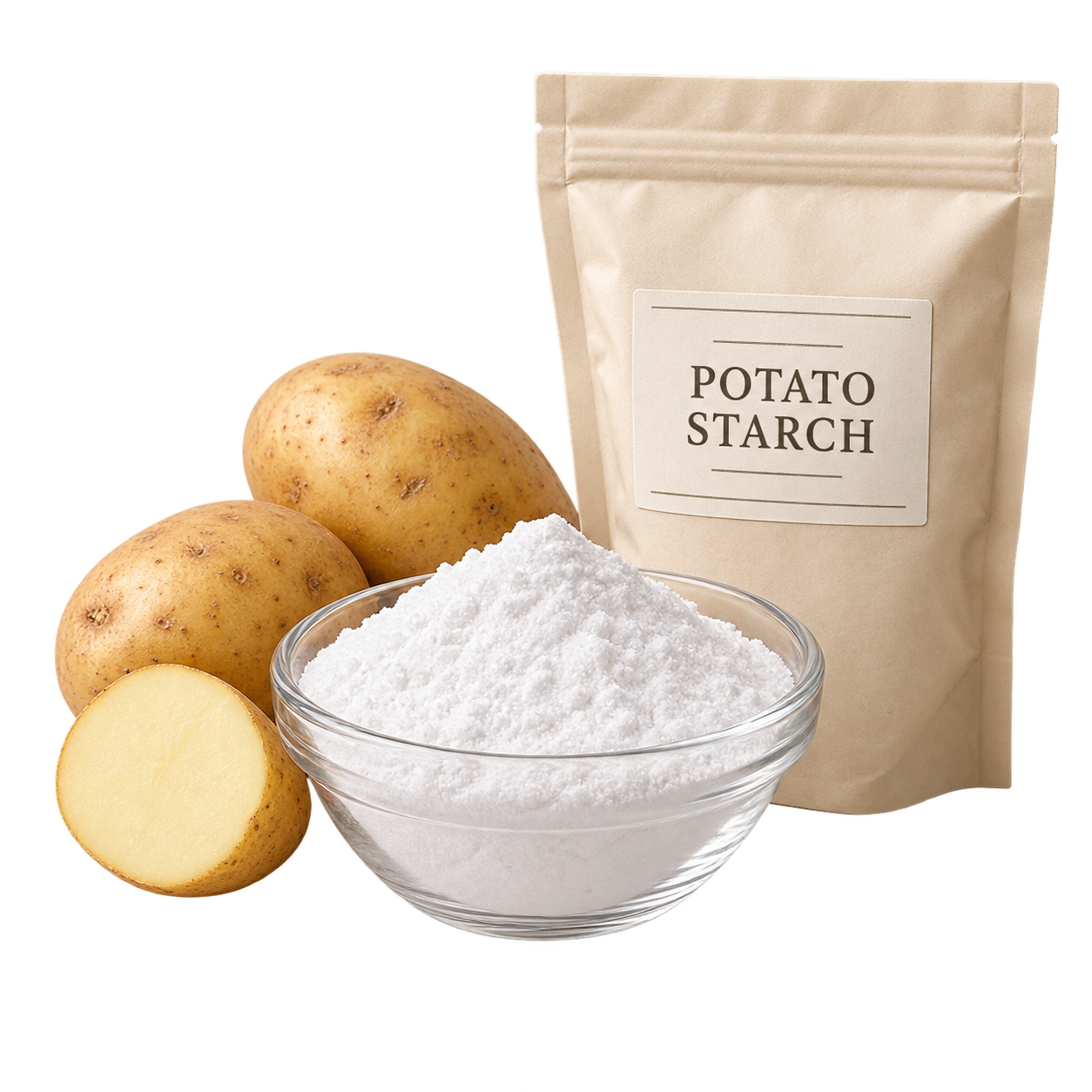
/academy/ibrary/pantry/starches/potatostarch.pngIngredient identity
Potato starch is the separated starch fraction of the tuber. Commercial processors release the starch granules, remove fiber and protein, wash and refine the starch slurry, then dewater and dry it into a fine powder.
| Ingredient | Made from | Flavor & color | Primary culinary role | Substitution control |
|---|---|---|---|---|
| Potato starch | Starch granules extracted and refined from raw potato tubers | Neutral; fine white powder | Thickening, binding, crispness and texture | Use recipe- or supplier-specific trials |
| Potato flour | Dried potato material retaining more whole-tuber solids | More potato flavor; creamier color | Flavor, moisture retention and dough structure | Not a direct replacement for purified starch |
| Modified potato starch | Potato starch processed to change functional performance | Varies by product | Targeted stability under heat, shear, acid, freezing or processing | Follow the exact technical sheet |
Commercial production
The potato starch value chain separates useful starch, protein and fiber fractions from the whole tuber. Exact equipment varies, but the core physical sequence remains consistent.
Starch potatoes are inspected, washed and cleared of soil, stones and field material.
Tubers are mechanically opened so starch granules can be released into water.
Fiber and potato juice are removed from the starch-rich slurry through staged separation.
The slurry is washed and concentrated; excess water is mechanically removed.
Starch is dried, sifted and released against food-safety and product specifications.
Professional technique
Native potato starch is practically insoluble in cold water. That makes cold liquid useful for even dispersion; thickening develops as the starch granules hydrate and gelatinize during cooking.
Usually caused by contact with hot liquid before even dispersion. Start with cold liquid and steady whisking.
Check the dose, finished yield, complete gelatinization and whether acid, shear or extended heat reduced performance.
The dosage may be too high or the system too concentrated. Reduce in controlled trials rather than by guesswork.
Native and modified products vary. Record the full product identity instead of purchasing by generic name alone.
Culinary applications
Potato starch is valued for texture, neutral flavor and clarity. The exact result depends on whether the starch is native, waxy, modified or pregelatinized and on the surrounding formula.
Builds viscosity with a smooth, glossy appearance and minimal flavor masking—useful in vegetable purées and refined sauces.
Supports light, brittle crusts in dusting blends and batters. Control hydration, layer thickness, frying temperature and oil condition.
Contributes tenderness and structure in formulated gluten-free products, but requires complementary flours and binders in most breads.
Helps bind free water and stabilize shape in suitable dumplings, fillings, patties and vegetable preparations.
Can modify bite, translucency and hydration in noodle and dumpling systems when balanced with the main flour.
Selected potato starch grades can provide clear, shiny fillings or smooth cream textures; bake stability is grade-specific.
Connected culinary system
This record starts with the confirmed Balsamic Jelly recipe and can discover future recipes that use the same permanent ingredient code or inventory identity.
Canonical inventory ID: potato_starch · ingredient code synchronized
TC_INGREDIENT_LIBRARY_V1 ↔ TC_RECIPE_INGREDIENT_CATALOG_V1Purchasing and storage
Purchase by function and specification. “Potato starch” alone does not tell the kitchen whether a product is native, waxy, modified, pregelatinized or designed for a particular process tolerance.
Confirm the product name, native or modified status, lot code, best-use date, intact moisture barrier, allergen statement and technical data sheet.
Keep sealed in a cool, dry pantry away from moisture, pests, contamination and strong odors. Follow the manufacturer label.
Validate dose and processing in the actual formula. Record texture, clarity, hold time, reheat behavior and any freeze-thaw requirement.
Technical references
Supplier-specific technical sheets remain the authority for purchasing and production decisions. These sources support the identity, properties, food-safety controls and applications summarized here.
Processing of starch potatoes into starch, protein and fiber fractions.
Food texture, viscosity, neutral taste and clarity.
Viscosity, water binding, crispness, clarity and product-grade variation.
Ingredient statement, gluten status, food safety, quality and receiving documentation.
Representative physical form, cold-water solubility and grade-specific gelatinization data.
U.S. labeling framework; supplier and cross-contact verification remain essential.