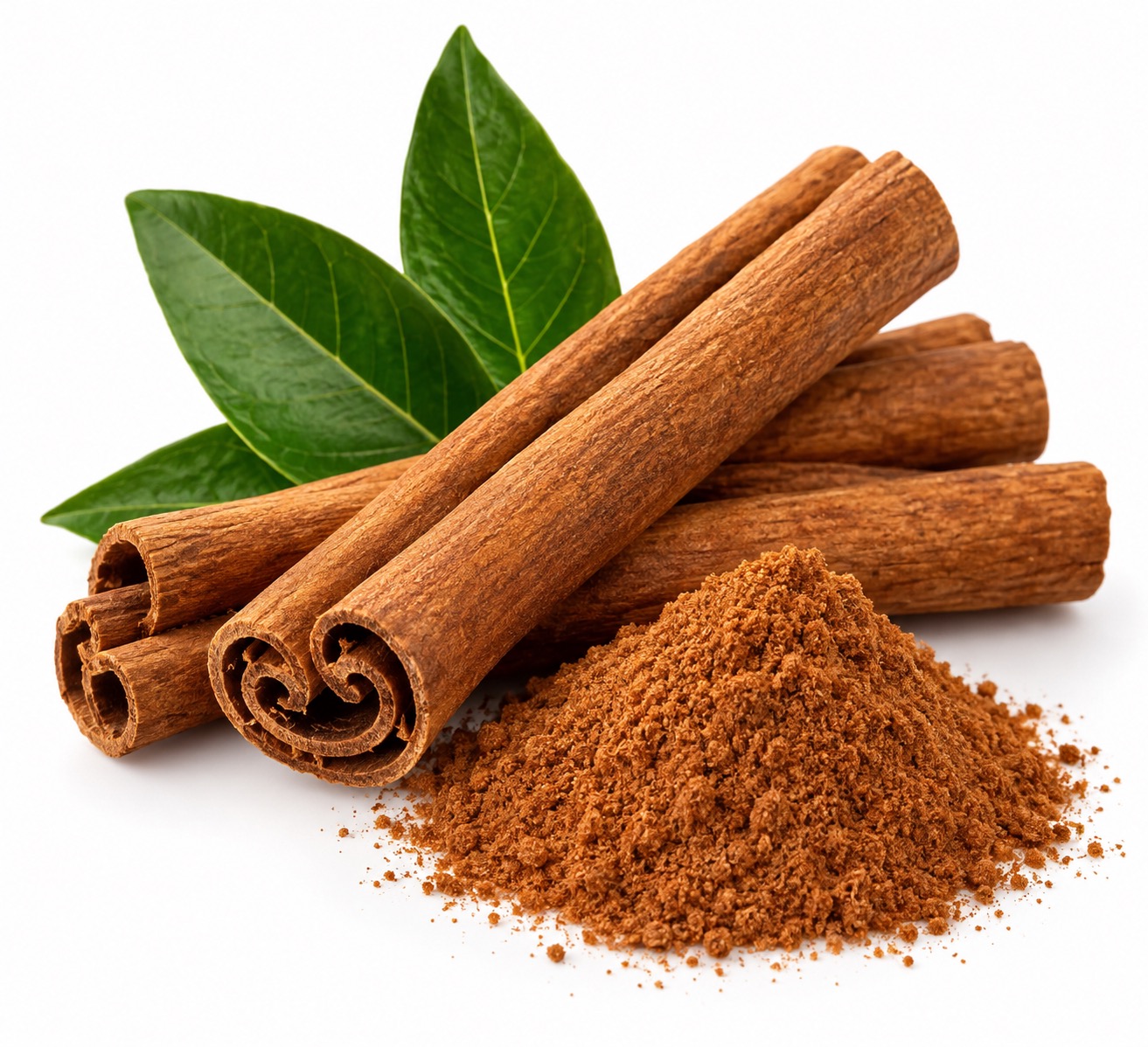
What Is Cinnamon?
Cinnamon is produced from the bark of trees in the genus
Cinnamomum, part of the Lauraceae family. After the outer bark is
removed, the aromatic inner bark is peeled, dried and naturally curls into
quills. The spice may be sold whole, broken into sticks or milled into powder.
Four species dominate the international culinary trade:
Cinnamomum verum (Ceylon or “true” cinnamon),
C. cassia (Chinese cassia),
C. burmannii (Korintje / Indonesian cinnamon) and
C. loureiroi (Saigon / Vietnamese cinnamon).
Chef’s perspective: cinnamon should be selected by application.
Delicate Ceylon cinnamon can disappear in a heavily spiced braise, while powerful
cassia or Saigon cinnamon can overwhelm custard, fruit or subtle pastry if used
at the same quantity.
History: One of the World’s Great Spice-Trade Ingredients
Cinnamon has been valued for thousands of years in cuisine, fragrance,
preservation, ritual and traditional medicine. Historical records connect
cinnamon with trade across Asia, the Middle East, North Africa and Europe.
Sri Lanka—historically known as Ceylon—became especially famous for the
delicate bark now called Ceylon cinnamon.
Arab and later Venetian merchants helped move cinnamon through the old spice
routes toward Europe. When European maritime powers searched for direct access
to Asian spices, cinnamon became one of the commodities that helped shape
exploration and colonial competition.
Sri Lanka’s Department of Cinnamon Development records that systematic
cultivation expanded during Dutch control of the island in the eighteenth
century. Portuguese, Dutch and British influence all left a lasting imprint
on the commercial cinnamon industry.
Historical significance: cinnamon was not merely a seasoning.
Its rarity, aroma and trade value made it a luxury commodity closely tied to the
history of global commerce.
How Cinnamon Is Produced
- Cultivation: cinnamon trees grow in warm tropical climates and are managed so new shoots can be harvested.
- Cutting: suitable shoots are cut when bark quality and maturity are appropriate.
- Outer-bark removal: the rough exterior is carefully scraped or removed.
- Peeling: the aromatic inner bark is loosened and peeled in strips.
- Quill formation: thin bark pieces curl as they dry. Ceylon cinnamon may be assembled into layered, cigar-like quills.
- Drying: controlled drying develops the familiar texture, color and aromatic concentration.
- Grading: quills, broken pieces and chips may be graded by size, appearance and quality.
- Grinding: selected dried bark is milled into ground cinnamon for bakery, spice blends and food-service use.
Ground spice loses aromatic intensity faster than whole bark. For high-quality
restaurant production, buy quantities that turn over efficiently and keep the
spice protected from air, heat, moisture and light.
The Four Major Commercial Cinnamon Types
Ceylon · Cinnamomum verum
Delicate & Layered
Native to Sri Lanka. Thin, pale, multi-layered quills with a mild,
sweet, floral and lightly citrus-like profile. Usually lower in coumarin
than cassia-type cinnamons.
Chinese Cassia · C. cassia
Bold & Spicy
Darker, thicker and more assertive. Familiar hot cinnamon character with
a stronger woody-spicy edge. Common in savory braises and spice mixtures.
Korintje · C. burmannii
Classic Bakery Warmth
Indonesian cinnamon widely used in commercial baking. Warm, familiar,
rounded and economical, making it useful for cookies, cakes, breads and
large-batch pastry production.
Saigon · C. loureiroi
Powerful & Aromatic
Vietnamese cinnamon with a strong, sweet-spicy aroma and high flavor
intensity. Excellent when the recipe needs cinnamon to be clearly present,
but dosage should be adjusted carefully.
| Type |
Typical Origin |
Flavor Direction |
Chef Application |
| Ceylon |
Sri Lanka |
Delicate · floral · sweet |
Custards, fruit, beverages, subtle pastry |
| Chinese Cassia |
China |
Bold · woody · spicy |
Braises, spice blends, stronger baking |
| Korintje |
Indonesia |
Warm · familiar · rounded |
Cookies, cakes, breakfast pastry |
| Saigon |
Vietnam |
Intense · sweet-spicy · aromatic |
Cinnamon-forward pastry and beverages |
Flavor & Aroma Profile
Cinnamaldehyde is one of the major compounds responsible for cinnamon’s
recognizable warm aroma. Species, origin, age, processing and storage all
influence the final flavor.
Sensory bars are editorial culinary visualizations, not laboratory measurements.
Ceylon tends to be more delicate; cassia-family cinnamons generally show greater
heat and intensity.
Whole Cinnamon Sticks vs. Ground Cinnamon
Inventory note: the Tuscany Cuisine platform treats
cinnamon_sticks and ground_cinnamon as two operational
forms under one master Cinnamon ingredient page so recipes can cost and deduct
the correct form.
Nutrition
Cinnamon is used in small quantities, so its nutritional contribution per dish
is usually modest. Ground cinnamon is naturally rich in plant fiber and
manganese by weight, but typical culinary portions are only a few grams.
Nutrition Facts
Typical culinary reference: 1 teaspoon ground cinnamon
(about 2.6 g)
Calories≈ 6
Carbohydrate≈ 2.1 g
Dietary Fiber≈ 1.4 g
Protein≈ 0.1 g
Total Fat≈ 0 g
Manganese≈ 0.45 mg
USDA legacy data list ground cinnamon at about 247 kcal and 53.1 g dietary
fiber per 100 g, while one teaspoon provides roughly 0.45 mg manganese.
Because normal recipes use far less than 100 g, large per-100-g nutrient
numbers should not be mistaken for typical serving intake.
Health Benefits: What the Evidence Actually Supports
Flavor Without Sugar or Sodium
Cinnamon can increase perceived sweetness and aroma in oatmeal, fruit,
coffee, tea and pastry without itself adding meaningful sugar or sodium
in normal culinary quantities.
Plant Aromatic Compounds
Cinnamon contains aromatic and phenolic compounds that have shown
antioxidant, antimicrobial and other biological activity in laboratory
research. Laboratory activity does not automatically equal a proven
clinical treatment.
Diabetes Claims Need Restraint
Cinnamon has been widely studied for blood glucose and insulin-related
outcomes, but current NIH/NCCIH guidance says the evidence remains
difficult to interpret and does not clearly support cinnamon as treatment
for a health condition.
Supplements Are Different From Food
Using a small amount of cinnamon in cooking is not the same as taking
concentrated cinnamon capsules or extracts. High-dose or prolonged
supplemental use deserves more caution and medical guidance.
Evidence-based conclusion: cinnamon is an excellent culinary
spice and can be part of a healthy eating pattern, but Tuscany Cuisine does
not present cinnamon as a treatment for diabetes, weight loss, inflammation
or other medical conditions.
Coumarin & Cinnamon Safety
The most important safety distinction is between Ceylon cinnamon and
cassia-family cinnamons. Cassia can contain substantially more
coumarin, a naturally occurring compound that may be a liver
concern when intake is high or prolonged in susceptible individuals.
- Normal food use: NIH/NCCIH considers cinnamon likely safe in amounts commonly used as a spice or flavoring.
- Heavy long-term use: larger or prolonged amounts may cause gastrointestinal symptoms or allergic reactions.
- Cassia: can contain much more coumarin than Ceylon cinnamon.
- Liver disease: people with liver disease should be especially cautious about large or prolonged cassia intake.
- Medication: concentrated supplements can interact with medications; discuss supplement use with a healthcare professional.
- Never inhale dry cinnamon powder: the “cinnamon challenge” is unsafe and can cause serious harm.
Kitchen standard: use cinnamon as a spice, not as a self-prescribed
medicinal dose. For frequent high-volume cinnamon use, identify the species
on your purchasing specification rather than relying on a generic label.
Culinary Uses
Fruit & Poaching
Apples, pears, peaches, plums, figs, citrus, dried fruit, compotes and
poaching syrups. Whole sticks are especially useful for controlled infusion.
Pastry & Baking
Cinnamon rolls, breads, coffee cake, cookies, pie filling, streusel,
bread pudding, custards and spiced cakes.
Rice, Grains & Breakfast
Rice pudding, oatmeal, ancient grains, granola, cereal, porridge and
breakfast fruit preparations.
Savory Braises
Lamb, beef, poultry, tomato-based braises, tagines, pilaf, curries and
Middle Eastern, North African and South Asian spice mixtures.
Sauces & Marinades
Warm-spice sauces, barbecue profiles, chutneys, fruit sauces and
spice-forward marinades where cinnamon is used as a background aromatic.
Chocolate & Dairy
Chocolate desserts, hot chocolate, cream sauces, ice cream, panna cotta,
custard and milk-based preparations.
Beverage Uses
Cinnamon is one of the most versatile bridge spices between the pastry,
restaurant and bar programs. Whole sticks are ideal for infusion because they
can be removed cleanly and provide gradual extraction.
Mulled Wine · Vin Brûlé
Cinnamon with red wine, citrus peel, clove and other warm spices creates
classic winter mulled-wine profiles. Keep the infusion below a hard boil
to preserve wine character.
Tea & Chai
Pair with black tea, cardamom, ginger, clove and milk. Whole sticks give
cleaner extraction than powder in service beverages.
Coffee & Espresso Drinks
Add ground cinnamon sparingly to foam, milk drinks or spiced coffee syrups,
or infuse sticks into simple syrup for consistent bar execution.
Cider & Punch
A natural match for apple, pear, cranberry, citrus and warm seasonal
punches, both alcoholic and alcohol-free.
Cocktails
Cinnamon syrup, tincture or controlled infusion can support rum, bourbon,
brandy, tequila, apple spirits and fortified wines.
Hot Chocolate
Ceylon cinnamon gives a soft aromatic lift; Saigon or cassia produces a
more assertive cinnamon-chocolate profile.
Bar program connection: Cinnamon is mapped to the Tuscany Cuisine
Beverage station so recipes can connect spice inventory with mulled wine,
cocktails, syrups, coffee and non-alcoholic beverage production.
Quality, Purchasing & Storage
- Identify the species: Ceylon, Chinese cassia, Korintje and Saigon are not flavor-equivalent.
- Aroma: fresh cinnamon should smell vivid, warm and sweet-aromatic, not dusty or flat.
- Whole bark: look for dry, clean sticks without visible moisture or mold.
- Ground cinnamon: buy in volumes that fit actual turnover; surface area accelerates aroma loss.
- Packaging: airtight packaging protects volatile aromas from oxygen and humidity.
- Storage: keep cool, dark and dry, away from ovens, steam and direct sunlight.
- FIFO: date receiving/opening and rotate stock using first-in, first-out procedures.
- Supplier specification: for large kitchens, record species, origin, form and pack size in Purchasing.
Cinnamon FAQ
Which cinnamon is best?
There is no single best cinnamon. Ceylon is delicate and refined; Korintje
is classic for baking; Saigon is intense; Chinese cassia is bold and
spice-forward. Choose according to the recipe.
Is Ceylon cinnamon healthier than cassia?
The most practical difference for frequent consumption is that Ceylon
cinnamon generally contains much less coumarin. That does not make cassia
unsafe in ordinary culinary amounts.
Does cinnamon lower blood sugar?
Research has investigated this question, but NIH/NCCIH states that evidence
does not clearly support cinnamon as a treatment for diabetes. Cinnamon
should not replace prescribed treatment.
Why use cinnamon sticks instead of ground cinnamon?
Sticks infuse gradually and can be removed from poaching liquid, wine,
tea, stock or syrup. Ground cinnamon distributes throughout the recipe and
is better suited to doughs, fillings and spice mixtures.
Can cinnamon be used in savory food?
Yes. Long before cinnamon became strongly associated with Western desserts,
it was and remains important in savory cuisines, including curries, pilaf,
tagines, braised meats and complex spice blends.
Evidence & Reference Notes
Tuscany Cuisine separates culinary tradition from medical claims. The health
and safety sections rely on current NIH/NCCIH guidance and scientific
literature; the history section also uses Sri Lankan cinnamon-industry sources.
-
NIH National Center for Complementary and Integrative Health — Cinnamon:
https://www.nccih.nih.gov/health/cinnamon
-
NIH NCCIH — Diabetes and Dietary Supplements:
https://www.nccih.nih.gov/health/diabetes-and-dietary-supplements-what-you-need-to-know
-
USDA National Nutrient Database — Total Dietary Fiber:
https://www.nal.usda.gov/sites/default/files/page-files/Total_Dietary_Fiber.pdf
-
USDA National Nutrient Database — Manganese:
https://www.nal.usda.gov/sites/default/files/page-files/manganese.pdf
-
Sri Lanka Department of Cinnamon Development — History:
https://cinnamon.gov.lk/about-cinnamon/history/
-
International Journal of Gastronomy and Food Science — Cinnamon: The historic spice, medicinal uses, and flavour chemistry:
https://doi.org/10.1016/j.ijgfs.2023.100858
-
Scientific review — Differentiating True and False Cinnamon:
https://pmc.ncbi.nlm.nih.gov/articles/PMC10609063/
Page reviewed: September 8, 2026.