Vegetable Ingredient No. TC-VEG-ASPARAGUS
Asparagus
Asparagus officinalis L.
A complete chef’s guide to one of spring’s most elegant vegetables—from green, white and purple spears to global seasons, storage, nutrition and precise cooking.
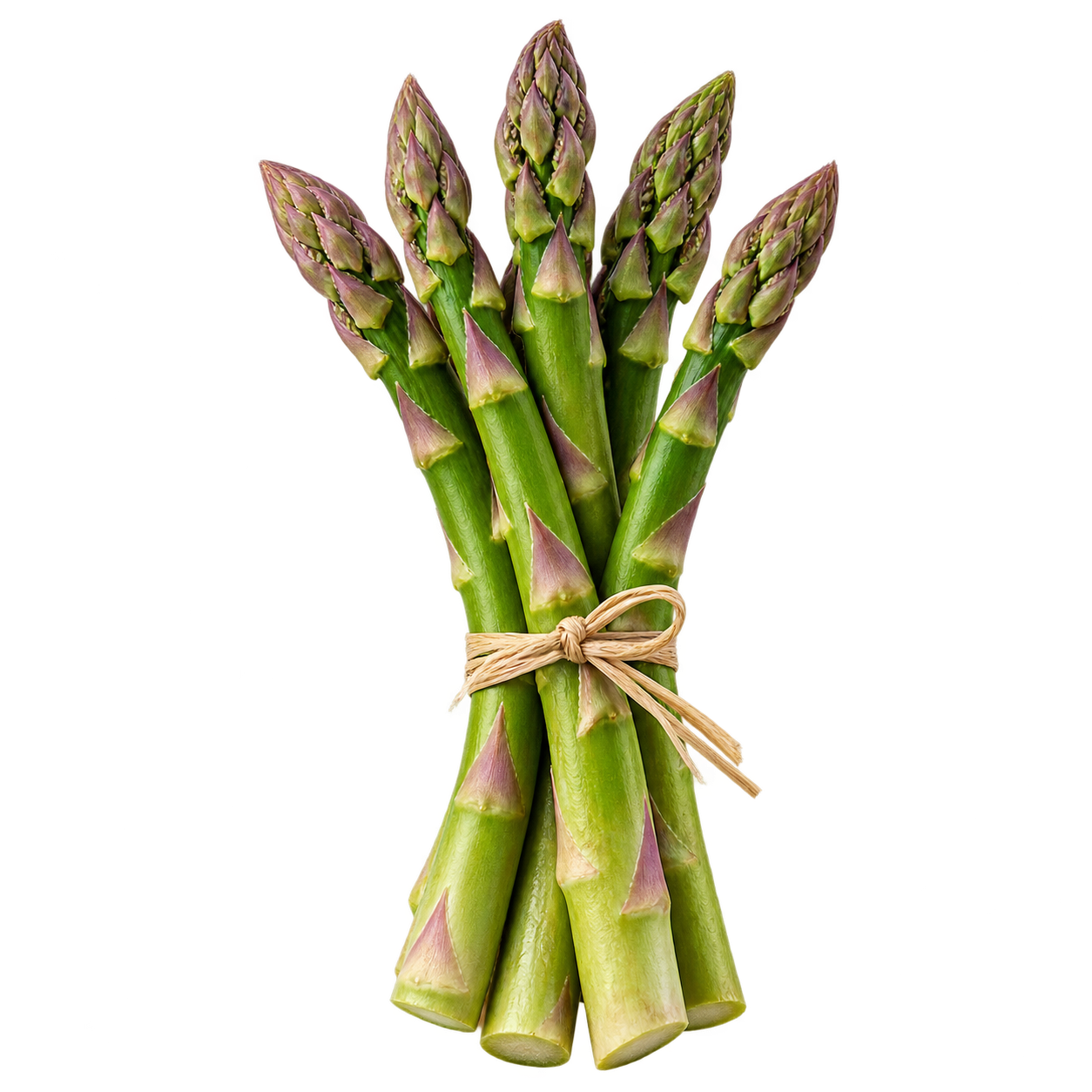
Ingredient identity
From perennial crown to the spring table
Asparagus is the young edible shoot of a long-lived perennial plant. Beneath the soil, a crown stores energy and sends up new spears when spring temperatures arrive. Once an established bed finishes its short harvest, later shoots are allowed to open into tall, fern-like growth that feeds the crown for the following season.
The plant is native to coastal areas of Europe, Asia and Africa. It was cultivated by the Romans roughly two thousand years ago and later traveled to North America with European settlers. Its name is connected to ancient words for a shoot or sprout—an appropriate description for the tender spear cooks prize today.
Varieties & growing styles
Green, white, purple and wild asparagus
Green asparagus
The most common form in North America and Italy. Sunlight develops chlorophyll, the green color and a fresh, grassy flavor. Thin spears cook very quickly; thicker spears are excellent for grilling and roasting.
White asparagus
Spears are covered with soil or opaque material and harvested before light reaches them. They remain ivory, taste mild and delicate, and usually need the fibrous outer layer peeled before gentle simmering or steaming.
Purple asparagus
Purple cultivars develop anthocyanin pigments and often taste sweeter and more tender. Quick cooking helps preserve character, but heat can shift the exterior from purple toward green.
Wild asparagus
Slender seasonal shoots are foraged in parts of the Mediterranean, including Tuscany. Their flavor is more concentrated and pleasantly bitter. Identify and harvest wild plants only with expert local knowledge and legal permission.
Global harvest calendar
Seasonality around the world
Local asparagus is fundamentally a cool-season spring crop. Modern production and imports make it available much of the year, but flavor, tenderness and value are generally strongest near the regional field season. Exact timing shifts with latitude, altitude and annual weather.
| Region | Typical local window | Culinary note |
|---|---|---|
| California & warmer North America | February–May | Early spring crop; timing varies by growing district and weather. |
| Northern United States & Canada | April–June | Peak local market season is often concentrated in May. |
| Italy & Mediterranean Europe | March–June | Green, purple and regional wild asparagus appear in spring. |
| Germany, Netherlands & United Kingdom | April–June | White asparagus season is culturally important and ends by late June. |
| Mexico | Multiple regional windows | Different climates support a long export season and broader availability. |
| Peru | Extended to near year-round | Irrigated coastal production supplies international markets beyond spring. |
| Australia, New Zealand & southern South America | September–December | Southern Hemisphere spring; some districts continue into January. |
Health & nutrition
Light, nutrient-dense and naturally versatile
Asparagus provides fiber and contributes folate, vitamin K, vitamin C, iron and an assortment of naturally occurring plant compounds. Its high water content and very low fat level make it easy to use in vegetable-forward menus; the final nutrition profile depends strongly on sauce, added fat and portion size.
Folate
Supports normal cell division and red blood cell formation as part of a balanced diet.
Vitamin K
Contributes to normal blood clotting and bone health; intake consistency matters for some medications.
Dietary fiber
Supports digestive health and adds satisfying texture with relatively few calories.
Raw asparagus quick nutrition
Approximate values per 1 cup raw asparagus (134 g).
Nutrition values are reference estimates, not medical advice. Asparagus is not a major U.S. food allergen, but individual sensitivities are possible. Anyone taking vitamin-K-sensitive medication should follow guidance from their healthcare professional.
Quality control
How to select and prepare asparagus
Look for
Firm, straight spears; smooth skin; moist-looking cut ends; and compact tips. Green asparagus should look vivid, while white asparagus should be pale and free of extensive browning.
Avoid
Slimy or opening tips, deep wrinkles, yellowing, soft stalks, strong odor, or dried, split bases. These indicate age or poor temperature control.
Storage & shelf life
Keep the cut ends in a refrigerated water bath
Asparagus loses moisture quickly after harvest. Treat the bunch much like cut flowers: support the bases with clean water, maintain refrigeration and protect the delicate tips without sealing them into a wet, airless environment.
Preferred refrigerator method
- Keep the asparagus unwashed until shortly before cooking.
- Trim only a thin slice from very dry ends if needed for water contact.
- Stand the spears upright in a clean container with about 1 inch (2.5 cm) of cold water.
- Loosely cover the tops with a clean reusable or food-safe bag.
- Refrigerate and replace the water daily if holding longer than two days.
- Use within about 3–5 days; discard spears that become slimy, soft, rotten or strongly odorous.
| Form | Storage method | Quality window |
|---|---|---|
| Fresh, whole spears | Upright in shallow water, loosely covered and refrigerated | Up to about 5 days |
| Fresh, alternative method | Wrap cut ends in a damp towel; place loosely in a refrigerated produce bag | About 2–3 days for best quality |
| Cooked asparagus | Cool promptly; refrigerate in a clean, covered container | Use promptly, generally within 3–4 days |
| Frozen | Blanch, chill, dry well and freeze in airtight packaging | Best quality within several months |
Culinary technique
The best cooking methods for asparagus
Match the heat to the spear. Thin asparagus needs only a flash of cooking; thick spears benefit from deeper browning or gentle heat long enough to tenderize the center. Timing is a guide—diameter and freshness decide the finish.
Grill
Oil lightly and grill across the grates, turning until marked and crisp-tender. Best for medium or thick green spears.
Sauté
Use thin whole spears or bias-cut pieces. Keep the pan uncrowded so the vegetable colors instead of steaming.
Steam
Ideal for clean flavor and controlled tenderness. Arrange similar diameters together and stop before the tips soften excessively.
Blanch
Cook until vivid and barely tender, then serve immediately or chill in ice water for salads and later service.
Roast
Arrange in one layer with a light coating of oil. Roasting concentrates sweetness and suits medium to thick spears.
Shave raw
Use very fresh thick green or purple spears. Shave lengthwise into ribbons and dress briefly with lemon and olive oil.
Flavor architecture
Classic pairings and Tuscan applications
In the Tuscan kitchen, asparagus works naturally in risotto, frittata, fresh pasta fillings, soups and simple grilled preparations finished with extra virgin olive oil. A soft-cooked egg, aged cheese or a lemon emulsion balances its green, gently bitter notes. For wine, consider a bright Vermentino, Verdicchio or restrained Sauvignon Blanc.
Tuscany Cuisine ingredient engine
Asparagus usage record across the platform
The permanent ingredient identity below connects the asparagus icon and canonical page to recipes, Menu Builder, Production, stations, inventory, purchasing, vendors and receiving. Records are matched first by ingredient ID, then by approved synonyms.
Recipe Library
Scanning recipe ingredient records…
ScanningMenu Builder
Scanning current menu records…
ScanningProduction Dashboard
Scanning production records…
ScanningStation Pick Lists
Scanning station records…
ScanningLive Inventory
Scanning inventory records…
ScanningVendor & Purchasing
Scanning purchase records…
ScanningReceiving
Scanning receiving records…
ScanningRecipes using asparagus
Frequently asked questions
Asparagus kitchen questions
Why is white asparagus white?
It is grown beneath mounded soil or opaque covers. Because the emerging spear does not receive sunlight, it does not develop green chlorophyll.
Should every asparagus spear be snapped by hand?
Snapping finds a natural breaking point but can waste tender product. For professional consistency, inspect one spear, establish the woody boundary, align the bunch and trim with a knife. Peel thick lower stems when appropriate.
Can asparagus be stored in water?
Yes. Stand unwashed spears upright with the cut ends in about one inch of clean cold water, loosely cover the tips and refrigerate. Refresh the water daily during longer holding and use within about five days.
Why does purple asparagus turn green when cooked?
Heat changes the purple anthocyanin pigments, allowing the underlying green color to become more visible. Raw or very quick cooking preserves more of the purple exterior.
Can fresh asparagus be frozen?
Yes. Blanch first, chill quickly in ice water, dry very well and package airtight. Freezing preserves the ingredient for later cooked applications, although the texture will not equal fresh spring asparagus.
Editorial references
Sources and further reading
- Purdue Extension FoodLink: asparagus selection, cooking, storage and nutrition
- USDA FoodData Central: asparagus nutrient data
- University of California: asparagus growing and white asparagus cultivation
- Purdue University Horticulture: asparagus origin, history and production
- Penn State Extension: preparing and preserving asparagus