Cabbage belongs to the Brassicaceae family. The European cabbage complex
developed from wild forms of Brassica oleracea associated with Mediterranean and Atlantic
European coasts. Generations of selection transformed the same species into cabbages, kale,
broccoli, cauliflower, Brussels sprouts and kohlrabi.
Ancient Greek and Roman writers documented cultivated B. oleracea. Theophrastus
described cultivated forms in the classical Greek world, while Cato later wrote about cabbage
in Roman agriculture. Over centuries, growers selected for tighter heads, looser leaves,
crinkling, color, cold tolerance, sweetness and storage life.
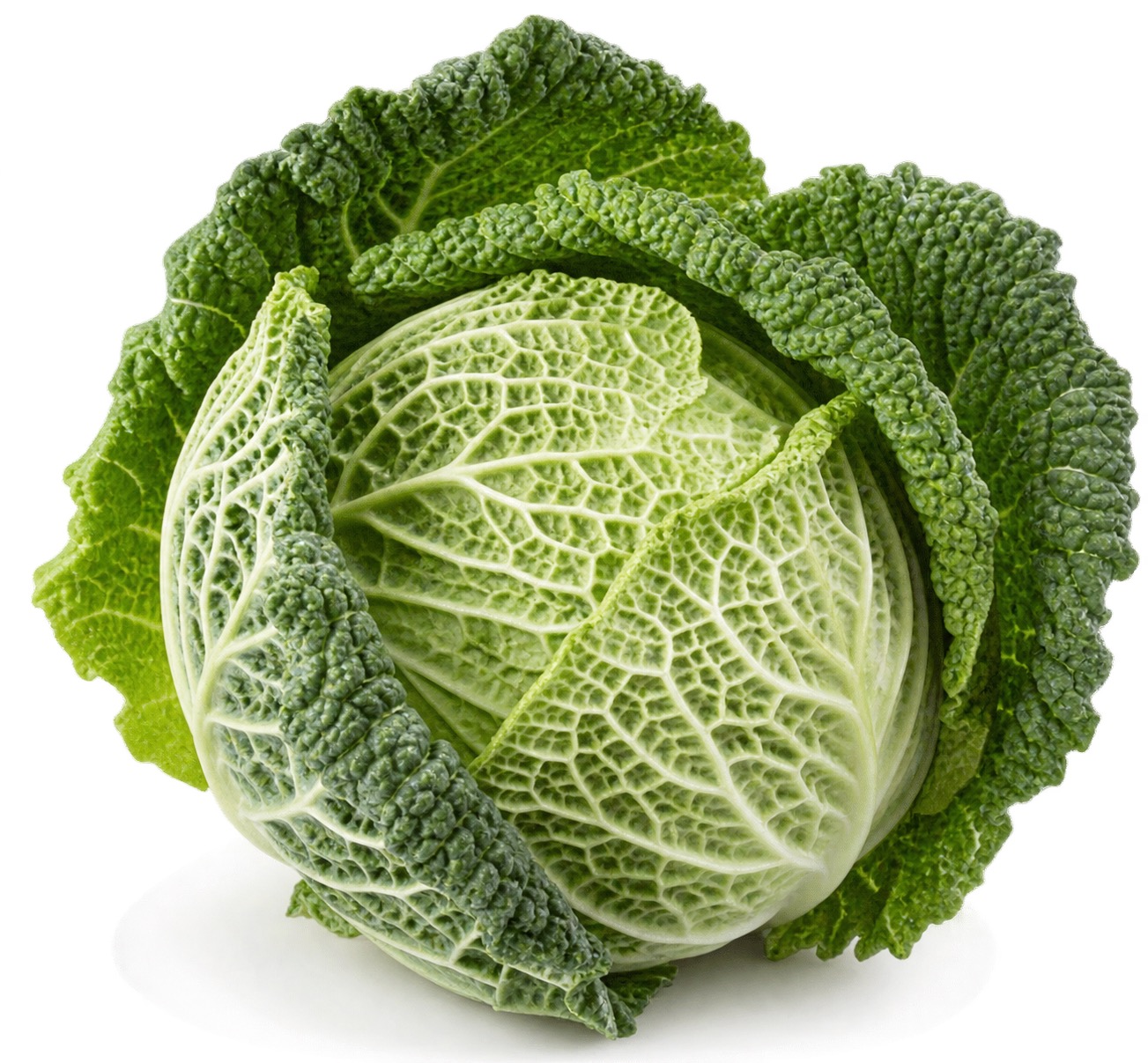
Savoy cabbage is one of the most elegant headed selections. It is associated with the historic
Savoy region and is also known as Milan or Lombard cabbage.
Its deeply puckered leaves are less densely packed than firm green cabbage, giving it a tender
texture and excellent capacity to hold broth, sauce and braising juices.
Ancient Mediterranean Wild and early cultivated Brassica oleracea forms were selected for edible leaves and resilience.
Classical Greece & Rome Written agricultural references confirm cabbage-family cultivation more than two millennia ago.
Medieval–Early Modern Europe Distinct headed, red, winter, storage and savoyed forms became increasingly regionalized.
Global Exchange European cabbages moved widely, while East Asian Brassica rapa cabbages developed their own major culinary traditions.
Modern Kitchens Cabbage now spans raw salads, fermentation, wok cooking, soups, braises, grilling, roasting and fine-dining vegetable cookery.