Overview
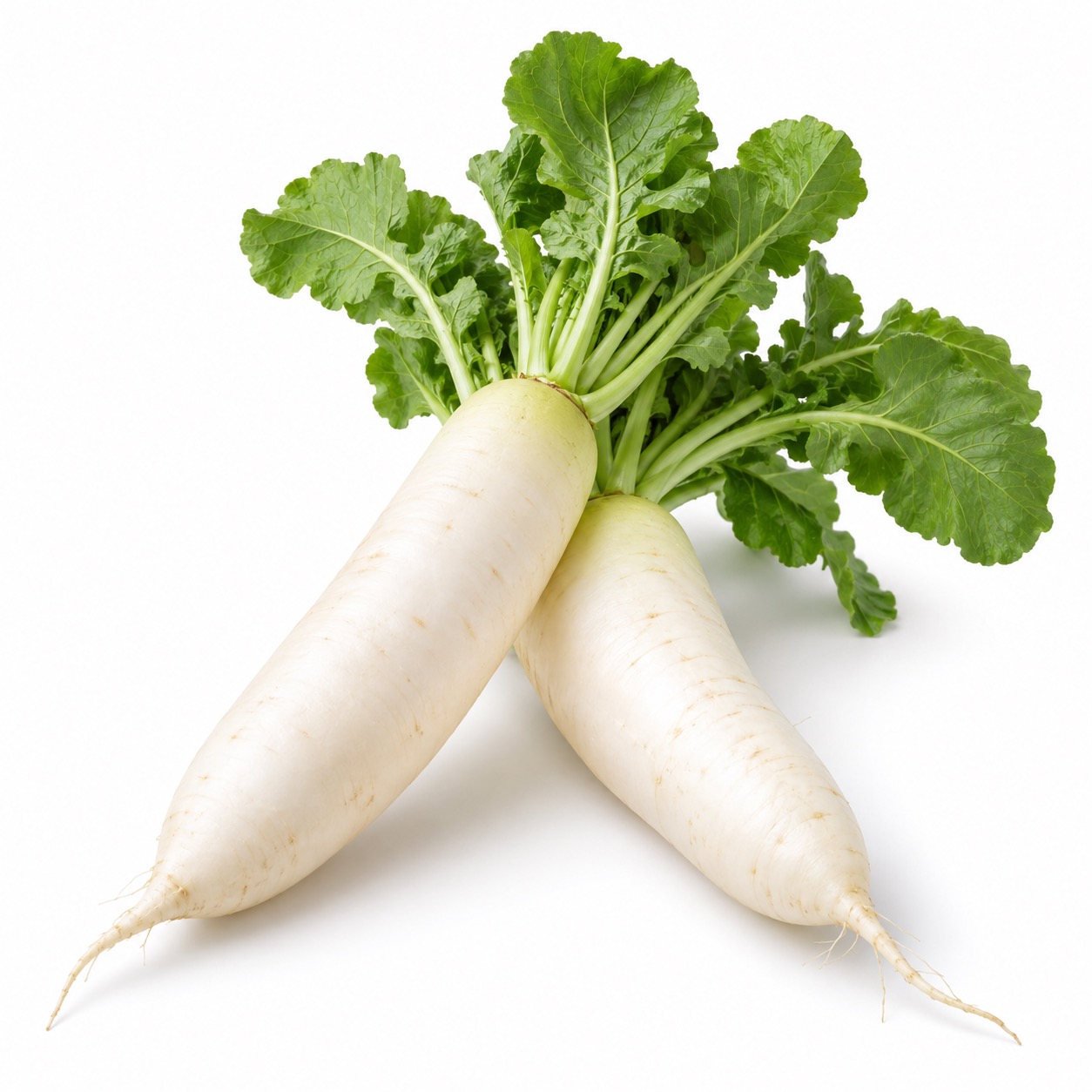
Daikon is a large white radish commonly associated with Japanese, Chinese, Korean, Southeast Asian, and increasingly modern Western kitchen applications. Compared with small red radishes, daikon is usually milder, juicier, and less aggressive in heat. Its clean flavor makes it extremely useful in salads, pickles, garnishes, slaws, broths, braises, and delicately cooked vegetable dishes. In a professional kitchen, daikon is also appreciated for its attractive structure when cut into julienne, batonnet, ribbons, rounds, or grated preparations.
Flavor & Texture
Fresh daikon offers a crisp, watery bite with a light mustardy or peppery note. When cooked, it becomes softer, sweeter, and more mellow while still keeping a clean vegetable character.
Why Chefs Use It
Daikon adds freshness, volume, and subtle pungency without overwhelming other ingredients. It works beautifully with seafood, citrus, herbs, soy-based seasonings, olive oil, and light vinaigrettes.
Common Types & Market Forms
Classic White Daikon
The most familiar long cylindrical white root. It is widely used raw, pickled, steamed, simmered, braised, or grated, and is the main reference form for this Tuscany Cuisine ingredient identity.
Featured Icon · daikon.webp
Mini & Young Daikon
Smaller market forms can be more tender and visually refined. These are often used for quick pickles, raw preparations, garnish work, and elegant plated salads.
Tender Market Form
Regional Daikon Varieties
Depending on the growing region, daikon may vary in length, shoulder color, sweetness, density, and heat. Some markets carry green-shouldered or shorter, denser forms with slightly different texture.
Regional Variations
Prepared Forms
Daikon is also encountered as julienne, grated, pickled, dried, or cooked pieces. These prepared forms are important in mise en place and broaden its use in salads, broths, condiments, and composed dishes.
Prep FormatsOrigin & Background
Daikon belongs to the radish family and has long been cultivated in Asia, where it became a staple ingredient in many regional cuisines. The name “daikon” comes from Japanese and is commonly translated as “big root.” Today it is sold globally in Asian markets, specialty produce suppliers, and many mainstream supermarkets because of growing consumer familiarity and its flexibility in modern cooking.
Culinary Usage
- Julienned or shaved raw for salads, slaws, garnishes, and composed vegetable plates.
- Pickled for brightness, crunch, acidity, and condiment applications.
- Steamed or lightly cooked in warm vegetable salads and side dishes.
- Simmered or braised in soups, broths, and savory preparations.
- Grated into fresh condiments or accompaniment for seafood and light proteins.
- Used with citrus, ginger, sesame, herbs, vinaigrettes, and refined vegetable compositions.
Chef Handling Notes
- Choose roots that feel firm, heavy, and hydrated.
- Peel if the skin is thick or if a cleaner white presentation is desired.
- For salad work, cut evenly and keep dry so dressings cling properly.
- Cook gently to preserve structure and avoid excessive water release.
Best Pairings
- Citrus, rice vinegar, white wine vinegar, and light citronette dressings
- Soy-based seasonings, ginger, sesame, and herbs
- Shrimp, scallops, white fish, and vegetable-focused composed plates
- Carrot, zucchini, kale, cucumber, apple, and crisp lettuces
Seasonality
Daikon is often associated with cool-season production and performs especially well in autumn, winter, and early spring. Because it is cultivated in multiple climates and distributed globally, it can often be found year-round. Peak quality generally comes from firm, fresh roots harvested before they become overly fibrous or pithy.
Cultivation & World Markets
Daikon is cultivated across Japan, China, Korea, Southeast Asia, India, Europe, and North America. It is sold widely through Asian produce channels and increasingly through mainstream supermarket networks. Important buying qualities include straight shape, bright skin, firmness, freshness, and density without sponginess. Global markets may refer to daikon as white radish, mooli, Japanese radish, or simply Asian radish depending on region and supplier.
Best Cultivation Characteristics
- Cool to mild growing conditions
- Loose well-drained soils for even root development
- Consistent moisture without excessive splitting
- Harvested before becoming hollow or fibrous
What Buyers Look For
- Firm, heavy roots with smooth skin
- No excessive softness, cracks, or dehydration
- Fresh tops if sold with greens attached
- Uniform shape for clean cutting and presentation
Nutrition
Daikon is a light, refreshing root vegetable with low calories and useful water content, fiber, and vitamin C. It fits well in lighter menu planning, raw vegetable preparations, vegetable-forward cuisine, and health-conscious dishes.
| Calories | 18 kcal |
| Carbohydrates | 4.1 g |
| Protein | 0.6 g |
| Fat | 0.1 g |
| Fiber | 1.6 g |
| Vitamin C | Good source |
| Water content | High |
| Diet profile | Low calorie, vegetable-forward |
Ingredient Record
Ingredient Identity
- Ingredient name: Daikon Root
- Common names: Daikon, White Radish, Japanese Radish, Mooli
- Category: Vegetables
- Ingredient code:
daikon_root - Inventory ID:
daikon_root - Base unit: g
Platform Notes
- Icon graphic:
daikon.webp - Page path:
/academy/ibrary/veggies/Daikonroot.html - Primary uses: salad, pickling, steaming, braising, garnish
- Recipe connection: Recipe 378 — Steamed Vegetable Salad
- System role: Ingredient Library / inventory / recipe icon synchronization