Overview
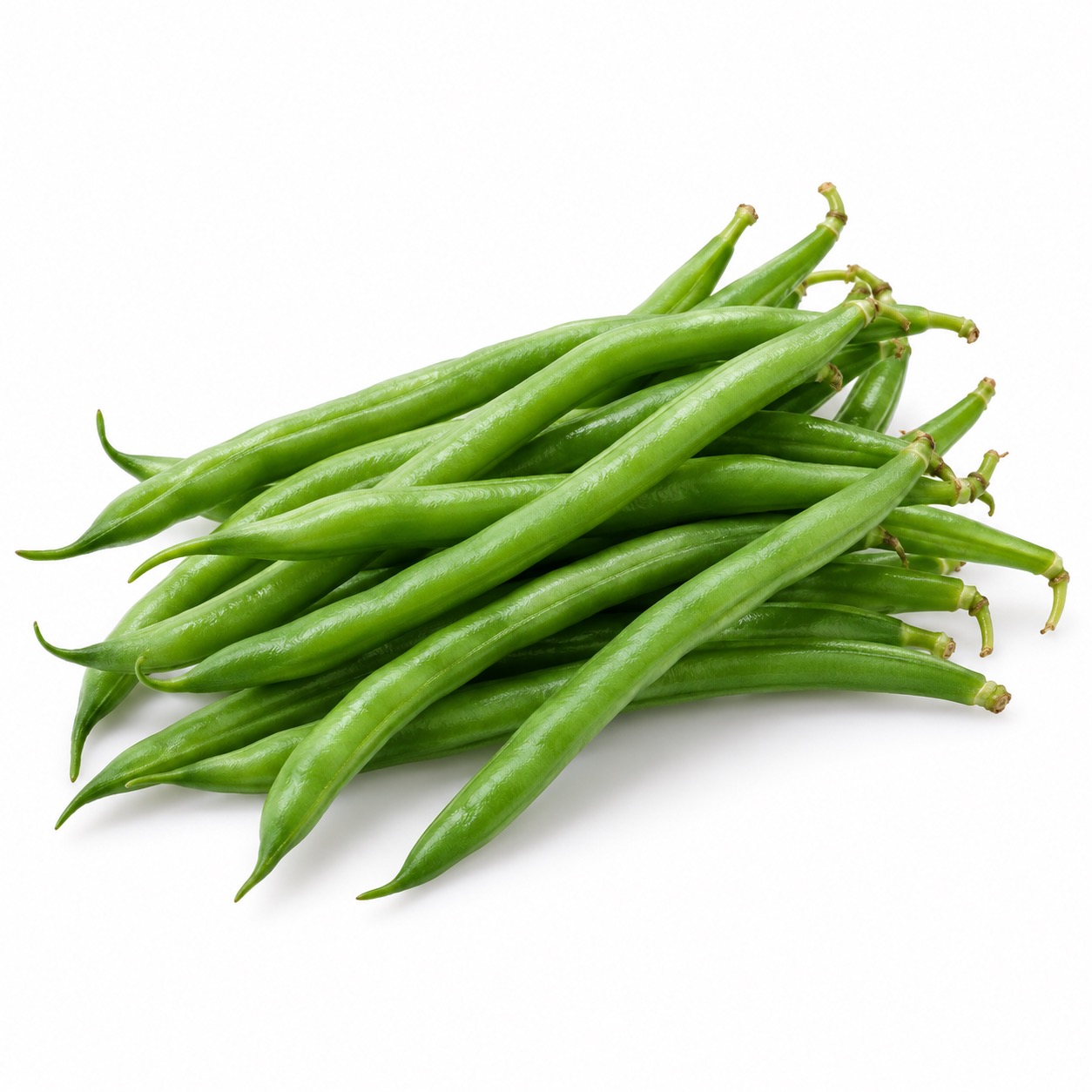
Green beans, also called string beans, snap beans, or French beans depending on the type and market, are immature pods harvested while still tender. Their appeal comes from a crisp bite, clean vegetal flavor, and their ability to complement seafood, poultry, beef, grains, eggs, and many Mediterranean preparations. In professional kitchens they are valued because they can be blanched ahead, refreshed, and finished to order with olive oil, butter, herbs, citrus, garlic, shallots, nuts, tomatoes, or vinaigrettes.
Flavor & Texture
Good green beans should taste fresh, slightly sweet, grassy, and clean, with a firm snap. The best examples remain bright after cooking and keep structure without becoming woody or limp.
Why Chefs Use Them
They bring color contrast, freshness, and a refined vegetable note to composed salads, sautéed plates, seasonal vegetable medleys, antipasti, and elegant side dishes.
Types of Green Beans
Haricot Vert
Haricot vert are slender, fine green beans often associated with French and contemporary restaurant cooking. They are typically thinner and more delicate than common green beans and are prized for a tender, refined texture.
Featured Icon · haricot.webp
Classic Green Beans / Snap Beans
These are the familiar market green beans found widely in supermarkets and produce departments. They are versatile, accessible, and suitable for blanching, steaming, roasting, and sautéing.
Common Market Type
Romano Beans
Romano beans are broader and flatter than standard green beans. They have a more assertive bean flavor and work well in braises, tomato dishes, stews, and rustic Mediterranean cooking.
Flat Pod Variety
Wax Beans
Wax beans are yellow or golden bean varieties with a similar texture to snap beans. They are attractive in mixed vegetable dishes and salads because of their color contrast.
Yellow VarietyCulinary Usage
- Blanched and shocked for composed salads and mise en place.
- Sautéed with garlic, shallots, olive oil, herbs, and citrus zest.
- Served warm with seafood such as shrimp, lobster, scallops, or white fish.
- Used as a side vegetable for poultry, veal, lamb, and beef.
- Paired with tomatoes, olives, capers, anchovy, almonds, pine nuts, or vinaigrettes.
- Included in niçoise-style salads, rustic vegetable platters, and Mediterranean antipasti.
- Added to soups, vegetable ragouts, braised dishes, and seasonal grain bowls.
Chef Handling Notes
- Trim the stem end cleanly; remove the tail only if desired for presentation.
- Blanch in salted boiling water until crisp-tender, then shock immediately in ice water.
- Dry well before sautéing or dressing to preserve flavor and texture.
- Do not overcook: good green beans should remain vivid and retain a bite.
Best Pairings
- Lemon, orange zest, and light citronette dressings
- Extra-virgin olive oil, butter, and garlic
- Parsley, basil, tarragon, mint, thyme, and chives
- Tomatoes, shallots, almonds, hazelnuts, and toasted breadcrumbs
Seasonality
Fresh green beans are generally best from late spring through early autumn, though global supply chains make them available for much of the year. Peak quality usually comes during warm growing months when beans are harvested young and tender. Local farmers’ markets often show the finest texture and flavor during summer. Haricot vert are especially valued when freshly picked, slim, and uniformly green.
Cultivation & World Markets
Green beans are cultivated widely across North America, Europe, Latin America, North Africa, and parts of Asia. Important commercial and seasonal market sources often include the United States, Mexico, France, Italy, Spain, Morocco, Kenya, Egypt, Guatemala, and other produce-exporting regions. Different markets favor different bean styles: slender French beans for fine dining, broader beans for rustic cooking, and common snap beans for large retail distribution.
Best Cultivation Characteristics
- Warm growing conditions with regular moisture
- Harvest at young, tender pod stage
- Uniform size for even cooking
- Bright color, smooth skin, and crisp snap
What Buyers Look For
- Firm pods without wrinkles or blemishes
- No excessive seed bulging
- Clean fresh aroma and bright color
- Minimal fiber and no signs of dehydration
Nutrition
Green beans are appreciated as a light, nutrient-dense vegetable. They contribute fiber, vitamin C, vitamin K, folate, and useful antioxidant compounds while remaining relatively low in calories. They fit naturally into Mediterranean-style, vegetable-forward, and lighter menu planning.
| Calories | 31 kcal |
| Carbohydrates | 7 g |
| Protein | 1.8 g |
| Fat | 0.2 g |
| Fiber | 2.7 g |
| Vitamin C | Good source |
| Vitamin K | Good source |
| Folate | Moderate source |
Ingredient Record
Ingredient Identity
- Ingredient name: Green Beans
- Featured subtype: Haricot Vert
- Category: Vegetables
- Primary use: Fresh vegetable / side / salad / composed dish
- Preparation class: Blanch, steam, roast, sauté, braise
Platform Notes
- Icon graphic:
haricot.webp - Page path:
/academy/ibrary/veggies/Greenbeans.html - Use case: Ingredient Library, recipe linking, search relevance, culinary education
- Featured card: Haricot Vert