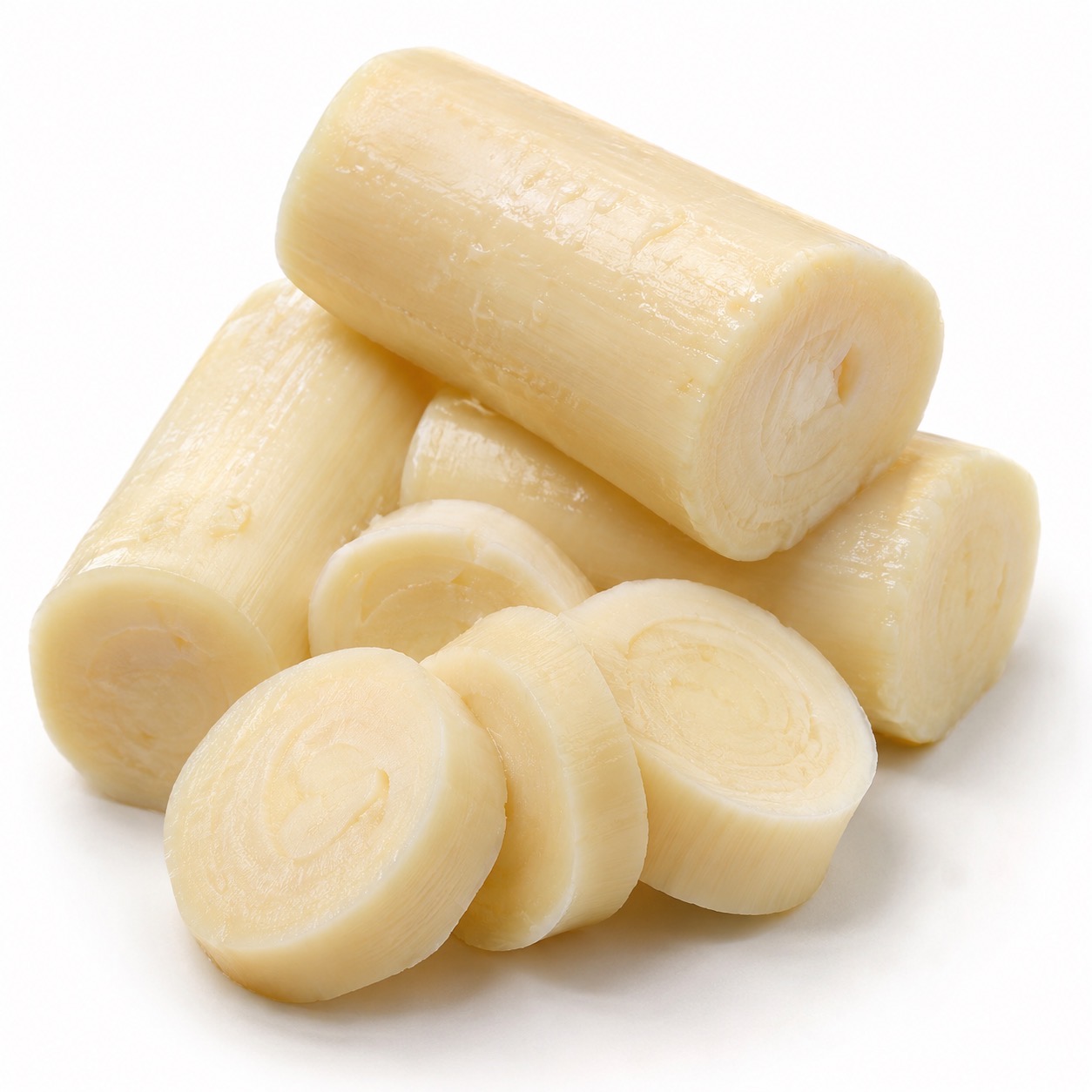
What Are Hearts of Palm?
Hearts of palm are the tender, edible tissues taken from the inner growing portion of certain palm stems. In culinary use they are usually sold as peeled cylinders or sliced rounds, most commonly preserved in cans, jars or pouches.
Hearts of palm · heart of palm · palm hearts · palmito
Arecaceae — the palm family
Peach palm (Bactris gasipaes) is one important cultivated source for modern palm-heart production.
Whole cylinders, halves, slices, medallions, julienne, diced or puréed.
Flavor Profile & Texture
Flavor: mild, clean and vegetal with a gentle nutty sweetness, light artichoke-like character and a subtle briny note when packed in salted liquid.
Texture
Firm yet tender, with fine fibrous layers and a pleasant crisp bite when properly drained and handled.
Aroma
Delicate and fresh. It should never smell fermented, sour or strongly metallic.
Pairing Behavior
Accepts citrus, olive oil, herbs, tomato, avocado, seafood, shellfish, light vinaigrettes and creamy emulsions without overpowering them.
History, Origin & Cultivation
Edible palm hearts have long been used in tropical regions of Central and South America. Several palm species can provide an edible heart. Peach palm has an especially important role in cultivated production because it can grow in clumps and produce basal shoots, allowing managed agricultural harvest rather than depending only on single-stem wild palms.
Historically, palms provided much more than the edible heart. Tropical communities used fruits, wood, leaves and fibers for food, construction and tools. In modern commercial kitchens, hearts of palm are most often encountered preserved and ready for service, which gives them a dependable texture and year-round availability.
Nutrition Reference
Values below are USDA reference values for canned hearts of palm per 100 g edible portion. Sodium can vary substantially by brand and packing liquid, so foodservice nutrition and recipe costing should use the actual product label whenever available.
| Nutrient | Per 100 g canned hearts of palm | Kitchen note |
|---|---|---|
| Energy | 28 kcal | Low-energy vegetable ingredient |
| Protein | 2.52 g | Modest plant protein |
| Fat | 0.62 g | Naturally low fat |
| Carbohydrate | 4.62 g | Low carbohydrate contribution |
| Dietary fiber | 2.4 g | Useful fiber contribution |
| Calcium | 58 mg | Mineral contribution |
| Iron | 3.13 mg | Notable relative to serving size |
| Potassium | 177 mg | Varies with processing |
| Sodium | 426 mg | Often driven by packing brine; drain or rinse when appropriate |
| Vitamin C | 7.9 mg | Processing and storage affect final level |
Fabrication & Professional Preparation
Most restaurant kitchens receive hearts of palm preserved rather than freshly harvested. Fabrication is therefore primarily about draining, evaluating texture, controlling salt, trimming and choosing the correct cut for the final dish.
Culinary Usage
Cold Applications
Composed salads, antipasti, seafood salads, citrus salads, avocado preparations, relishes and chilled vegetable plates.
Warm Applications
Light sautéing, roasting, grilling, warm vinaigrettes, vegetable ragouts and plated seafood garnishes.
Modern Plant-Forward Use
Shredded or sliced hearts of palm can provide a delicate, fibrous texture in vegetarian or vegan preparations where the goal is texture rather than imitation alone.
Seafood Pairings
Excellent with octopus, shrimp, crab, scallops, white fish and tuna because the flavor remains light and does not compete with delicate marine notes.
Sauces & Dressings
Lemon vinaigrette, herb oil, basil oil, tomato vinaigrette, aioli-style sauces, avocado emulsion and light mustard dressings.
Flavor Partners
Lemon, lime, parsley, basil, tomato, radish, asparagus, avocado, olive oil, capers, chives and mild chile.
Purchasing, Quality & Storage
Purchasing
Choose intact pieces with uniform pale color and minimal breakage. Compare drained weight, not only can size, when evaluating price.
Quality
Avoid pieces that are excessively soft, gray, sour-smelling, slimy or mechanically shredded unless that format is intended.
Storage
Keep unopened shelf-stable product according to manufacturer instructions. Once opened, refrigerate in a clean covered food-safe container and follow the manufacturer's refrigerated shelf-life guidance.
Service
For cold dishes, drain close to service and season after tasting. Brined products may already contribute enough salt.
Recipe Connection — Spanish Octopus
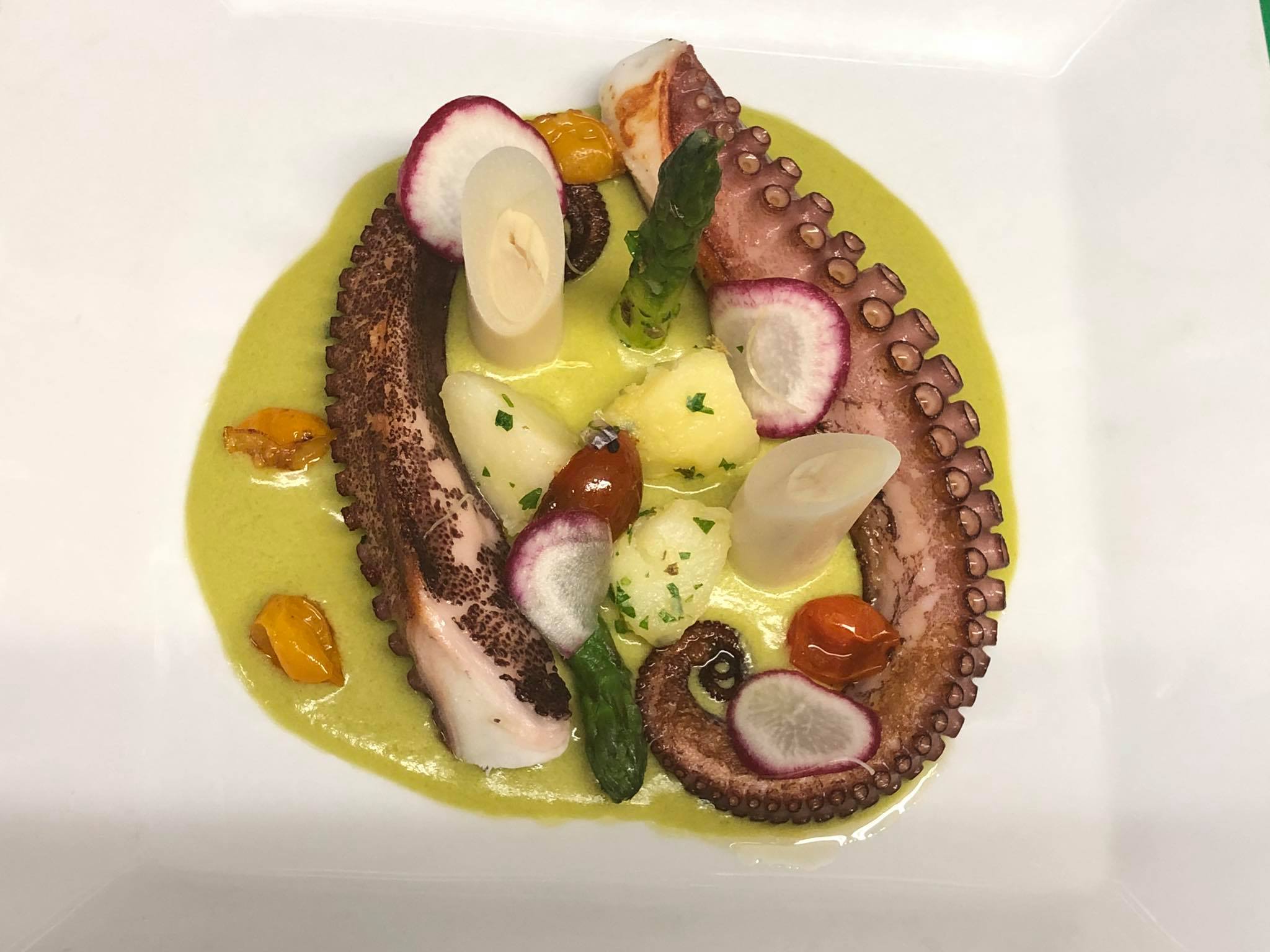
Spanish Octopus with Seasonal Vegetables
The Tuscany Cuisine Spanish Octopus recipe uses hearts of palm as part of the composed vegetable garnish alongside grape tomatoes, asparagus, potatoes and radishes. The mild palm heart gives the plate a clean, crisp-tender contrast against the tender octopus and asparagus emulsion.
Open Spanish Octopus RecipeIngredient Record
This record gives hearts of palm a permanent identity for recipe pages, ingredient icons, Live Inventory, Menu Builder, purchasing, stations and future market-price mapping.
| Ingredient name | Hearts of Palm |
|---|---|
| Ingredient code | VEG-HEARTS-PALM-001 |
| Inventory ID | hearts_of_palm |
| Category | Produce / Preserved Vegetables |
| Subcategory | Palm Hearts |
| Base unit | g |
| Primary station | Produce / Garde Manger |
| Icon | /academy/ibrary/veggies/Hearths-palm.webp |
| Ingredient page | https://www.tuscanycuisine.com/academy/ibrary/veggies/Palm.html |
| Common names | Heart of palm · Palm hearts · Palmito |
| Typical commercial form | Canned, jarred or pouched in brine / acidified packing liquid |
Tuscany Cuisine Platform Connections
Education & Recipes
Culinary Academy
Culinary Foundations
Recipe Directory
Spanish Octopus
Menu & Production
Inventory & Purchasing
Ingredient Synchronization
The hearts-of-palm record can synchronize its icon and identity across recipes, Live Inventory, purchasing, station dashboards and master search.
Hearts of Palm ingredient record is ready.