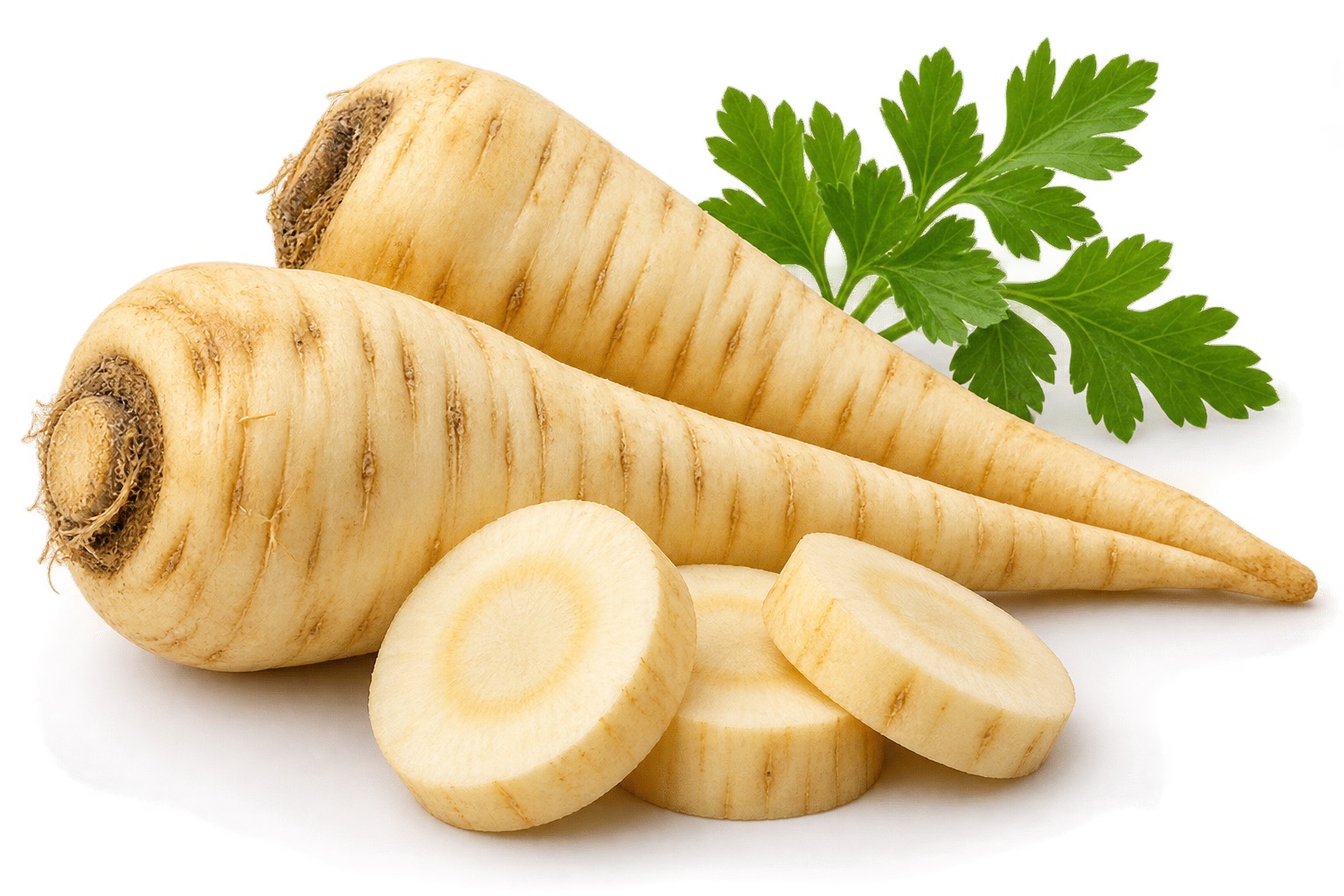
Ingredient Profile
Parsnips resemble pale carrots in shape but have their own distinct culinary identity.
Their flesh is cream-colored, firm when raw and increasingly tender and aromatic with heat.
The natural sugars become more noticeable during roasting and slow cooking, making parsnips
useful in both rustic and refined preparations.
In restaurant mise en place, parsnips are especially valuable because one ingredient can
move between several textures: crisp chips, roasted wedges, glazed roots, silky purée,
soup, mash and braised garnish.
Chef’s practical note:
large mature parsnips can develop a firmer central core. For a very smooth purée,
inspect the root after peeling and remove a woody center when necessary.
Flavor Profile
Sweet
Naturally sweet, with sweetness becoming more pronounced after roasting or long cooking.
Earthy
Root-vegetable depth gives parsnip a grounding quality that pairs well with braises and winter dishes.
Nutty
Roasting and browning reveal a subtle nutty character and richer aromatic profile.
Aromatic
Gentle herbal and spice-like notes connect parsnip naturally with parsley, celery, fennel and other Apiaceae ingredients.
Bitterness
Usually low, although older roots and heavily browned surfaces can contribute a slightly bitter edge.
Texture
Firm and crisp when raw; tender, creamy and almost starchy when fully cooked.
Richness
Medium. Purées become especially luxurious when finished with olive oil, butter, cream or stock.
Best balance
Acidity, fresh herbs, black pepper and savory meat juices help balance parsnip’s natural sweetness.
Culinary Usage
Purée & Mash
Cook until fully tender, then blend or pass through a food mill.
Parsnip purée is excellent beneath beef, lamb, game, poultry and roasted vegetables.
It may be used alone or blended with potato, celery root or cauliflower.
Roasted
Cut into batons, wedges or coins and roast until caramelized.
High dry heat develops sweetness, nutty aromas and browned edges.
Excellent with rosemary, thyme, sage, garlic and olive oil.
Soups & Veloutés
Parsnip contributes body and mild sweetness to puréed soups.
It works with leek, onion, apple, pear, potato, chestnut, celery root and warming spices.
Braised & Glazed
Slow cooking in stock or pan juices produces a soft, glossy vegetable component
suited to braised meats, Sunday roasts and cold-weather menus.
Chips & Crisps
Thin slices can be fried or baked into crisp garnish.
Use controlled heat because their natural sugars encourage rapid browning.
Raw & Shaved
Young tender parsnips can be shaved very thin for salads or slaws.
Pair with lemon, apple, mustard, fresh herbs and a bright vinaigrette.
Professional Ingredient Usage
- Beef: purée for braised beef, short ribs, shoulder clod, pot roast and stracotto.
- Lamb & game: roasted or puréed parsnip works well with lamb, venison, wild boar and elk.
- Poultry: useful with roast chicken, duck and turkey, especially on autumn and winter menus.
- Vegetarian plates: roast with carrots, beets, turnips, squash and mushrooms.
- Soups: combine with leek, potato, celery root, apple or chestnut.
- Banquet production: parsnip purée can be prepared in batches, chilled correctly and regenerated for service.
- Plating: use purée as a base, quenelle, swipe or supporting element beneath sliced proteins.
Fabrication & Preparation
- Trim the stem end and fine root tip.
- Scrub thoroughly; peel when a refined presentation or very smooth purée is required.
- Inspect larger roots for a firm central core and remove it if woody.
- Cut uniformly for roasting, braising or blanching so pieces cook evenly.
- For purée, cook until completely tender before blending.
- For chips, slice very thinly and monitor browning carefully because the root contains natural sugars.
Oxidation:
cut parsnips can discolor gradually. For advance prep, keep them cold and limit unnecessary exposure to air.
Acidulated water can be used briefly when appropriate, but avoid excessive soaking that dilutes flavor.
Nutrition
Parsnip is a carbohydrate-containing root vegetable that also supplies dietary fiber,
potassium, vitamin C, folate and vitamin K. Values vary by cultivar, growing conditions
and laboratory sample.
| Nutrient |
Approx. per 100 g raw |
| Energy | 75 kcal |
| Protein | 1.2 g |
| Total fat | 0.3 g |
| Carbohydrate | 18 g |
| Dietary fiber | 4.9 g |
| Total sugars | 4.8 g |
| Potassium | 375 mg |
| Vitamin C | 17 mg |
| Folate | 67 µg |
| Vitamin K | 22.5 µg |
Nutrition values are presented as practical approximate values per 100 g raw edible portion.
USDA FoodData Central is used as the nutrition reference framework; FoodData Central added
raw parsnips to its Foundation Foods dataset in 2025 and reports nutrient data on a 100 g edible-portion basis.
Selection, Storage & Quality
Selection
- Choose roots that feel firm and heavy for their size.
- Look for smooth, cream-colored roots with minimal shriveling.
- Small to medium roots are often easier to fabricate and may have a more tender core.
- Avoid roots with extensive softness, mold, deep damage or severe dehydration.
Storage
- Store refrigerated in the produce area under cool, humid conditions.
- Keep unwashed when possible until preparation to reduce excess surface moisture.
- After peeling or cutting, refrigerate promptly in a food-safe covered container.
- For professional production, label and date prepared mise en place according to the operation’s food-safety system.
Pairing Guide
Herbs & Aromatics
Rosemary, thyme, sage, parsley, bay leaf, garlic, onion, leek, chives.
Vegetables & Fruit
Carrot, potato, celery root, turnip, beet, squash, mushroom, apple, pear.
Proteins & Sauces
Beef, lamb, duck, chicken, venison, wild boar, demi-glace, pan jus and red-wine sauces.
Tuscany Cuisine Recipe Connection
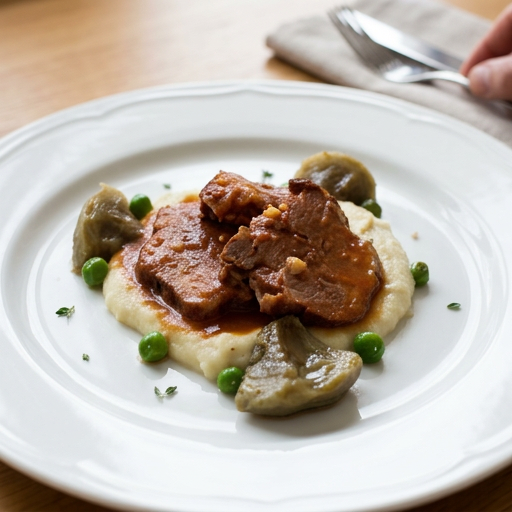
Stracotto Fiorentino
Parsnip is used as a smooth purée beneath long-cooked beef shoulder clod,
with artichokes, sweet peas and red-wine sauce.
Open Stracotto Fiorentino →
Ingredient Record
Canonical name: Parsnip
Italian name: Pastinaca
Scientific name: Pastinaca sativa
Family: Apiaceae
Ingredient code: parsnips
Inventory ID: parsnips
Category: Produce
Subcategory: Root Vegetables
Base unit: g
Icon: parsnips.webp
Connected Learning
Every ingredient page strengthens the Tuscany Cuisine culinary knowledge platform by
connecting ingredient identity with recipes, culinary techniques, Live Inventory,
purchasing, menu development and professional education.
← Back to Ingredients Library
·
Culinary Academy
·
Recipe Library
Parsnip. Parsnips. Pastinaca. Pastinaca sativa. Apiaceae. Root vegetable.
Flavor profile: naturally sweet, earthy, nutty, aromatic, mild and creamy when cooked.
Culinary uses: parsnip puree, roasted parsnips, braised parsnips, soups, veloutes,
mash, chips, crisps, shaved raw parsnip, winter vegetables, root vegetable garnish.
Pairings: beef, lamb, game, duck, chicken, rosemary, thyme, sage, parsley,
garlic, onion, leek, carrot, potato, celery root, apple, pear, mushrooms.
Nutrition per 100 g raw approximately 75 calories, 1.2 g protein, 18 g carbohydrate,
4.9 g fiber, 0.3 g fat, 375 mg potassium, 17 mg vitamin C, 67 micrograms folate.
Inventory ID parsnips. Ingredient code parsnips.
Related recipe: Stracotto Fiorentino.
Tuscany Cuisine Ingredients Library.