Sweetness
Moderate raw; medium-high after sweating, braising or roasting.
Mild, sweet and deeply aromatic, the leek is one of the most important background flavors in European cooking. From ancient Egypt and Rome to Tuscan soups, French classics, Welsh tradition and modern restaurant cuisine, the leek bridges history, agriculture and technique.
Leeks have been cultivated for thousands of years. Archaeological and historical records place them in ancient Egyptian food culture by at least the second millennium BCE, while Mesopotamian texts also document leek-like alliums. Greeks and Romans later valued the leek as a food and seasoning vegetable.
Roman culinary use was especially important. Leeks appear in classical food traditions, and Emperor Nero became associated with eating leeks because he believed they benefited his voice. Over time, the crop spread through Europe and became strongly established in French, Italian, British, Belgian, Dutch and Central European kitchens.
Kew Plants of the World Online accepts the botanical name Allium porrum L. and lists it as a cultivated plant lineage associated with Iran. Horticultural references also commonly describe garden leek as Allium ampeloprasum var. porrum.
Moderate raw; medium-high after sweating, braising or roasting.
Lower than most bulb onions; clean and restrained rather than sharp.
Fresh vegetal and grassy notes are stronger toward the green leaves.
Subtle earthiness develops with braising, roasting and caramelization.
Crisp, layered and somewhat fibrous, especially in darker green sections.
Silky, tender and almost melting when slowly cooked with fat and moisture.
Leeks are both a principal vegetable and a supporting aromatic. The white and pale-green shaft is prized for tenderness, while the darker green leaves are valuable in stocks, braises and long-cooked preparations once thoroughly washed.
Porri are used in risotti, vellutate, soups, vegetable braises, savory tarts, frittate and pasta fillings. Slow cooking in olive oil or butter develops sweetness without the sharpness of onion.
Classic applications include poireaux vinaigrette, potage Parmentier, vichyssoise, quiches, gratins and butter-braised leeks served with fish, poultry or eggs.
The leek is an important national symbol and culinary vegetable, appearing in cawl, soups, savory pies and traditional cold-weather dishes.
Cock-a-leekie soup pairs leeks with chicken and traditionally prunes; leeks also appear in broths, stews and winter vegetable preparations.
Leeks are widely used in soups, gratins, braises, mashed-potato dishes, savory pies and vegetable sides, reflecting the region’s strong cool-season production.
Pırasa is commonly cooked slowly with olive oil, rice, carrots and lemon in zeytinyağlı pırasa, as well as in soups and braises.
Leeks appear in potato soups, cheese soups, casseroles, meat-and-vegetable stews and savory bakes where their mild allium character provides background sweetness.
Common uses include potato-leek soup, chowders, quiches, stuffing, roasted vegetables, pan sauces and restaurant vegetable garnishes.
Washed leek whites and green tops contribute refined allium aroma to vegetable stock, fish fumet, court bouillon, sauces and braising liquids.
Leeks can be charred, confited, roasted whole, grilled, dehydrated into powders, fried into crisp garnish, or served as a composed vegetable with vinaigrette and herbs.
Soil collects between the overlapping leaf sheaths. Trim the root end, split the leek lengthwise, fan the layers under cold running water, or slice first and wash in a bowl of cold water. Lift the leek out of the water rather than pouring the grit back over it.
USDA FoodData Central SR Legacy entry FDC 169246 reports the classic raw leek profile for the bulb and lower leaf portion. USDA notes that its Foundation Foods leek data were updated in late 2025, so exact values can vary by dataset and sampled portion.
Culinary nutrition reference only. Values vary with cultivar, edible portion, soil, storage and cooking.
Cold-hardy, cool-season allium grown as a biennial but harvested as an annual vegetable.
Best market quality commonly runs from fall through spring; Purdue lists typical availability from October to May.
Smaller, faster-growing types are harvested in the same season they are planted and tend to be milder.
Thicker blue-green cultivars are more cold tolerant and often stronger in flavor; some can overwinter in the field.
Depending on cultivar, roughly 70–120 days is common; many commercial guides use about 100–130 days for full maturity.
Refrigerate unwashed leeks; extension guidance commonly recommends using refrigerated leeks within about 7–10 days for best quality.
For purchasing, choose leeks with firm white shafts, crisp leaves and fresh roots or a clean root plate. Avoid slimy layers, yellowing, severe bruising or soft water-soaked tissue.
FAOSTAT’s published commodity category combines leeks with other alliaceous vegetables. It does not isolate common leek in every country. The 2024 series covers 57 countries and totals about 2.13 million metric tonnes across available observations.
| Rank | Country | Production (thousand t) | Approx. world share |
|---|---|---|---|
| 1 | Indonesia | 627.0k | 29.4% |
| 2 | France | 159.1k | 7.5% |
| 3 | South Korea | 153.3k | 7.2% |
| 4 | Belgium | 151.5k | 7.1% |
| 5 | Türkiye | 151.3k | 7.1% |
| 6 | Netherlands | 128.5k | 6.0% |
| 7 | China | 122.4k | 5.7% |
| 8 | Kazakhstan | 94.4k | 4.4% |
| 9 | Germany | 89.6k | 4.2% |
| 10 | Spain | 66.3k | 3.1% |
Statistical caution: these figures are for FAOSTAT’s “Leeks and other alliaceous vegetables” category, not pure leek-only production. Indonesia ranked first in 2024 at about 627,000 t, followed by France, South Korea, Belgium and Türkiye.
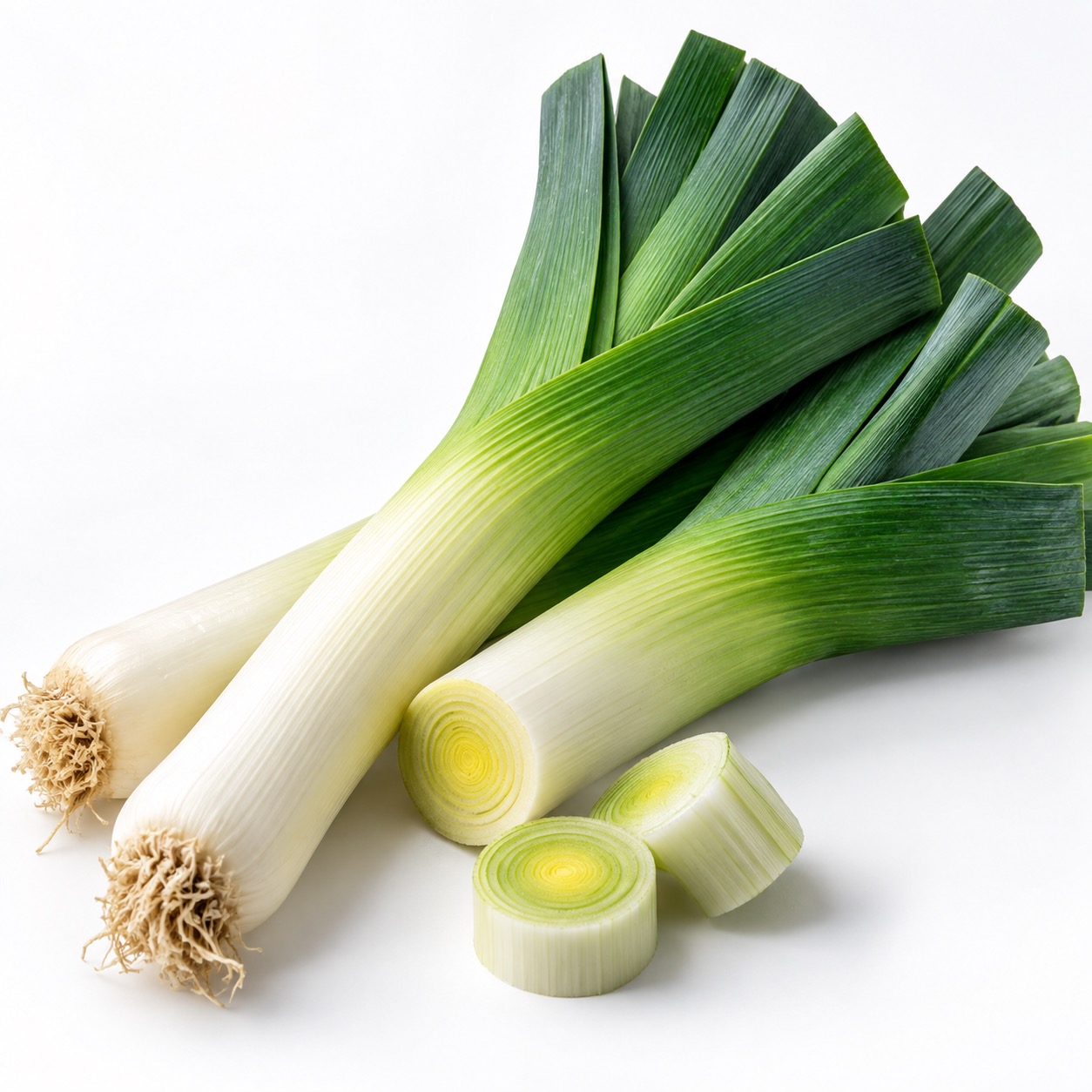
/academy/ibrary/veggies/Leek.webp
Traditional Tuscan Minestrone Soup uses 120 g leek in the current 8-serving base recipe. This page establishes the same leek identity for the recipe page, Zuppa Station, Live Inventory, purchasing, search and future menu-cost systems.
Cook slowly in olive oil or butter without color to release sweetness for soups, risotti and sauces.
Whole or halved leeks become silky in stock, wine or cream and pair especially well with fish and poultry.
High heat concentrates sweetness and gives caramelized edges while the interior becomes tender.
Blanch first for large leeks, then char over high heat and finish with vinaigrette, herbs or cheese.
Slow cooking in oil or butter produces a luxurious texture for composed vegetable dishes.
Clean green tops add allium depth to vegetable stock, fish fumet and braising liquids.
The white and pale-green shaft is the most tender portion, but well-washed darker green leaves are valuable in stocks, broths and long-cooked preparations.
Leeks are alliums but their flavor is generally softer, sweeter and less sharply pungent than bulb onions, especially after gentle cooking.
Leeks are cool-season vegetables. In temperate markets, fall through spring is the most important period, although cultivar choice can extend production across much of the year.
Soil often collects between the overlapping leaf sheaths. Splitting or slicing the leek and washing between the layers removes grit before cooking.
FAOSTAT reports the category 'leeks and other alliaceous vegetables.' In 2024, Indonesia ranked first, followed by France, South Korea, Belgium, Türkiye, the Netherlands and China.