Botanical family
Solanaceae
Understanding Bell Pepper Colors
Bell peppers belong to the species Capsicum annuum. Many peppers begin green and develop their mature color while remaining on the plant. The final color depends on the cultivar. Green peppers are commonly harvested earlier, while yellow and red peppers remain longer on the plant and usually develop more sweetness and mature aroma.
Crop type
Warm-season fruit used as a vegetable
Warm-season fruit used as a vegetable
Availability
Commercially available year-round through regional fields, greenhouses and imported supply.
Commercially available year-round through regional fields, greenhouses and imported supply.
Highest cultivation
Asia produces most of the world's peppers, and China is the leading producing country.
Asia produces most of the world's peppers, and China is the leading producing country.
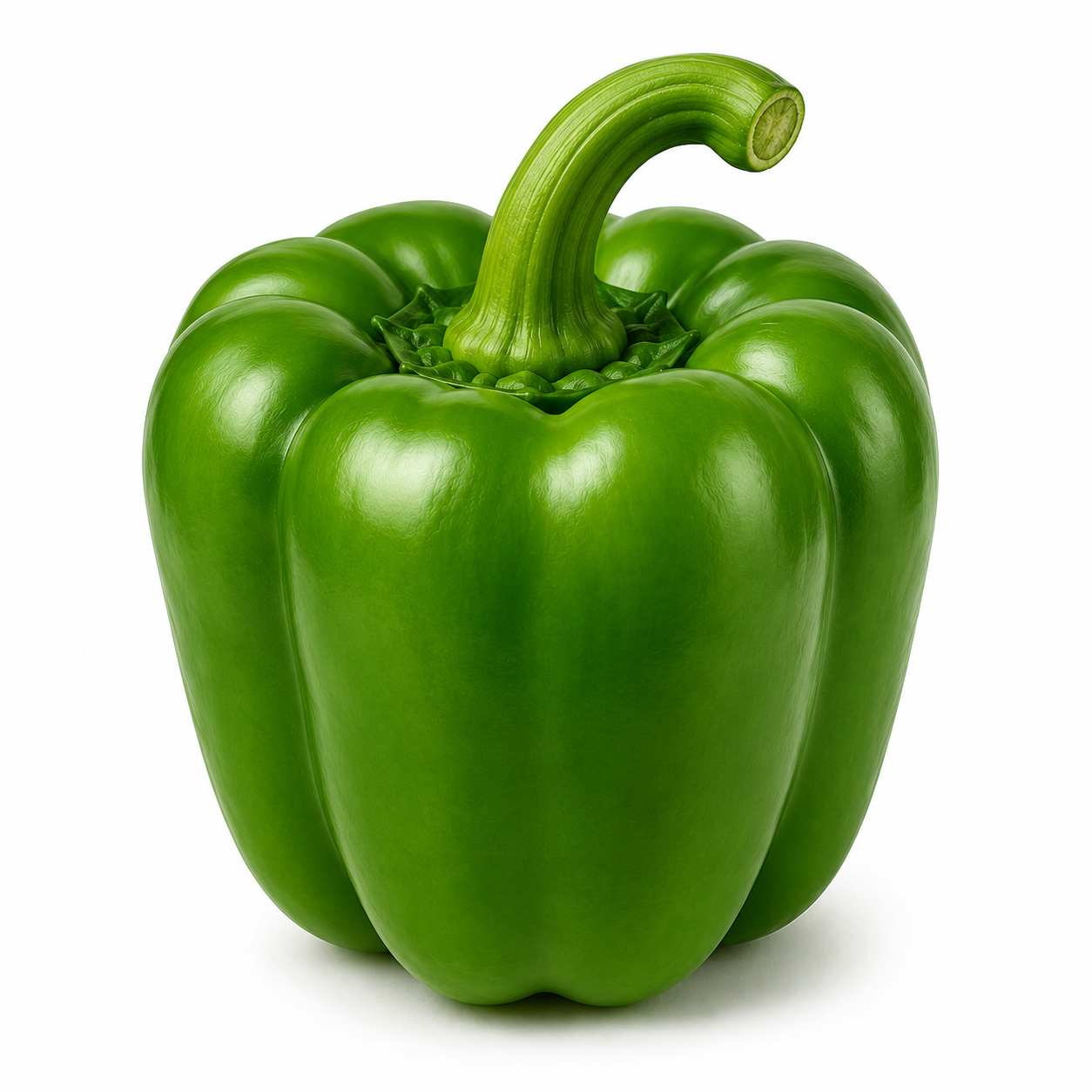
Green Bell Pepper
Flavor: crisp, grassy, fresh, vegetal and mildly bitter, with less developed sugar than fully colored peppers.
Green bell peppers are normally harvested after reaching full size but before developing their mature varietal color. Their firm walls and assertive flavor work well in savory preparations.
Best uses: stuffing, pizza, sautéed vegetables, eggs, fajitas, Cajun trinity, kebabs, salads, relishes and tomato-based sauces.
Harvest: picked when full-sized, glossy, firm and uniformly green. They usually require less growing time than colored peppers and are often less expensive.
Quality: choose heavy peppers with tight glossy skin, firm walls, a fresh stem and no soft spots, shriveling, cuts or decay.
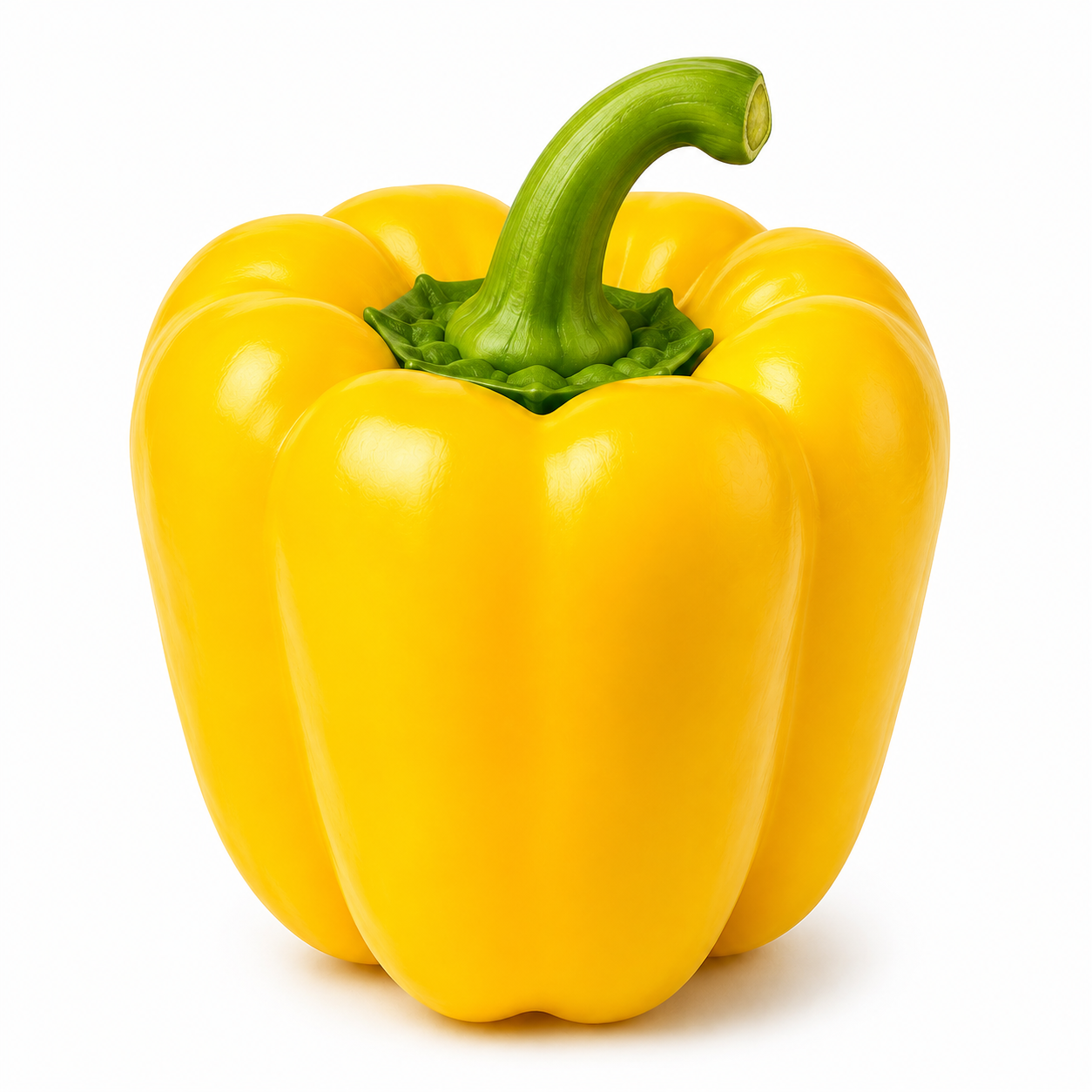
Yellow Bell Pepper
Flavor: mild, clean, gently sweet and subtly fruity, with less bitterness than green pepper.
Yellow peppers come from cultivars that mature to yellow or golden. Their delicate sweetness and bright color make them especially useful with seafood, tuna, fresh salads and elegant vegetable preparations.
Best uses: Ahi tuna preparations, seafood, pasta, composed salads, crudités, grilled vegetables, coulis, salsa and garnish.
Harvest: picked after the fruit develops its intended yellow color. Full coloration requires more time on the plant than the mature-green stage.
Quality: select firm, glossy and evenly colored fruit. Avoid soft walls, deep bruising, wrinkling, mold or wet decay.
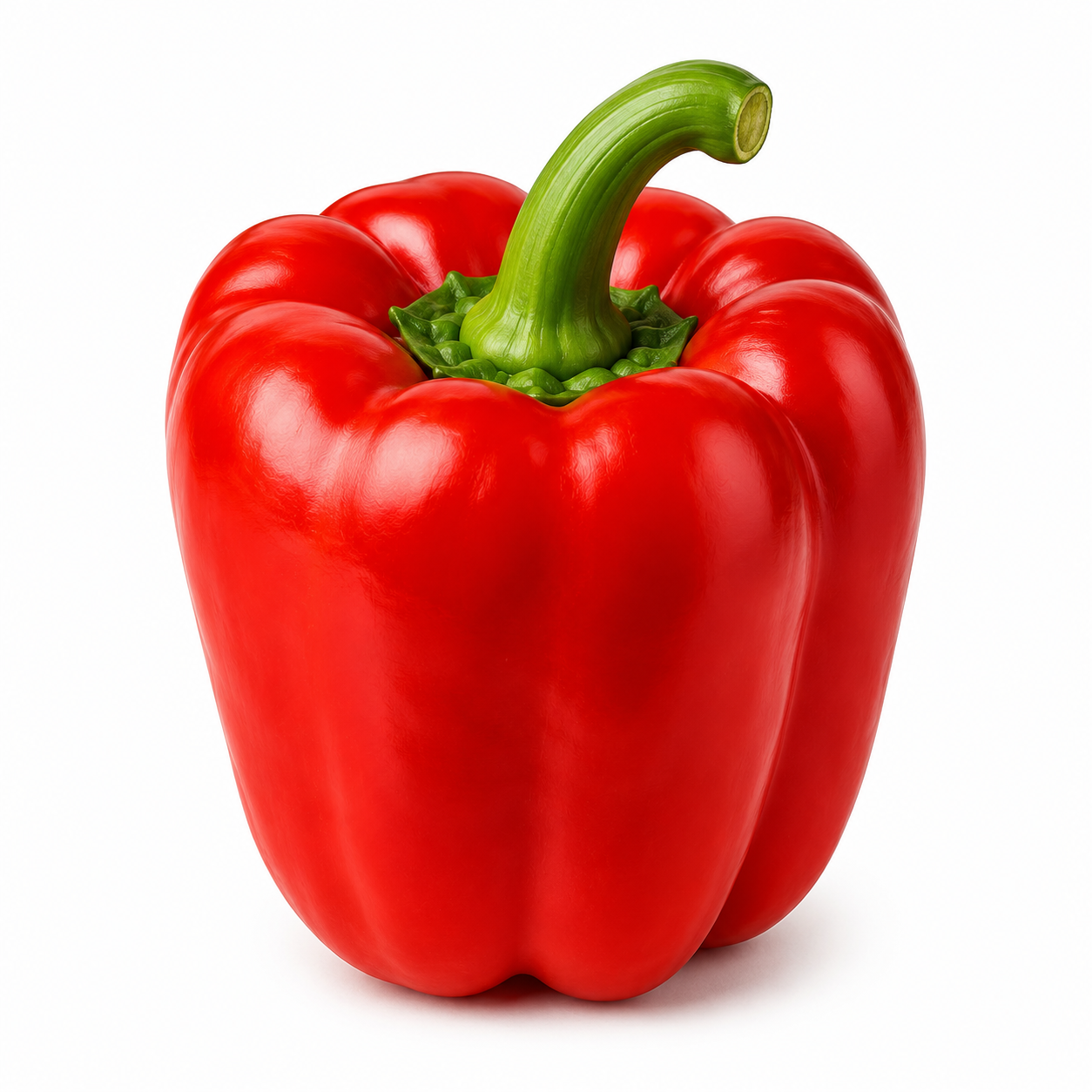
Red Bell Pepper
Flavor: the sweetest and ripest of these three colors, with fuller fruitiness and rich caramelized flavor after roasting.
Red bell peppers are allowed to develop full color and flavor. Their natural sweetness intensifies under roasting, grilling and charring.
Best uses: roasted peppers, antipasti, pasta, risotto, soups, sauces, coulis, romesco, spreads, sandwiches and seafood dishes.
Harvest: picked when fully red, firm and glossy, before softening or wrinkling begins. Their longer growing time commonly creates a higher market price.
Quality: choose thick-walled, heavy peppers with uniform red color, smooth skin and no soft areas or decay.
Seasonality and Harvest Months
Bell peppers are warm-season crops. In many temperate North American regions, local field harvest is strongest from July through October. Southern growing regions may harvest during spring, fall or winter, and greenhouse production helps maintain year-round availability.
| Period | Typical availability |
|---|---|
| January-March | Greenhouse and imported supply are especially important. |
| April-June | Southern and protected production increases. |
| July-October | Peak field harvest in many temperate growing regions. |
| November-December | Field supply declines in cool regions; greenhouse and imports expand. |
Cultivation and Quality Types
Open-field peppers
Seasonal volume and good flavor, with more natural variation in size, shape and surface appearance.
Seasonal volume and good flavor, with more natural variation in size, shape and surface appearance.
Greenhouse peppers
More uniform size, color and finish, often used for premium colored pepper programs.
More uniform size, color and finish, often used for premium colored pepper programs.
Blocky bell peppers
Thick-walled peppers with three or four lobes, ideal for stuffing, roasting and standardized cuts.
Thick-walled peppers with three or four lobes, ideal for stuffing, roasting and standardized cuts.
Mini sweet peppers
Small, colorful and sweet peppers used for roasting, crudités, snacking and garnish.
Small, colorful and sweet peppers used for roasting, crudités, snacking and garnish.
Elongated sweet peppers
Longer or tapered peppers that are often excellent for frying, grilling and rustic preparations.
Longer or tapered peppers that are often excellent for frying, grilling and rustic preparations.
Processing grade
Sound peppers with cosmetic imperfections, useful for sauces, soups, purées and diced production.
Sound peppers with cosmetic imperfections, useful for sauces, soups, purées and diced production.
Chef's Color Comparison
| Color | Flavor | Texture | Best applications |
|---|---|---|---|
| Green | Grassy, vegetal and mildly bitter | Very crisp and firm | Stuffing, pizza, sautéing and savory dishes |
| Yellow | Mild, sweet and lightly fruity | Firm and juicy | Tuna, seafood, salads, pasta and garnish |
| Red | Ripe, sweet and full flavored | Fleshy and juicy | Roasting, sauces, antipasti and purées |
Storage and Preparation
- Refrigerate unwashed peppers in a ventilated produce area.
- Keep peppers dry and protected from crushing pressure.
- Wash under running water immediately before preparation.
- Remove the stem, seeds and white internal ribs for clean cuts.
- For roasting, blister the skin, cover briefly and peel without rinsing away flavor.
- Record trim loss when calculating recipe yield and ingredient cost.
Recipes Using Bell Peppers
Published recipes can connect directly to this ingredient page. Each recipe should use the exact color icon required by the recipe so the ingredient identity remains accurate throughout the Tuscany Cuisine system.

Ahi Tuna Tartare Tower with Pepper Relish
This plated appetizer uses all three bell pepper colors: 40 grams of red bell pepper, 40 grams of yellow bell pepper, and 40 grams of green bell pepper in the base recipe. Each pepper contributes a distinct flavor, texture, and visual role.
The recipe produces six servings with 75 grams of ahi tuna per plate. The separate pepper icons connect the recipe directly to the correct red, yellow, and green sections on this page.
Open Ahi Tuna Tartare RecipeBell Pepper Ingredient Icon System
These icons are not generic vegetable decorations. Each one identifies a separate ingredient with its own flavor, ripeness, purchasing identity, recipe quantity, inventory record, and culinary use.
Green Bell Pepper Icon
Use only when a recipe specifically requires green bell pepper. Link the icon to the green pepper section.
Yellow Bell Pepper Icon
Use only when a recipe specifically requires yellow bell pepper. Link the icon to the yellow pepper section.
Red Bell Pepper Icon
Use only when a recipe specifically requires red bell pepper. Link the icon to the red pepper section.
Tuscany Cuisine Platform Connections
The Bell Peppers page is part of a connected culinary system. The same ingredient identity can support education, recipes, production, purchasing, inventory, menu planning, and future analytics.
Education and Recipes
Menu and Production
Inventory and Purchasing
Ingredient Library Connection
Each recipe should use the icon for the exact pepper color required. The green, yellow and red icons identify three different flavor profiles, not merely three decorative colors.
Ingredient Synchronization
Green, yellow and red bell peppers are registered as separate ingredients. Their icons can synchronize with recipes, inventory, stations, vendors, purchasing and receiving while preserving the exact pepper color.
Bell pepper ingredient records are ready.