Florence Fennel · Finocchio
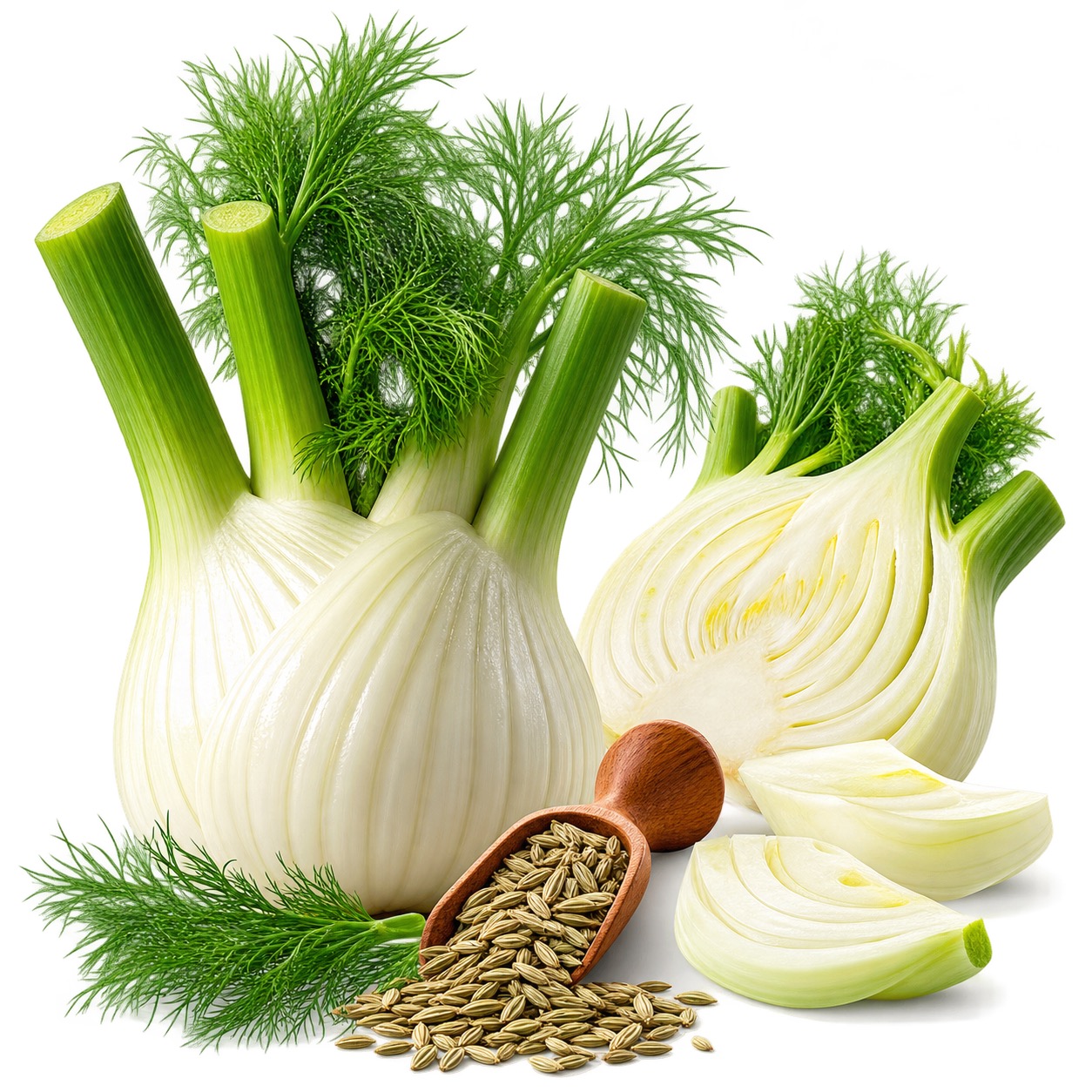
The culinary vegetable form. Thickened leaf bases create a crisp white-to-pale-green bulb with celery-like crunch and a sweet, fresh anise aroma.
VEG-FENNEL-FRESHFinocchio in the Italian kitchen: a crisp, aromatic Mediterranean vegetable whose bulb, stalks, fronds, flowers, pollen and seeds can each play a different culinary role. Learn how climate, variety and harvest stage determine sweetness, tenderness and anise character.
 Active fennel icon
Fennel belongs to the carrot family, Apiaceae. Florence fennel is selected for the swollen, layered leaf bases commonly called the bulb, while common and bronze fennel are grown primarily for foliage, flowers and aromatic fruits commonly called seeds.
The culinary vegetable form. Thickened leaf bases create a crisp white-to-pale-green bulb with celery-like crunch and a sweet, fresh anise aroma.
VEG-FENNEL-FRESHYoung Florence fennel harvested before full bulb size. It is smaller, tender and useful whole or halved for roasting, braising, glazing and refined plate presentation.
Use fresh-fennel identity unless SKU requires separationFeathery green foliage with a lighter, greener fennel aroma. Use as herb, garnish, cure aromatic, salad accent, fish seasoning or finishing component.
fennel_topsThe aromatic fruits sold as fennel seed and the intensely perfumed pollen are dry pantry/spice products. They should not deduct from fresh bulb-fennel inventory.
Separate records when usedRaw fennel is crisp, cool and aromatic; slow cooking softens the anise edge and develops sweetness. The bulb, stalk and fronds are related but not interchangeable in texture. Slice the bulb across the grain for salads, cut through the root for wedges that stay together during roasting or braising, and reserve the fronds for aroma and finishing.
Kew recognizes Foeniculum vulgare as native from the Mediterranean region eastward through parts of Southwest Asia. Fennel has long been used as food, condiment and aromatic plant, and the swollen Florence form became an especially important vegetable in Italian cooking.
Wild and common fennel thrives in sunny Mediterranean landscapes. Its deep aromatic character, drought tolerance after establishment and prolific flowering helped it naturalize far beyond its original range.
Fennel leaves, fruits and aromatic preparations were known in classical Mediterranean cultures. Roman-era culinary and medicinal traditions helped carry fennel throughout Europe.
Florence fennel is the vegetable form prized for its swollen leaf bases. In Italy it is eaten raw, roasted, braised, baked, gratinéed and paired with citrus, olives, fish, pork and cheeses.
The correct form matters because bulb development, foliage color, flavor, bolting tendency and intended harvest are different.
| Type | Primary harvest | Character | Professional use |
|---|---|---|---|
| Florence fennel / Finocchio | Swollen leaf bases, stalks and fronds | Crisp, juicy, sweet-anise profile | Salads, roasting, braising, gratins, soups, fish garnish, purées |
| Baby fennel | Immature whole plant | Tender, mild, elegant small format | Whole roasting, glazing, grilling, braising, tasting menus |
| Common / Sweet fennel | Leaves, flowers and aromatic fruits | Tall herb form; does not form the classic market bulb | Herb use, sausage, stock, fish, pickling, seeds |
| Bronze fennel | Bronze-purple foliage, flowers, fruits | Decorative foliage with fennel aroma | Garnish, herb gardens, edible landscape, aromatic use |
| Fennel seed | Dried aromatic fruits | Warm, sweet, concentrated anise character | Sausage, salumi, bread, spice blends, sauces, marinades |
| Fennel pollen | Collected flower pollen | Very concentrated floral-fennel perfume | Finishing spice for pork, fish, vegetables, pasta and bread |
Modern bulb-fennel cultivars include compact, bolting-resistant selections such as Zefa Fino and Orion. Growers select varieties according to day length, climate, planting window and target bulb size.
“Baby fennel” is usually not a different species. It is Florence fennel harvested young. The smaller bulb and tender stalks can justify a separate vendor SKU even when the culinary identity remains fresh fennel.
Bulb fennel performs best in full sun, fertile well-drained soil and consistent moisture. Heat, drought, root disturbance or an unsuitable planting window can trigger bolting before a good bulb develops.
Strong light supports compact growth and bulb development. Shading or overcrowding can produce weak, elongated plants.
Utah State recommends loamy, well-drained soil in roughly the pH 6.5–8 range. Heavy waterlogged soil and severe compaction work against clean bulb formation.
Bulb fennel needs reliable water during active growth. Moisture stress contributes to tough texture, splitting and premature flowering.
Florence fennel is managed as a cool-season crop. Prolonged heat raises bolting risk, so production windows are often planned for spring or autumn, and winter in mild climates.
Fennel develops a strong root system and can respond to transplant shock by bolting. Direct seeding or careful young transplants are preferred.
Many Florence fennel cultivars mature in roughly two to three months. Baby fennel is harvested earlier when the whole plant is still tender.
Commercial availability can be year-round, but field-grown Florence fennel is generally sweetest, crispest and most reliable when the bulb develops in mild to cool weather. Exact calendars vary by region and cultivar.
Excellent production window in many warm-summer climates. Cooling temperatures support bulb enlargement and sweet flavor.
Peak market quality in mild regions. Protect crops where hard freezes are common, but fennel tolerates cool conditions well.
Possible in many regions, especially with early sowing. Rising day length and heat increase the risk of bolting as the season advances.
A good fennel bulb should feel heavy and crisp, with tightly layered leaf bases and fresh green fronds when attached. The aroma should be clean, sweet and characteristic.
| Checkpoint | Accept | Reject / Flag | Kitchen action |
|---|---|---|---|
| Bulb | Firm, dense, pale, crisp layers | Softness, severe splitting, brown decay, sliminess | Trim root and damaged outer layers only as needed. |
| Stalks | Crisp and green | Rubbery, yellowing, collapsed | Use in stock, braise or aromatic prep when quality allows. |
| Fronds | Fresh, feathery, aromatic | Blackened, slimy, heavily wilted | Separate immediately for garnish or recipe issue. |
| Aroma | Clean sweet-anise and green notes | Fermented, sour, musty or chemical odor | Reject off-aroma product. |
| Storage | Cold refrigerated produce storage | Warm, dehydrated or exposed to condensate | Protect from drying; use fronds promptly. |
USDA reference data for raw fennel bulb shows a water-rich vegetable with modest carbohydrate, useful dietary fiber, vitamin C and potassium. Values below are approximate per 100 g edible portion.
| Nutrient · raw bulb | Per 100 g | Chef interpretation |
|---|---|---|
| Water | 90.21 g | Explains crisp texture and sensitivity to dehydration. |
| Calories | 31 kcal | Low energy density. |
| Carbohydrate | 7.30 g | Includes natural sugars and fiber. |
| Dietary fiber | 3.1 g | Contributes structure and bulk. |
| Total sugars | 3.93 g | Supports the naturally sweet profile, especially after cooking. |
| Potassium | 414 mg | One of the more notable minerals in raw fennel bulb. |
| Calcium | 49 mg | Present in modest quantity. |
| Vitamin C | 12 mg | Raw preparations retain the fresh vitamin-C contribution better than prolonged cooking. |
| Folate | 27 µg | Present in modest amount. |
Nutrition note: composition varies by cultivar, maturity and preparation. Use the actual supplier or approved nutrition-analysis source for menu labeling.
Every part of fresh fennel can be useful, but each part needs a preparation suited to its texture and aromatic strength.
Shave thin for salads with citrus, apple, pear, radish, olives, Parmigiano, pecorino, seafood or vinaigrette. Ice water can increase crispness before service.
Cut through the root into wedges, season with olive oil and roast until browned and tender. Excellent with pork, chicken, fish and Mediterranean vegetables.
Slow cooking in wine, stock, tomato or citrus softens the fibers and develops sweetness while retaining a gentle fennel perfume.
Use bulb and stalk in fish soups, vegetable soups, bisques, sauces, coulis and purées. The flavor works especially well with tomato and seafood.
Use as a fresh herb in cures, marinades, seafood, salsa verde, salads, oils, dressings and finishing garnish. Add late when you want the freshest aroma.
Use seed in sausage, salumi, breads and spice rubs; use pollen as a concentrated finishing spice. Both should remain separate pantry identities.
Do not automatically discard the stalks and fronds. Stalks can flavor stocks, braises and sauces; fronds can finish seafood, cure mixtures, salads and oils. Record trim yield when fennel cost materially affects the recipe.
This counter includes only recipes already confirmed in the Tuscany Cuisine platform. New connections can be appended to the embedded recipe record without changing the page design.

Uses fresh Fennel Tops / Fennel Fronds in the aromatic cure with citrus, bay, peppercorn, garlic, onion, sea salt, granulated sugar, brown cane sugar and grappa.
The new fennel.png asset becomes the visual identity for fresh fennel and the current fennel-frond usage record. Seed and pollen remain separate dry-spice identities when they enter recipes or inventory.
TC-ICON-VEG-FENNEL
Match fresh fennel and fennel-frond identities exactly. Do not let generic “fennel” text merge seed, pollen or dried spice into produce inventory.
Track bulb fennel by actual received unit/weight and preserve vendor SKU, case pack and trim yield. Fronds can be separately issued by bunch or gram weight when operationally useful.
Verify firm bulbs, crisp stalks, fresh fronds, no decay, correct pack and lot. Record baby fennel separately only when its vendor SKU, price or yield materially differs.
Botanical range, cultivation and nutrition information was cross-checked against botanical, university-extension and USDA references.
Professional notice: seasonality, cultivar performance, maturity, nutrient composition and market specifications vary by region and supplier. Use the operation's approved vendor specification, food-safety procedures and current nutrition-analysis source for required labeling.