Seasonality
A Green That Signals Spring
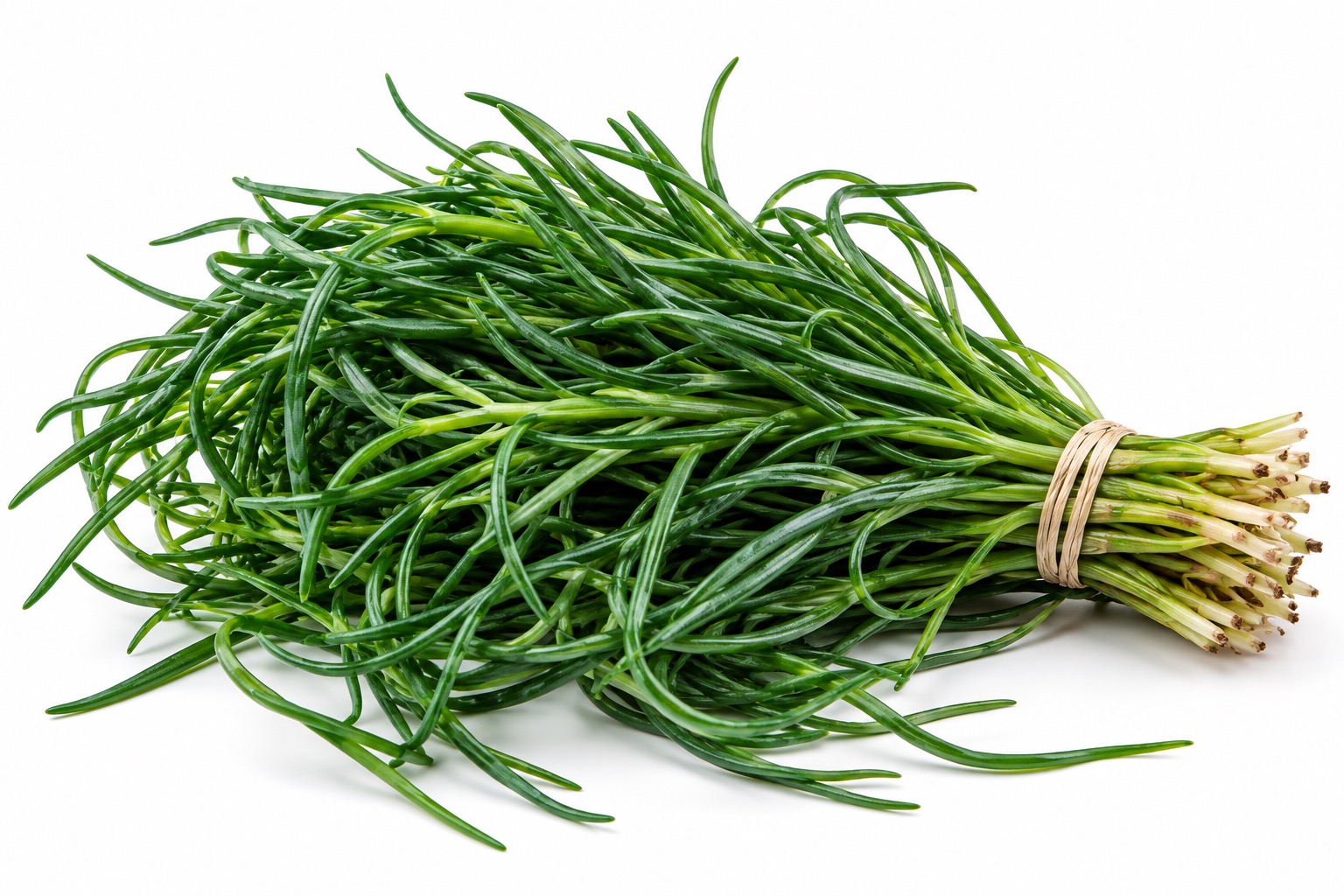
Agretti is most closely associated with spring markets and spring menus in Italy. Its young shoots are at their best when tender, juicy, and bright green. As plants mature they become more branched and fibrous, so chefs prize the early, supple growth.
The Royal Horticultural Society describes sowing in March to April and harvest from late spring to early autumn under suitable conditions. For culinary menu planning, Tuscany Cuisine treats spring through early summer as the prime seasonal window, with local climate determining how far the harvest can extend.
WinterSeed / planning
SpringPeak culinary season
SummerPossible continued harvest
AutumnLate harvest in mild climates
Cultivation
Growing Agretti
Agretti is a halophyte—a plant naturally adapted to saline environments—but it can also be cultivated in ordinary garden soil. Research from USDA-linked work has shown that agretti tolerates saline and boron-laden growing conditions, which makes it an interesting specialty crop for challenging soils.
- Sowing: use fresh seed; germination declines as seed ages. Spring sowing is preferred.
- Temperature: cool conditions favor establishment; commercial seed guidance commonly targets early spring sowing.
- Site: full sun with moist to well-drained soil.
- Water: keep young plants evenly watered, especially during dry periods, without leaving them waterlogged.
- Harvest: cut tender green tops above the growth point to encourage branching and regrowth, or harvest young plants whole.
- Kitchen quality: younger shoots offer the best balance of tenderness, succulence, and clean mineral flavor.
Chef’s cultivation note: culinary quality matters more than plant size. Once the stems become coarse or woody, the vegetable loses the delicate texture that makes agretti special.
Selection + Storage
Buying the Best Agretti
Look for bunches with vivid green, flexible shoots and a fresh, hydrated appearance. The stems should be fine rather than woody, with no slimy patches, blackened tips, sour odor, or excessive yellowing.
- Choose slender, bright green shoots with a crisp snap.
- Avoid bunches that are wilted, crushed, yellowed, or excessively tough at the base.
- Because grit collects around the roots and lower stems, buy with cleaning yield in mind.
- Store refrigerated and loosely protected from dehydration and crushing.
- For best texture, wash close to use rather than storing the vegetable wet.
Preparation
How to Clean Agretti
Trim the root endCut away the brown or woody root base and discard any coarse lower stems.
Separate the tender shootsPull apart dense clusters so sand and soil trapped inside can wash free.
Wash repeatedlySwish in a large bowl of cold water, lift the greens out, discard the gritty water, and repeat until the water is clean.
Drain thoroughlyUse a colander or salad spinner gently. Excess water can dilute olive-oil sautés and prevent proper seasoning.
Cook brieflyBlanch, steam, or sauté only until tender. The best agretti keeps its green color and a little resilience.
Culinary Usage
How Italian Kitchens Use Agretti
Agretti works best when cooking respects its freshness. Its mineral edge pairs naturally with acidity and fat, which explains the classic Italian combination of lemon and olive oil.
Blanched + DressedBriefly blanch, drain, and dress with lemon, extra-virgin olive oil, sea salt, and black pepper.
Garlic SautéSauté quickly with sliced garlic and olive oil; finish with lemon zest or a few drops of lemon juice.
PastaToss with spaghetti or other long pasta, pasta water, EVOO, garlic, and Parmigiano or Pecorino when appropriate.
Fish + SeafoodUse the clean mineral profile as a vegetable bed or garnish for grilled, roasted, or poached seafood.
EggsFold cooked agretti into frittata, omelets, or soft eggs with aged cheese.
Salad / CrudoVery young tender shoots may be used raw in small quantities for crunch and a grassy-saline accent.
Natural flavor partners: extra-virgin olive oil, garlic, lemon, Parmigiano Reggiano, Pecorino, anchovy, eggs, white fish, shellfish, fresh herbs, and long pasta.
Nutrition
Raw Agretti — Approximate Nutrition per 100 g
| Nutrient | Per 100 g |
|---|
| Energy | 22 kcal |
| Water | 92.3 g |
| Protein | 1.8 g |
| Available carbohydrate | 2.2 g |
| Fat | 0.2 g |
| Total fiber | 2.3 g |
| Calcium | 131 mg |
| Phosphorus | 34 mg |
| Iron | 1.2 mg |
| Vitamin C | 24 mg |
| Vitamin A, retinol equivalent | 392 µg |
Nutrition reference: CREA / AlimentiNUTrizione food-composition table for raw agretti. Values are reference data for the ingredient itself and may vary by cultivar, growing conditions, freshness, and preparation.
Tuscany Cuisine Connection
Agretti in the Recipe System

Spaghetti with Agretti
Fresh handmade spaghetti with tender agretti, garlic, extra-virgin olive oil, Parmigiano Reggiano, sea salt, and black pepper.
Open the Recipe →