Tender leaves
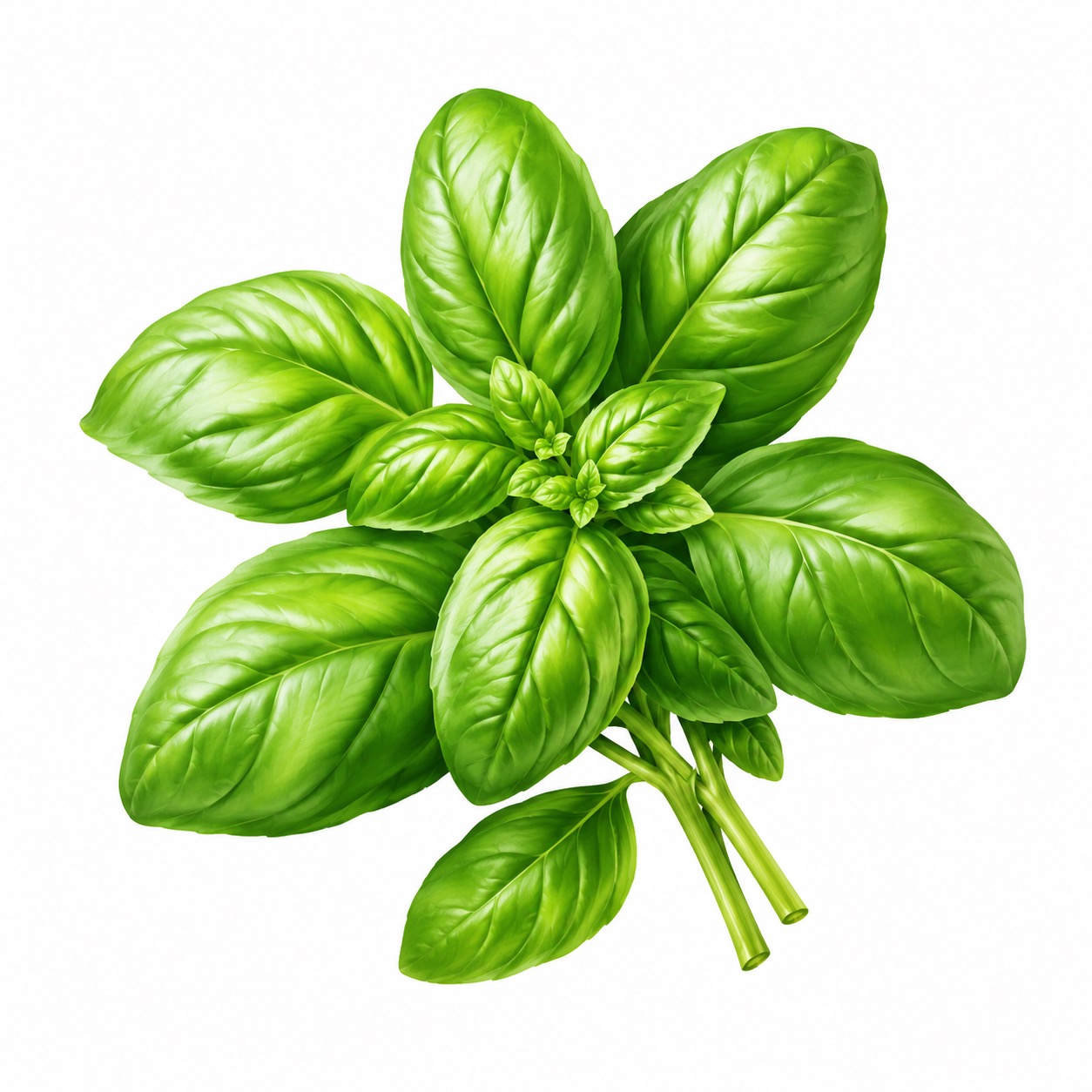
Fresh basil bruises easily. The most aromatic leaves should be handled gently, kept dry, and torn or cut close to service when appearance matters.
Tuscany Cuisine · Fresh Herbs Ingredient Library
Basilico · Ocimum basilicum · Italian & global culinary herb
Basil is one of the world's most recognizable fresh culinary herbs and one of the defining aromas of Italian summer cooking. Tender leaves bring sweet, green, floral, peppery and clove-like notes to pesto, tomato, burrata, mozzarella, pasta, pizza, soups, vegetables and sauces. In Liguria, basil reaches one of its most celebrated expressions in Basilico Genovese DOP and the tradition of Pesto Genovese.
Ingredient identity
Sweet basil, Ocimum basilicum, is an aromatic herb in the Lamiaceae family. The plant produces tender, highly fragrant leaves whose flavor changes significantly by cultivar, climate, maturity and growing conditions. Basil is used fresh more often than dried in high-quality professional cooking because its most valued aromas are volatile and delicate.
fresh_basilHERB-BASIL-FRESH-001Fresh basil bruises easily. The most aromatic leaves should be handled gently, kept dry, and torn or cut close to service when appearance matters.
Basil is tropical in origin and is not frost-hardy. Warm temperatures drive vigorous growth and strong leaf production.
Drying changes basil's aroma substantially. Dried basil can be useful in cooked sauces, but it is not a direct sensory replacement for fresh basil in pesto or finishing applications.
Once basil begins flowering heavily, leaf texture and aroma can change. Culinary growers commonly pinch flower buds to extend tender leaf production.
History & global movement
Kew's Plants of the World Online recognizes the native range of Ocimum basilicum from tropical and subtropical Asia to northern Australia, with the plant now cultivated broadly around the world. Over centuries basil traveled with agriculture, migration, trade and cooking traditions and became deeply integrated into cuisines across Asia, the Middle East, Africa, Europe and the Americas.
Many basil forms remain essential in South and Southeast Asian cooking, where they appear in curries, stir-fries, soups, beverages and religious or cultural traditions.
Sweet basil became strongly associated with Mediterranean cuisine, especially tomato, olive oil, garlic, cheese, vegetables and fresh summer cookery.
In Italy, basil became especially famous through Ligurian cooking and Pesto Genovese, but it is also used throughout the country with tomatoes, mozzarella, pasta, pizza, seafood and vegetables.
Italian protected tradition
Basilico Genovese DOP is a protected Italian agricultural product from Liguria. The current European specification identifies the production area along the Tyrrhenian coast of the Liguria region and describes a characteristic basil with a strong, pleasant aroma and an absence of mint-like odor. Protected production may take place under cover or in the open, allowing year-round supply.
Pesto Genovese is one of Italy's most famous basil preparations. The official Ligurian tradition identifies seven core ingredients:
The protected specification links Basilico Genovese to Liguria's coastal environment, cultivation methods and local growing knowledge. Young tender leaves, delicate color and the characteristic non-minty perfume are central quality features for culinary use.
Traditional Pesto Genovese is made in a marble mortar with a wooden pestle. The goal is to release basil's aroma without overheating or aggressively destroying the leaves. In modern professional kitchens, a food processor may be used, but short processing, cold ingredients and rapid finishing help reduce oxidation and heat damage.
Basil pesto is extremely popular in Italy and internationally. In Liguria it is a regional culinary emblem, traditionally served with pasta shapes such as trenette, trofie and mandilli, and also used to flavor minestrone. Potatoes and green beans are classic accompaniments with pasta and pesto even though they are not part of the core pesto sauce itself.
Basil around the world
The basil family includes several species and many cultivars. Common names can overlap, so professional kitchens should identify the intended basil by flavor, leaf form and botanical or supplier identity rather than assuming every "basil" is interchangeable.
| Type | Botanical / identity note | Flavor profile | Professional culinary use |
|---|---|---|---|
| Sweet / Italian basil | Primarily Ocimum basilicum | Sweet, floral, peppery, clove-like | Tomato, pasta, sauces, salads, mozzarella, finishing |
| Genovese basil | Sweet-basil type selected for broad tender leaves; protected Basilico Genovese DOP is a specific Ligurian identity | Sweet, fragrant, delicate, classic pesto aroma | Pesto Genovese, pasta, tomato, fresh sauces |
| Thai basil | O. basilicum types commonly used in Southeast Asia | Anise-like, licorice-like, spicy, firmer leaf | Thai curries, soups, stir-fries, noodle dishes |
| Holy basil / Tulsi | Commonly Ocimum tenuiflorum | Spicy, clove-like, peppery, complex | South Asian culinary, tea and cultural uses; not a direct pesto substitute |
| Lemon basil | Often associated with O. × africanum and lemon-scented hybrids | Citrus-forward, bright, floral | Seafood, salads, rice, Southeast Asian dishes, beverages |
| Purple basil | Purple-leaf cultivars of sweet basil and related basil types | Sweet-spicy basil aroma with decorative color | Salads, garnish, flavored vinegar, modern plating |
| Greek / dwarf basil | Compact small-leaved basil forms | Concentrated sweet-herbal aroma | Garnish, small-leaf use, containers, Mediterranean dishes |
| Cinnamon basil | Aromatic cultivar of O. basilicum | Warm cinnamon-clove notes | Fruit, beverages, desserts, aromatic savory applications |
| African / clove basil | Often Ocimum gratissimum | Strong clove, warm spice, robust herbal aroma | West African and tropical cuisines, soups, stews, sauces |
Seasonality & production
Basil prefers warm growing conditions and is damaged by frost. In temperate regions the strongest field season generally runs from late spring through early autumn, with summer providing the most abundant harvest. Greenhouse, hydroponic and protected cultivation make fresh basil available year-round in modern markets.
Professional sensory profile
Basil aroma is highly cultivar-dependent. Sweet basil can show combinations of linalool, eugenol, estragole and other volatile compounds, producing a profile that may read as sweet, floral, clove-like, peppery, anise-like, citrusy or spicy.
Professional culinary applications
The classic high-volume basil application. Use tender, aromatic leaves and avoid unnecessary heat during processing.
Basil and ripe tomato form one of Italian cuisine's strongest flavor partnerships in salads, sauces, bruschetta and pasta.
Fresh basil cuts through rich dairy and complements tomato, olive oil, sea salt and black pepper.
Use in pesto, tomato sauces, butter sauces and fresh finishing. Add at the end when a bright basil aroma is required.
Fresh basil is especially important on simple tomato-and-cheese pizzas. Add late or after baking to preserve fragrance.
Basil can finish vegetable soups or be used through pesto to enrich Ligurian minestrone.
Sweet or lemon basil can complement shellfish, white fish, tomato seafood sauces and citrus-forward preparations.
Excellent with zucchini, eggplant, peppers, peas, green beans, potatoes, artichokes and summer squash.
Basil oil, herb emulsions and purees extend basil into contemporary garnish, sauce and plating systems.
Nutrition profile
Fresh basil is low in calories and provides vitamin K, vitamin A, vitamin C and several minerals. Because chefs normally use basil in small quantities, a 100 g nutrition table is most useful for comparing nutrient density, not for estimating what a few leaves contribute to a finished plate.
| Nutrient | Approximate amount per 100 g fresh basil | Kitchen interpretation |
|---|---|---|
| Energy | 23 kcal | Very low-calorie fresh herb |
| Protein | 3.15 g | Not significant at normal garnish portions |
| Carbohydrate | 2.65 g | Low carbohydrate |
| Fiber | 1.6 g | Present, but normal portions are small |
| Total fat | 0.64 g | Very low fat |
| Calcium | 177 mg | Mineral-dense by weight |
| Iron | 3.17 mg | Meaningful per 100 g, less so per garnish |
| Magnesium | 64 mg | Supports overall nutrient density |
| Potassium | 295 mg | Moderate amount per 100 g |
| Vitamin C | 18 mg | Fresh use preserves more heat-sensitive vitamin C |
| Vitamin A | 264 µg RAE | Provided through carotenoid pigments |
| Vitamin K | 414.8 µg | Fresh basil is especially rich in vitamin K |
Approximate values reflect USDA FoodData Central reference data for fresh basil. Actual composition varies with cultivar, growing conditions, maturity and analytical method. Culinary servings are generally far smaller than 100 g.
Receiving, handling & shelf life
Choose vibrant leaves with strong aroma and no sliminess, yellowing, major black spots or collapsed stems. Inspect the center of bunches for trapped moisture and decay.
Basil is more sensitive to cold than parsley or many hardy herbs. Excessively cold storage can cause blackening and chilling injury, so follow supplier specifications and avoid direct exposure to freezing air.
Wash only as needed for production, then dry thoroughly. Wet basil bruises, discolors and deteriorates quickly.
Do not overpack hotel pans or containers. Compression damages cells and accelerates blackening.
Torn leaves generally show less severe edge damage than aggressive mincing. Chiffonade should be prepared close to service.
Rotate basil aggressively. Remove deteriorated leaves immediately so damaged product does not compromise the rest of the batch.
Tuscany Cuisine ingredient usage
The new Basil page now becomes the canonical educational destination for the existing
fresh_basil inventory identity. Recipes and production records can use the same
basil.png icon rather than the generic ingredient placeholder.
Recipe ID 150
Confirmed base usage: 2 g fresh basil, torn, for 1 serving.
Station: Antipasti. Basil supports vine-ripe tomato, Burrata and extra-virgin olive oil.
Fresh basil is the defining herb in the Tuscany Cuisine Basil Pesto recipe. This page provides the canonical fresh-basil identity for future recipe, inventory, purchasing and menu-cost synchronization.
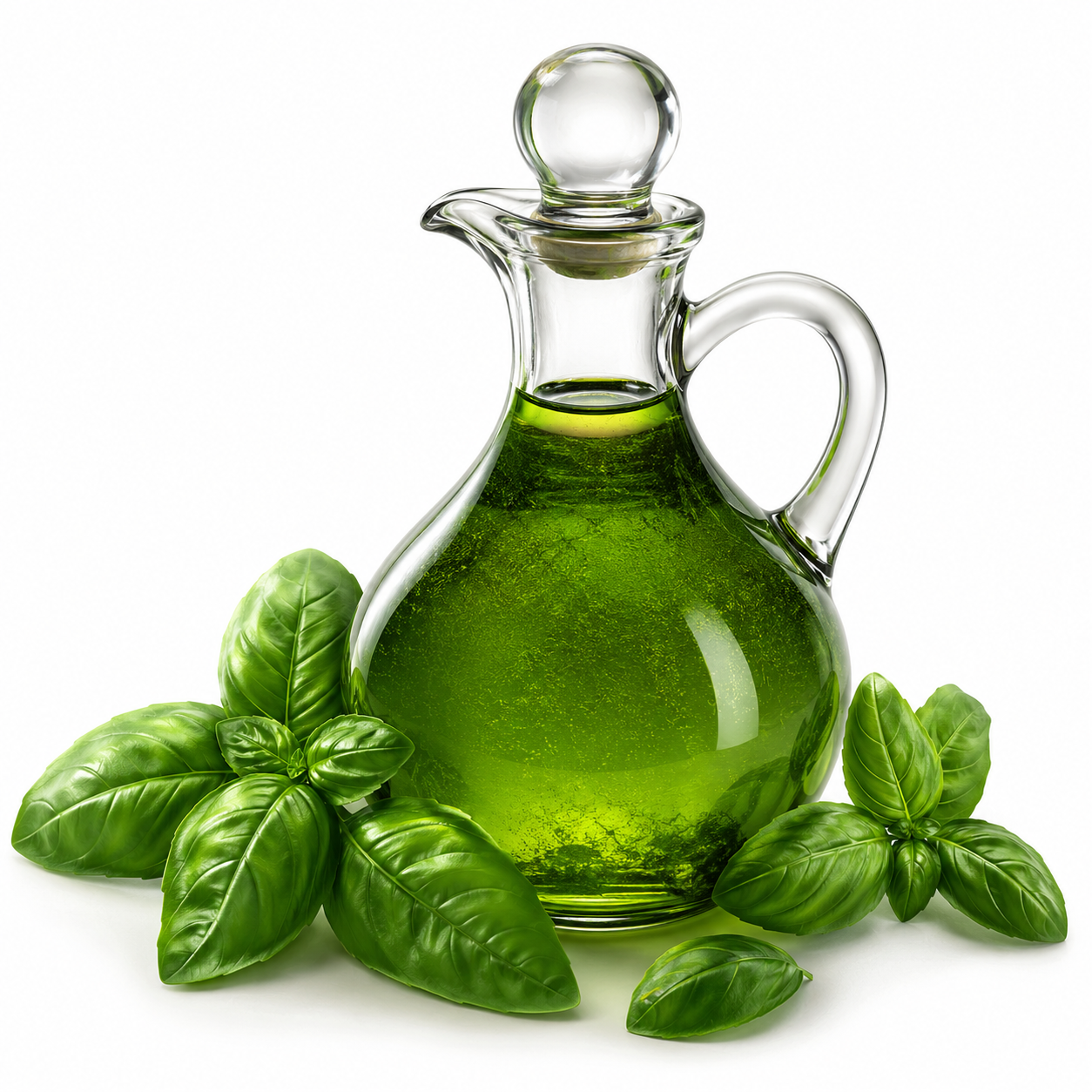
Tuscany Cuisine Basil Oil uses the chef-production method: 500 g fresh basil : 225 g avocado oil. Basil is blanched, shocked in ice water, squeezed thoroughly, blended with the oil, strained through a fine chinois and held refrigerated with a recommended 2-day shelf life.
One ingredient · one identity
HERB-BASIL-FRESH-001fresh_basilfresh_basilTC-ICON-HERB-BASIL-FRESH/academy/ibrary/veggies/herbs/basil.html/academy/ibrary/veggies/herbs/basil.pngfresh_basil inventory ID is preserved, preventing a duplicate basil identity.
basil.png is now the exact visual identity for Fresh Basil instead of the generic placeholder icon.
Basil FAQ
For the protected Ligurian tradition, Basilico Genovese DOP is the reference ingredient. In kitchens outside Liguria, high-quality tender Genovese-style sweet basil is commonly used, but it should not be labeled DOP unless it meets the protected specification.
It can produce an interesting sauce, but it will not taste like classic Pesto Genovese. Thai basil has a firmer leaf and a stronger anise-like profile, so the substitution changes the dish identity.
Basil bruises and oxidizes quickly, and cold injury can also darken leaves. Use a sharp knife, avoid crushing, keep leaves dry and prepare chiffonade close to service.
Usually not when fresh aroma is the goal. Long cooking reduces basil's delicate volatile aroma. For many dishes, add fresh basil late and reserve some leaves for finishing.
Yes through greenhouse, hydroponic and protected production. Outdoor field basil is strongly seasonal in cooler climates, while Basilico Genovese DOP may be produced throughout the year under its current protected specification.
Reference sources