Ingredient Identity
Common culinary sage
Salvia officinalis is an evergreen, bushy subshrub in the mint family, Lamiaceae. The leaves are oblong, aromatic, grey-green and softly textured. It is the standard culinary sage used throughout European and Mediterranean cooking.
Botanical nameSalvia officinalis
FamilyLamiaceae
Common namesSage · Common sage · Garden sage · Salvia
Plant typeEvergreen aromatic subshrub
Primary part usedLeaves
FlavorSavory · earthy · resinous · peppery
Kitchen formFresh leaves · dried rubbed · ground
Primary platform categoryFresh Produce / Fresh Herbs
Identity rule: this page is for Salvia officinalis, the common culinary sage. Other plants called “sage” may belong to different species and can have different flavors or culinary suitability.
History
From Mediterranean herb to European kitchen classic
Sage carries one of the longest culinary reputations among European herbs. Its story crosses ancient Mediterranean traditions, Roman culture, medieval monastery gardens and the evolution of regional European cooking.
Ancient Mediterranean
Food, fragrance and traditional use
Greek and Roman writers described sages as valued aromatic plants. The plant later known as Salvia officinalis became closely associated with household, culinary and traditional medicinal use.
Roman world
The name Salvia
The genus name is associated with Latin words connected with health and saving. Roman culture gave sage a strong reputation as a useful and respected herb, helping spread its cultivation through Europe.
Middle Ages
Monastery and kitchen gardens
Sage was widely cultivated in European monastery and household gardens. Medieval texts and the Salernitan tradition gave the herb a celebrated place in the historical culture of food and healing.
Early modern Europe
A seasoning becomes regional tradition
Sage became established in meat cookery, sauces, sausages, stuffings, cheeses and herb preparations across Europe while retaining particularly strong importance in Italian and Mediterranean kitchens.
Modern professional cuisine
Classic and contemporary
Today chefs use sage both traditionally and creatively: whole fried leaves, sage-brown butter, infused oils, aromatic roasting, fillings, foams, broths and controlled herb garnishes.
Historical medicinal references describe cultural use and are not medical advice. Tuscany Cuisine presents sage here as a culinary ingredient.
Around the World
A Mediterranean herb with global reach
Kew records Salvia officinalis as native from southwestern Germany through southern Europe, with introductions in many other regions. Its success comes from drought tolerance, aromatic foliage and its compatibility with rich savory foods.
Italy
Burro e salvia for ravioli and gnocchi; saltimbocca; beans; veal; pork; squash; potatoes; focaccia and fried sage leaves.
Britain & United States
Sage-and-onion stuffing, poultry, pork, sausages, holiday dishes and savory breads are among the most familiar uses.
Balkans & Mediterranean
Sage appears in herb traditions connected to roasted meats, legumes, teas, aromatic seasonings and dry-climate herb gardens.
Modern restaurant kitchens
Chefs use it in brown butter, herb oils, roasted vegetables, pasta fillings, cocktails, infusions and crisp edible garnishes.
Native vs. cultivated: the genus Salvia is very large, but this page specifically tracks Salvia officinalis. It has been cultivated far beyond its native European range.
Cultivation
Sun, drainage and restraint with water
Common sage is naturally suited to warm, sunny conditions and free-draining soil. Once established it is drought tolerant, while continually wet soil is one of its greatest enemies.
Light
Full sun develops strong growth and concentrated aroma. A sheltered, warm position supports healthy foliage.
Soil
Use free-draining soil. Loam, sandy and chalky soils can work well when water does not remain around the roots.
Water
Water new plants while establishing, then allow the root zone to dry somewhat between waterings. Avoid prolonged wetness.
Habit
A bushy evergreen subshrub, commonly around 30–90 cm depending on cultivar and growing conditions.
Pruning
Light spring pruning and regular harvesting encourage compact new growth. Avoid severe pruning into old bare wood.
Harvest
Fresh growth in spring and summer is especially aromatic. Pick leaves or young shoots and harvest before prolonged storage whenever possible.
Professional herb-garden workflow
- Plant in full sun with reliable drainage.
- Keep foliage dry when possible and avoid waterlogged roots.
- Harvest clean young leaves regularly to promote bushy growth.
- Remove flowering stems after bloom if leaf production is the goal.
- Replace old, woody, weak plants when leaf quality declines.
Chef David's culinary perspective
Sage is an herb where strength matters. One leaf can perfume a plate. The best cooking uses do not bury the food under sage; they use heat and fat to release the aroma, then control the amount so the herb supports the ingredient instead of dominating it.
Culinary Usage
How chefs control sage flavor
Sage loves fat. Butter, olive oil and rendered meat fat dissolve and carry its aromatic compounds, which is why the herb is so successful with pasta, veal, pork, poultry, beans and winter vegetables.
Technique by timing
Early in cooking
Add whole leaves to braises, beans, roasts and soups when you want a rounded, integrated herb character.
During fat infusion
Bloom leaves gently in butter or olive oil to perfume the fat. Watch temperature carefully so the milk solids or herbs do not burn.
At service
Use a crisp fried leaf, finely sliced fresh sage or a controlled drizzle of sage-infused fat when you want the aroma to remain recognizable.
Classic pairings
- Brown butter
- Ravioli
- Gnocchi
- Veal
- Pork
- Poultry
- Cannellini beans
- Pumpkin
- Butternut squash
- Potatoes
- Mushrooms
- Garlic
- Rosemary
- Extra-virgin olive oil
- Lemon
- Parmigiano
- Pecorino
Flavor control: dried sage is more concentrated and diffuse than fresh whole leaves. Start with less, especially in long cooking, and build gradually.
Italian classics
Saltimbocca, pumpkin ravioli, gnocchi with brown butter and sage, stuffed pasta, beans, roast meats and fried sage leaves.
Soups & braises
Excellent with cannellini beans, rustic bread soups, pork-based soups, root vegetables and slow-cooked legumes.
Contemporary applications
Sage oil, herb butter, crispy leaf garnish, savory espuma, aromatic broth, cocktail infusion and dehydrated herb powder.
Nutrition
Concentrated when dried
Herbs are normally eaten in small quantities, so their culinary impact is much larger than their calorie contribution. The standardized USDA legacy reference commonly available for sage is ground dried sage, which is much more concentrated than fresh leaves because most water has been removed.
Nutrition Reference
Ground sage · approx. 1 tbsp (2 g)
Calories6 kcal
Protein0.21 g
Carbohydrate1.21 g
Dietary fiber0.81 g
Total fat0.26 g
Calcium33 mg
Iron0.56 mg
Magnesium8.6 mg
Potassium21 mg
Vitamin K34 µg
Approximate 2 g values calculated from USDA Standard Reference legacy values for ground sage. Fresh sage has substantially more water and should not be treated as nutritionally identical to dried ground sage.
| Nutrient |
Ground sage per 100 g |
Culinary interpretation |
| Energy | 315 kcal | High per 100 g because dried herbs are concentrated, but normal serving weights are tiny. |
| Protein | 10.63 g | Not a meaningful protein food at normal herb portions. |
| Carbohydrate | 60.73 g | Includes a large fiber fraction. |
| Dietary fiber | 40.3 g | Dried leaf material is naturally fiber-dense. |
| Total fat | 12.75 g | Includes naturally occurring plant lipids and aromatic compounds. |
| Calcium | 1,652 mg | Concentrated on a dry-weight basis. |
| Iron | 28.12 mg | Concentrated on a dry-weight basis. |
| Magnesium | 428 mg | Concentrated on a dry-weight basis. |
| Potassium | 1,070 mg | Present, but actual intake remains modest at culinary portions. |
| Sodium | 11 mg | Naturally very low in sodium before seasoning. |
| Vitamin K | 1,714.5 µg | Very concentrated in dried sage by weight. |
Nutrition values are reference data, not a medical recommendation. Dried and fresh sage are not interchangeable nutritionally because moisture content changes nutrient concentration dramatically.
Purchasing & Storage
Protect aroma, texture and color
Fresh sage should smell immediately aromatic when handled. The leaf surface is naturally soft and velvety; quality loss shows as yellowing, blackening, slime, excessive wilting or stale aroma.
Purchase
Select dry, intact grey-green leaves with a strong clean scent. Avoid bunches with wet decay, black patches, mildew or excessive woody stem.
Receiving
Check aroma, leaf integrity, temperature, decay and moisture. Reject product with slime, sour odor or extensive discoloration.
Storage
Hold refrigerated and protected from condensation and crushing. Keep leaves dry and use good air circulation rather than sealing wet herbs tightly.
Preparation
Wash under clean running water as needed, dry thoroughly, then pick leaves from woody stems. Cut close to service when fresh-cut aroma matters.
Drying
Dry in a warm, shaded, well-ventilated place until fully crisp, then protect from light and humidity in an airtight container.
Waste control
Use clean tender stems in stocks or infusions when appropriate. Record trim and spoilage separately so usage data remains meaningful.
Platform Integration
One sage identity across the Tuscany Cuisine system
`Sages.webp` is now the visual identity for fresh sage. This record is designed to keep the same ingredient code, inventory identity, icon and canonical page connected across recipes, Menu Builder, production stations, Live Inventory, vendors, purchasing, receiving and search discovery.
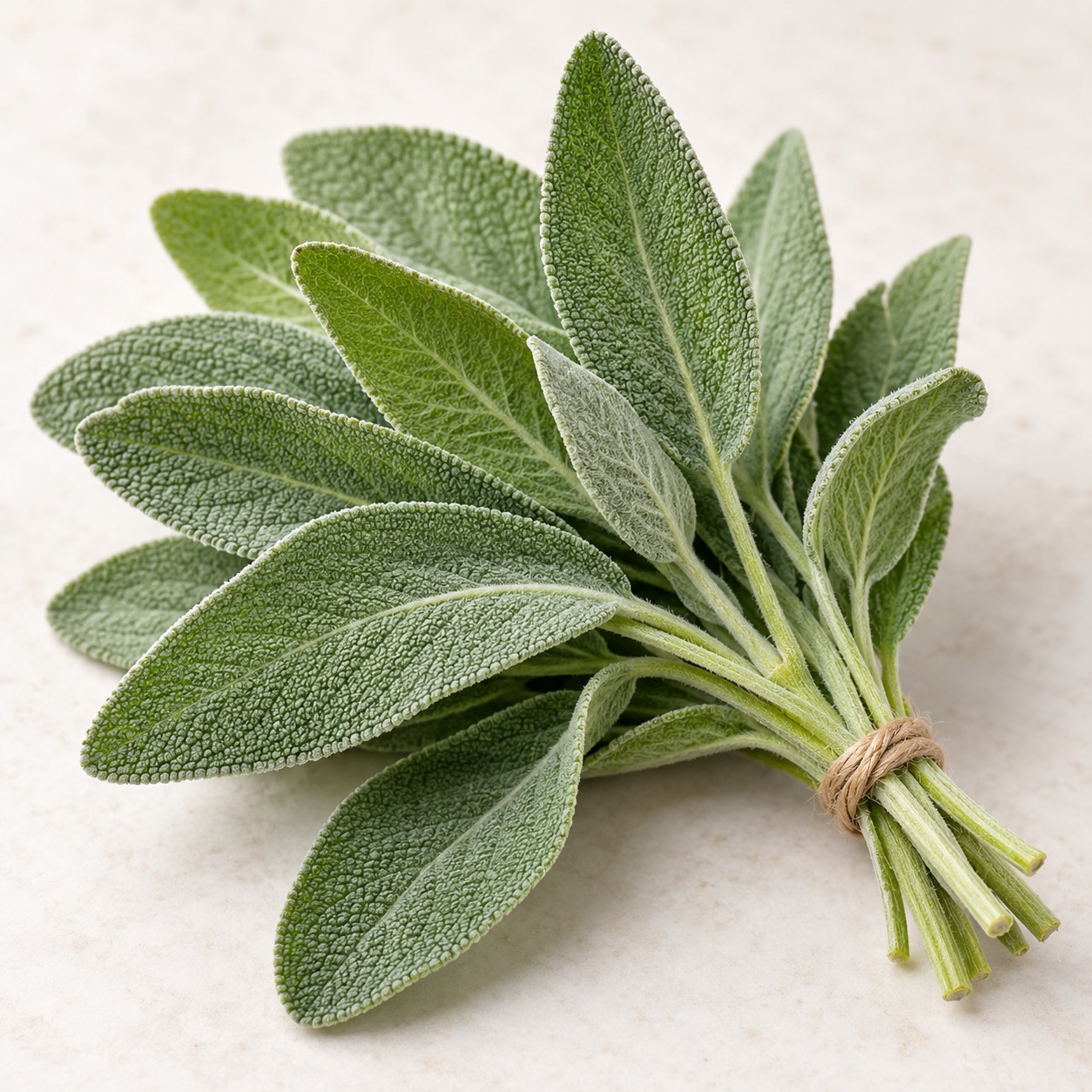 /academy/ibrary/veggies/herbs/Sages.webp
- Canonical name
- Fresh Sage / Salvia
- Botanical name
- Salvia officinalis
- Ingredient code
- HERB-SAGE-COMMON
- Inventory ID
- fresh_sage
- Icon ID
- TC-ICON-HERB-SAGE-COMMON
- Category
- Fresh Produce
- Subcategory
- Fresh Herbs
- Base unit
- g
- Purchase unit
- bunch
- Storage zone
- Refrigerated produce
- Ingredient page
- /academy/ibrary/veggies/herbs/salvia.html
- Connected recipe
- /engine/zuppa/breadcook.html
Status: Active · Live Inventory ready · Recipe icon sync ready · Menu Builder ready · Purchasing/Receiving ready · Search discovery ready.
Recipes
Recipe ingredient rows resolve the same code, inventory ID and `Sages.webp` icon.
Inventory
`fresh_sage` remains the stock identity so quantities can aggregate across recipe directories.
Purchasing
Vendor and purchasing systems can retain the kitchen base unit while ordering by bunch.
Search
ExpertRec / my_result can surface sage by common name, Italian name, botanical name, dishes and culinary techniques.
Research Sources
Botany, cultivation, history and nutrition references
These references support the factual background used in this ingredient guide.
Sage / Salvia. Fresh common sage. Salvia officinalis. Culinary herb. Fresh herbs.
Mediterranean herb. Italian sage. Burro e salvia. Brown butter and sage. Sage ravioli.
Sage gnocchi. Saltimbocca. Sage and cannellini beans. Sage soup. Sage pork. Sage poultry.
Sage pumpkin. Sage butternut squash. Fried sage. Sage cultivation. Sage nutrition.
Sage history. Garden sage. Common sage. Fresh sage ingredient icon.
Tuscany Cuisine ingredient code HERB-SAGE-COMMON. Inventory ID fresh_sage.
Icon Sages.webp. Connected recipe Pan Cotto Tuscan Bread and Cannellini Bean Soup.
Connected systems: Recipes, Menu Builder, Zuppa Station, Live Inventory, Purchasing,
Receiving, Vendor Dashboard, Ingredient Library and search discovery.