Tuscany Cuisine · Ingredients Library

Jicama

Pachyrhizus erosus · Fabaceae

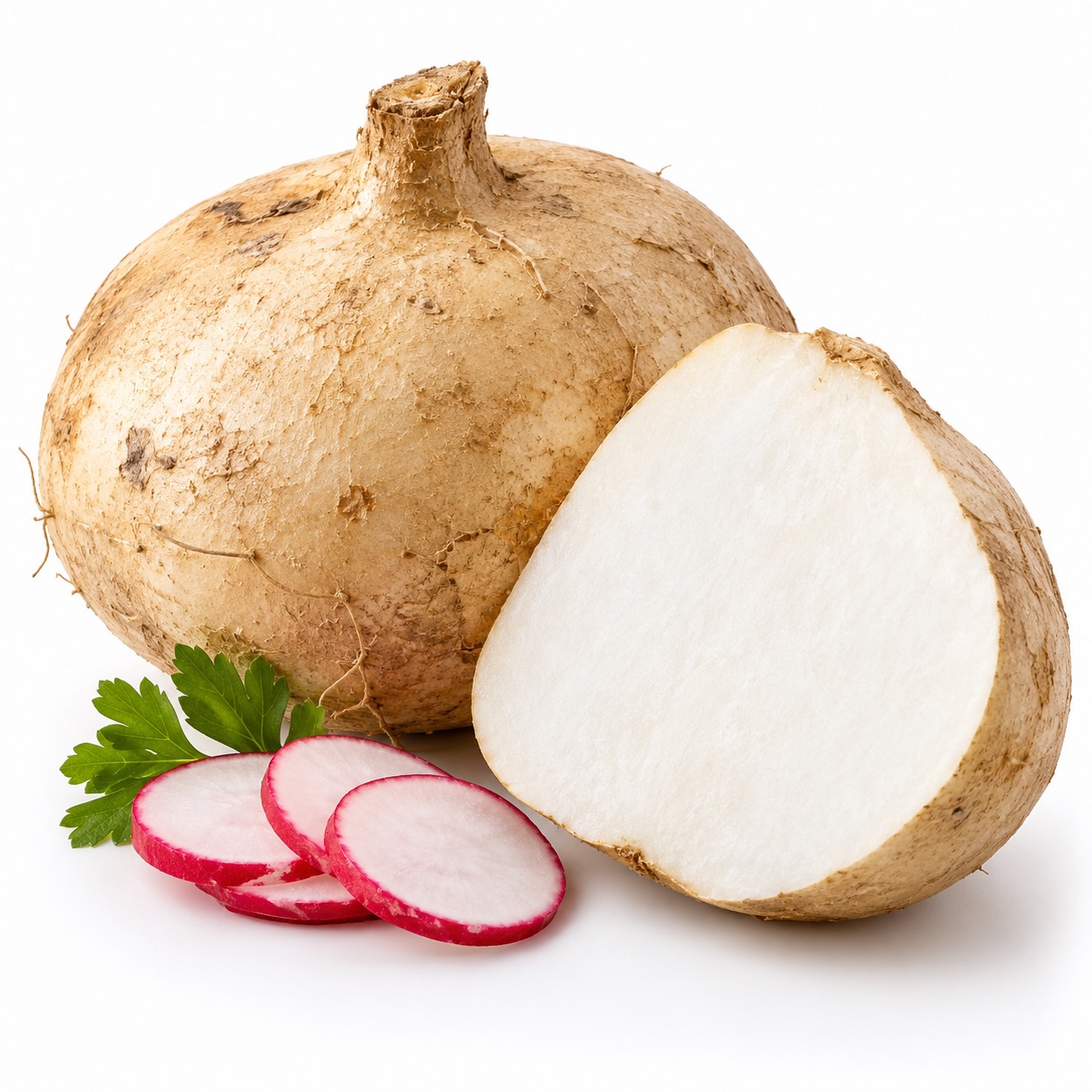
Jicama is a crisp, juicy tuberous root native to Mexico and Central America. Beneath its thin tan skin is white flesh with a clean, mildly sweet flavor and a water-chestnut-like crunch—excellent raw, pickled, sautéed, or used to bring refreshing texture to seafood and composed salads.

Root VegetableVeganGluten-FreeHigh-CrunchVitamin C
Jicama whole and cut open with crisp white flesh
OriginMexico & Central America
Best TextureCrisp, juicy, dense-white flesh
AvailabilityYear-round; strongest Dec–Jun
Platform IDjicama

Origin & History

Jicama belongs to the bean family, yet the part valued in the kitchen is its enlarged underground root. Its center of origin is Mesoamerica, especially Mexico and Central America, where it was cultivated long before European contact.

Pre-Columbian era. Historical and ethnobotanical records document jicama among Toltec, Mexica/Aztec, Maya and Zapotec food traditions.
Nahuatl heritage. The name comes from xīcamatl; Mexican agricultural sources commonly interpret the name as “water root,” reflecting the root's high water content.
Global movement. After Spanish contact, cultivation spread from Mexico to the Philippines and from there into parts of Southeast and East Asia, where the root became integrated into local cuisines.
Modern market. Jicama remains strongly associated with Mexican agriculture and cuisine while also serving chefs globally as a fresh, crunchy root vegetable.

Flavor Profile & Culinary Character

The flesh is crisp, succulent and neutral enough to carry citrus, chile, herbs and vinaigrettes. Compared with potato it is less starchy; compared with apple or pear it is less aromatic; compared with water chestnut it offers a similarly refreshing crunch.

Crispness
5/5
Juiciness
5/5
Sweetness
2/5
Earthiness
2/5
Starchiness
2/5
Acidity
0/5
Chef pairing logic: jicama works especially well with lemon, lime, orange, chile, cilantro, mint, cucumber, radish, avocado, shrimp, crab, scallops, raw fish, sesame, soy, ginger and bright vinaigrettes.

Nutrition · Raw Jicama per 100 g

Jicama is a low-energy, high-water root with meaningful dietary fiber and vitamin C. The values below follow USDA legacy composition data for raw yambean/jicama.

NutrientAmount
Energy38 kcal
Water90.1 g
Carbohydrate8.82 g
Dietary fiber4.9 g
Total sugars1.8 g
Protein0.72 g
Total fat0.09 g
Vitamin C20.2 mg
Potassium150 mg
Calcium12 mg
Iron0.6 mg
Sodium4 mg

Culinary Uses

RawBatons, julienne, shaved ribbons, brunoise, slaws, fruit cups, crudo garnish, ceviche, composed salads.
Cold soupsAdd diced jicama to gazpacho or use it as part of the blended vegetable base for clean sweetness and body.
PickledQuick-pickle with citrus or vinegar, chile, coriander, cumin, ginger or herbs while preserving crunch.
Hot cookingSauté, stir-fry, roast lightly or add to soups; the root keeps more texture than many potatoes.
SeafoodExcellent with crab, shrimp, scallops, tuna and white fish because it adds freshness without overwhelming delicate flavors.
Texture substituteCan stand in for water chestnut when a clean, crisp bite is desired.

Markets, Seasonality & Production

Commercial jicama can be found throughout the year, but Mexican agricultural sources report particularly strong availability from December through June. Specific harvest windows vary with state, climate and planting cycle.

182k+metric tons produced in Mexico in 2024
6,169 haharvested area reported for 2024
70.2%+of 2024 Mexican volume from Nayarit, Morelos & Veracruz combined

U.S. market: USDA postharvest guidance notes that most jicama found in U.S. markets is imported from Mexico. Limited domestic production has historically existed in Hawaii, while California has periodically explored commercial production.

What chefs should buy

  • Choose roots that feel firm, heavy and crisp with relatively smooth skin.
  • Avoid major shriveling, soft spots, deep cuts, mold or internal browning.
  • Smaller to medium roots are often preferred; very large roots can become more fibrous or woody.
  • After peeling, the flesh should be clean white, juicy and crisp.

Professional Kitchen Handling

Prep sequence

  1. Wash the exterior before cutting.
  2. Trim top and bottom to create stable surfaces.
  3. Remove the fibrous brown skin completely with a knife or peeler.
  4. Cut to the required shape: julienne, baton, dice, ribbon or slice.
  5. Hold cut product refrigerated in a covered food-safe container and use promptly for best crunch.

USDA's Food Buying Guide reports approximately 0.89 lb ready-to-serve peeled raw jicama from 1 lb as-purchased, useful for purchasing and prep-yield calculations.

Food-safety note: use the edible tuberous root only. Seeds and other non-root portions of the plant should not be consumed; official Mexican agricultural guidance notes rotenone in the seeds.

Tuscany Cuisine Recipe Connection

Snow Crab SaladJicama is used with tomato and bell pepper in the chilled gazpacho/vegetable composition, bringing crisp texture and clean sweetness to the seafood plate.