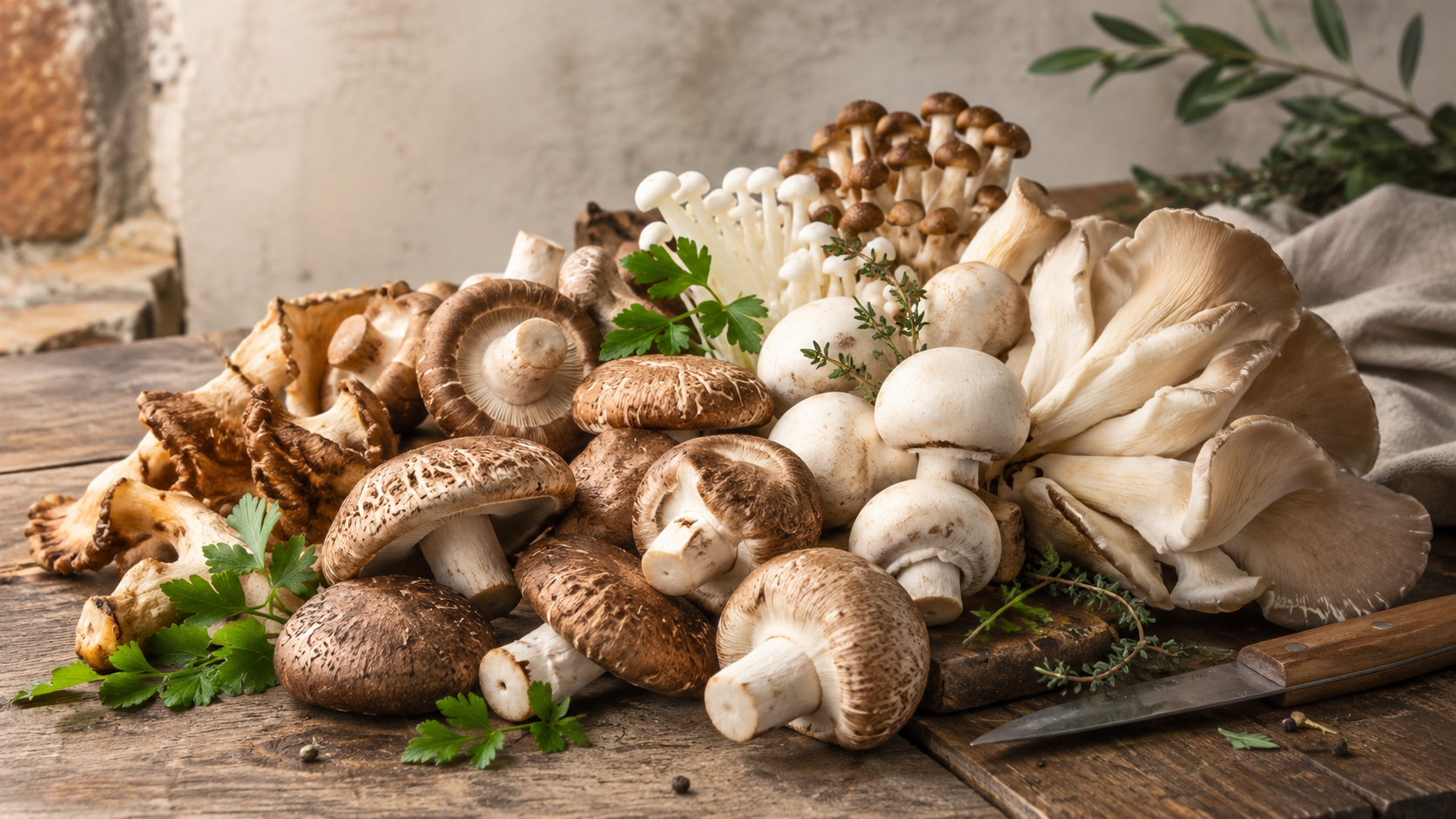
An essential culinary family prized for umami, aroma, texture and extraordinary
versatility—from delicate cultivated varieties to deeply flavored wild mushrooms.
The Culinary World of Mushrooms
Mushrooms are fungi rather than vegetables botanically, yet in professional kitchens
they are commonly organized with produce because they are received, stored, prepared
and cooked as fresh plant-market ingredients. Their naturally savory character makes
them important in sauces, stocks, terrines, pasta, risotto, soups, vegetable cookery,
garnishes and meat or poultry preparations.
The culinary value of mushrooms comes from differences in aroma, moisture, cap and stem
structure, firmness and intensity. Button mushrooms are mild and adaptable; cremini bring a fuller earthy flavor; shiitake
contribute a deeper woodsy character; oyster mushrooms are tender and delicately
aromatic. Treating these varieties as separate ingredient identities allows recipes,
inventory and purchasing to remain precise.
Five Culinary Mushroom Identities
Shiitake, Button and Oyster are used in the Chicken & Mushroom Terrine.
Porcini is an Italian culinary reference. Cremini now has its own graphic, flavor profile
and characteristics, with a direct connection to the
Cremini Mushroom Risotto.
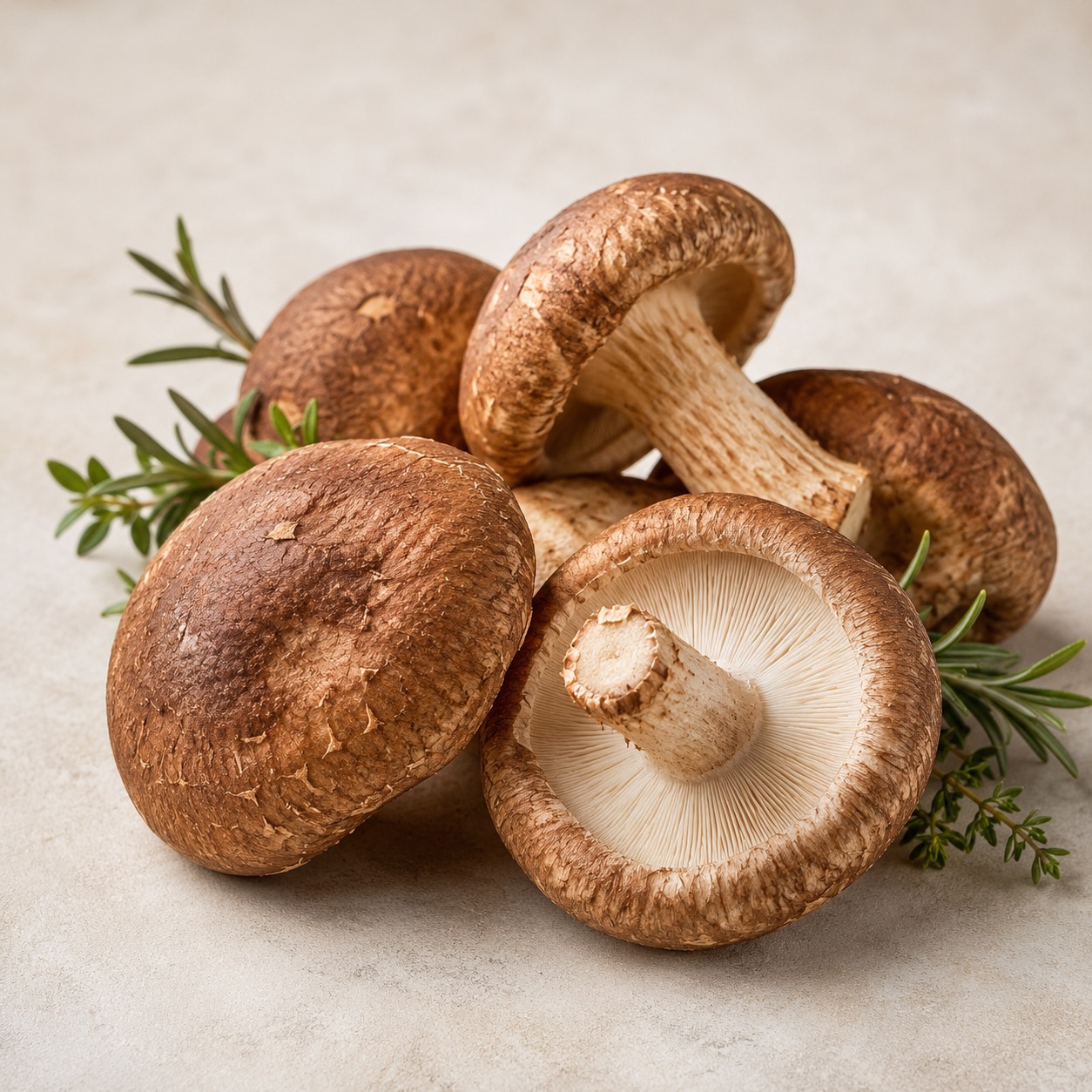
Shiitake
Lentinula edodes
Firm, aromatic and deeply savory. Fresh shiitake are excellent for sautéing, roasting,
broths, fillings and terrines. The stems are usually tougher than the caps and are often
reserved for stocks or infusions.
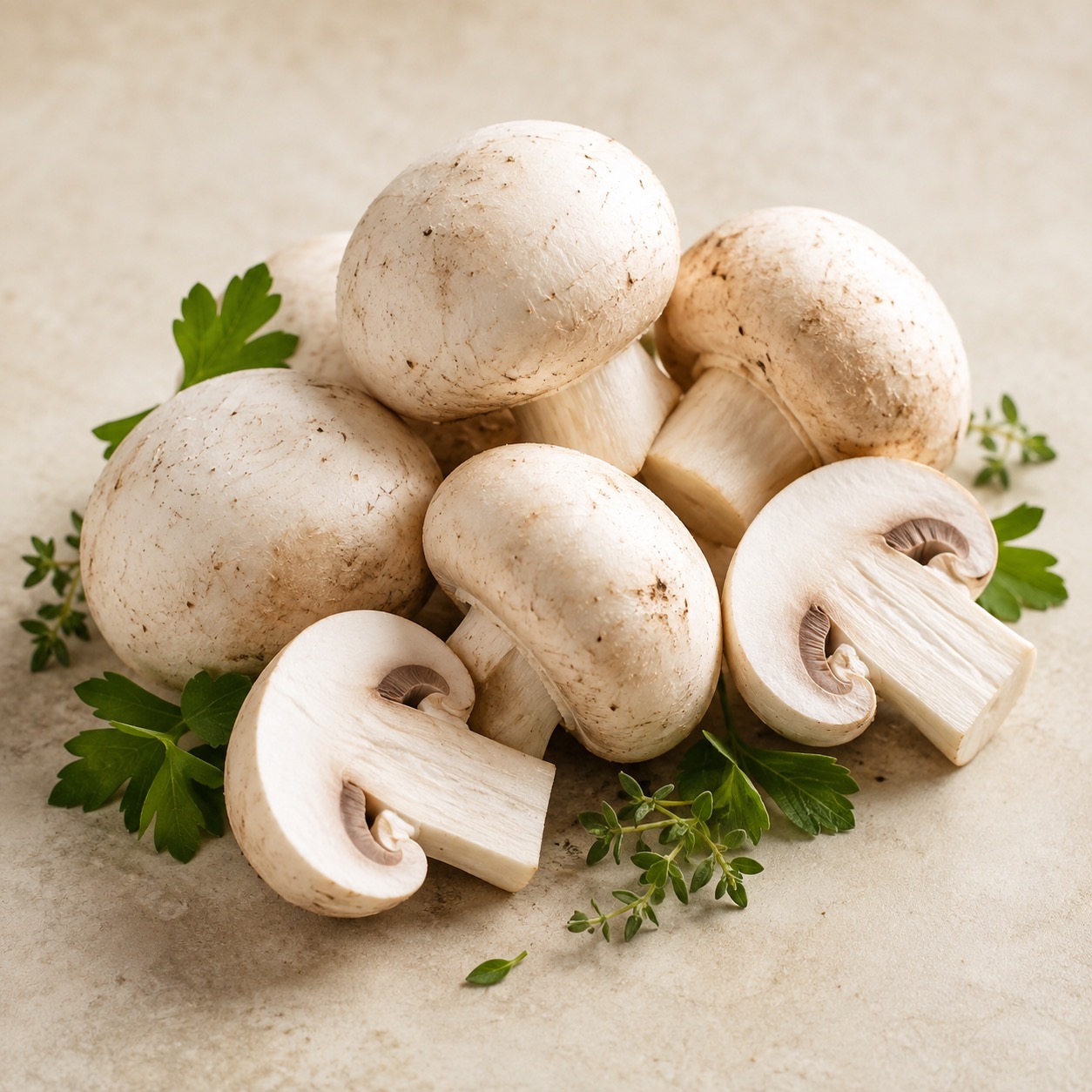
Button Mushroom
Agaricus bisporus
Mild, clean and versatile. White button mushrooms work well raw, sautéed, roasted,
duxelles-style, in stuffings and in preparations where mushroom flavor should support
rather than dominate the dish.
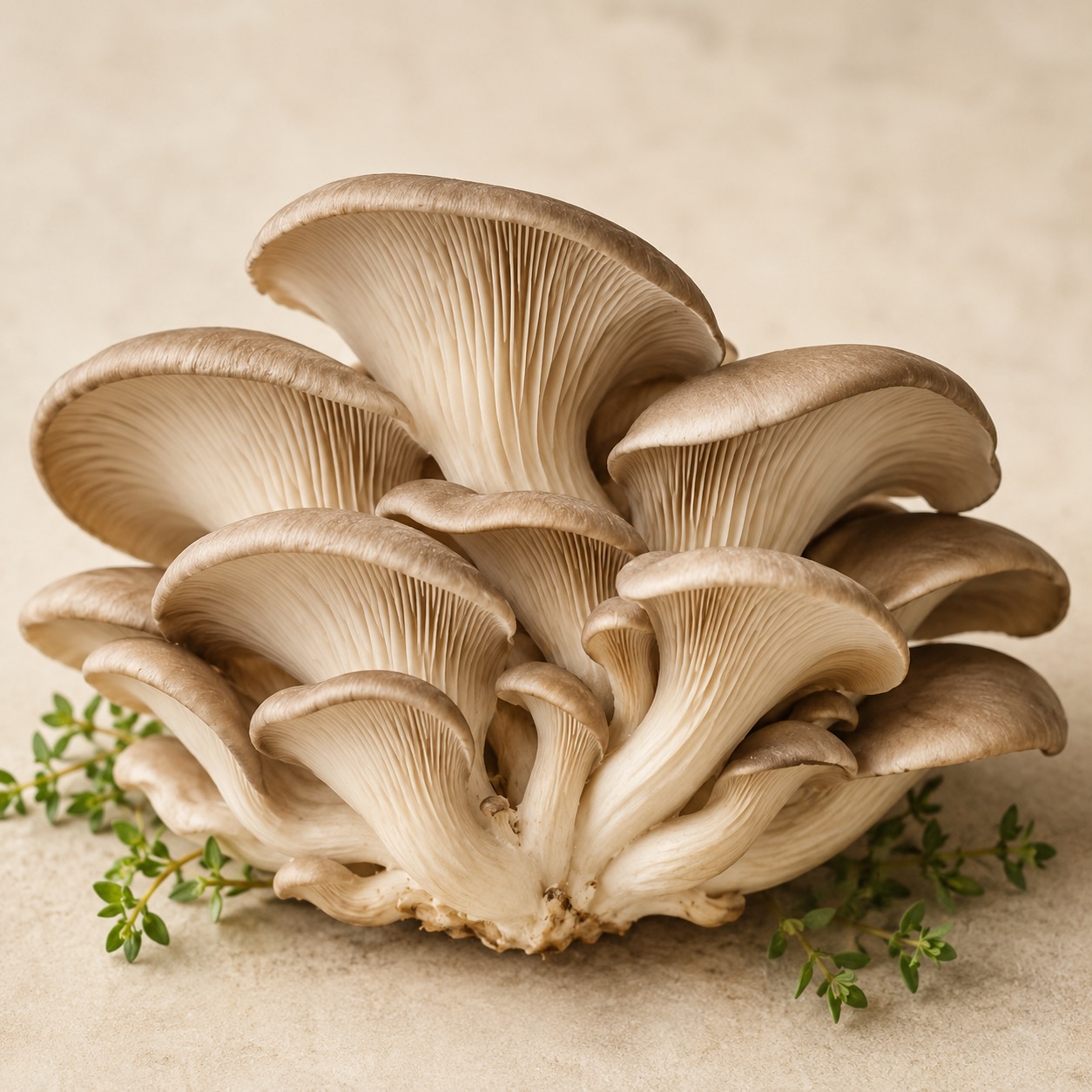
Oyster Mushroom
Pleurotus species
Tender, fan-shaped mushrooms with a delicate savory character. Their layered structure
is excellent for searing, roasting and preparations where both texture and visual form
are important.
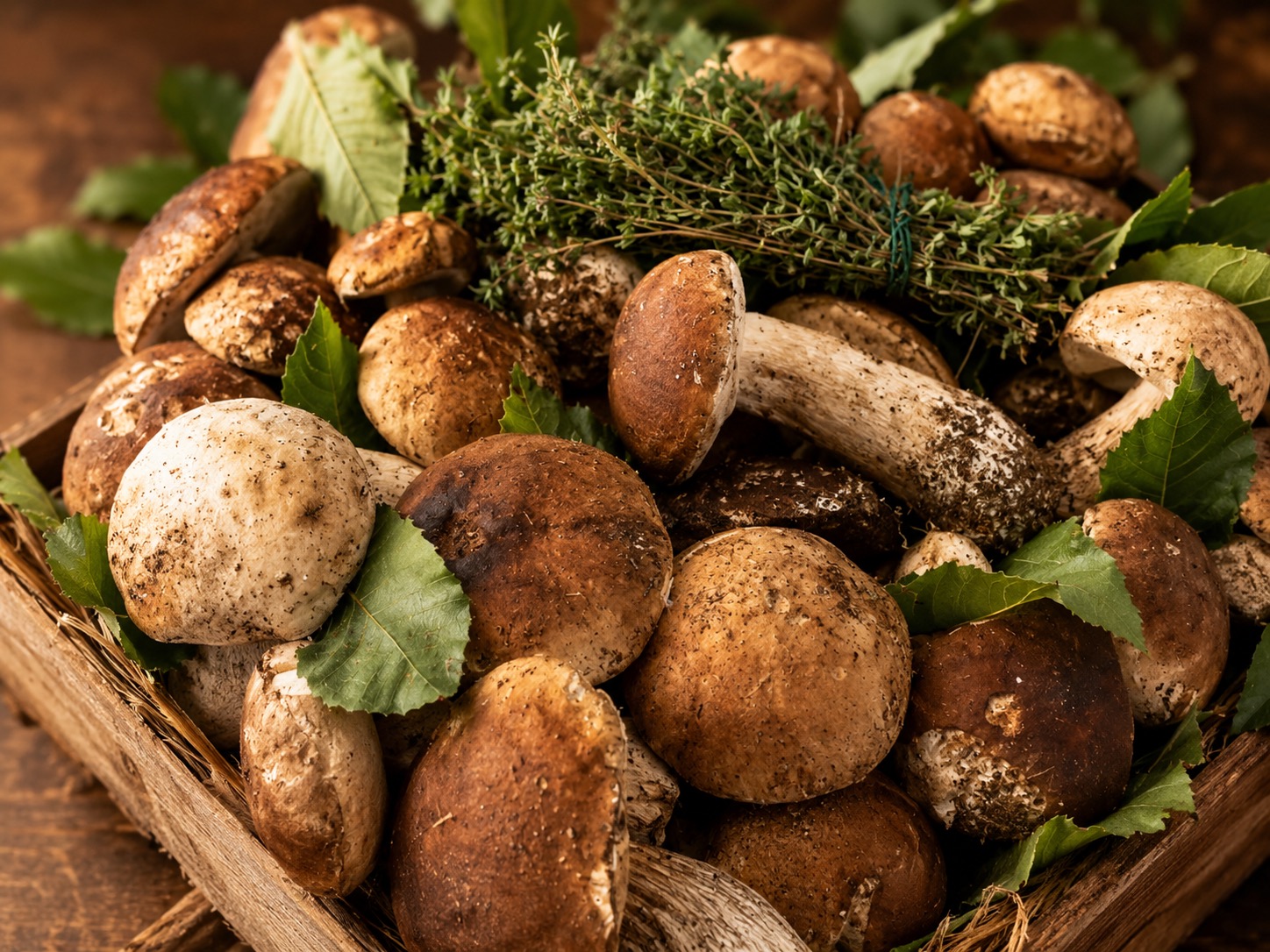
Porcini
Boletus edulis
One of Italy's most celebrated wild mushrooms, porcini have a dense, meaty texture
and an intense woodland aroma. They are prized fresh or dried for risotto, pasta,
sauces, soups, polenta, meat dishes and traditional Tuscan preparations.
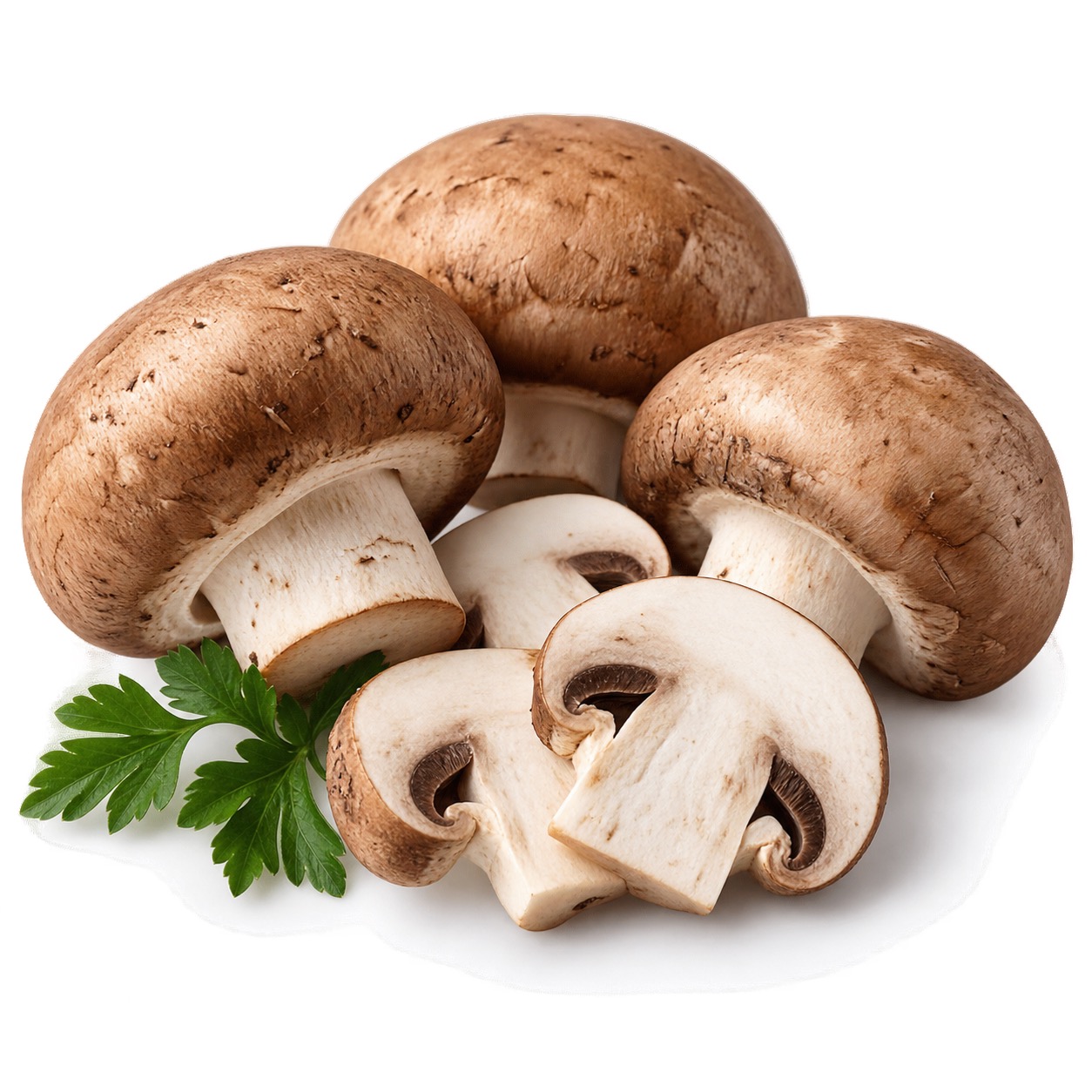
Also known as: Crimini, Baby Bella, Brown Mushrooms and Swiss Brown.
Brown Mushroom · Risotto Ingredient
Cremini Mushrooms
Agaricus bisporus · Brown cultivated form
Cremini are brown-capped cultivated mushrooms harvested while still compact.
They belong to the same species as white button mushrooms; portobello are the
mature, open-capped form of brown Agaricus bisporus.
Flavor Profile
Earthy, savory and full-bodied, with deeper mushroom flavor and more pronounced
umami than white buttons. Cooking intensifies their flavor and brings out
a satisfying meaty character.
Physical Characteristics
Rounded caps range from light tan to chestnut brown. Their firm texture
stands up well to high-heat cooking. Both caps and stems are edible;
young mushrooms often retain a veil covering the gills.
Culinary Uses
Use in risotto, pasta sauces, soups, pizza toppings and vegetable dishes.
Slice or quarter for sautéing with garlic and herbs, or roast for
a substantial mushroom garnish.
Selection & Care
Choose firm, plump mushrooms with a dry surface. Refrigerate unwashed in
a paper bag or ventilated packaging. Brush clean, or rinse briefly and
dry thoroughly before cooking; avoid soaking.
Chef's application — Cremini Mushroom Risotto
Following this Tuscany Cuisine recipe, brown the cremini with garlic and thyme
before folding them into the Carnaroli rice. Finish with parsley and
Parmigiano Reggiano, then add the tomato-basil confit at service.
The mushroom library can expand gradually while preserving the five distinct identities above.
Professional kitchens also use portobello, chanterelles, morels,
maitake, enoki, king oyster and many other cultivated or wild mushrooms. Porcini and cremini
are represented above as distinct Tuscany Cuisine mushroom identities. White button,
cremini and portobello belong to Agaricus bisporus: white buttons are white strains,
cremini are compact brown mushrooms, and portobello are mature brown mushrooms with open
caps. Color strain and harvest maturity both matter; cremini are not simply white buttons
that have become brown with age. Each of the other major culinary mushrooms has its own
flavor, texture and handling requirements. Species and maturity reference.
Professional Culinary Techniques
High heat, controlled moisture and proper pan loading are central to good mushroom cookery.
Sautéing
Use a sufficiently hot pan and avoid crowding. Mushrooms release moisture first, then
concentrate and brown as water evaporates.
Roasting
Roasting encourages caramelized edges, concentrated flavor and a firmer texture. Coat
lightly with fat rather than saturating the mushrooms.
Searing & Grilling
Larger oyster, king oyster, portobello and shiitake caps can develop excellent browning
and a satisfying meat-like texture.
Terrines & Fillings
Cook mushrooms enough to remove excess moisture before combining them with forcemeats,
poultry, cheeses, eggs or other binding ingredients.
Stocks & Sauces
Mushroom trimmings and suitable stems can deepen vegetable stocks, poultry jus, sauces
and reductions with additional savory character.
Duxelles
Finely chopped mushrooms cooked with aromatic ingredients until moisture is greatly
reduced create a concentrated preparation for pastries, stuffings and composed dishes.
Cleaning, Storage & Handling
Fresh mushrooms are delicate and absorb moisture readily. Brush away soil or wipe gently
with a slightly damp cloth when possible. If washing is necessary, rinse briefly and dry
well rather than soaking.
Refrigerate mushrooms with ventilation, preferably in paper or another breathable
container. Avoid sealing wet mushrooms in an airtight environment because trapped
condensation accelerates deterioration. Trim damaged portions before cooking and discard
mushrooms showing significant spoilage, unpleasant odor or slimy deterioration.
Food-safety principle:
Only consume mushrooms positively identified as edible. Wild mushrooms should come from a
knowledgeable, reliable source; appearance alone is not a safe identification method.
Nutrition & Health Context
Mushrooms are generally low in calories and fat while contributing water, fiber, minerals,
B vitamins and other compounds that vary by species and growing conditions. Some mushrooms
may contain vitamin D when exposed to ultraviolet light.
Characteristic
General culinary-nutrition profile
Energy
Generally low calorie
Protein
Modest plant/fungal protein contribution
Fat
Naturally low
Fiber
Varies by mushroom species
Micronutrients
Commonly include several B vitamins and minerals; amounts vary
Nutritional composition differs among shiitake, button, oyster, porcini and other species and also
changes with cooking method, growing conditions and serving size.
Cultivation & Global Availability
Commercial mushroom cultivation allows many varieties to be available throughout the year.
Button mushrooms and related Agaricus bisporus forms are widely cultivated, while
shiitake and oyster mushrooms are also major cultivated culinary mushrooms in many regions.
Porcini are especially important in European and Italian culinary traditions and are commonly
encountered fresh in season or dried for year-round professional use. Wild mushrooms remain
more seasonal and depend strongly on climate, geography and responsible harvesting.
Tuscany Cuisine Platform Usage
This page serves as the parent knowledge page for the Mushroom family. The platform keeps
individual mushroom varieties separate when recipe costing, inventory deduction, purchasing
and vendor records require a specific ingredient.
Chicken & Mushroom Terrine uses three distinct mushroom ingredients: Shiitake,
Button Mushroom and Oyster Mushroom. Porcini remains a separate identity for other
Tuscany Cuisine recipes and Italian culinary knowledge. Cremini Mushrooms is the fifth
identity, with its dedicated funghicremini.webp graphic and
funghi.html#cremini knowledge anchor for Cremini Mushroom Risotto.
Keep its existing inventory identity, cremini_mushrooms, separate from
Button Mushroom and Porcini when mapping recipes, purchasing and Live Inventory.
This knowledge-page update does not itself change stock quantities or server registry records.
Mushroom Graphic Identities
These five graphics are assigned to distinct mushroom types. Use each matching
image and knowledge-page anchor when connecting recipe and inventory records.