Raw character
Crisp, thin-skinned and juicy with a fresh grassy-green flavor, mild sweetness and light pepperiness. The seeds and membranes are tender enough that the whole pod is commonly cooked intact.
Shishito peppers are slender, wrinkled Japanese peppers harvested mainly while green. They are usually mild, vegetal and lightly sweet, with an occasional pepper carrying noticeably more heat; their thin skin makes them especially valuable for fast blistering, grilling and high-heat appetizer service.
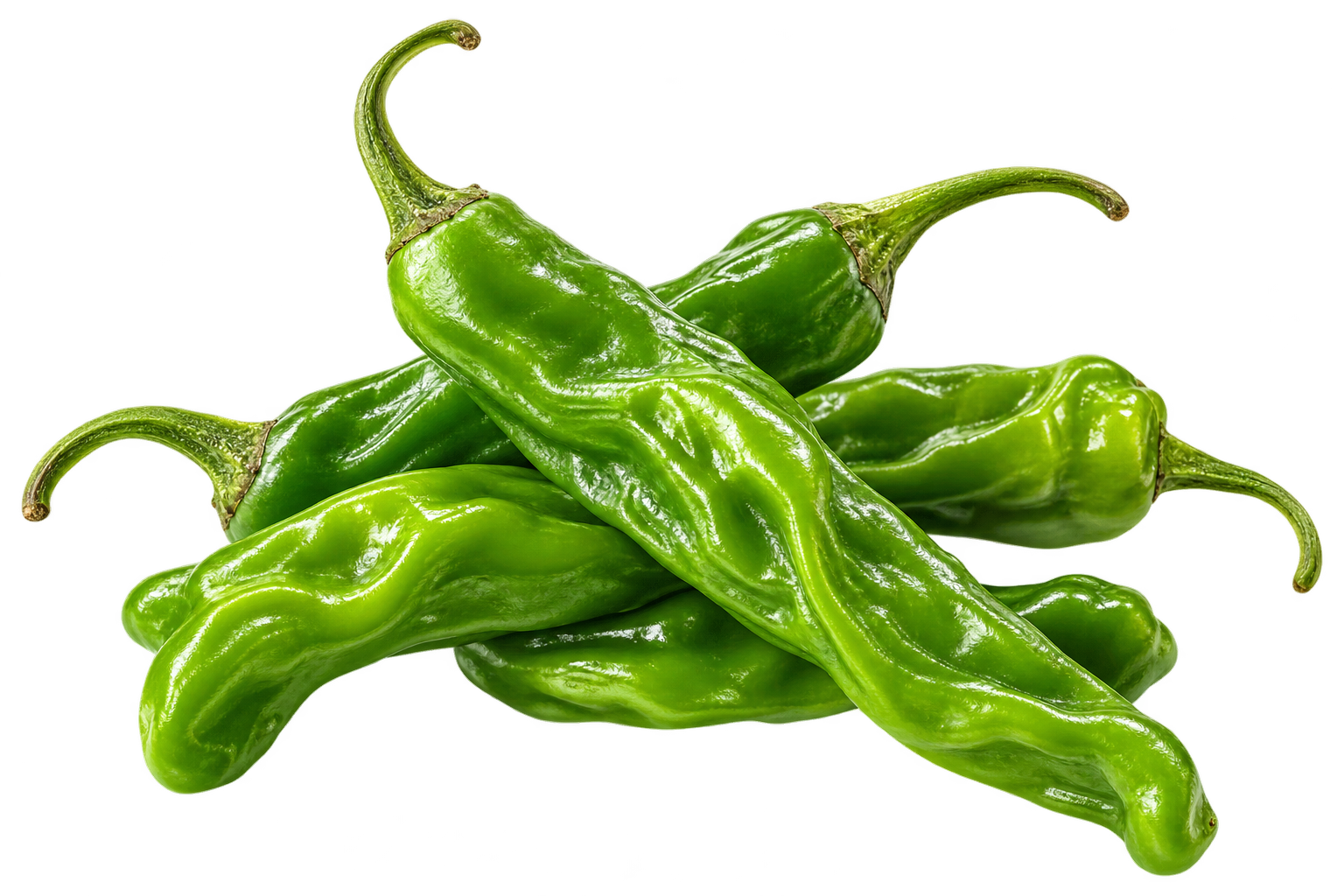
Shishito is a Japanese cultivar of Capsicum annuum in the nightshade family. The edible portion is the fruit of the pepper plant, most often harvested immature and green, although the pods ripen to red if left on the plant. The peppers are small, thin-walled, wrinkled and slightly curved. In professional kitchens they are prized because their delicate skin blisters quickly over high heat, creating a smoky exterior while the flesh stays tender and juicy.
Common name: Shishito Peppers
Alternate name: Japanese Shishito Chile Pepper
Scientific name: Capsicum annuum
Botanical family: Solanaceae
Crop type: FRUIT
Primary station: Produce
Base unit: grams
Flavor: Mildly sweet and vegetal with gentle peppery notes, low bitterness and fresh green aroma. Raw pods are crisp and juicy; high heat softens the flesh rapidly and adds charred, smoky and savory notes. Heat is normally mild, but individual peppers can be noticeably hotter.
Heat level: Shishitos are generally mild, commonly cited around 100–1,000 Scoville Heat Units, but an occasional pod can be significantly hotter than its neighbors. This natural variability is part of the pepper's identity.
Crisp, thin-skinned and juicy with a fresh grassy-green flavor, mild sweetness and light pepperiness. The seeds and membranes are tender enough that the whole pod is commonly cooked intact.
Blistering, grilling or sautéing collapses the thin walls quickly, concentrates the pepper flavor and adds smoky, roasted notes. A little oil and salt are often enough to finish the peppers.
Choose small to medium, glossy green pods with firm stems and tight skin. Green shishitos are the standard restaurant form; fully mature pods turn red and develop a riper flavor.
Shishito peppers can be available through much of the year from protected cultivation and multiple growing regions, but summer through early fall is the strongest field season in many markets. California growers commonly bring fresh shishitos to market during summer, when quality and local availability are especially strong.
| Period | Typical availability |
|---|---|
| January–March | Available from greenhouse, imported or warm-climate production; local field supply is usually lighter. |
| April–June | Availability increases as warmer-region crops begin and local plantings develop. |
| July–September | Peak field season in many regions; typically excellent freshness, color and restaurant availability. |
| October–December | Strong through early fall, then local field volume generally declines as temperatures cool. |
Record trim loss, usable yield, case size, supplier, origin and cost per unit so purchasing and inventory calculations remain accurate.
Garlic, scallion, cilantro, parsley, ginger, sesame, lemon, lime, yuzu, sea salt, black pepper and smoked chile.
Grilled beef, pork, chicken, tuna, shrimp, scallops, eggs, goat cheese, feta and aged cheeses.
Avocado, corn, tomatoes, mushrooms, eggplant, radish, rice, noodles, farro and legumes.
Published recipes can connect directly to this ingredient page. Each recipe should use the exact ingredient code and icon so production, costing, inventory, purchasing and analytics preserve the correct ingredient identity.
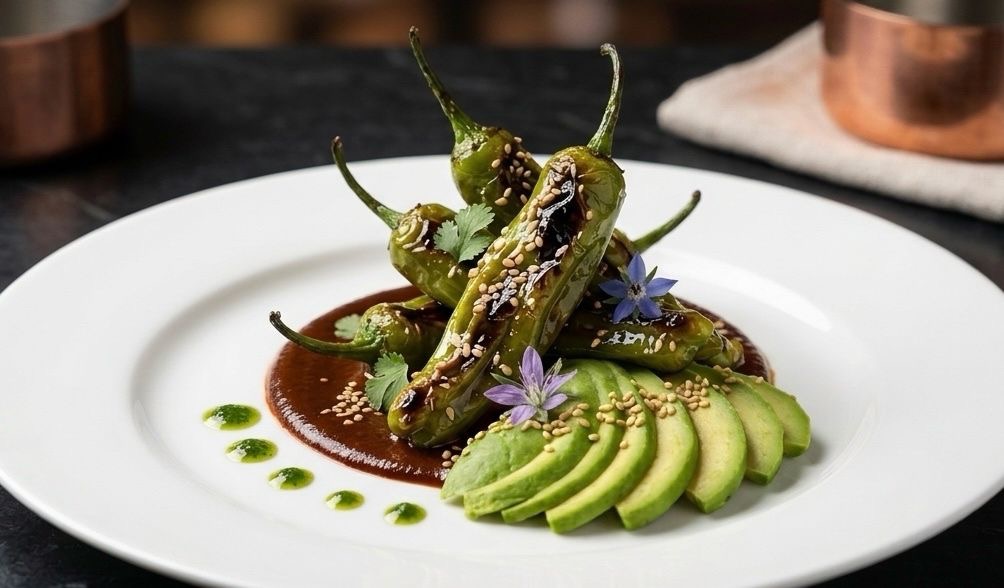
In this featured appetizer, 200 g of whole shishito peppers are blistered over high heat until charred, then paired with warm mole sauce, sliced avocado, sesame seeds, edible flowers and cilantro. The peppers provide the smoky, savory and lightly spicy centerpiece of the plate.
Open Blistered Shishito Peppers with Mole and AvocadoThe Shishito Peppers graphic identifies this exact ingredient throughout Tuscany Cuisine. It can synchronize with recipes, inventory, stations, vendors, purchasing and receiving.
Shishito Peppers ingredient record is ready.
Every page created from this template publishes a reusable ingredient record. The same record can identify the ingredient inside recipes, display its icon, calculate cost, check inventory, create purchase needs, suggest cooking methods and support future AI-assisted recipe creation.