red_radishHistory & Origin
Radish has been cultivated for so long that its exact domestication point is no longer certain. Kew describes it as an ancient cultigen and notes that it is thought to have evolved in the eastern Mediterranean region. Its long culinary history made radish one of the world's classic fast-growing root vegetables.
Culinary Tradition
Radishes have crossed culinary traditions because they provide something few vegetables deliver at once: vivid color, immediate crunch, moisture, and a sharp mustard-family freshness.
Mediterranean & European use
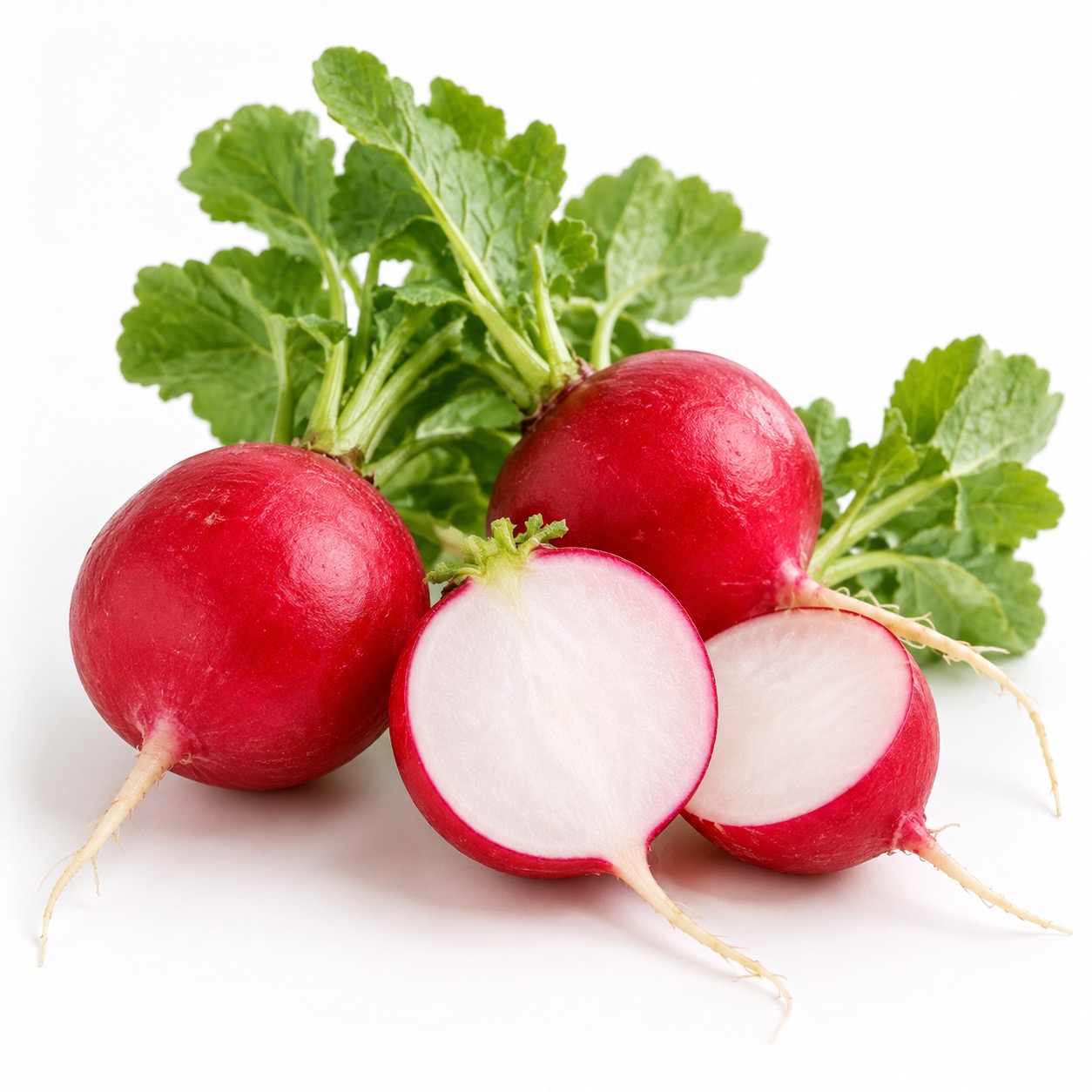
Small red radishes are naturally suited to antipasti, salads, butter-and-salt presentations, open sandwiches, crudités, pickles, and herb-driven vegetable plates. Their sharpness acts almost like a seasoning ingredient, especially with rich dairy, cured fish, eggs, and olive-oil dressings.
Asian traditions
While long white daikon dominates many East Asian preparations, the broader radish family is deeply established in Japanese, Korean, Chinese, and Southeast Asian cuisines through pickling, soups, garnishes, stir-fries, grated condiments, and fermented preparations.
Flavor Profile & Culinary Character
Fresh red radish has a clean, juicy crunch followed by a peppery, mustard-like heat. The pungency comes from compounds typical of the Brassicaceae family and can vary greatly with cultivar, maturity, growing speed, temperature, and water stress.
Nutrition · Raw Red Radish per 100 g
Red radish is very high in water and low in energy while providing vitamin C, folate, potassium, and dietary fiber. USDA FoodData Central added a dedicated Foundation Food entry for raw red radishes in December 2025.
| Nutrient | Approximate Amount |
|---|---|
| Energy | 20 kcal |
| Water | 94.7 g |
| Carbohydrate | 4.1 g |
| Dietary fiber | 1.3 g |
| Total sugars | 2.6 g |
| Protein | 0.7 g |
| Total fat | 0.1 g |
| Vitamin C | 17.8 mg |
| Folate | 63.2 µg |
| Potassium | 198 mg |
| Calcium | 21.5 mg |
| Sodium | 51 mg |
Professional Culinary Uses
Season, Selection & Storage
Red garden radishes are cool-season vegetables. They perform best in spring and fall, when fast growth and consistent moisture produce tender roots with a balanced peppery flavor. Heat, age, and slow growth can make radishes woody, pithy, or excessively hot.
What chefs should buy
- Choose small to medium radishes that are firm, heavy, smooth and brightly colored.
- Leaves, when attached, should look fresh and green rather than yellow or wilted.
- Avoid roots that feel soft, hollow, split, shriveled or spongy.
- Smaller roots generally deliver the cleanest, crispest table-radish texture.
Storage
Remove the greens before refrigeration because the leaves continue drawing moisture from the root. Store roots chilled in a food-safe bag or covered container. Illinois Extension recommends using small garden radishes within about 5–7 days for best quality, while the greens should be stored separately and used sooner.