Produce Ingredient · Inventory ID baby_spinach
Spinach
Spinacia oleracea L.
From tender baby leaves for raw salads to mature savoy leaves for sautés, soups, pasta fillings and Tuscan vegetable dishes, spinach is a cool-season green with exceptional culinary range and a long history stretching from western and central Asia into the Mediterranean kitchen.
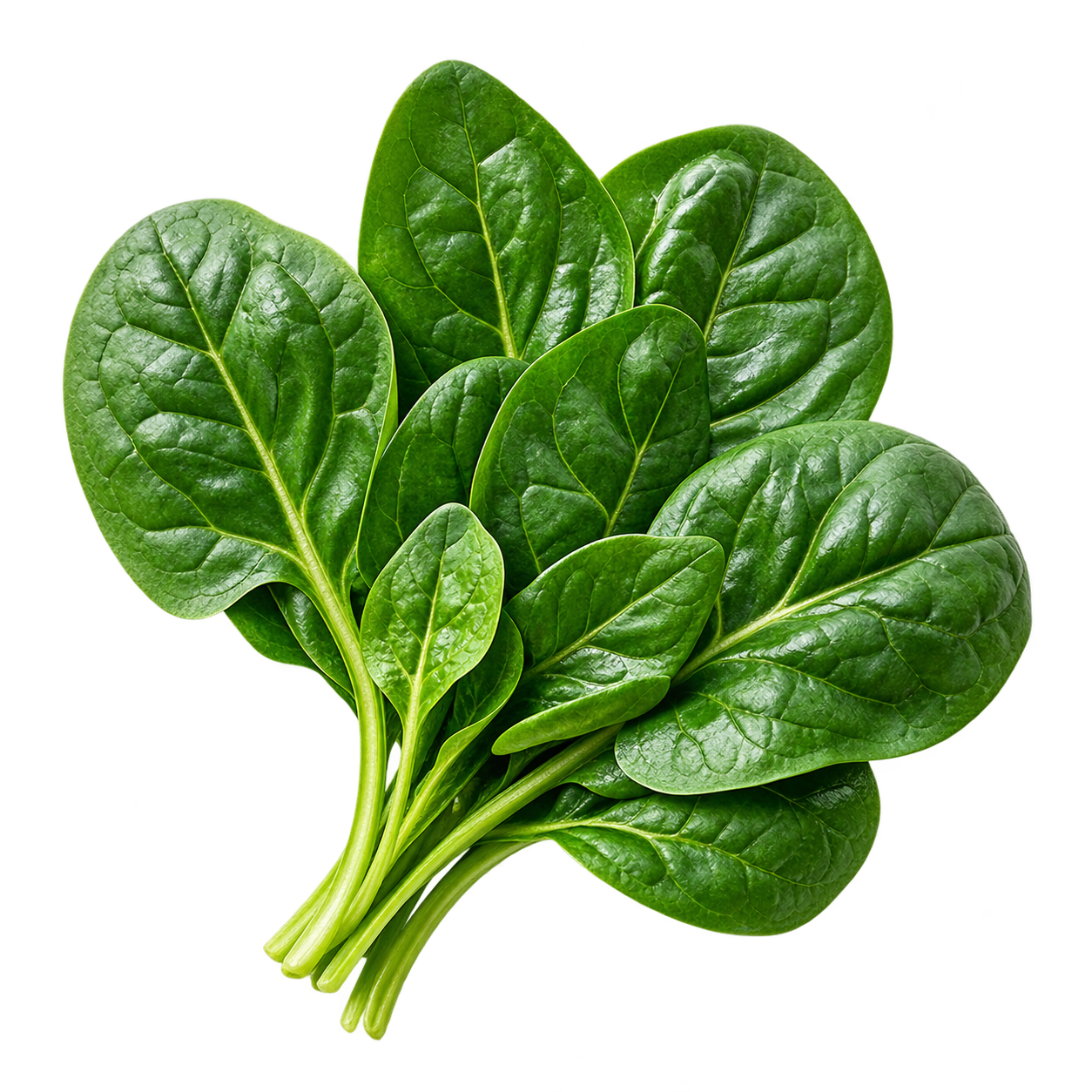
Ingredient identity & history
A cool-season leafy green with roots in western and central Asia
Spinach belongs to the amaranth family and is botanically classified as Spinacia oleracea. Kew Science places the native range of the species from Iran through Central Asia to western Pakistan. Modern crop-history research considers spinach to have been domesticated in the region of former Persia before spreading east toward China and west toward the Mediterranean and Europe.
Historical evidence indicates spinach was known in Mesopotamia by late antiquity. Written records place cultivated spinach in China by the seventh century, while Mediterranean references appear in the medieval Islamic world. It moved into Europe through routes that included Moorish Spain, where written evidence appears by the medieval period. Its value was practical as well as culinary: spinach is a hardy, fast-growing green that supplies fresh leaves during cool seasons when many other vegetables are less abundant.
Wild relatives and the native range center on Iran, Central Asia and western Pakistan.
Written Chinese records document spinach arriving through Nepal during the Tang period.
Spinach appears in Arabic agricultural and medical traditions and later in Moorish Spain.
The crop spread across Europe and became valued as an early cool-season leafy vegetable.
Maturity & kitchen use
Baby spinach and mature spinach are the same plant at different harvest stages
Baby spinach
Harvested while the leaves are young. The texture is thin and tender, the stems are delicate and the flavor is usually mild. It is ideal for salads, sandwiches, cold antipasti, quick wilting and garnish.
Mature spinach
Older leaves are larger, more structured and often deeper in flavor. Their greater body makes them preferable for sautéing, blanching, braising, soups, gratins, ricotta fillings, gnudi, ravioli and other cooked applications.
baby_spinach as both ingredient code and inventory ID. This page therefore
keeps baby_spinach as the operational identity so the new icon and page connect
directly to the existing recipe instead of creating a duplicate ingredient record.
Commercial leaf types
Savoy, semi-savoy and smooth-leaf spinach
Savoy
Deeply crinkled or curly leaves with substantial texture. Savoy types present beautifully at market and can hold well, but the folds require careful washing because soil can lodge between the leaf surfaces.
Semi-savoy
A middle ground between crinkled savoy and flat-leaf spinach. The leaves retain body while being easier to clean and process. Many modern cultivars fall into this group.
Smooth / flat leaf
Broad, relatively smooth leaves that are easier to wash and trim. Commercial processors often favor smooth-leaf cultivars for baby greens, freezing and other high-volume applications.
Baby-leaf production
Baby spinach describes harvest stage more than one fixed botanical type. Cultivars for baby-leaf production are chosen for tender texture, uniformity, color, yield and resistance to important field diseases such as downy mildew.
Seasonality & purchasing
A hardy cool-season crop that dislikes prolonged heat
Spinach performs best in cool conditions. USDA and university extension resources identify spring and fall as important seasonal windows in temperate climates. Warm weather encourages the plant to bolt—sending up a seed stalk—which generally makes the leaves less tender and more bitter. Commercial farms use multiple regions, protected culture and cultivar selection to supply spinach beyond the local field season.
| Season / condition | Crop behavior | Kitchen / purchasing implication |
|---|---|---|
| Early spring | Fast, tender leaf growth in cool weather | Excellent local quality; mild flavor and crisp leaves. |
| Late spring / warming weather | Bolting risk increases as temperatures rise | Watch for stronger flavor, thicker stems and reduced shelf life. |
| Summer | Traditional spinach struggles in sustained heat | Supply often shifts to cooler regions or controlled production. |
| Fall | Cool weather again favors leaf quality | Strong second local season in many temperate regions. |
| Winter / protected production | Hardy cultivars tolerate considerable cold | Availability depends on region, tunnels, greenhouses and import channels. |
Nutrition
Very low in calories, with valuable micronutrients and leafy-green fiber
Raw spinach contributes fiber and a range of vitamins, minerals and plant pigments. USDA SNAP-Ed lists a 1-cup raw serving at about 30 grams with approximately 7 calories, 1 gram of protein, 1 gram of carbohydrate, 1 gram of fiber and essentially no fat. Vitamin C and provitamin-A carotenoids are among the nutrients present in fresh spinach.
Carotenoids
Deep green leaves contain carotenoid pigments that contribute to vitamin A activity and color.
Vitamin C
Fresh raw spinach contributes vitamin C; cooking method and holding time influence retention.
Folate & fiber
Spinach contributes folate and dietary fiber as part of a varied vegetable-rich diet.
Raw spinach quick nutrition
USDA SNAP-Ed reference serving: 1 cup raw spinach (30 g).
Nutrition values are reference estimates and vary with cultivar, serving size and preparation. Spinach is naturally high in vitamin K, so people using vitamin-K-sensitive medications should follow guidance from their healthcare professional rather than making abrupt dietary changes.
Selection, receiving & food safety
Buy dry, crisp, uniformly green leaves and protect the cold chain
Look for
Crisp, fully turgid leaves with strong green color, clean stems and minimal bruising. Baby spinach should look tender but not crushed or wet.
Avoid
Slime, yellowing, blackened edges, sour odor, heavy bruising, standing water inside the package or leaves that have collapsed into a wet mass.
Receiving
Inspect package integrity, use-by dates, cold-chain condition and any ready-to-eat or pre-washed labeling before accepting product into inventory.
Storage & shelf life
Cold, dry and protected from crushing
Spinach deteriorates quickly when leaves remain wet. Refrigeration slows respiration and wilting, while dry storage helps prevent the slimy breakdown associated with trapped moisture.
Professional refrigerator method
- Keep spinach refrigerated immediately after receiving.
- Do not compress tender baby leaves under heavier produce.
- Keep unwashed leaves dry until preparation unless the purchased product requires a different handling procedure.
- If spinach has been washed, spin or drain it thoroughly before refrigerated holding.
- Use a clean food-safe container lined with absorbent material when appropriate to control excess moisture.
- Rotate stock frequently and discard slimy, sour-smelling or badly deteriorated leaves.
| Form | Storage approach | Chef note |
|---|---|---|
| Baby spinach, packaged | Refrigerate in original intact package until opening; follow label | Highly tender; bruises and deteriorates rapidly after opening. |
| Loose mature spinach | Refrigerate dry and loosely protected | Remove damaged leaves before they accelerate spoilage in the bunch. |
| Washed spinach | Drain and dry very thoroughly before refrigerated holding | Standing moisture is the enemy of shelf life. |
| Cooked spinach | Cool promptly and refrigerate in a clean covered container | Use promptly; reheated spinach loses green color and texture quickly. |
| Frozen spinach | Keep frozen until needed; thaw under controlled refrigeration when required | Excellent for fillings, soups, sauces and gratins where fresh leaf structure is unnecessary. |
Culinary technique
Spinach cooks in minutes—control water, pan size and timing
The central technical fact about spinach is its dramatic volume loss. A large bowl of raw leaves becomes a small amount of cooked spinach because the leaf structure softens and releases water. Plan yield accordingly, especially for pasta fillings, gratins and banquet production.
Salad
Use dry baby leaves. Dress only at service so salt and acid do not collapse the spinach prematurely.
Sauté
Use a wide hot pan, small batches and minimal added liquid. Garlic and olive oil are classic partners.
Blanch
Blanch just until wilted, chill if needed, then squeeze thoroughly for fillings and molded preparations.
Wilt / steam
A small amount of retained wash water is often enough to wilt mature spinach without additional cooking liquid.
Purée
Drain very well before puréeing to control sauce texture. Spinach purée works in pasta dough, soups and green sauces.
Fillings
Cook, cool and squeeze aggressively before mixing with ricotta, eggs or cheese so ravioli, gnudi and pies do not become watery.
Italian & Tuscan culinary use
Spinaci in the Italian kitchen
Classic applications
In Italy, spinach appears simply sautéed with olive oil and garlic, dressed with lemon, folded into frittate, layered into baked dishes, blended into green pasta dough and paired with ricotta for ravioli, cannelloni, crespelle and gnudi. Nutmeg is a traditional seasoning for many ricotta-and-spinach fillings.
For cold service, baby spinach works with cured meats and aged cheeses because its mild, fresh flavor balances salt and richness without competing with the primary ingredient.
Tuscany Cuisine ingredient engine
Spinach usage record across the platform
The page keeps the existing baby_spinach identity already used by the Bresaola appetizer. The canonical icon and page can now replace the recipe's generic ingredient placeholder without changing its inventory identity.
Recipe Library
Bresaola with Spinach & Parmesan uses 57 g baby spinach in the base 2-serving recipe.
ConnectedMenu Builder
Use the same baby_spinach identity when the connected recipe is added to a menu.
Identity readyProduction / Station
Pantry and Antipasti production can scale spinach by recipe grams while preserving the shared identity.
Identity readyLive Inventory
Map icon and page metadata to the existing baby_spinach inventory item rather than creating a duplicate.
Identity readyPurchasing
Purchase unit can remain supplier-specific while recipe and inventory calculations use grams.
Identity readyReceiving
Record package integrity, temperature condition, use-by date, leaf quality and supplier lot information.
Identity readyBresaola with Spinach & Parmesan
Open the connected appetizer recipe →
Base usage: 57 g baby spinach · 2 servings · Antipasti Station.
This is the recipe record that established the current baby_spinach identity.
Canonical Spinach ingredient record
Frequently asked questions
Spinach kitchen questions
Is baby spinach different from regular spinach?
It is the same species, Spinacia oleracea, harvested at a younger stage. Young leaves are smaller, thinner and milder, making them especially suitable for raw service.
What is the difference between savoy and flat-leaf spinach?
Savoy spinach has deeply crinkled leaves. Flat or smooth-leaf spinach is easier to wash and process. Semi-savoy falls between the two in leaf texture.
Why does spinach shrink so much during cooking?
Heat softens the leaf structure and releases water held inside the cells. Large volumes of raw spinach therefore collapse into a much smaller cooked yield.
How do I keep sautéed spinach from becoming watery?
Use high heat, a wide pan and small batches. Add only the water needed for the technique and allow released moisture to evaporate before final seasoning.
Should packaged pre-washed spinach be washed again?
Follow the package instructions. FDA guidance generally advises consumers to follow labeling on ready-to-eat or pre-washed produce rather than automatically re-washing it in a way that could introduce contamination from the sink or kitchen environment.
Can fresh spinach be frozen?
Yes. Blanching before freezing is useful for longer storage. Frozen spinach loses fresh-leaf texture but is excellent for soups, sauces, gratins, fillings and baked applications.
Editorial references
Sources and further reading
- Royal Botanic Gardens, Kew — Spinacia oleracea taxonomy and native range
- Euphytica — review of spinach genetic resources, domestication and breeding history
- USDA SNAP-Ed — spinach seasonality, basic handling and nutrition reference
- Colorado State University Extension — spinach varieties, quality, seasonality and storage
- U.S. FDA Food Code 2022 — temperature control guidance for cut leafy greens
- Tuscany Cuisine — Bresaola with Spinach & Parmesan recipe