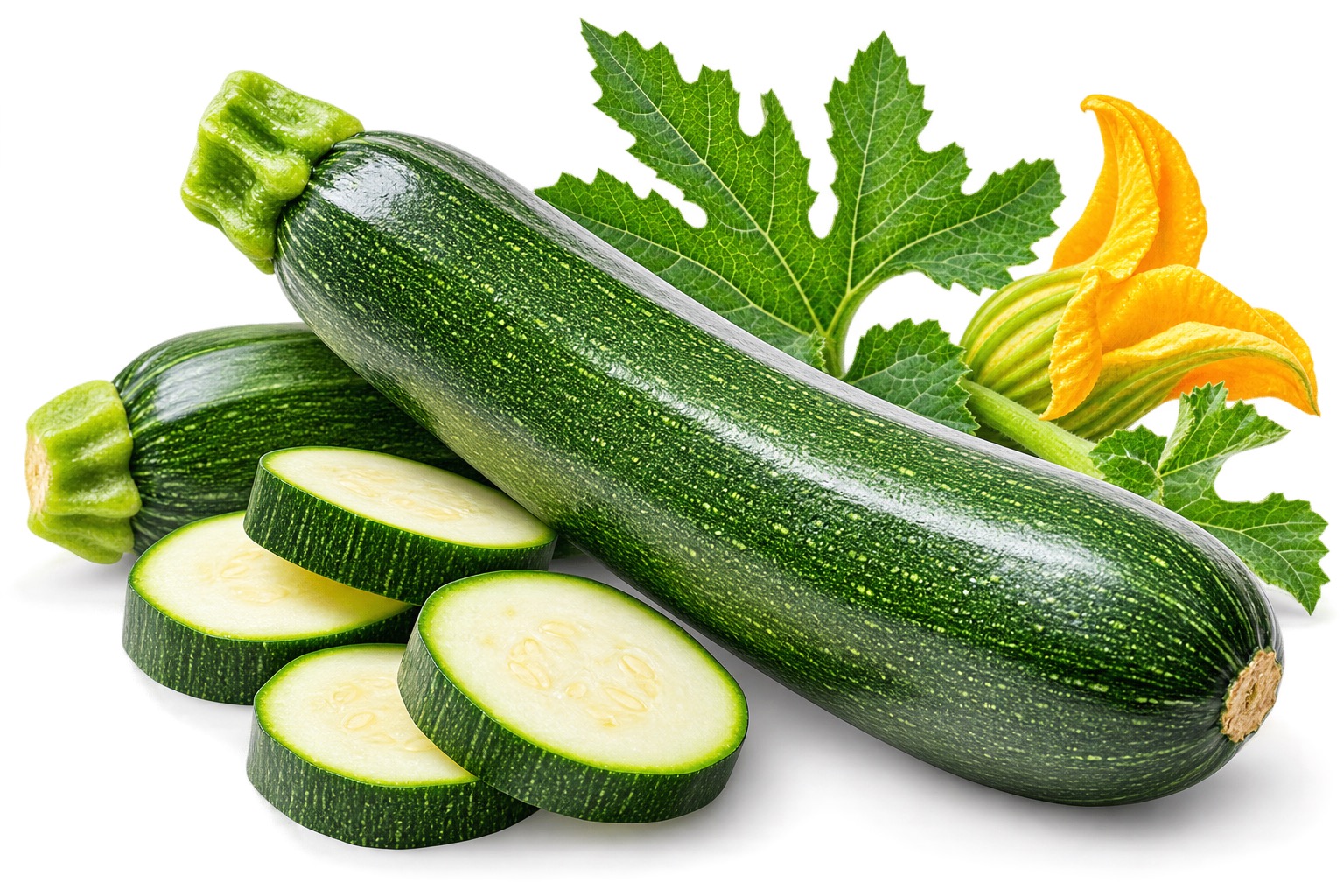
What Is Zucchini?
Zucchini is a tender form of summer squash belonging to Cucurbita pepo
in the Cucurbitaceae family. Kew recognizes Cucurbita pepo as an
accepted species and notes that the species includes courgettes or zucchinis among its many cultivated forms.
Botanically, the edible zucchini is a fruit because it develops from the flower's ovary,
although it is used as a vegetable in professional kitchens. Its delicate flavor, tender skin
and quick-cooking flesh make it one of the most versatile produce ingredients in Italian cooking.
Origin, Cultivation & Italian Identity
The plant is New World in origin; the modern culinary identity of zucchini is deeply tied to European and Italian cooking.
Kew records Cucurbita pepo as an accepted species and describes its native range as a
cultigen associated with Mexico. The species has been cultivated for edible fruits for thousands
of years and includes many squash, marrow, pumpkin and zucchini forms.
In Italy, zucchini became a foundational ingredient because it responds well to olive oil, herbs,
garlic, tomato, cheese, eggs, pasta and gentle frying. Both the fruit and the blossom are important:
young zucchini are used whole, while fiori di zucca may be stuffed, battered, fried or folded into risotto and pasta.
Flavor & Texture Profile
Delicate flavor means technique and moisture control determine the finished result.
Mild & FreshYoung zucchini has a clean, green and lightly sweet flavor that takes seasoning easily.
High MoistureThe flesh releases water rapidly with heat; overcrowding a pan can steam rather than brown it.
Tender SkinThe skin is normally left on for color, structure and minimal waste when the fruit is young and fresh.
Selection & Receiving
Young, firm fruit gives the best professional texture and yield.
Look ForFirm, slender zucchini with glossy bright skin, tight flesh and no wrinkling, soft spots or decay.
AvoidDull, oversized or soft fruit with large developed seeds and watery or fibrous flesh.
Utah State University Extension recommends harvesting zucchini young and tender; commercial-quality
fruit is commonly around 6–8 inches long. Frequent harvesting helps maintain quality.
Professional Culinary Uses
One ingredient, many textures — raw, sautéed, grilled, fried, baked, stuffed or puréed.
SautéHigh heat, modest batch size and controlled seasoning preserve color while limiting water release.
GrillLengthwise slices or batons benefit from olive oil, salt, herbs and direct heat.
FryThin slices, batons and blossoms can be shallow- or deep-fried; moisture management is critical for crispness.
ScapeceFried zucchini is seasoned with vinegar and herbs, traditionally including mint in many southern Italian versions.
Pasta & RisottoZucchini can remain diced, become a purée, or be combined with blossoms and cheese.
Stuffed & BakedLarger zucchini can be hollowed and filled with vegetables, meat, grains or cheese.
Zucchini Scapece
A classic use where frying, acidity and herbs transform a mild vegetable.
For professional scapece, slice zucchini evenly, reduce surface moisture when practical,
fry until lightly colored, drain thoroughly, then season while still receptive to flavor.
Vinegar provides acidity; mint gives lift and freshness. The preparation can be served warm,
room temperature or chilled depending on the dish and service style.
Recipe 158 connection: Tuscany Cuisine uses 100 g of thin-sliced zucchini
in the Zucchini Scapece Filled Tomato, where it is shallow-fried, drained and tossed with mint,
aged ricotta and red wine vinegar before filling the slow-poached tomato.
Common Professional Cuts
Cut choice controls cooking time, browning and water release.
| Cut | Best Applications | Technique Note |
|---|
| Thin rounds | Scapece, chips, layered gratins | Dry surface well before frying for better texture. |
| Bias slices | Grill, sauté, plated vegetables | Larger surface area improves browning and presentation. |
| Batons | Sauté, tempura, mixed vegetables | Keep uniform for even cooking. |
| Small dice | Pasta, risotto, fillings, soups | Cook quickly to avoid collapse. |
| Ribbons | Raw salads, garnish, quick sauté | Use mandoline or peeler; season close to service. |
| Halves / boats | Stuffed zucchini | Remove some seed core when necessary to control moisture. |
Zucchini Blossoms / Fiori di Zucca
The blossoms are a separate high-value culinary product from the same plant.
Zucchini blossoms are delicate and highly perishable. They can be stuffed with ricotta,
mozzarella, herbs or anchovy, lightly battered and fried, or used in pasta, risotto, frittata
and garnishes. Handle them with minimal pressure and use as soon as possible after receiving.
Storage & Kitchen Handling
Protect the tender skin and avoid excess moisture.
- Storage: Refrigerated produce zone.
- Handling: Avoid stacking excessive weight on the fruit; the skin scratches easily.
- Washing: Rinse before production, then dry thoroughly when frying or grilling.
- Trim loss: Usually low for young zucchini because the skin is edible.
- Production: Cut close to cooking or service when possible to limit moisture loss and oxidation.
Nutrition Context
Zucchini is a low-energy, high-moisture produce ingredient.
USDA FoodData Central includes raw green zucchini with skin as a Foundation Food and,
in its recent update log, lists added Vitamin C and folate data for this item. As with all produce,
exact values vary with cultivar, maturity and preparation.
| Approximate raw zucchini profile | Per 100 g | Kitchen meaning |
|---|
| Energy | about 17 kcal | Very low-energy vegetable base. |
| Protein | about 1.2 g | Not a meaningful protein source by itself. |
| Carbohydrate | about 3 g | Low carbohydrate contribution. |
| Fat | about 0.3 g | Most fat in cooked dishes comes from added oil or dairy. |
| Vitamin C | present | Heat and holding can reduce some vitamin content. |
Tuscany Cuisine Platform Ingredient Record
Zucchini / Zucchina now has a reusable Tuscany Cuisine identity connected to the Live Inventory
key zucchini. Recipe pages should use this code, icon and ingredient page instead of
a generic vegetable fallback.
Canonical nameZucchini
ItalianZucchina
BotanicalCucurbita pepo
FamilyCucurbitaceae
Ingredient codeTC-VEG-ZUCCHINI-001
Inventory IDzucchini
Icon IDTC-ICON-VEG-ZUCCHINI-001
CategoryProduce
SubcategorySquash / Zucchini
Base unitg
StorageRefrigerated / Produce
Icon path/academy/ibrary/veggies/zucchini.png
Ingredient page/academy/ibrary/veggies/zucchini.html
Sync statusActive shared identity
Current Recipe Usage
Recipe 158 — Zucchini Scapece Filled Tomato uses
100 g thin-sliced zucchini for the base one-serving recipe.
The zucchini is shallow-fried and combined with mint, aged ricotta and red wine vinegar.
Recipe 158 · Zucchini Scapece Filled Tomato → Open connected recipe
Botanical, Nutrition & Harvest References
Zucchini. Zucchina. Courgette. Green zucchini. Summer squash.
Cucurbita pepo. Cucurbitaceae. Italian zucchini. Zucchini scapece.
Zucchini alla scapece. Fried zucchini. Grilled zucchini. Sauteed zucchini.
Zucchini blossoms. Fiori di zucca. Stuffed zucchini. Zucchini pasta.
Zucchini risotto. Zucchini storage. Zucchini selection. Recipe 158.
Zucchini Scapece Filled Tomato. Ingredient code TC-VEG-ZUCCHINI-001. Inventory ID zucchini.
Icon zucchini.png. Produce. Squash and Zucchini. Tuscany Cuisine Ingredient Library.