Grapes become must
Freshly pressed grape juice supplies sugars, acids, aroma precursors and dissolved solids. The selected product style determines whether cooked or concentrated must stands alone or is blended with wine vinegar.
Ingredient Library · Vinegars & Acids
Aceto balsamico · Grape must · Italian pantry
A dark, aromatic sweet-sour condiment whose culinary identity begins with grapes. From versatile Balsamic Vinegar of Modena I.G.P. to long-aged Traditional Balsamic Vinegar of Modena D.O.P., quality, density, acidity and cost determine how each bottle should be used.
/academy/ibrary/vinegars/Hero-balsamics.webp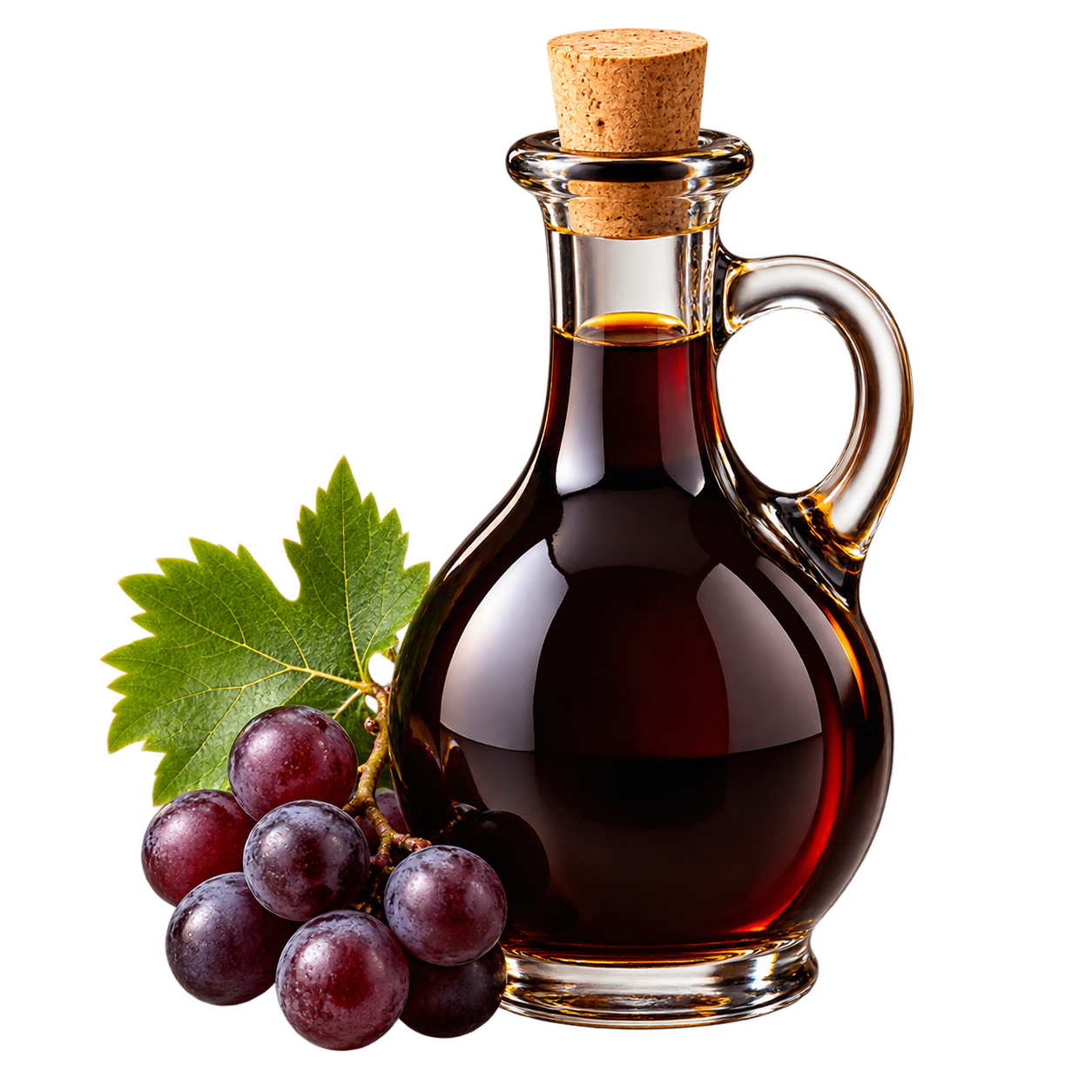
/academy/ibrary/vinegars/balsamic.png · Hero image remains /academy/ibrary/vinegars/Hero-balsamics.webp.
Emilia-Romagna heritage
Vinegar has ancient roots, but the balsamic tradition developed a special identity around Modena and Reggio Emilia. Families concentrated grape must, encouraged fermentation and acetification, and matured the liquid in wood until acidity, sweetness and aroma became harmonious.
Freshly pressed grape juice supplies sugars, acids, aroma precursors and dissolved solids. The selected product style determines whether cooked or concentrated must stands alone or is blended with wine vinegar.
In traditional production rooms, fermentation, acetification, wood, seasonal temperature changes and time shape the liquid rather than a single flavoring step.
Traditional Balsamic Vinegar of Modena received protected designation recognition, preserving its territory, production rules and long ageing tradition.
The European Union registered Aceto Balsamico di Modena as a protected geographical indication, defining its identity and production framework.
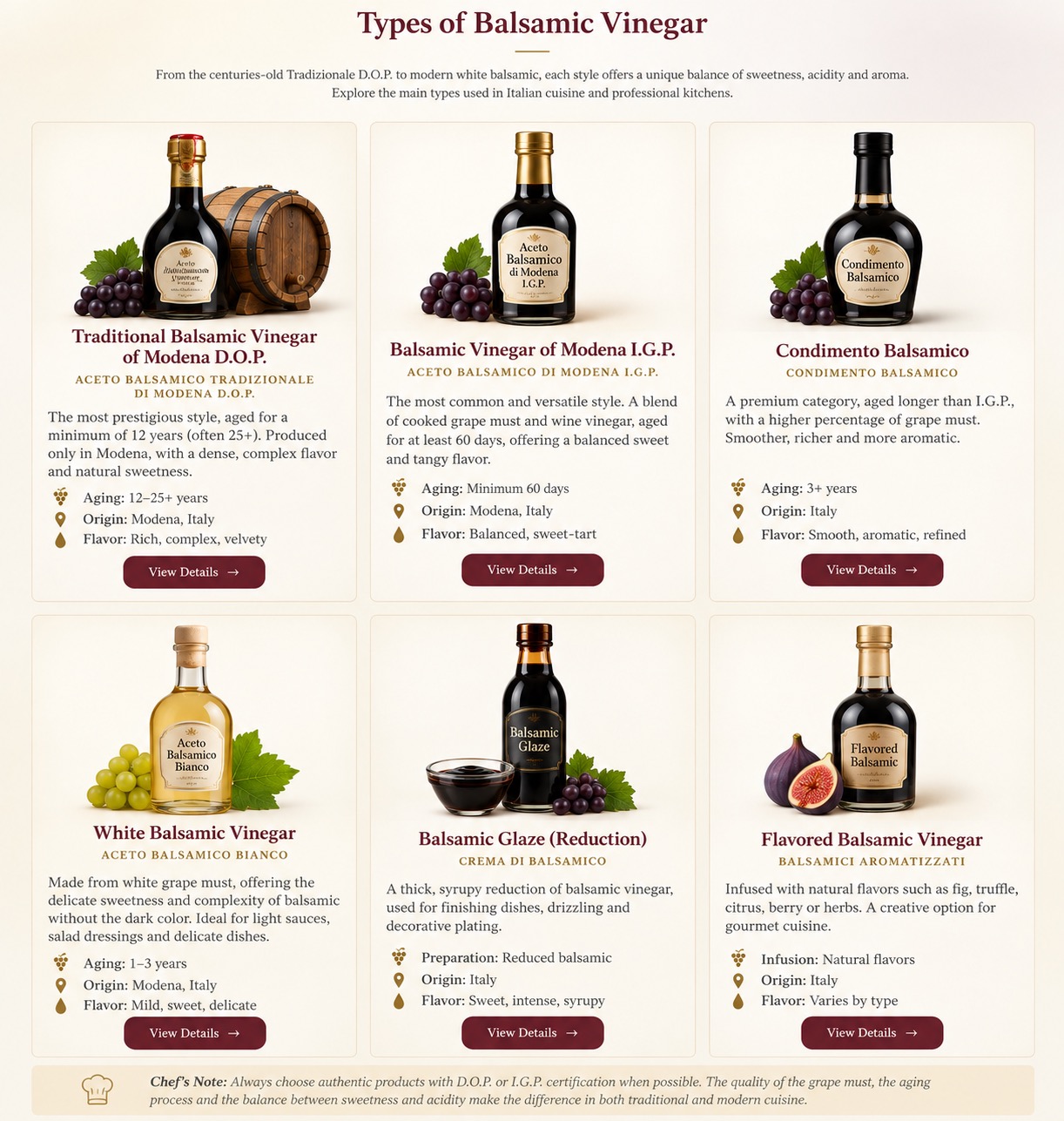
Product classification
“Balsamic” is not one uniform product. Protected designations, condimenti and prepared glazes can differ greatly in raw materials, ageing, viscosity, sweetness, acidity, cost and intended culinary role.
Produced from cooked grape must under the protected specification and aged through a traditional series of wooden vessels for no less than 12 years. “Extravecchio” identifies product aged at least 25 years. Use by drops as a finishing condiment.
Made from grape must combined with wine vinegar under the protected specification. Acidification and refining occur in approved wood for at least 60 days; “aged” may be used when maturation reaches at least three years.
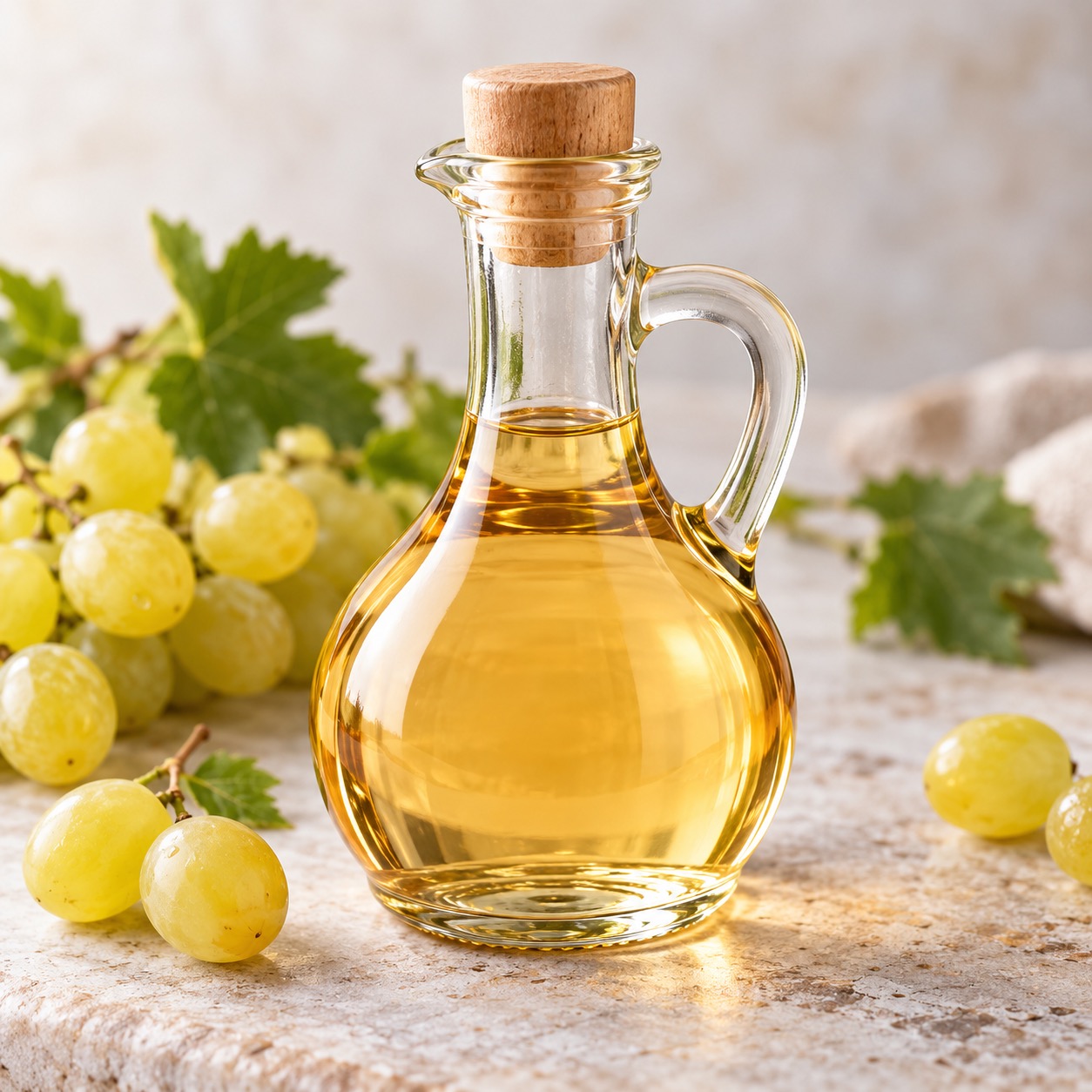
A pale-gold balsamic-style condiment chosen when a chef wants gentle sweet-sour acidity without darkening peaches, tomatoes, seafood, fresh herbs or delicate greens. Production varies by producer, commonly using white-grape must with wine vinegar or other carefully controlled grape-based methods designed to retain a lighter color. It should be purchased and costed as its own ingredient rather than substituted automatically for dark balsamic vinegar.
VINEGAR-BALSAMIC-WHITE-0001 · inventory white_balsamic_vinegar ·
icon Balsamico-bianco.webp · Ingredient Library anchor
/academy/ibrary/vinegars/balsamicvinegar.html#white-balsamic.
Connected recipe: Peach Salad with Grilled Onions.
A balsamic-style condiment that may follow careful artisan methods but does not automatically carry the D.O.P. or I.G.P. production identity. Judge it by the complete label, producer, ingredients, density, acidity and intended application.
A thickened or reduced preparation, often sweetened or stabilized. It is not interchangeable with straight balsamic vinegar for recipe costing, inventory deduction or production. Register glaze separately when it enters a recipe.
Tuscany Cuisine identity rule: VINEGAR-BALSAMIC-0001 represents the approved everyday dark balsamic vinegar used by the current recipe system. White Balsamic Vinegar now has its own permanent identity, VINEGAR-BALSAMIC-WHITE-0001, because its color, flavor profile, purchasing specification and recipe role are operationally different. Traditional D.O.P., named premium products and balsamic glaze also require separate cost and inventory identities when specified.
Production foundation
Exact production rules depend on the protected or commercial product class, but the culinary logic follows a path from grapes to concentrated must, acidity, wood influence and maturation.
Grape varieties and growing origin matter most for protected products. Sound fruit provides clean must and balanced sugars and acids.
Fresh juice, skins and solids are separated. The must becomes the grape-based foundation of the condiment.
Water reduction concentrates sugar, color, acids and dissolved solids. Time and heat management influence caramelized and cooked-fruit notes.
Acetic-acid bacteria convert alcohol into acetic acid. Traditional D.O.P. and I.G.P. reach this stage through different regulated methods and raw-material systems.
Wood vessels, oxygen, evaporation and time integrate sweetness and acidity while contributing aroma, color and complexity.
Buying by culinary purpose
Price alone does not define usefulness. A bright, fluid vinegar can be ideal for vinaigrette and reduction, while a dense, long-aged product can lose its value when heated aggressively.
Cooking and production
Choose an approved balsamic whose ingredient statement, acidity, density and flavor remain consistent across purchases.
Finishing and tasting
Choose a mature, aromatic bottle that balances acidity and sweetness without a harsh finish. Use smaller quantities where its complexity remains visible.
Receiving standards
Protect the ingredient identity by checking the complete name, certification when claimed, ingredient statement, acidity, sensory condition and supplier specification.
Storage: Keep tightly closed in a cool, dry, dark pantry away from heat and direct sunlight. Refrigeration is normally unnecessary for shelf-stable commercial vinegar. Follow the manufacturer label and the operation’s approved storage program.
Professional culinary use
Balsamic vinegar can season, deglaze, marinate, reduce or finish. Select the quality level and cooking exposure according to the role it must play on the plate.
Balance balsamic with extra virgin olive oil, salt, aromatics and any additional sweetness only after tasting the vinegar itself.
Add measured vinegar to dissolve fond and brighten rich sauces. Reduce carefully; sugar and concentrated solids can scorch.
Use for mushrooms, onions, roasted peppers, beets and grilled vegetables. Control time so acidity does not overwhelm texture.
Apply mature balsamic after cooking to cheese, meat, fruit, risotto or dessert, preserving aroma and controlling food cost.
Nutrition and labeling
Balsamic vinegar is used in modest quantities, but calories, sugars and sodium can vary with grape-must concentration, ageing, recipe and added ingredients. The approved supplier label remains the operational nutrition source.
| Reference serving | 1 tbsp / 15 ml |
| Calories | Approximately 10–20 |
| Fat | 0 g |
| Carbohydrate | Usually 2–4 g |
| Primary contributor | Grape-derived sugars |
| Acidity | Check product label |
Balsamic vinegar is generally vegan, vegetarian, fat-free and gluten-free by composition, but purchasing must verify the actual label and production declaration.
Connected culinary system
This record starts with the confirmed Balsamic Jelly recipe and also reads the Tuscany Cuisine recipe-ingredient catalog for future dishes using the same permanent ingredient identity or approved aliases.
Canonical inventory ID: balsamic_vinegar · ingredient code synchronized
TC_INGREDIENT_LIBRARY_V1 ↔ TC_RECIPE_INGREDIENT_CATALOG_V1Authoritative references
Official European Union and protection-consortium sources support the protected names, production requirements, ageing terminology and historical context summarized on this page.