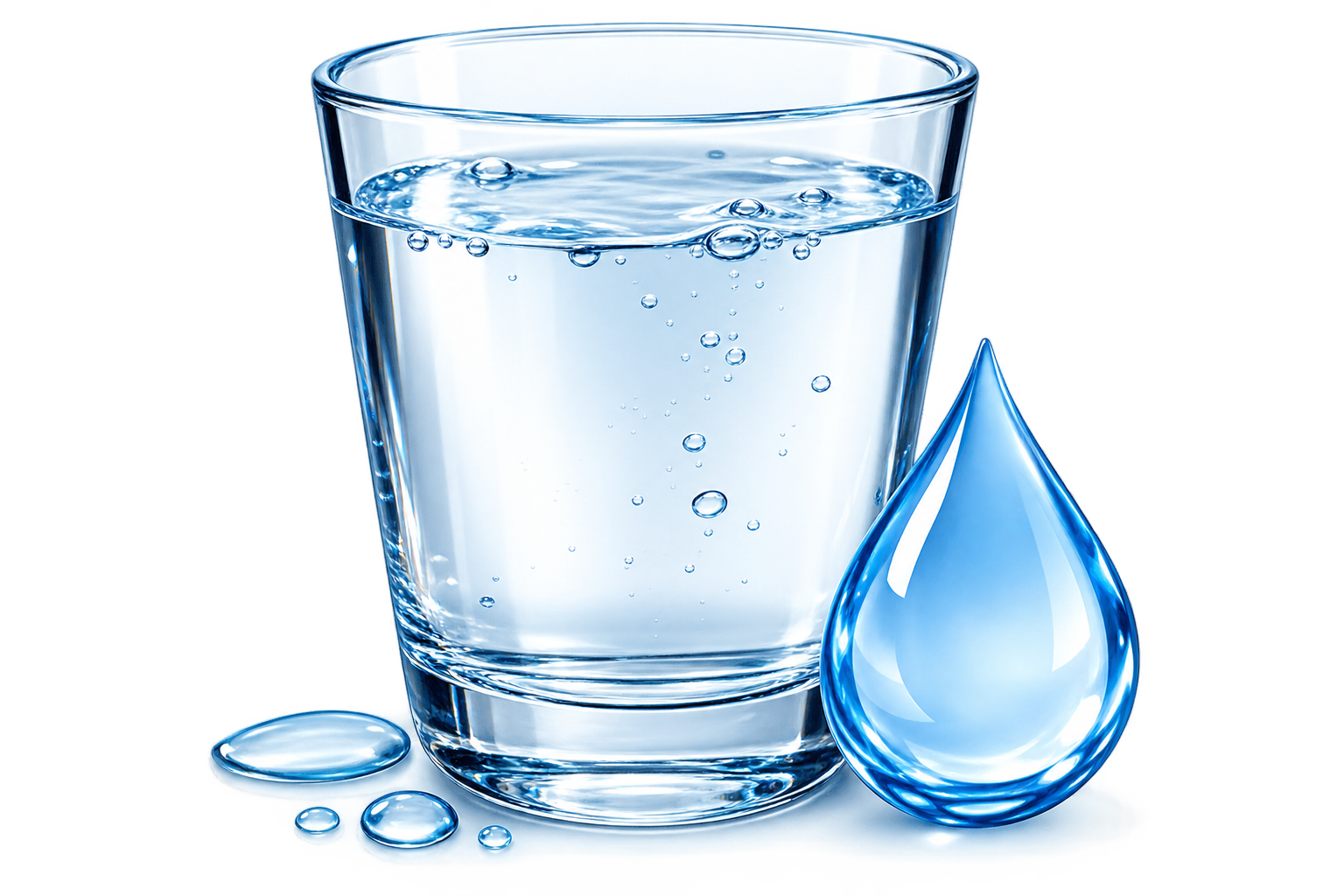
What Is Potable Water?
Potable water is water that is suitable for drinking and for use in food preparation. In a professional kitchen it is the standard water used for washing produce, making ice, cooking, preparing beverages, reconstituting foods, cleaning food-contact equipment, and any process in which water becomes part of the food.
Although water can appear neutral, its dissolved minerals, treatment method, hardness, aroma, and temperature may influence taste and cooking performance.
Why Water Matters in Cooking
- Hydration: essential for pasta, rice, grains, legumes, doughs, batters, and dried ingredients.
- Heat transfer: used for boiling, simmering, blanching, poaching, steaming, and sous-vide support systems.
- Extraction: draws flavor, gelatin, minerals, sugars, and aromatic compounds into stocks, broths, teas, and infusions.
- Dissolving medium: distributes salt, sugar, acids, starches, and other soluble ingredients.
- Texture control: affects dough hydration, starch gelatinization, legume cooking, and vegetable tenderness.
- Yield management: becomes part of soups, sauces, braises, purees, beverages, and rehydrated preparations.
Water Quality Characteristics
| Characteristic | What It Means | Culinary Importance |
|---|---|---|
| Hardness | Amount of dissolved calcium and magnesium. | Can influence scale buildup, beverage extraction, dough behavior, and the cooking of some legumes. |
| pH | Measure of acidity or alkalinity. | Can affect color, texture, extraction, and fermentation performance. |
| Mineral content | Naturally occurring dissolved minerals. | May subtly affect flavor and beverage quality. |
| Chlorine / treatment aroma | Residual disinfectant character from municipal treatment. | Strong residual aroma may be noticeable in delicate beverages, stocks, or doughs. |
| Turbidity | Cloudiness caused by suspended matter. | Potable kitchen water should be clean and appropriate for food use. |
Common Culinary Water Types
| Type | Typical Use | Chef Consideration |
|---|---|---|
| Potable tap water | General cooking, washing, boiling, stocks, blanching. | Best everyday kitchen standard when local water is safe and acceptable in flavor. |
| Filtered water | Coffee, tea, beverages, delicate stocks, baking. | Useful when taste, odor, or excessive mineral character needs to be reduced. |
| Spring / mineral water | Beverage service and selected culinary applications. | Mineral profile can affect taste; not automatically better for every preparation. |
| Distilled water | Specialized applications. | Very low mineral content; generally unnecessary for routine cooking. |
| Sparkling water | Batters, beverages, selected doughs. | Carbonation can add temporary aeration to some preparations. |
Professional Kitchen Applications
Potable water should be treated as a measurable ingredient whenever it directly affects recipe yield, texture, consistency, concentration, or food cost. Recording it in a recipe also improves production accuracy when recipes are scaled for events, catering, commissary production, or multiple restaurant stations.
Food Safety & HACCP Considerations
- Use potable water for food preparation and food-contact applications.
- Use potable water for ice that will contact food or beverages.
- Protect water and ice from cross-contamination during storage and service.
- Maintain clean ice machines, beverage systems, hoses, filters, and dispensing equipment.
- If a water-safety advisory affects the facility, follow the applicable public-health and local regulatory instructions.
- Do not assume visually clear water is automatically appropriate for food preparation.
Water in Dough, Pasta & Baking
Hydration influences gluten development, dough extensibility, fermentation, starch absorption, and finished texture. In bread and pizza production, small changes in water percentage can significantly alter handling characteristics. Water temperature can also be used strategically to help control final dough temperature.
Water in Stocks, Soups & Sauces
Water becomes the extraction medium that carries flavor from vegetables, bones, meat, seafood, herbs, spices, and aromatic ingredients. The amount of water used affects concentration, reduction time, seasoning balance, and final yield.
Water for Legumes & Grains
Water quantity and mineral composition can influence hydration and tenderness. Dried beans and chickpeas require adequate soaking and cooking liquid, while rice and grains depend on controlled absorption ratios for consistent production.
Purchasing, Receiving & Inventory
Municipal potable water normally behaves more like a utility than a purchased pantry item, but the Tuscany Cuisine system can still track it as a recipe ingredient for accurate scaling and production records. Bottled, filtered, spring, or specialty waters may instead be treated as conventional purchased inventory.
- Inventory ID:
potable_water - Primary unit:
ml - Large-volume unit: liters
- Approximate density reference: 1 g/ml
- Recipe icon:
/academy/ibrary/water/water1.png - Ingredient page:
/academy/ibrary/water/potable-water.html
Use in Tuscany Cuisine Recipes
This ingredient record is designed to connect directly with recipe pages, serving calculators, production dashboards, inventory mapping, purchasing logic, and future ingredient analytics. Recipes that currently use a generic Water record can gradually be migrated to Potable Water where this is the correct culinary specification.