
Preparation Overview
Gnudi are one of the most refined expressions of Tuscan cucina povera — a dish born from necessity, elevated through technique. Their name, meaning “naked,” reflects their essence: the filling of a raviolo, freed from its pasta shell and allowed to stand on its own.
This page serves as the technical foundation of the preparation. Here, the focus is on balance — moisture control, gentle mixing, shaping, and cooking — while final expression is developed later through sauce, plating, and menu context.
Ingredients
- 2 lb fresh ricotta cheese, well-drained
- 1 lb all-purpose flour
- 1 tsp fine sea salt
- 1/2 tsp white ground pepper


Method
In the kitchens of Florence and Siena, gnudi were never meant to be perfect. Their irregular form reflects a deeper truth of Tuscan cooking — that technique serves the ingredient, not the other way around. What matters is not precision of shape, but precision of touch.
This preparation follows that philosophy. Each step protects the softness of the ricotta, ensuring the dumplings remain delicate enough to yield under the fork, yet structured enough to carry through service.
- Drain the ricotta thoroughly. Place the ricotta in cheesecloth over a sieve and refrigerate overnight. This step defines everything — excess moisture leads to heavy gnudi and unnecessary flour.
- Build the mixture with restraint. Combine ricotta, salt, white pepper, and flour just until it comes together. Do not knead. The mixture should remain soft, slightly loose, and natural.
- Rest to stabilize. Refrigerate for about 1 hour. This allows the structure to settle without tightening the texture.
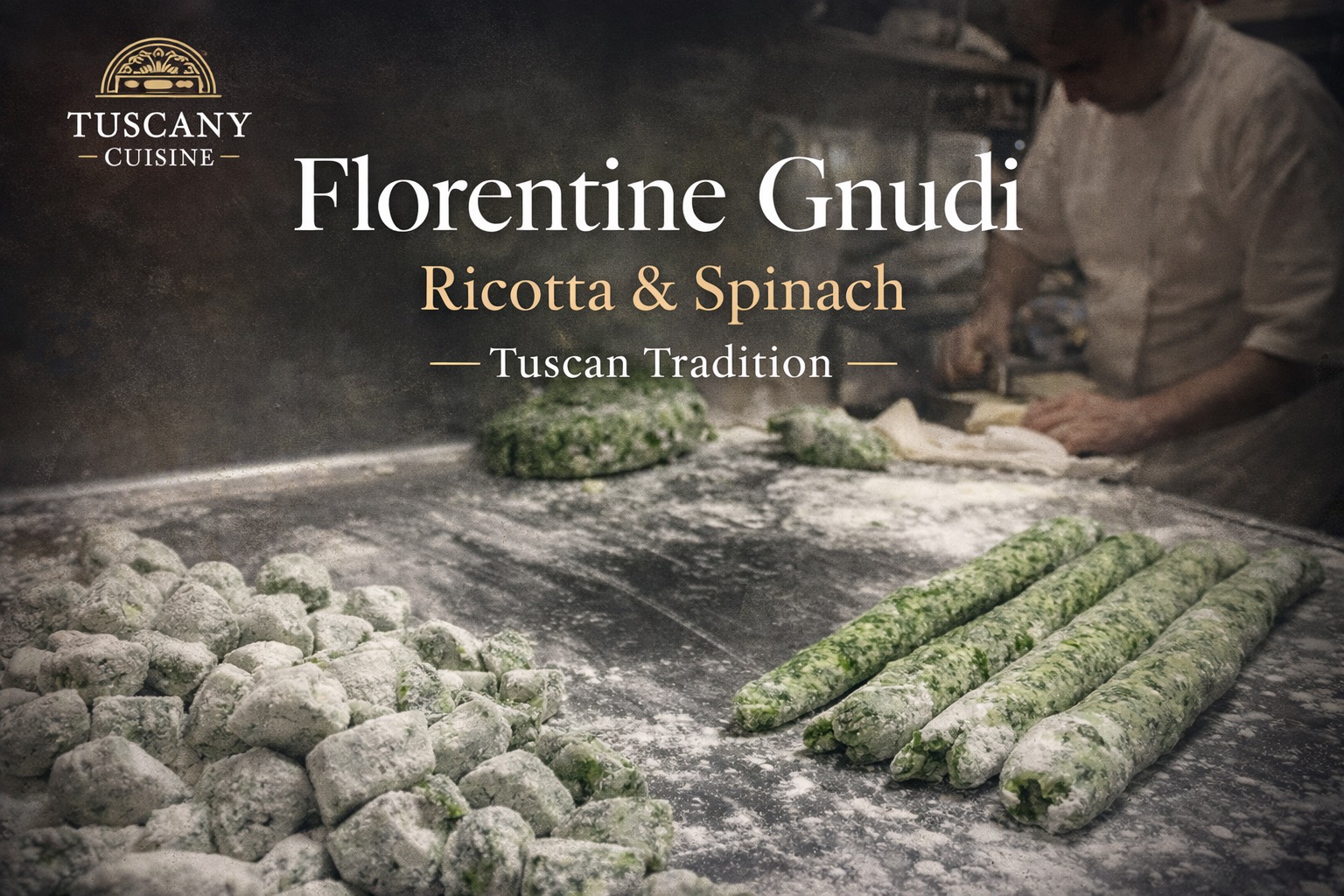
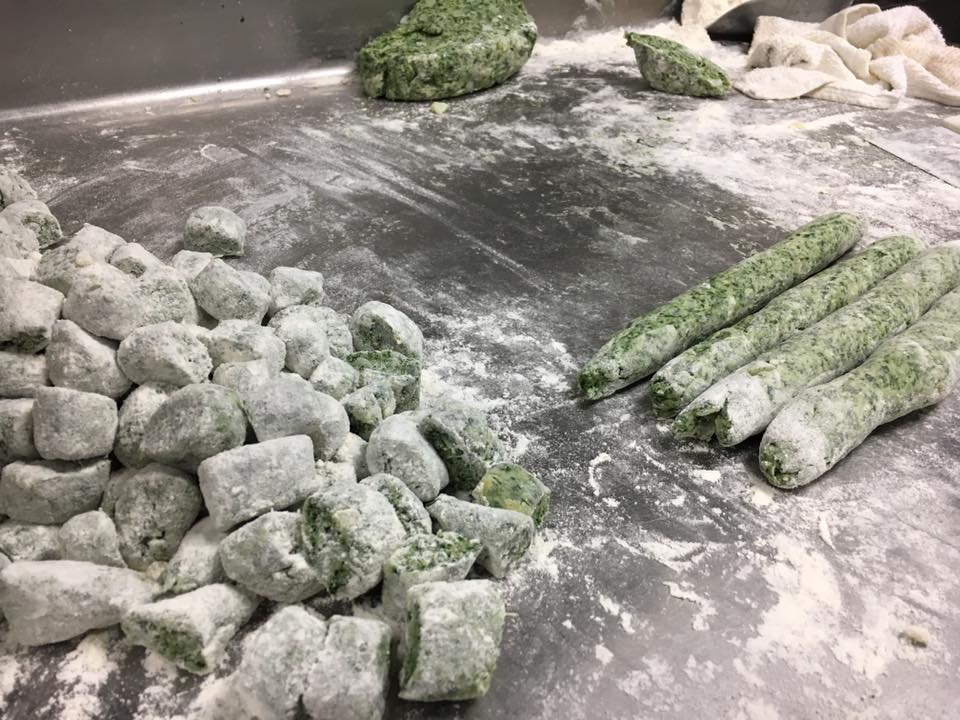
- Shape with a light hand. Roll into logs on a well-floured surface and cut into irregular pieces. Avoid over-handling — imperfection is part of the identity.
- Cook gently. Drop into lightly boiling salted water. Once they float, allow only 30–60 seconds more — overcooking weakens their structure.
- Finish or hold with care. Transfer directly into sauce for service, or shock briefly and reserve lightly oiled. Reheat only through sauce — never aggressively.
• Explore the Finished Gnudi Dish
• Read the Gnudi Story & Origins
• Discover Other Gnocchi Traditions