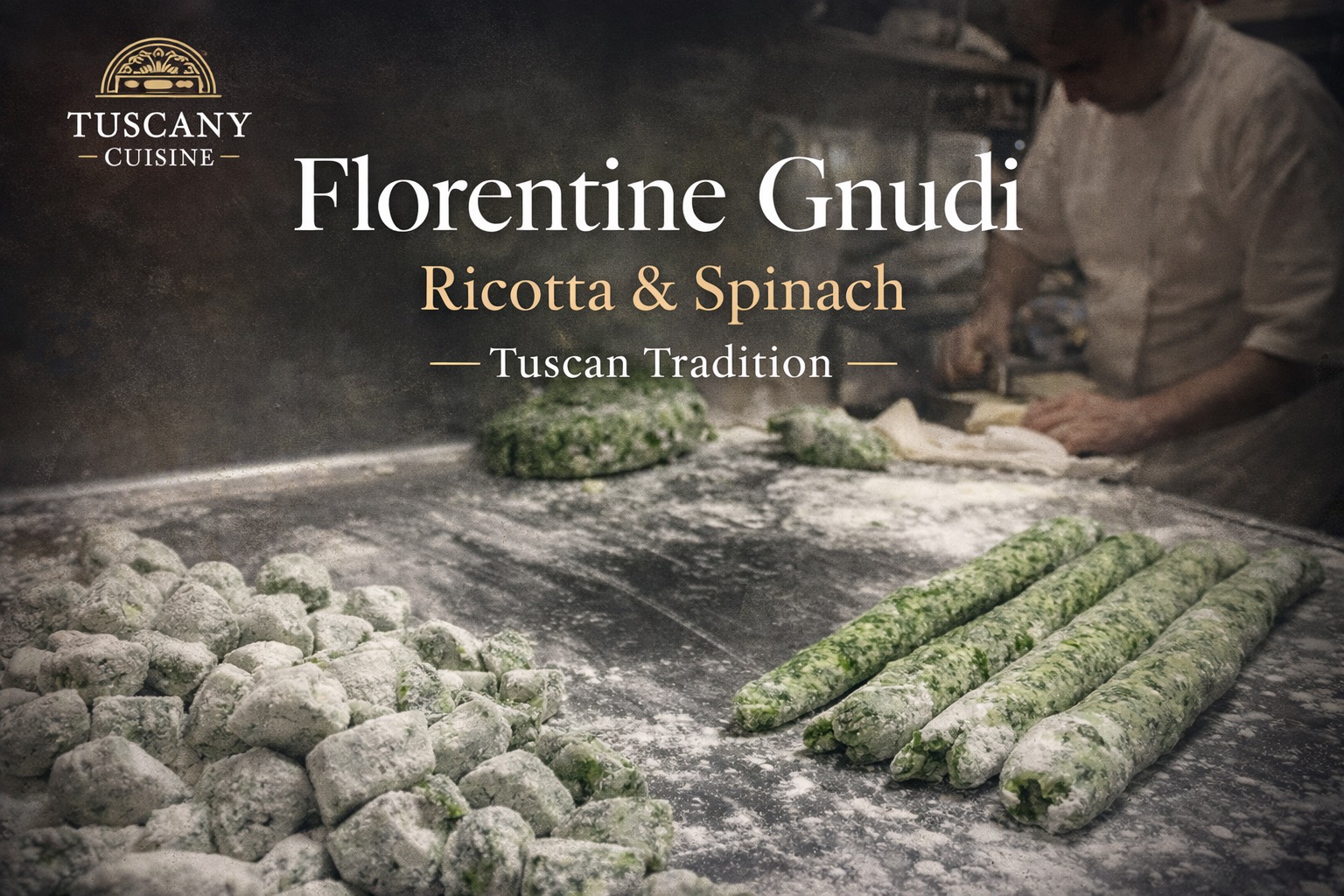

This page presents the finished plated expression of Florentine gnudi — a refined interpretation of one of Tuscany’s most soulful preparations. The ricotta-based gnudi are light, tender, and elegant, while the sage tomato sauce brings brightness, aromatic depth, and just enough acidity to frame the dish without taking it over.

Dish Overview
This is the finished dish page designed for menu presentation, pairing, story engagement, and production flow. The full gnudi preparation remains on the dedicated prep page, while this page highlights plating, sauce direction, wine notes, and broader inspiration for chefs exploring the versatility of gnudi.
How This Plate Is Finished
- Prepare the gnudi from the dedicated base recipe: Florentine Gnudi Prep Recipe.
- Warm the classic tomato sauce gently and infuse it with fresh sage so the sauce remains fragrant, light, and balanced.
- Reheat the gnudi delicately in the sauce just until hot, allowing the dumplings to stay tender and softly coated.
- Plate immediately and finish with freshly grated Parmigiano Reggiano for savory depth and a clean final touch.
Sauce Pairings & Flavor Direction
Gnudi are among the most expressive preparations in Tuscan cuisine — their soft ricotta structure acts as a canvas for sauce. The key is restraint: the sauce must support, not dominate.
The version presented here — sage-infused tomato sauce — creates a beautiful balance of acidity, freshness, and aromatic depth. But gnudi also welcome many interpretations, from delicate butter finishes to richer countryside ragouts.

Classic Tomato Sauce
A bright and clean sauce for gnudi, especially when scented with fresh sage and finished with Parmigiano Reggiano. It keeps the plate lively, elegant, and true to the image shown here.

Tuscan Ragout Sauce
A richer, deeper alternative for a more rustic countryside expression. Excellent for colder seasons or menus seeking a fuller, more robust gnudi presentation.
Think of gnudi like a conversation between texture and sauce. The ricotta brings softness and subtle sweetness — your sauce must answer with balance. Too heavy, and the dish collapses. Too light, and it lacks identity.
• Butter and sage sauce for the most classic and delicate Tuscan finish.
• Blue cheese sauce for a richer, more luxurious interpretation.
• Light tomato and basil for a brighter summer version.
• Tuscan ragout for a hearty regional menu expression.
From Cucina Povera to Elegant Plate
Gnudi are one of Tuscany’s most poetic creations — born from necessity, refined by generations of hands. Their name, meaning “naked,” reveals their essence: the filling of ravioli without the pasta, pure, honest, and deeply rooted in the ingenuity of home cooking.
What began as a humble farmhouse preparation has evolved into a dish that moves effortlessly between rustic Tuscan tables and refined restaurant menus. Their beauty lies in that tension: simple ingredients, careful technique, and a final result that feels both comforting and elegant.
On this dish page, the sauce and plated identity take center stage, while the linked story page expands the history, meaning, and evolution of gnudi in greater depth.
Read the Full Story of Gnudi
Discover the roots, Tuscan identity, and deeper meaning of this remarkable preparation:
Explore the Complete Gnudi Story Page
Explore the World of Gnocchi & Gnudi
Gnudi belong to a wider family of Italian dumpling traditions — from classic potato gnocchi to semolina and regional variations shaped by local ingredients and culinary imagination.
For chefs, cooks, and readers who want to go deeper into technique, identity, and variation:
Chef Variation & Inspiration
Gnudi are not a fixed recipe — they are a technique, a philosophy, and a foundation for creativity. Once the base is understood, chefs can adapt the final plate to season, region, restaurant style, or menu intent.
- Finish with brown butter, sage, and crispy hazelnuts for a warmer autumn profile.
- Pair with blue cheese sauce and toasted walnuts for a richer, more decadent menu version.
- Use a lighter tomato-basil finish for spring and summer menus.
- Present with Tuscan ragout for a more rustic countryside expression.
- Add seasonal greens, wild mushrooms, or truffle accents for a signature chef interpretation.
Have your own gnudi variation, sauce pairing, or service idea? Let this dish inspire your next menu concept and help expand the conversation around Tuscan craftsmanship and contemporary culinary expression.