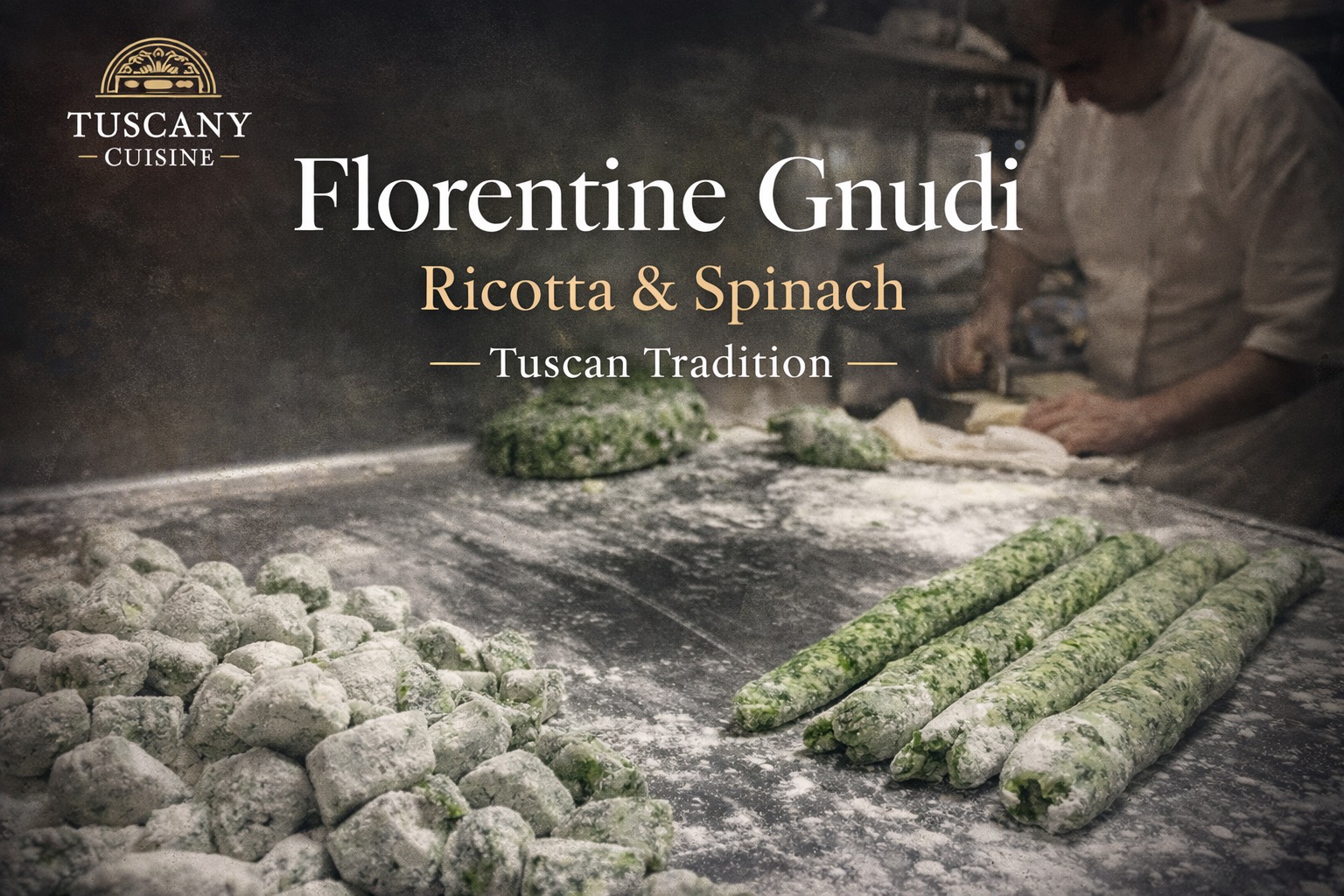

Where Gnudi Begin
The classic Tuscan version of gnudi is made with ricotta and spinach, though variations have existed for generations. Their mixture is closely related to the filling of ravioli, and that relationship is exactly what makes the dish so fascinating: gnudi are, in essence, the soul of ravioli without the pasta wrapper that would normally contain them.
That is also where their name comes from. In Italian, gnudi means “naked.” The name is direct, expressive, and beautifully accurate. These dumplings are the filling laid bare — the richness of dairy and greens presented without disguise.
Born from Simplicity and Resourcefulness
Like so many enduring dishes, gnudi emerged from practical intelligence. They offered the satisfaction of a filled pasta preparation without the extra labor of laminating, cutting, and enclosing dough. In homes, farms, and religious kitchens, this mattered. Good cooks learned to create something nourishing, elegant, and deeply comforting from ingredients already close at hand.
Fresh ricotta, leafy greens, eggs, and a small amount of flour formed the base. What happened next depended on the cook’s hand: shaping, poaching, finishing, and sauce. This is where cucina povera reveals its brilliance. Poverty of means did not produce poverty of imagination. Quite the opposite.
From Maremma to Florence
Gnudi are often linked to Maremma, where rustic foodways preserved old gestures and practical recipes, but the dish belongs more broadly to Tuscany. Florence embraced gnudi as part of its first-course tradition, and over time the preparation became one of the region’s most recognizable expressions of softness, balance, and culinary restraint.
Their appeal is timeless. They feel rural and refined at once. They can sit comfortably on a farmhouse table or on a polished restaurant plate. That dual identity is one of the reasons gnudi continue to resonate so strongly with cooks and diners alike.
Malfatti: The Beauty of Imperfection
In parts of Tuscany, especially around Siena, gnudi are also known as malfatti, literally “badly made.” It is a wonderful name, full of irony and affection. Because these dumplings are shaped by hand and have no pasta shell to discipline their form, they often appear irregular, soft-edged, and imperfect.
Yet that irregularity is their beauty. Malfatti are proof that handmade food carries character in its very shape. Each piece preserves the gesture of the cook. Their imperfections are not flaws but signatures.
A Dish That Welcomes Interpretation
One of the reasons gnudi remain so compelling is their versatility. Traditionally, they are often finished with butter and Parmigiano, a pairing that allows their delicate interior to shine. But the same base can move in many directions: light tomato sauce, sage, herbs, seasonal vegetables, blue cheese, ragù, or more contemporary restaurant finishes.
This makes gnudi especially meaningful for chefs. They are not confined to a single rigid expression. They are a foundational preparation — a base that can support regional character, seasonality, personal style, and modern plating while still preserving its Tuscan identity.
Why Gnudi Still Matter
In a culinary world often drawn toward spectacle, gnudi remind us that texture, balance, and memory can be more powerful than complication. They ask for a sensitive hand. Too much sauce and the dish loses grace. Too much heaviness and its identity disappears. But when treated carefully, gnudi become one of the most elegant first courses in the Italian tradition.
That is why they still matter. They are not only a historic recipe. They are a living lesson in proportion, tenderness, and regional intelligence.
Connected to the Tuscany Cuisine System
This story page is part of a larger culinary structure: a connected system where story, preparation, plated expression, and menu logic speak to one another. Here, gnudi are not isolated as a single recipe. They live across multiple layers — the historical narrative, the prep page, the finished dish presentation, and the broader gnocchi and dumpling tradition.
That connection matters because it reflects how chefs actually work. A base recipe becomes many services. A traditional idea becomes several interpretations. A story becomes a menu direction.
An Invitation to Chefs
If you are a chef, cook, or culinary creator, gnudi offer a perfect place to begin exploring the dialogue between heritage and invention. Perhaps your version leans more rustic, with tomato and basil. Perhaps you finish them with brown butter and sage. Perhaps you adapt the greens, bring in shellfish, or express the technique through another local ingredient entirely.
These variations are not departures from tradition when done with understanding. They are evidence that the dish is still alive.
Continue the Journey of Gnudi
Discover the working preparation, see the finished plated expression, and explore the wider gnocchi world that surrounds this Tuscan classic.
View the Gnudi Prep Page
View the Finished Dish Page
Explore the Gnocchi Master Guide
Share Your Gnudi Inspiration
Tuscany Cuisine also welcomes chefs to contribute their own recipe inspirations, sauce ideas, regional interpretations, and plated concepts. Gnudi prove that culinary heritage is strongest when it is both preserved and continued — not frozen, but cooked, refined, and shared.
Whether your version stays close to Tuscan roots or explores a new creative direction, your work can help expand the conversation around pasta, dumplings, technique, and the art of simplicity.