Dijon mustard
A smooth, usually sharp prepared mustard. Brown or other pungent seeds are ground with water, salt and an acidic liquid. Exact formulas and seed origins vary by producer.
Brassica juncea, Sinapis alba & related mustard seeds · Brassicaceae
A tiny seed becomes one of the world's most useful condiments when it is cleaned, crushed, moistened and balanced with salt and acidity. Dijon built an international identity around this craft; green-grape verjuice and Burgundy wine connect the paste to vineyard history, while Canadian prairie seed became important to modern global supply.
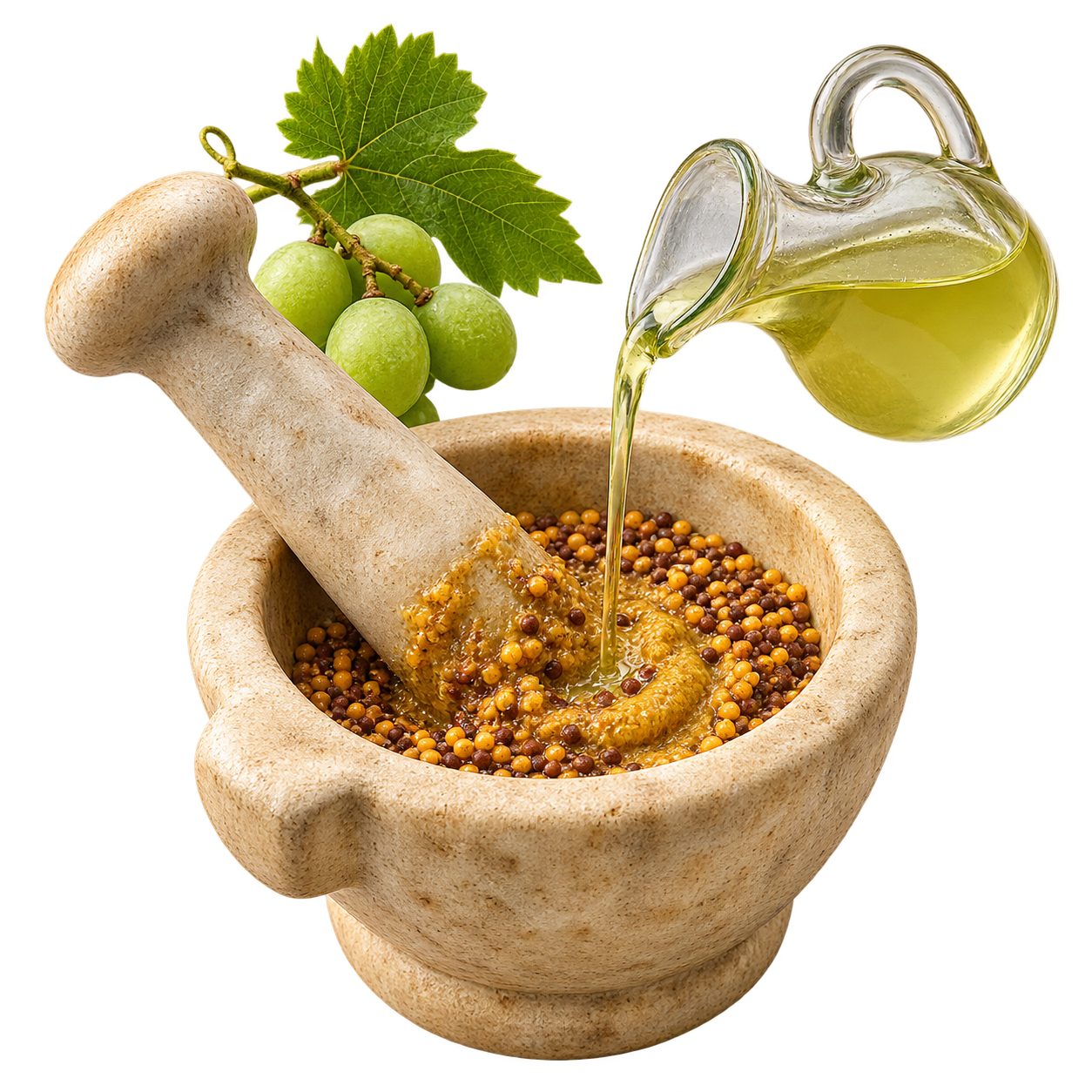 Dijon mustard icon active
The label needs careful reading. “Dijon mustard” evokes the city of Dijon and its historic trade, but the words alone do not guarantee locally grown seed. The protected Moutarde de Bourgogne IGP follows a more specific regional rule.
A smooth, usually sharp prepared mustard. Brown or other pungent seeds are ground with water, salt and an acidic liquid. Exact formulas and seed origins vary by producer.
A protected Burgundy product. Its specification requires approved mustard seed grown and stored in Burgundy, Burgundy AOC white wine and production within the defined area.
Yellow, brown, black and oriental mustard seeds differ in chemistry and culinary use. The active Dijon paste record must not absorb raw seed, powder, whole-grain or sweet mustard inventory.
Mustard Extract is not Dijon mustard in a smaller bottle. It is a separate, highly concentrated mustard-derived flavor ingredient used in very small amounts when a chef or food manufacturer needs sharp mustard character without adding the texture, water, salt and bulk of prepared mustard.
Commercial mustard flavor concentrates begin with mustard seed or mustard-derived material. The seed is crushed or comminuted so its natural glucosinolates and enzyme system can develop the characteristic pungent mustard compounds. Depending on the product specification, manufacturers then use controlled extraction, steam distillation or hydro-distillation to recover and concentrate the volatile mustard flavor.
Food-grade mustard essential oil is traditionally obtained by water/steam distillation after the crushed seed is moistened. This process produces a very pungent liquid rich in allyl isothiocyanate. Other commercial mustard extracts and oleoresins can use different extraction and standardization systems, so the exact concentration, carrier, solubility and handling requirements must always come from the supplier's technical data sheet.

Food manufacturers begin with an approved mustard species and lot selected for pungency, purity and flavor performance.
Breaking the seed and adding controlled moisture allows the natural mustard enzyme system to generate pungent isothiocyanate compounds.
Steam or hydro-distillation can recover volatile mustard oil; other commercial extracts or oleoresins may use supplier-specific extraction methods.
The recovered concentrate is separated from seed solids and unwanted material to produce a consistent liquid flavor ingredient.
The supplier controls potency, solubility, carrier system and specification so professional users can dose the ingredient consistently.
Concentrated mustard flavor is packed in tightly closed, compatible containers and protected according to the exact supplier specification.

A small amount can add a direct mustard note without adding the body, salt, acidity or emulsified texture of prepared Dijon mustard.
Flavor systems, sauces, marinades, pickles, dressings, emulsions, savory fillings and tightly controlled tasting-menu preparations.
Potency can vary greatly among essential oil, extract and oleoresin products. Never substitute one concentration for another without an approved specification and recipe test.
The orange mustard component uses 1 g Mustard Extract to reinforce mustard character without adding the bulk of prepared mustard.
Open RecipeMustard's long life comes from a simple technique: break the seed, add liquid and capture its heat. Burgundy added a vineyard identity to the method, while trade and industrial production carried the condiment far beyond Dijon.
Mustard seed was cultivated and crushed in early Mediterranean food traditions. Mixing ground seed with grape must or acidic liquid made a pungent paste.
Dijon's mustard tradition is documented from the Middle Ages. Vineyards supplied tart grape products that could moisten, acidify and perfume the crushed seed.
Burgundian mustard makers refined grinding, sieving, seasoning and the use of verjuice or wine. The pale, smooth, sharp style became associated with Dijon.
Mechanized milling, controlled acidity, glass packaging and rail and maritime trade transformed a regional preparation into an exportable pantry standard.
European mustard expertise now intersects with large seed-growing regions, especially the Canadian Prairies, plus producers and culinary traditions across Asia, Europe and the Americas.
The familiar explanation of “mustard” as a fiery mixture of must and crushed seed reflects the historic connection between grape products and mustard making. Today, however, a commercial Dijon formula may use vinegar, wine, water or several acids rather than fresh green-grape verjuice.
Pungency is not simply added from a bottle. It develops when the seed is damaged and hydrated. The maker then controls heat, acidity, texture and resting time to preserve the desired aroma and strength.
Choose the seed species and lot for color, pungency, protein, oil, glucosinolate profile, moisture and purity. Remove foreign seed, stones and damaged material.
Mortar, stone mill or industrial equipment breaks the seed coat and exposes the kernel. Fine milling supports a smooth paste; partial crushing preserves grain texture.
Water in the dilution liquid allows the seed enzyme myrosinase to meet glucosinolates. Their reaction creates the volatile pungent compounds that rise into the nose.
Verjuice, wine, wine vinegar, spirit vinegar or blends supply tartness, flavor and preservation support. The choice changes brightness, fruit character and perceived heat.
Resting develops and integrates pungency. Smooth mustard is sieved to remove hull fragments; whole-grain styles keep visible cracked seed.
The paste is filled into clean containers and protected from excess heat, oxygen and contamination. Product formulation and processing determine label storage directions.
Verjuice is pressed from unripe grapes before their sugars fully develop. It is tart, wine-friendly and softer in aroma than many vinegars, making it a natural partner for crushed mustard seed in a vineyard region.
Verjuice supplies water for hydration, grape acidity, freshness and a regional flavor bridge. It does not create the seed's pungency by itself; that heat emerges from the seed's enzyme-driven chemistry after crushing and hydration.
White wine, white-wine vinegar, spirit vinegar and water-acid blends are common. The Dijon tourism recipe, for example, combines ground brown seed with dry white wine and white-wine vinegar.
Think of mustard as a four-part structure: seed heat, liquid acidity, salt and texture. Verjuice creates a rounder grape connection; vinegar gives a cleaner, harder line; wine adds aroma. The best choice depends on the sauce, protein and final cooking temperature.
For citronette and vinaigrette, mustard also helps disperse oil into the acidic phase, but the emulsion still needs controlled whisking or blending and correct proportions.
Seed species, hull retention, grind, acid, sweetener, heat and regional tradition create very different condiments. Recipe substitutions should be deliberate.
| Style | Typical structure | Flavor & texture | Best culinary use | System rule |
|---|---|---|---|---|
| Dijon-style | Finely ground pungent seed, water, salt and acidic liquid | Smooth, sharp, pale gold, clean finish | Vinaigrettes, pan sauces, marinades, crusts, mayonnaise | Active Dijon record |
| Moutarde de Bourgogne IGP | Burgundy seed plus Burgundy AOC white wine under the protected specification | Strong, wine-marked, smooth or old-style grain | Burgundian sauces, charcuterie, refined meat cookery | Separate protected-origin item when purchased |
| Whole-grain / à l'ancienne | Partly crushed seed with hulls retained | Textured, aromatic, generally rounder bite | Charcuterie, cream sauces, glazes, roasted meats | Separate inventory identity |
| Yellow / American | Milder yellow seed, vinegar, often turmeric and seasoning | Bright yellow, smooth, gentle and tangy | Hot dogs, burgers, barbecue, picnic salads | Not a Dijon substitute by default |
| English mustard | Very fine mustard flour, often a blend of seed types | Hot, direct and clean; paste may be mixed fresh | Roast beef, cheese sauces, savory pastry | Powder and prepared paste need separate codes |
| German styles | Regional recipes from smooth sharp to coarse sweet | Ranges from assertive Düsseldorf-style to sweet Bavarian | Sausages, pork, pretzels, braises | Register the actual purchased style |
| Chinese hot / Japanese karashi | Mustard powder hydrated near service | Powerful fresh nasal heat, little sweetness | Dipping sauces, dumplings, pork, noodle dishes | Separate dry/paste identity |
| South Asian mustard & kasundi | Whole or ground brown/black/yellow seed; regional pastes may include chile and aromatics | Earthy, pungent, fermented or spiced depending on style | Tempering, fish, pickles, chutneys, curries | Do not collapse seed, oil and paste records |
| Honey / sweet mustard | Prepared mustard balanced with honey or other sweetener | Sweet-tart, rounded heat | Dips, glazes, sandwiches, poultry | Track added sweetener and allergen label |
Mustard is grown, processed and eaten across continents. Production may refer to seed for condiments, culinary oil, spice tempering, cover crop or industrial food manufacture, so market statistics must be read carefully.
Western Canada produces yellow, brown and oriental mustard, especially in Saskatchewan and Alberta. Canadian grain laboratories grade and analyze seed for oil, protein, glucosinolates and quality.
Dijon provides the historic name and manufacturing culture. Many Dijon-style products have used imported seed; Moutarde de Bourgogne IGP instead requires Burgundy seed and Burgundy wine.
India and neighboring cuisines use mustard as whole seed, ground spice, paste and oil. Brown and black mustard bring a culinary role much broader than European table mustard.
Germany, Poland, Ukraine, Russia and neighboring countries grow or trade seed and maintain distinctive prepared-mustard traditions from sharp to sweet.
English mustard flour emphasizes immediate heat, while North American yellow mustard became a mild, bright and widely recognized prepared style.
Chinese hot mustard and Japanese karashi often rely on freshly hydrated powder, highlighting the short-lived intensity created when seed chemistry is activated.
Mustard seed contains protein, oil and glucosinolates, but prepared mustard is normally eaten in small portions and may carry substantial sodium. It is a flavorful condiment—not a treatment or cure.
Canadian quality testing confirms that mustard seed contains meaningful protein, with values differing among yellow, brown and oriental lots.
Mustard seed contains oil and fatty acids. Table mustard uses only a modest quantity of seed per serving, so benefits should not be exaggerated.
These plant compounds are precursors to pungent isothiocyanates. They are actively researched, but laboratory findings do not make mustard medicine.
Salt supports flavor and preservation. Compare labels when sodium is a concern and calculate the actual recipe portion rather than the value for a whole jar.
A professional specification names the style, brand or equivalent standard, seed origin when relevant, texture, heat level, acid source, pack size, allergen declarations and expected opened life.
| Checkpoint | Accept | Reject or flag | Record |
|---|---|---|---|
| Identity | Correct Dijon formula, brand/specification and pack | Yellow, honey, whole-grain or flavored substitution | Item code, brand, lot, origin claim |
| Package | Seal intact, clean lid, readable label | Leaking, swollen, cracked, rusted or tampered package | Received date, lot, best-before date |
| Aroma | Clean, sharp, mustard-forward | Rancid, moldy, fermented or chemically abnormal odor | Sensory check and corrective action |
| Texture | Smooth and emulsified for Dijon specification | Unexplained gas, mold, severe drying or abnormal separation | Style, opened date, condition |
| Allergen label | Mustard and conditional ingredients clearly recorded | Missing label or unapproved substitute | Mustard; sulphites if declared |
Store according to the manufacturer, protected from excessive heat, freezing and direct sunlight. Rotate by best-before or received date.
Date the container, close tightly and refrigerate when the label directs or when longer flavor retention is desired. Never top off a used container.
Use a clean utensil, prevent allergen cross-contact and return the product promptly to controlled storage. Discard contaminated or abnormal product.
Dijon mustard contributes acidity, salt, aromatic heat and emulsifying support. Its effect changes with cooking time and the fat, sweetness and liquid already present.
Whisk mustard into the acid phase before slowly incorporating oil. Adjust salt only after tasting the mustard.
Use mustard to sharpen reduced juices, cream, wine and stock. Avoid hard boiling after final addition when bright pungency matters.
Helps herbs and seasoning cling to poultry, pork, lamb, beef, fish and vegetables. Acidity and salt still need independent control.
A thin coat anchors panko, herbs or nuts. Use a measured layer so the crust adheres without becoming pasty.
Combine with honey, fruit, reduced juice or brown sugar for roast meats and vegetables. Track the added sugar separately.
Sharp mustard refreshes pâté, cured duck, sausages and terrines. Whole-grain mustard offers a different texture and must remain separately identified.
Use in warm dressings, gratins, braises and bean salads. Mustard connects naturally with cabbage-family vegetables.
Apply thinly for aroma and moisture management. Pair with cheese, roast meats, pickles and bitter greens.
Only confirmed recipe connections are counted. Every linked recipe must use the same Dijon ingredient code so Menu Builder quantities, station production, inventory and purchasing do not split into duplicate mustard records.
Dijon mustard supports the orange citronette, helping its flavor and emulsion structure balance house-cured duck, asparagus and toasted panko.
Open RecipeCONDIMENT-MUSTARD-DIJON and dijon_mustard.The active record supplies the same code, icon, allergen and inventory identity to recipes, Menu Builder calculations, production, station pick lists, Live Inventory, vendor requirements, purchasing and receiving.
TC-ICON-MUSTARD-DIJON
CONDIMENT-MUSTARD-DIJON / dijon_mustard for prepared Dijon Mustard, and CONDIMENT-MUSTARD-EXTRACT-001 / mustard_extract for the specialty concentrated Mustard Extract. They must never deduct from the same inventory item.Scale grams from the exact Dijon or Mustard Extract record and preserve the mustard allergen through every serving calculation.
Send Dijon quantities to Garde Manger or the assigned station without substituting another mustard style.
Deduct actual grams from dijon_mustard and calculate cost from the received jar or bulk pack.
Verify style, pack, lot, seal, allergen label, conditional sulphites and approved product specification.
History, protected-origin requirements, seed quality, trade context, chemistry, nutrition and allergen guidance were checked against government, institutional and scientific references.
Educational notice: this page provides culinary, historical and general nutrition education, not medical advice. Recipes, seed origins, sodium, sulphites, alcohol ingredients, preservatives and storage directions vary by manufacturer. Read the actual label, follow local food-safety and allergen rules, and use your operation's approved receiving and HACCP procedures.