Dry Goods Ingredient · BREADCRUMB-PANKO-JAPANESE
Panko
パン粉 · Japanese-style breadcrumbs
A professional guide to the airy Japanese breadcrumb that changed crisp coatings: its origin, production, types, quality, worldwide relatives and culinary versatility.
Ingredient identity
What makes panko a different breadcrumb?
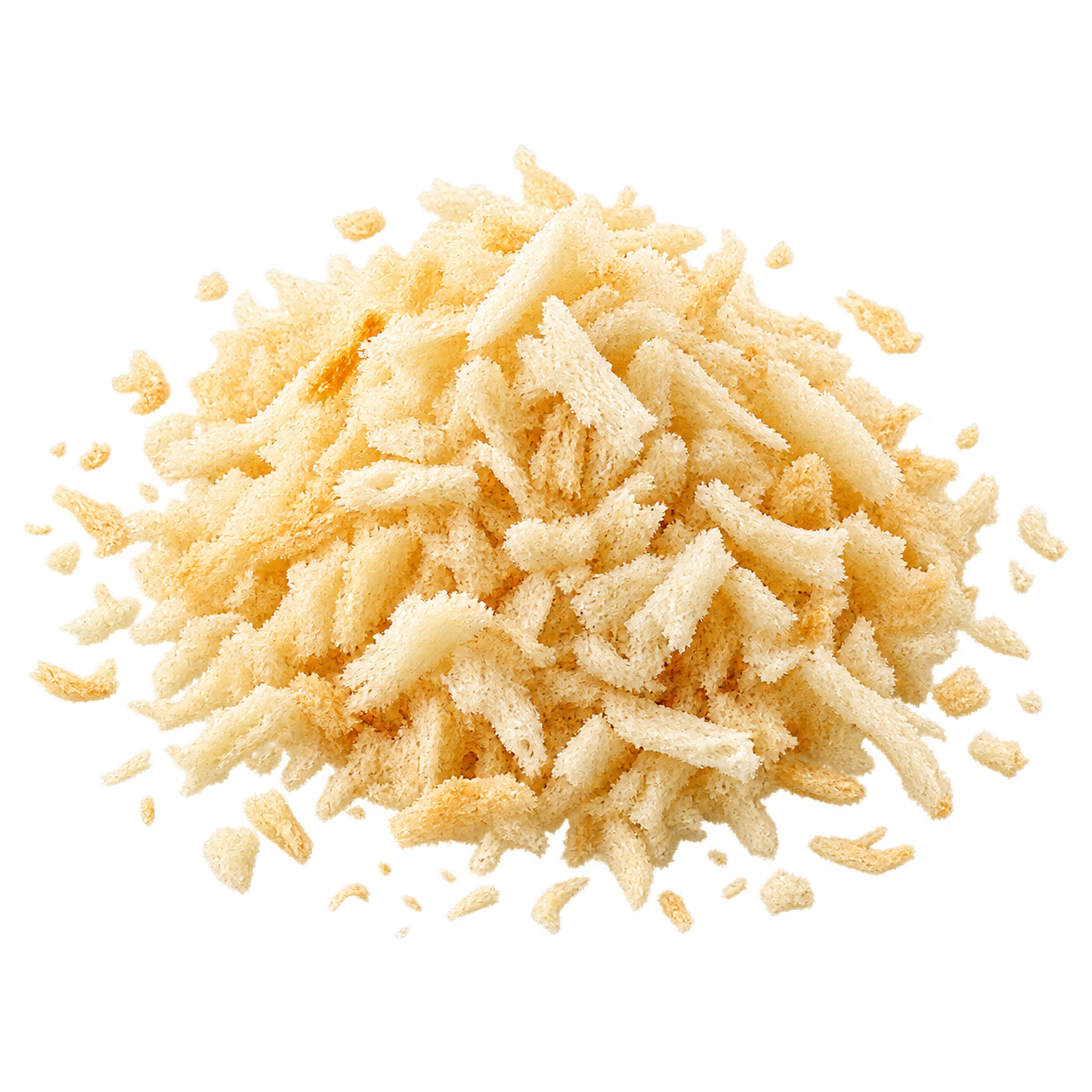
Panko is the Japanese word for breadcrumbs, written パン粉. In international culinary use, the term usually means Japanese-style crumbs made from light, crustless bread and processed into large, irregular, porous flakes. That open structure creates a loose coating with many crisp edges instead of the compact, uniform layer formed by fine dried crumbs.
The word joins pan—Japan’s borrowed word for bread, historically connected to Portuguese pão—with ko, meaning flour or powder. In Japan the category includes fresh, semi-dried and dried breadcrumbs; the dry boxed product common in international supermarkets represents only one form.
Culinary history
From European bread to Japanese electric baking
Bread entered Japan through Portuguese contact in the sixteenth century, and commercial breadcrumb production existed by the early twentieth century. The distinctive modern panko structure became associated with bread cooked by electrical resistance—also called ohmic or electrode baking—instead of relying only on a conventional hot oven.
Historical research connects electrode bread cookers with Japanese military development in the 1930s. Passing current through dough produced an evenly heated, pale loaf without a conventional browned crust. After the Second World War, the method moved into commercial food production. Manufacturers found that the resulting bread could be dried and shredded into long, porous crumbs that drained well after frying and delivered a light, durable crunch.
By the later twentieth century, Japanese and Japanese-American food businesses brought panko into North American restaurant and retail channels. It then spread into global kitchens because its mild flavor and texture worked beyond Japanese dishes.
Ingredient comparison
Panko versus ordinary breadcrumbs
| Characteristic | Japanese-style panko | Fine dried breadcrumbs | Fresh breadcrumbs |
|---|---|---|---|
| Raw material | Usually specially baked, light, crustless wheat bread | Dried bread, often including crust | Fresh or day-old bread crumb |
| Particle shape | Coarse, elongated, jagged and porous flakes | Small, dense and relatively uniform particles | Soft, irregular and moist particles |
| Color | Pale ivory to light gold | Cream to toasted brown | Depends on bread and crust |
| Coating behavior | Open, dimensional coating; avoid compacting | Tighter, more complete and compact coating | Not normally selected for a dry crisp shell |
| Best uses | Katsu, fried seafood, croquettes, gratins, baked toppings | Cutlets, breaded vegetables, stuffing, gratins, binders | Panades, tender meatballs, stuffing and moist fillings |
| Seasoning | Often plain and neutral | Plain or commercially seasoned | Seasoned by the cook for the recipe |
Manufacturing knowledge
How quality panko is produced
Formulas and machinery vary by producer. The essential objective is consistent, crustless bread with an open internal cell structure, followed by controlled shredding and drying. Some specialized Japanese-style production uses electrical resistance to heat dough internally, while other manufacturers use purpose-built ovens and loaf systems designed to create similarly pale, airy bread.
Japanese & commercial classifications
Types of panko
Nama panko
Moist, soft and especially fluffy. Used heavily in professional frying operations; requires refrigeration and careful date control.
Han-nama panko
A middle-moisture style balancing fresh-like expansion with somewhat easier handling. Storage requirements follow the producer’s specification.
Kansō panko
The shelf-stable form commonly exported and sold in boxes or foodservice bags. Keep it protected from humidity after opening.
Extra-large & large
Creates dramatic texture and coating coverage for shrimp, fish, poultry, vegetables and restaurant-scale fried preparations.
Medium & fine
Useful for croquettes, crab cakes, binders, delicate pieces and recipes needing panko character with a less rugged appearance.
Whole-grain, seasoned & alternative
Modern production includes whole-wheat, flavored and gluten-free panko-style coatings. Formulas and allergens vary significantly by brand.
Global culinary breadcrumb traditions
Breadcrumb production around the world
Many cuisines transform leftover or purpose-baked bread into crumbs, but regional particle size, moisture, bread style and seasoning create different results. These traditions are related—not interchangeable in every recipe.
| Region | Breadcrumb tradition | Typical structure | Culinary applications |
|---|---|---|---|
| Japan | Panko | Fresh, semi-dried or dried; light flakes in multiple grades | Tonkatsu, ebi fry, korokke, kushikatsu, hambāgu and toppings |
| Italy | Pangrattato | Fine to medium dry grated bread; sometimes toasted or seasoned | Fried cutlets, gratins, stuffed vegetables, pasta and toasted garnish |
| Sicily & Southern Italy | Muddica atturrata | Breadcrumbs toasted with olive oil and aromatics | Pasta finishing, vegetables and dishes once enriched in place of cheese |
| France | Chapelure / mie de pain | Chapelure is dry and grated; mie de pain is softer white crumb | Panure, gratins, croquettes, stuffings and forcemeat work |
| Spain & Latin America | Pan rallado / pan molido | Usually fine dry crumbs, plain or seasoned | Croquetas, milanesas, breaded seafood, meat and vegetable dishes |
| Germany & Austria | Semmelbrösel / Paniermehl | Dry crumbs traditionally made from rolls or bread | Schnitzel coating, dumplings, pastries, gratins and pan preparation |
| United Kingdom & United States | Fresh, dried and seasoned breadcrumbs | Ranges from soft fresh crumb to fine shelf-stable products | Stuffings, fried coatings, casseroles, meatloaf, crab cakes and toppings |
Purchasing & receiving standards
How to evaluate professional panko quality
Flake architecture
Seek light, porous, irregular flakes with the grade size specified for the menu application and minimal powdery fines.
Color & flavor
The crumb should look pale and clean with a neutral bread aroma. Reject scorched, stale, rancid, musty or foreign odors.
Moisture control
Dried panko should flow freely without damp clumps. Packaging must be sealed and protected from tears or water exposure.
Formula & allergens
Verify wheat, gluten and any milk, egg, sesame, soy or facility statements. Confirm seasoned versus unseasoned specifications.
Traceability
Record supplier, brand, item number, lot code, received date and best-by date for quality and recall readiness.
Performance test
Test adhesion, browning, oil drainage, crunch after holding and consistency before approving a new foodservice product.
Storage, shelf life & allergens
Keep dried panko crisp and protected
Dried panko
Store sealed in a cool, dry, sanitary location away from steam, heat, pests and strong odors. Close opened bags tightly or transfer to a labeled food-safe airtight container. Follow the manufacturer’s best-by date and first-in, first-out rotation.
Fresh and semi-dried panko
Refrigerate at the temperature specified by the producer, protect from cross-contamination and observe the use-by date. Never substitute a shelf-stable storage assumption for a higher-moisture product.
Allergen and dietary notice
Traditional panko is normally made with wheat and therefore contains wheat and gluten. Some formulas may include milk, egg, sesame, soy, enzymes, shortening or seasonings. “Panko-style” gluten-free products may use rice, corn or other ingredients, but certification and labels must be checked for every supplier.
Culinary versatility
More than a fried coating
Fried & air-fried foods
Chicken, pork, fish, shrimp, tofu, croquettes and vegetables gain an open, crisp exterior.
Oven crusts
Mix lightly with oil or butter for baked fish, poultry, stuffed mushrooms and vegetable gratins.
Golden finishes
Finish casseroles, macaroni, gratins, pasta bakes and roasted vegetables with toasted texture.
Meatballs & patties
Use an appropriate grind to manage moisture and structure in crab cakes, meatballs, burgers and fillings.
Toasted crunch
Toast with olive oil, garlic, citrus zest, herbs or cheese for pasta, salads, soups and plated vegetables.
Dessert texture
Plain panko can add crisp structure to fruit crumbles, baked toppings and creative pastry crusts.
Professional breading technique
Build adhesion without crushing the flakes
Three-stage breading method
- Dry the food surface and season appropriately.
- Apply a thin, even layer of flour; shake away all excess.
- Coat with egg wash or the specified pre-dip, allowing extra liquid to drain.
- Lay the food into panko and turn gently. Press only enough for adhesion—do not compact the flakes.
- Rest briefly under refrigeration so the coating hydrates and adheres before cooking.
- Cook at the recipe’s controlled temperature and drain on a rack to preserve airflow and crispness.
Tuscany Cuisine Ingredient Master Registry
Panko usage record across the platform
One permanent identity connects this panko icon and page to recipe quantities, Menu Builder, Production, stations, inventory, purchasing, vendor orders and receiving. Systems match the permanent ingredient ID first, then the approved panko aliases.
Recipe Library
Scanning recipe records…
ScanningMenu Builder
Scanning menu records…
ScanningProduction Dashboard
Scanning production records…
ScanningStation Pick Lists
Scanning station records…
ScanningLive Inventory
Scanning inventory records…
ScanningVendor & Purchasing
Scanning purchase records…
ScanningReceiving
Scanning receiving records…
ScanningRecipes using panko
Frequently asked questions
Panko questions for cooks and chefs
Is panko simply coarse regular breadcrumbs?
Not exactly. Flake size is important, but the open structure of the specially made bread is equally important. Crushing an ordinary dry loaf coarsely does not always reproduce panko’s airy, elongated flakes.
Can panko replace Italian breadcrumbs?
Often, but the result changes. Panko makes a looser, more dimensional crust. Fine Italian-style crumbs make a tighter coating and may already contain herbs, cheese, salt or garlic. Adjust seasoning, quantity and technique rather than substituting blindly by volume.
Is panko always made by electric-current baking?
No. Electrode or ohmic baking is historically important and remains associated with authentic industrial panko, but manufacturers also use specialized conventional systems designed to produce pale, crustless bread with an open crumb.
Why does panko become soggy in storage?
The dry porous flakes readily pick up environmental moisture. Keep opened product tightly sealed and away from steam, damp storage, refrigeration condensation and uncovered wet ingredients.
Is panko vegan?
Many plain formulas contain only wheat flour, yeast, sugar and salt, but not every product is identical. Check for milk, egg, shortening, honey, seasonings and cross-contact statements before assigning a dietary tag.
Editorial references
Sources and further reading
- Kikkoman USA: panko ingredients, structure, nutrition and culinary applications
- Upper Crust Enterprises: professional panko grades, formulas and foodservice uses
- Japan Science and Technology Agency J-GLOBAL: history of ohmic cooking, electric bread and panko
- Food Science and Technology Research: breadcrumb structure and oil-absorption study
- The Recipes Project: Japanese electric bread and the history of panko