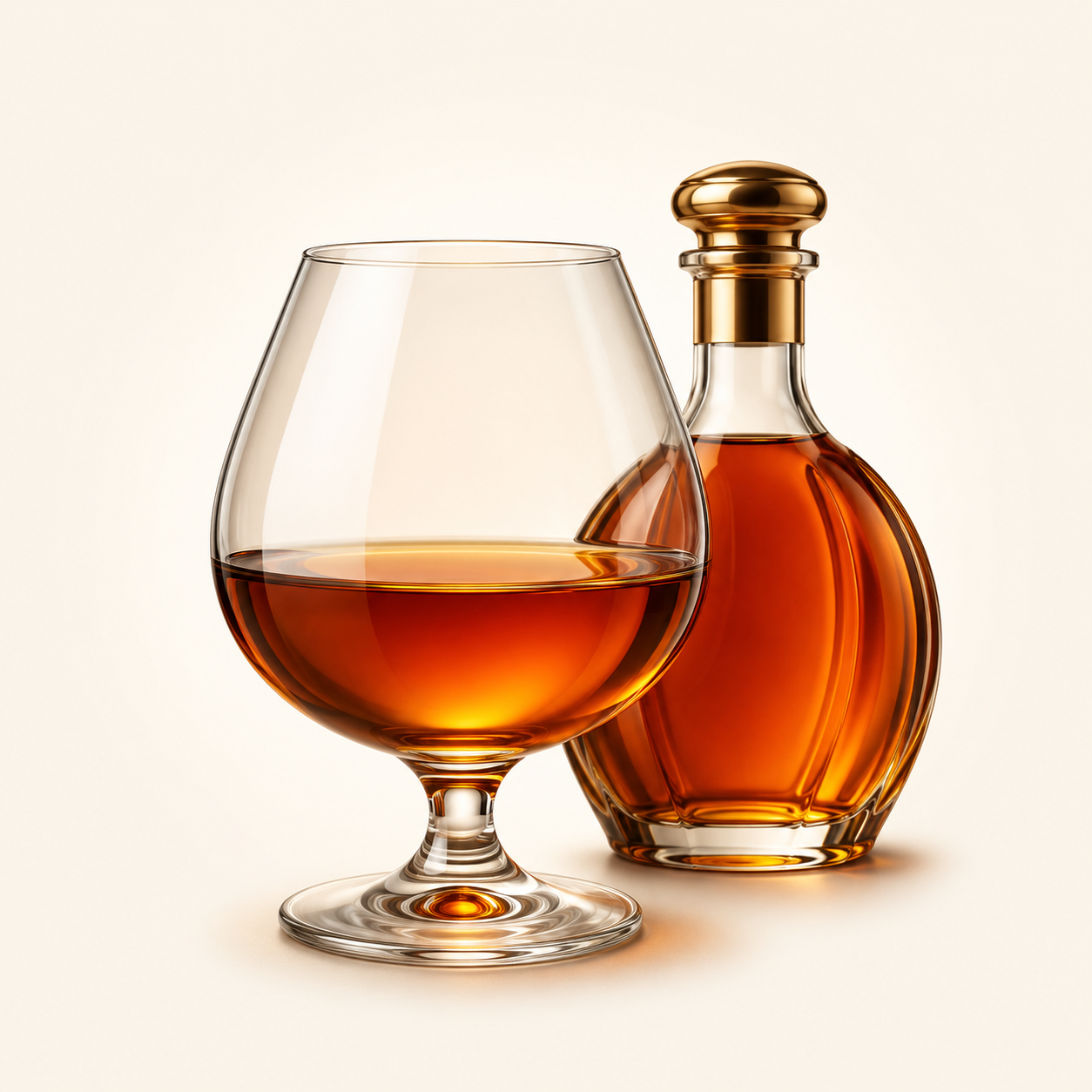
Distilled wine transformed by copper, oak, time and blending. Brandy spans
everyday culinary work, classic cocktails, after-dinner service and some of
the most prestigious aged spirits in the world.
CognacArmagnacBrandy de JerezOak AgingCulinary UseBeverage Inventory
What Is Brandy?
Brandy is a distilled spirit made from wine or another fermented fruit base.
In its classic wine-brandy form, grapes are fermented into wine and then distilled
to concentrate alcohol and aroma. The spirit may be bottled young, but many of the
world's most celebrated brandies are matured in oak and blended to create a consistent
house style.
Cognac is brandy, but not every brandy is Cognac. Cognac is a protected
geographical indication from the Cognac region of France with defined grapes, production
rules, distillation requirements and oak-aging standards. Armagnac, Brandy de Jerez and
other regional traditions follow different rules and develop distinct personalities.
History: From “Burnt Wine” to Fine Spirit
Brandy grew from the practical need to concentrate wine into a sophisticated aging culture.
The English word brandy is associated with the Dutch term
brandewijn, meaning “burnt wine,” referring to wine transformed by
distillation. European wine merchants learned that distilling wine reduced volume,
improved transport efficiency and created a product that could survive long journeys.
When distilled wine spirits spent time in wooden casks, producers discovered that
maturation changed the spirit dramatically.
Through oxidation, extraction from oak and slow chemical evolution, raw eau-de-vie
developed deeper color, softer texture and increasingly complex aromas. Over centuries,
local wine regions developed their own methods. Cognac and Armagnac became two great
French traditions; Jerez developed a dynamic solera system in Sherry-seasoned casks;
Italy, Portugal, the Balkans, Armenia, South Africa and the Americas developed additional
regional expressions.
How Brandy Is Produced
The character of the final spirit is shaped at every stage—from vineyard to blend.
1
Fruit & Wine
Grapes or other fruit are fermented into a low-alcohol wine or fruit wine.
2
Distillation
Pot stills, column stills or regional systems concentrate alcohol and aroma.
3
Spirit Selection
The distiller separates desirable spirit from unwanted early and late fractions.
4
Oak Maturation
Time in wood develops color, spice, vanilla, dried-fruit and oxidative complexity.
5
Blending
Different barrels, ages and sometimes vineyard origins are assembled into a house style.
6
Reduction & Bottling
Mature spirit is adjusted to bottling strength and prepared for release.
Professional tasting principle:
age alone does not guarantee quality. Fruit quality, distillation precision,
oak management, warehouse conditions, blending skill and balance are equally important.
Cognac Aging Classifications
For Cognac, the stated category is based on the youngest eau-de-vie in the blend.
Classification
Minimum Oak Aging
General Style
Professional Use
VS Very Special
At least 2 years
Younger, fruit-forward, lively
Cocktails, culinary work, accessible sipping
VSOP Very Superior Old Pale
At least 4 years
More integrated oak, spice and fruit
Premium cocktails, sauces, sipping
Napoléon
At least 6 years
More mature and rounded
Sipping and richer culinary pairing
XO Extra Old
At least 10 years
Deep dried fruit, spice, oak and long finish
Primarily premium sipping and pairing
XXO Extra Extra Old
At least 14 years
Very mature, layered and concentrated
Luxury sipping and collector market
Brandy de Jerez: Solera, Sherry Casks & Dynamic Aging
A different aging philosophy creates a different style of brandy.
Brandy de Jerez is matured in the Jerez region of Spain using the traditional
criaderas y solera system. Brandy moves progressively through
different aging scales, while older brandy is drawn from the solera and replenished
with younger material. This creates continuity and blending across generations of spirit.
The casks are especially important because they have previously held Sherry.
Fino, Oloroso, Amontillado or Pedro Ximénez seasoning can influence color, sweetness,
nuttiness, oxidative character and aroma. Official Brandy de Jerez categories include
Solera, Solera Reserva and Solera Gran Reserva.
Major Brandy-Producing Countries & Traditions
Similar raw materials can create very different spirits depending on region and method.
France
Cognac and Armagnac are among the world's benchmark grape-brandies, each protected by regional rules and distinct production traditions.
Spain
Brandy de Jerez is famous for Sherry-seasoned casks and the dynamic criaderas-and-solera aging system.
Italy
Italy produces wine brandy alongside its better-known grappa tradition. Italian brandy is used both for sipping and cooking.
United States
California has a long grape-growing and brandy tradition, ranging from value production to artisanal pot-distilled spirits.
South Africa
South Africa has a respected brandy culture built on wine grapes, copper distillation and barrel maturation.
Armenia & Caucasus
Armenian grape brandy has a long regional identity and is known for mature barrel-aged styles and distinctive local grapes.
Why Brandy Becomes More Expensive
Price rises for several reasons—and age is only one part of the equation.
Time & Warehouse Cost
Long aging ties up inventory and capital for years or decades before the bottle can be sold.
Angel's Share
Spirit evaporates during maturation, so producers may have substantially less liquid to sell after long aging.
Oak & Cask History
Quality barrels, rare old casks and specific seasoning histories can materially affect cost and character.
Scarcity
Old stocks, single-cask releases, vintage distillates and limited blends become increasingly scarce.
Protected Origin
Appellation rules, restricted production zones and controlled methods can increase production costs and prestige.
Brand & Presentation
Reputation, global demand, packaging, taxes, import costs and luxury positioning can raise retail pricing independently of age.
Value lesson:
the most expensive bottle is not automatically the best bottle for every purpose.
For cooking, cocktails and bar programs, balance, consistency and cost per serving
often matter more than luxury age statements.
Benchmark Producers & Brands to Know
Examples for professional education—not a universal ranking and not a paid endorsement.
Cognac · France
Hennessy · Rémy Martin · Martell · Courvoisier · Camus · Frapin · Delamain
Armagnac · France
Château de Laubade · Delord · Janneau · Darroze
Brandy de Jerez · Spain
Cardenal Mendoza · Lepanto · Carlos I · Gran Duque de Alba · Fundador · Lustau
Italy
Vecchia Romagna and other regional wine-brandies
United States
Germain-Robin and other California craft-brandy producers
South Africa & Armenia
KWV · Van Ryn's · ARARAT
Professional Culinary Uses
Brandy is both a beverage spirit and a classic cooking ingredient.
Deglazing
Use a measured quantity to dissolve browned fond from sauté pans for meat, poultry and mushroom sauces.
Pâté & Charcuterie
Brandy or Cognac can season liver pâté, terrines, forcemeats and other rich preparations.
Pan Sauces
Classic peppercorn, cream, demi-glace and mushroom sauces can gain aromatic depth from brandy.
Flambé
Used in controlled flambé applications where the kitchen procedure and fire safety standards permit.
Desserts
Fruit, chocolate, pastry creams, bread puddings, sauces and preserved fruit can all use brandy as an aromatic component.
Cocktails & Service
Brandy supports classic cocktails, after-dinner service and beverage pairings across the bar program.
Kitchen safety:
never pour brandy directly from the bottle over an open flame. Measure the spirit
away from the heat source, control ignition carefully, and follow the operation's
fire-safety procedures.
Brandy Ingredient Identity
The same spirit identity can connect recipes, bar inventory, purchasing and culinary education.
Brandy / Cognac
The Tuscany Cuisine working identity brandy_cognac is designed
to support recipes that call for either general brandy or Cognac. More specialized
identities can later be added for Cognac VS, Cognac VSOP, Cognac XO, Armagnac,
Brandy de Jerez and individual beverage SKUs without breaking this core recipe identity.
Ingredient Usage Record on Tuscany Cuisine
Brandy already has an active culinary role on the platform and can now connect
that recipe use directly to the beverage system.
Recipe
Crostini di Fegatini di Pollo
Recipe Path
/engine/Appetizers2/Crostini.html
Ingredient Role
Deglazing and aromatic seasoning for chicken-liver pâté
Current Recipe Quantity
30 g Brandy or Cognac in the base recipe
This page establishes Brandy / Cognac as a reusable beverage and culinary ingredient
identity for recipes, beverage inventory, purchasing, costing and future cocktail records.
Ingredient Code
brandy_cognac
Inventory ID
brandy_cognac
Display Category
Beverage
Subcategory
Distilled Spirits / Brandy
Preferred Beverage Unit
ml
Recipe Units Supported
ml / g
Icon
/wine/liquor/brandy.png
Ingredient Page
/wine/liquor/brandy.html
Beverage Dashboard
/wine/wines.html
Storage Zone
Bar / Spirits
Professional References & Further Study
Official regional sources are especially important when studying protected spirit classifications.