Vinaccia · Grape Pomace
The aromatic grape skins and seeds remaining after pressing still contain volatile compounds and, depending on winemaking method, fermented alcohol that can be recovered and concentrated by distillation.
Italy's historic grape-marc spirit: born from the principle that the pomace left after winemaking still contains aroma, alcohol and value. Grappa moved from rural distillation into refined tasting, pastry, sauces, marinades, cures and modern desserts.
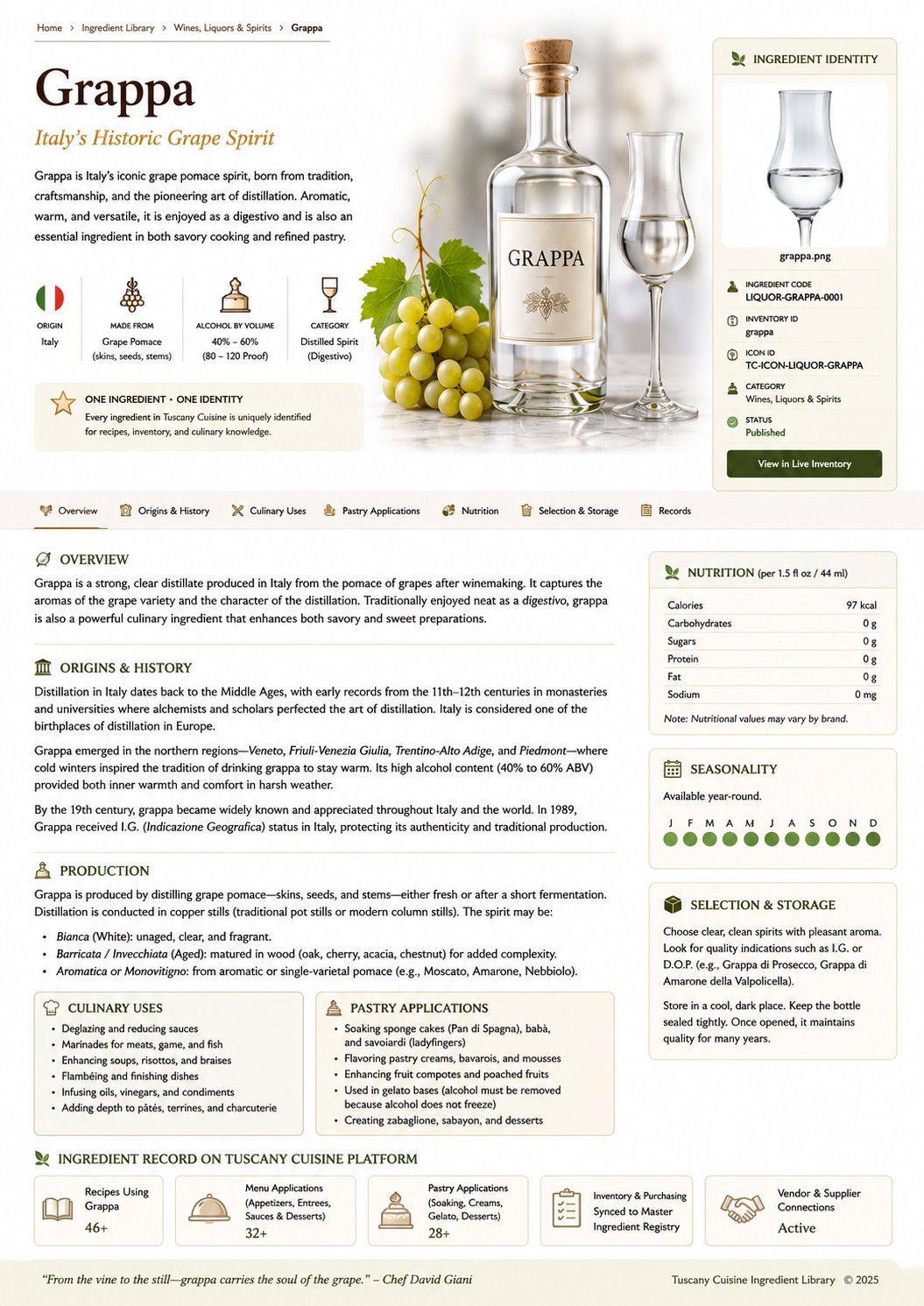 Grappa · Italian Grape Marc Spirit
Grappa is not brandy and it is not simply distilled wine. It is produced from the solid grape material—skins, seeds and associated pomace—left after winemaking. Modern European rules define grape-marc spirit and protect the Grappa identity for Italian production.
The aromatic grape skins and seeds remaining after pressing still contain volatile compounds and, depending on winemaking method, fermented alcohol that can be recovered and concentrated by distillation.
European spirit rules define grape-marc spirit and historically reserve the designation Grappa for qualifying spirit produced in Italy. The Italian Ministry also maintains Grappa as a protected spirit geographical indication.
Brandy is distilled from wine or fermented wine material; Grappa is characteristically distilled from grape marc itself. That raw material gives Grappa its distinctive structure, dryness and varietal aromatic expression.

The compact grappa.png graphic is the permanent ingredient identity used by recipes, inventory, purchasing, station records, Menu Builder and the Tuscany Cuisine knowledge system. The larger grappagraphic1.jpeg and grappa2.jpeg images are educational page graphics only.
The purpose of distillation is not to “create” alcohol from nothing. Fermentation creates alcohol first; distillation separates and concentrates alcohol and aromatic volatile compounds from the grape marc.
Grapes are crushed and pressed. The remaining skins, seeds and pomace become the raw material.
Pomace used for Grappa must provide fermented material so alcohol is present before distillation.
The marc is heated directly or by steam so alcohol and volatile aromas move into vapor.
The vapor is cooled and condensed back into liquid spirit.
The distiller keeps the desirable heart fraction, then reduces, rests, ages or bottles according to style.
In the late 19th century, Enrico Comboni in Conegliano helped refine steam-distillation equipment for grape pomace. The technique allowed steam to pass through the marc and carry alcohol and aroma without relying only on direct-fire heating, a major step toward modern Grappa production.
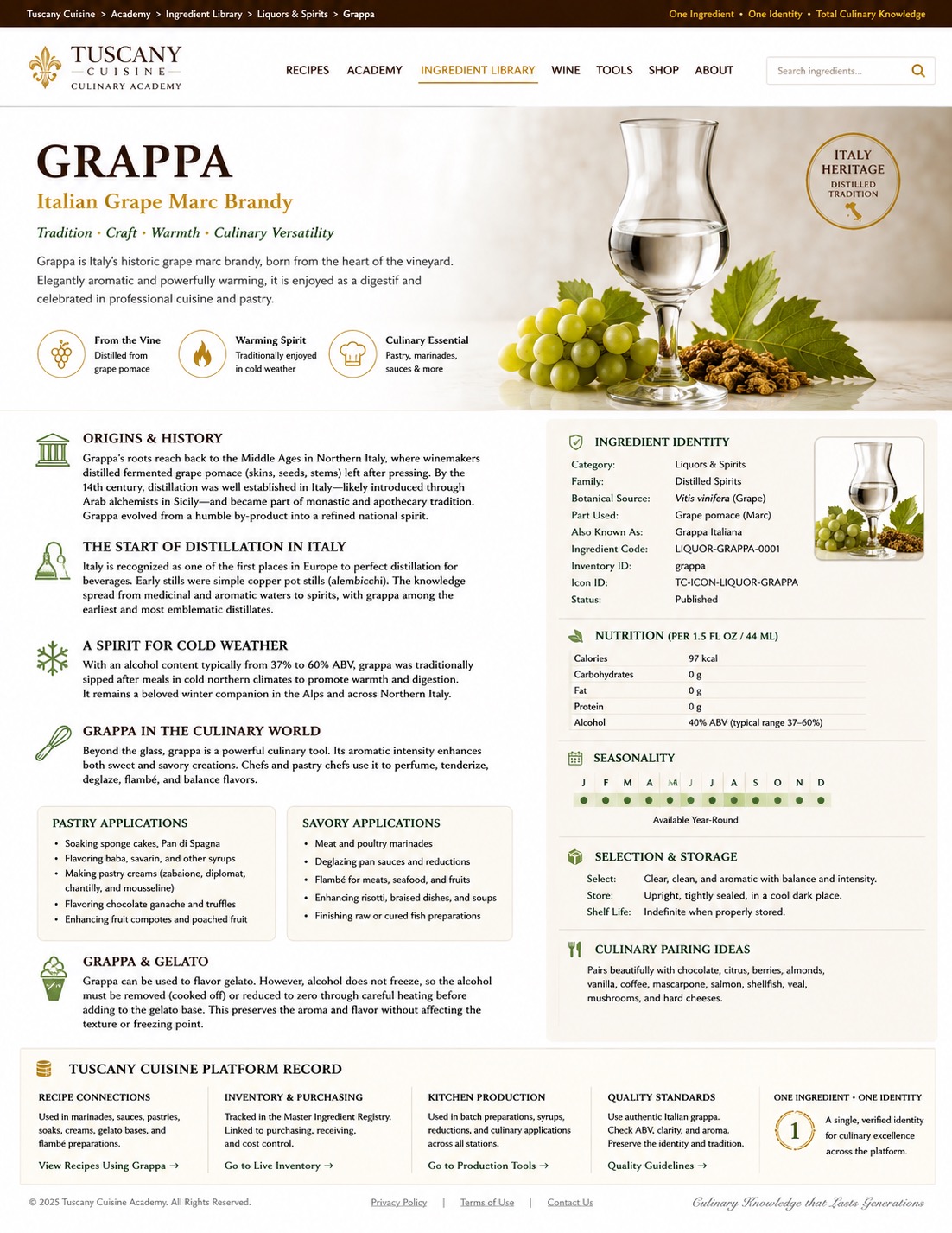
It is tempting to call Grappa one of the first grape distillates, but the historical record is more nuanced. Distillation itself is ancient and developed across several civilizations. The specifically Italian tradition of distilling grape pomace appears much later.
Early still-like apparatuses were used for perfumes, essences, medicine and alchemy. These ancient techniques should not be described as evidence of Grappa production.
Italian historical accounts connect the School of Salerno with early medieval study and codification of alcoholic distillation for medicinal “water of life.”
The exact first producer is unknown. The Poli Grappa Museum notes that grape-pomace distillation was probably practiced in the 14th or 15th century, possibly earlier.
The Paduan physician wrote De Conficienda Aqua Vitae, an important early treatise on wine distillate. It documents the rise of serious distillation knowledge in northern Italy.
Distillation remained local and artisanal. Mobile stills moved from farm to farm, turning leftover grape marc into a useful, high-value spirit rather than waste.
The Florentine Baglioni developed a distillation column in 1813. Later fermentation science and steam distillation improved control, purity and aromatic quality.
Modern Grappa includes transparent young styles, aromatic varietal expressions and wood-aged spirits with amber color and notes of vanilla, spice, tobacco, cocoa and dried fruit.
In Alpine and northern Italian culture, a small glass of Grappa became associated with cold evenings, mountain hospitality and the end of a meal. Its high alcohol strength creates an immediate warming sensation in the mouth, throat and skin.
Historically, farmers, workers and families in cooler northern regions often consumed strong spirits in winter. The heat of ethanol, the ritual of sipping and the indoor social setting made Grappa feel like a natural cold-weather drink.
Alcohol can widen peripheral blood vessels and increase warm blood flow near the skin. This can create a sensation of warmth while actually increasing heat loss from the body's core.
Grappa should never be presented as protection against hypothermia. Public-health guidance specifically warns against alcoholic drinks for rewarming because alcohol can increase heat loss and impair judgment. The “warming” tradition is sensory and cultural, not a medical warming strategy.
Grappa can be classified by age, grape variety and aromatic treatment. The raw pomace, still design, distillation cut, rest period and wood all influence the finished spirit.
| Style | Production / aging | Typical character | Culinary direction |
|---|---|---|---|
| Giovane · Young | Rested in inert containers; no wood aging | Clear, direct, grape-skin and pomace character | Cures, syrups, creams, fruit, clean aromatic applications |
| Aromatica | From aromatic or semi-aromatic grapes such as Moscato or Malvasia | Floral, fruity, varietal perfume | Pastry, fruit desserts, creams, gelato, finishing |
| Affinata | Short period in wood before 12 months | Beginning wood influence | Chocolate, nuts, caramel, richer pastry |
| Invecchiata / Vecchia | More than 12 months in wood | Rounder, amber, spice and wood notes | Chocolate, coffee, chestnut, dried fruit, pan sauces |
| Stravecchia / Riserva | More than 18 months in wood | Deeper maturation, vanilla, tobacco, cocoa, sweet spice | Primarily sipping; use selectively in high-value desserts |
| Monovitigno | Pomace from one grape variety | Clear varietal identity | Pair cuisine to grape aroma: Moscato with fruit; aromatic whites with pastry |
| Aromatizzata | Infused after distillation with botanicals | Added herbal or botanical character | Specialty cocktails and specific dessert applications |
Used with restraint, Grappa can provide grape aroma, alcoholic lift and a clean Italian identity without the heavier oak or caramel character of some brandies.
Small amounts can perfume salmon cures, seafood marinades and aromatic cold preparations. It should support citrus, fennel, herbs and spice rather than dominate them.
Grappa can be used in controlled quantities with juniper, rosemary, garlic, citrus, wine and spice for game, pork and robust meat preparations.
Deglaze in small amounts away from open flame, then reduce deliberately. Aromatic Grappa can add grape and floral top notes; aged styles pair with richer brown sauces.
Excellent with pear, apple, grape, peach, apricot, plum, berries, fig and dried fruit. Use in maceration, compotes and aromatic syrups.
Aged Grappa works naturally with dark chocolate, cocoa, coffee, hazelnut, chestnut and caramel. Add after excessive heat has dissipated if you want to preserve aroma.
A few measured drops can finish cured salmon, fruit, cream desserts or plated chocolate. Measure rather than free-pour so flavor and alcohol remain controlled.
Pastry gives Grappa a particularly useful second life because sugar, dairy, chocolate and fruit can soften its alcoholic edge while preserving grape aroma.
Blend a measured amount into a cooled simple syrup and brush or soak sponge layers. Adding the Grappa after the syrup cools preserves more aroma; heating it intentionally removes more alcohol.
Rum is traditional for babà, but Grappa can be used as an Italian variation. A sugar-citrus syrup can carry the spirit into the porous yeast cake while controlling sharpness.
Add modest amounts to cooled pastry cream, diplomat cream, mascarpone cream or whipped ganache. Too much alcohol can thin structure and overpower dairy aromas.
Use Grappa in place of or alongside traditional fortified wine only when the formula is adjusted for alcohol strength and aroma. Aromatic Grappa gives a more intense grape character.
Add after the emulsion forms and cools slightly. Aged Grappa pairs especially well with dark chocolate, espresso, hazelnut and dried fruit.
Macerate fruit or use Grappa in syrups for savarin, cake layers, charlotte-style desserts and plated fruit. Balance alcohol with sugar, acid and water.
Alcohol is a powerful freezing-point depressant. Pure ethanol does freeze, but at roughly −114°C—far below a normal gelato cabinet—so adding Grappa changes how much water in the mix can turn to ice at serving temperature.
Do not say “alcohol does not freeze.” The accurate lesson is: ethanol freezes at a much lower temperature than water, so at normal gelato temperatures it stays liquid and strongly depresses the freezing point. A Grappa gelato can therefore be made with controlled alcohol, or with some alcohol cooked off when a firmer result is required.
A small tulip-shaped glass concentrates aroma without forcing the alcohol directly toward the nose. Service temperature depends on style.
Common professional guidance places young and young aromatic Grappa around 9–13°C. This keeps alcohol controlled while leaving fruit and floral aromas visible.
Aged Grappa is commonly served around 17°C so wood, spice and mature aromatic notes can open without making the alcohol excessively volatile.
Keep sealed, upright, away from direct sun, excessive heat and ignition sources. In the kitchen, secure high-proof spirits according to local alcohol and fire-safety rules.
Responsible-service notice: Grappa is a high-alcohol beverage intended for legal-age adults. Culinary use does not guarantee that all alcohol has evaporated. Alcohol retention varies with quantity, heat, time, vessel and cooking method.
The current platform connection demonstrates Grappa as a culinary aromatic—not only a beverage.

Italian Grappa perfumes a professional salmon cure with fennel tops, citrus peel, bay leaves, garlic, onion, black peppercorns, sea salt, granulated sugar and brown cane sugar.
The new grappa.png icon gives this liquor a permanent identity across recipes, inventory, purchasing, stations and Menu Builder.
TC-ICON-LIQUOR-GRAPPA
The page separates documented distillation history from legend and uses current European and Italian spirit references for the legal identity.
Educational notice: this page is culinary and historical education. Distillation is regulated and can create fire, pressure, methanol and legal hazards. It does not provide instructions for home distillation. Follow applicable alcohol, licensing, fire-safety and food-service laws.