Tuscany Cuisine · Spirits Knowledge Library

Whiskey & Whisky

From grain, water and yeast to copper stills, oak casks and decades of maturation, whiskey is one of the world’s most diverse distilled spirits. This guide follows its history, production, legal styles, aging traditions, landmark distilleries, rare expressions, market tiers and professional culinary uses.

Bourbon & Rye Scotch Whisky Irish Whiskey Japanese Whisky American Single Malt Culinary Uses
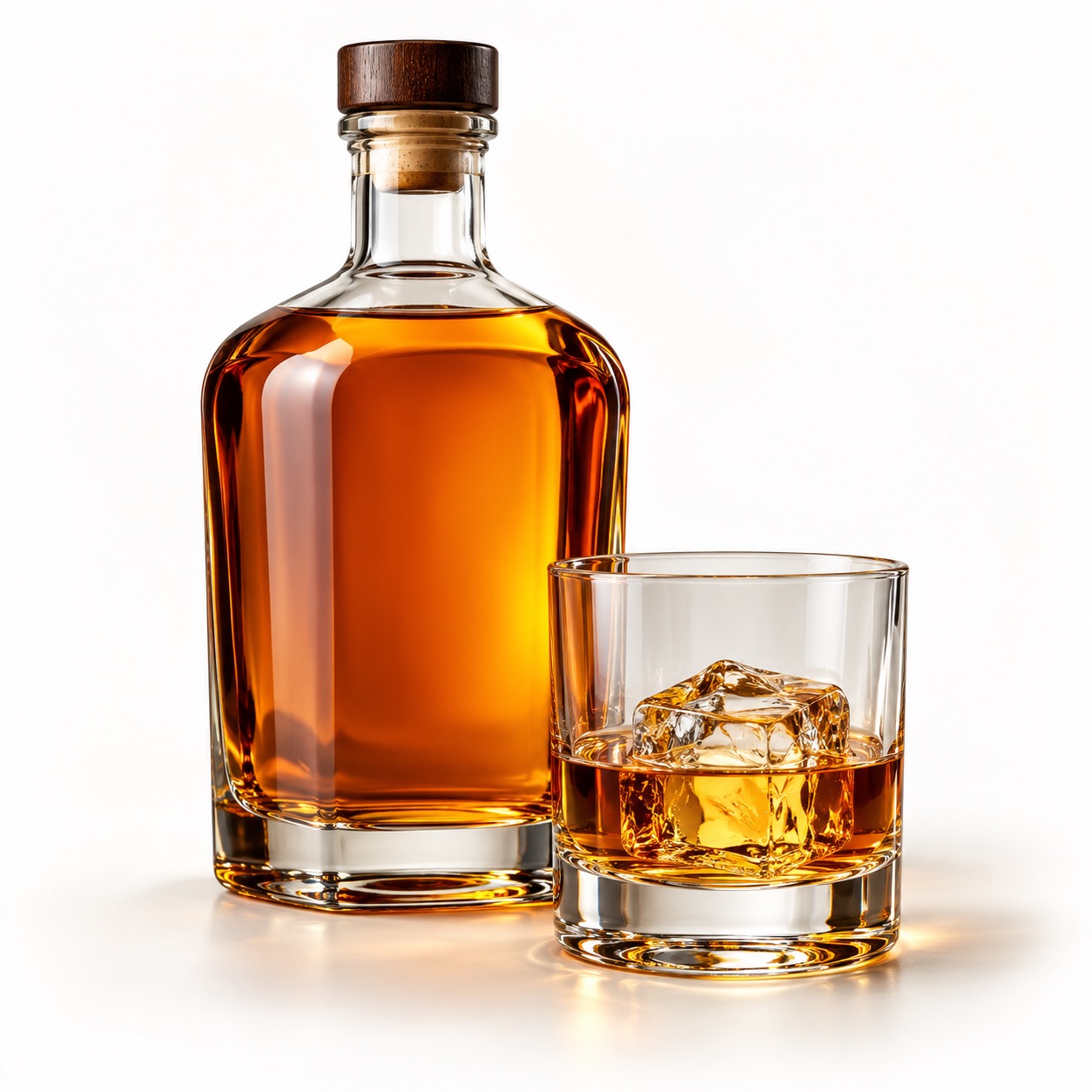
Whiskey bottle and glass with amber whiskey and ice

What Is Whiskey?

Whiskey is a distilled spirit made from fermented grain mash and, in most major traditions, matured in wood. The grain may be corn, barley, rye, wheat or a combination, and the final character is shaped by mash bill, fermentation, still design, distillation proof, climate, cask type, warehouse location, aging time, blending and bottling strength.

The spelling varies by tradition. Whiskey is common in the United States and Ireland, while whisky is standard in Scotland, Canada and Japan. The spelling alone does not define quality or production method.

Flavor can range from vanilla, caramel and toasted oak to malt, dried fruit, spice, smoke, cereal, tropical fruit, nuts, leather, cocoa and savory notes. Because whiskey is both an ingredient and a mature spirit, it belongs naturally in a culinary library alongside wines, fortified wines, vinegars, stocks and aromatic reductions.

History: From “Water of Life” to a Global Spirit

The history of whiskey grew out of European distillation traditions and the adaptation of distilling to fermented grain. In Gaelic, the expression associated with distilled spirit, uisce beatha or uisge beatha, means “water of life” and eventually evolved linguistically toward the words whiskey and whisky.

1405

An often-cited early Irish written reference appears in medieval records. Early whiskey history remains partly contested because production knowledge was transmitted orally as well as in writing.

1494

Scotland’s Exchequer Rolls record malt supplied to Friar John Cor to make aqua vitae, the earliest documented Scottish distilling record recognized by the Scotch Whisky Association.

1770s

European settlers brought distilling knowledge into Kentucky. Corn cultivation became a major foundation for the style that developed into American Bourbon.

1823

Scotland’s Excise Act encouraged legal licensed distilling and helped move production away from widespread illicit operations.

1830s

The development of continuous column distillation made grain whisky production more efficient and became central to blended whisky traditions.

1923

Shinjiro Torii established Yamazaki, Japan’s first malt whisky distillery, beginning the modern Japanese whisky tradition.

1934

Masataka Taketsuru established the company that became Nikka and completed Yoichi Distillery in Hokkaido.

2025

American Single Malt Whisky became a formal U.S. standard of identity, recognizing a modern American malt-whisky category.

How Whiskey Is Made

The sequence is simple in outline but extremely complex in practice. Each producer controls hundreds of variables that influence aroma, texture and maturation.

1

Grain Selection

Corn gives sweetness and body; rye brings spice and herbal intensity; malted barley contributes enzymes and malty character; wheat often softens the profile.

2

Malting & Milling

For malt whisky, barley is germinated and dried to develop enzymes. Some traditions use peat smoke during drying, creating phenolic smoky aromas.

3

Mashing

Ground grain is combined with warm water so enzymes convert starch into fermentable sugars. The resulting sugary liquid becomes the base for fermentation.

4

Fermentation

Yeast converts sugars into alcohol and produces esters, acids and other flavor compounds. Fermentation length and yeast strain strongly influence the spirit.

5

Distillation

Copper pot stills emphasize batch character and selective cuts; column stills can produce lighter, highly controlled spirit continuously. Some distilleries use both.

6

Cask Filling

New-make spirit enters barrels at a controlled strength. Bourbon requires new charred oak; many Scotch and Irish whiskies use ex-Bourbon, ex-Sherry or other seasoned casks.

7

Maturation

Time, oxygen, wood, temperature and warehouse conditions transform the spirit. Extraction, oxidation and concentration create color and complexity.

8

Blending & Bottling

Casks may be married for consistency or bottled individually. Water may be added to reach bottling strength. Some whiskies are chill-filtered; others are bottled at cask strength.

Major Whiskey & Whisky Styles of the World

StyleCore production identityAging frameworkTypical flavor directionCulinary strengths
Bourbon
United States
At least 51% corn; distilled at no more than 160 proof; entered into new charred oak at no more than 125 proof.Standard Bourbon has no stated federal minimum time, but must be stored in new charred oak. Straight Bourbon requires at least 2 years.Caramel, vanilla, toasted oak, corn sweetness, baking spice.BBQ sauce, pork glaze, steak sauce, caramel, pecan, chocolate.
Rye Whiskey
United States
At least 51% rye under the U.S. standard for rye whiskey.New charred oak; straight rye requires at least 2 years.Pepper, herbs, dry spice, citrus peel, oak.Pan sauces, mustard glazes, duck, game, dark chocolate.
American Single Malt100% malted barley; mashed, distilled and aged in the U.S.; entirely distilled at one U.S. distillery.Oak casks no larger than 700 L; “Straight” requires at least 2 years.Malt, cocoa, fruit, toasted grain, region-specific oak and smoke.Mushrooms, roasted meats, malt desserts, chocolate, nuts.
Single Malt ScotchWater and malted barley at one distillery, batch-distilled in copper pot stills.At least 3 years in oak casks in Scotland; minimum 40% ABV at bottling.Malt, orchard fruit, dried fruit, heather, coastal, peat or smoke depending on style.Smoked fish, cream sauces, mushrooms, chocolate, caramelized fruit.
Blended ScotchBlend of one or more Single Malt Scotch whiskies with one or more Single Grain Scotch whiskies.All components must satisfy Scotch maturation rules.Balanced malt, cereal, fruit, oak and gentle smoke.General sauces, cocktails, glazes, desserts, flambé-style preparations.
Irish Pot Still WhiskeyDistinctive Irish style using malted and unmalted barley and pot still distillation.Irish whiskey must mature on the island of Ireland in wooden casks for at least 3 years.Creamy, spicy, orchard fruit, cereal, soft oiliness.Cream sauces, coffee desserts, pork, poultry, bread pudding.
Irish Malt / Grain / BlendMalt uses 100% malted barley in pot stills; grain is generally column-distilled; blends combine two or more component styles.Minimum 3 years in wooden casks on the island of Ireland.Fruit, honey, cereal, vanilla, spice; varies by component and cask.Custards, cakes, cream sauces, fruit compotes, savory reductions.
Japanese WhiskyUnder JSLMA standards: malted grain must be used; saccharification, fermentation and distillation occur in Japan with Japanese water.At least 3 years in Japan in wooden casks no larger than 700 L; bottled in Japan at 40% ABV or higher.Refined fruit, incense, spice, oak, floral notes, sometimes smoke.Delicate reductions, seafood glazes, mushrooms, refined desserts.
Canadian WhiskyOften built from separately distilled grain components that are blended for a house style.Whisky sold in Canada, except imported Bourbon or Tennessee whisky, must be aged at least 3 years in small wood under current Canadian regulations.Light cereal, vanilla, spice, caramel, rye influence.Glazes, roast poultry, maple preparations, sauces and cocktails.
Indian Single MaltSingle malt traditions adapted to Indian barley and tropical maturation.Producer and national rules differ from Scotch; warm climates can accelerate extraction and evaporation.Tropical fruit, malt, spice, oak, cocoa and concentrated sweetness.Spiced meat dishes, chocolate, dried fruit, caramel and nuts.

Aging, Casks and the Cost of Time

What Aging Actually Does

  • Extraction: spirit draws color, vanillin, lactones, tannin and toasted compounds from wood.
  • Oxidation: slow oxygen exposure softens harsh notes and creates new aromatic compounds.
  • Concentration: evaporation changes alcohol and water balance and concentrates flavors.
  • Integration: grain, fermentation and oak aromas knit together over years.
  • Climate effect: warmer warehouses can accelerate wood interaction but also increase evaporation.

Why Older Whiskey Costs More

  • Capital is tied up in inventory for years or decades.
  • Warehouse space, insurance, cooperage and handling accumulate cost.
  • The “angel’s share” reduces liquid volume every year.
  • Long-aged casks are scarcer, and some become over-oaked or are lost.
  • Rare cask types and limited releases add scarcity premiums.
  • Collector demand can push market prices far beyond production cost.
Tropical maturation: Paul John in Goa reports an angel’s share of roughly 8–10% per year in its climate, illustrating why hot-climate whisky can mature rapidly but lose much more volume than spirit resting in cool warehouses.

Barrel & Cask Influence

New Charred American Oak

Common in Bourbon. Strong vanilla, caramel, coconut, baking spice, toast and char. Charring creates a highly active wood surface and a charcoal layer.

Ex-Bourbon Casks

Common in Scotch, Irish and world whisky. Often brings vanilla, honey, citrus, coconut and gentle oak without the aggressive extraction of first-use American whiskey barrels.

Sherry-Seasoned Oak

Important in many Scotch and world malts. Can emphasize dried fruit, walnut, raisin, spice, cocoa and oxidative richness.

Wine & Port Casks

Finishing in red wine, Port, Madeira or other wine-seasoned casks can add berry, plum, fig, tannin, chocolate and sweet-spice notes.

Mizunara Oak

Japanese Mizunara can contribute incense, sandalwood, coconut, spice and aromatic wood notes. Mature Mizunara expressions can be rare and expensive.

Peat Smoke

Not a barrel treatment. Peat smoke traditionally enters certain whiskies when malted barley is dried over peat, creating smoky, earthy and medicinal phenolic aromas.

Landmark Distilleries & Producers Around the World

This is a representative educational map, not a ranking. Each region contains many important producers beyond those listed here.

Scotland

Glenfiddich · The Macallan · Lagavulin · Ardbeg · The Glenlivet · Balvenie · Oban · Laphroaig

Ireland

Midleton · Bushmills · Teeling · Dingle · Waterford · Boann · Powerscourt

Kentucky & American Bourbon

Buffalo Trace · Maker’s Mark · Woodford Reserve · Four Roses · Heaven Hill · Wild Turkey · Jim Beam

American Single Malt

Westland · Westward · Stranahan’s · Balcones · Copperworks · Virginia Distillery Company

Japan

Yamazaki · Hakushu · Chita · Yoichi · Miyagikyo · Mars Shinshu · Chichibu

India & Taiwan

Amrut · Paul John · Rampur · Indri · Kavalan — examples of major modern world-whisky producers outside the historic Atlantic traditions.

Rare and Collectible Whiskey Styles

Very Old Single Malt

Twenty-five, thirty, forty years and beyond. Rarity rises because fewer casks survive long maturation in ideal condition and the angel’s share continually reduces volume.

Mizunara-Matured Japanese Whisky

Japanese oak can be difficult to cooper and is prized for incense-like, sandalwood and aromatic spice notes. Mature Mizunara bottlings are often scarce.

Single Cask / Single Barrel

Bottled from one individual barrel rather than blended across many casks. Yield is limited and flavor can vary from barrel to barrel.

Cask Strength

Bottled at or near barrel proof with little dilution. These releases showcase concentration and can vary significantly by cask and batch.

Closed or “Ghost” Distillery Whisky

Stocks from distilleries that no longer operate can become increasingly scarce as remaining casks are bottled and disappear from inventory.

Tropical Single Malt

Indian and Taiwanese whiskies can mature with intense wood interaction and high evaporation. Tropical climate creates a different aging trajectory from Scotland or Ireland.

Peated Irish Whiskey

A less common contemporary Irish style that reconnects with older smoky traditions while remaining distinct from classic unpeated Irish profiles.

Heritage Grain & Local Oak

Some new-wave producers use regional barley, rye, corn, peat or local oak species to express place in ways comparable to terroir-minded wine production.

Historic Bottlings

Discontinued labels, pre-Prohibition American whiskey, old blends and early releases can become collector objects. Provenance and storage condition are crucial.

2026 Whiskey Price & Aging Guide

Educational U.S. retail ranges only. Prices vary dramatically by state, taxes, allocation, bottle size, exchange rates and collector demand. Rare bottles may trade far above normal retail.

CategoryTypical age / tierIllustrative U.S. retail rangeWhy price rises
BourbonStandard / straight / 4–10 yearAbout $20–$70 for many widely distributed 750 ml bottlesBrand, proof, barrel selection, mash bill and age.
Premium BourbonSingle barrel / cask strength / 10–18 yearOften $70–$180; older special releases may reach $200–$300+Longer maturation, lower yield, allocation and barrel selection.
Single Malt Scotch12 yearRoughly $40–$90Cask program, distillery reputation, region and import cost.
Single Malt Scotch15–18 yearOften $125–$400Long maturation, cask scarcity, evaporation and brand demand.
Old Scotch21–25+ yearAbout $300 to well above $2,000 for luxury releasesDecades of inventory carrying cost, angel’s share and rarity.
Irish Whiskey12 yearAbout $50–$80 for premium pot still examplesAge, pot still production, cask quality and brand.
Irish Whiskey15–21 yearAbout $100–$400+Long aging, small stocks and special cask programs.
Japanese WhiskyNAS / younger premiumAbout $30–$100 for many available expressionsProduction scale, imported supply and brand demand.
Japanese Whisky12 yearOften around $150–$190 for sought-after single malt examplesLimited mature stocks and high demand.
Japanese Whisky18 year / rare MizunaraApproximately $750–$1,700+ for some current rare retail examplesAge, rare casks, limited releases and collector demand.
Important: Age is not a universal quality score. A well-made younger whiskey can be more balanced than an older one. After a certain point, excessive oak can dominate fruit and grain character.

Culinary Uses of Whiskey

In professional cooking, whiskey is valuable because it contributes alcohol-soluble aroma, oak-derived complexity, grain sweetness and concentrated spice. The style should be matched to the dish rather than treated as interchangeable.

Deglazing & Pan Sauces

Bourbon, rye or malt whisky can lift browned fond from beef, pork, mushrooms or game. Reduce before adding stock, cream or demi-glace.

Beef & Game

Rye and smoky Scotch can reinforce pepper, char, mushrooms and demi-glace. Bourbon can add sweeter vanilla and caramel tones.

Pork & Barbecue

Bourbon is particularly effective with molasses, maple, mustard, apple, brown sugar and smoke in glazes or barbecue sauces.

Seafood

Use delicate, lightly peated or refined Japanese-style whisky sparingly with scallops, salmon or cream sauces so the spirit does not dominate.

Chocolate & Caramel

Oak, vanilla and roasted grain notes pair naturally with dark chocolate, caramel, pecans, coffee and brown-butter desserts.

Fruit & Dried Fruit

Whiskey can macerate raisins, cherries, figs, apricots or prunes and can be reduced into sauces for apples, pears and stone fruit.

Custard, Cake & Ice Cream

Small amounts can perfume pastry cream, bread pudding, cake syrup, gelato, ice cream and whipped cream.

Cheese Pairing

Nutty, sherry-cask or malt-forward whiskies can complement aged cheddar, blue cheese, Gruyère, Parmigiano and washed-rind cheeses.

Professional Kitchen Safety

Distilled spirits are flammable. Keep bottles away from open flame and high heat. When deglazing, use measured quantities and add the spirit with controlled technique rather than pouring directly from a bottle over a live flame. Alcohol does not disappear instantly; retention depends on cooking method, time and surface area.

Flavor Pairing Guide

Bourbon

Vanilla · caramel · maple · toasted nuts · bacon · pork · barbecue · peach · apple · chocolate.

Rye

Black pepper · mustard · herbs · duck · game · charred beef · bittersweet chocolate.

Sherried Scotch

Porcini · dried fruit · walnuts · aged cheese · dark chocolate · roast meat.

Peated Scotch

Smoked salmon · oysters · charred beef · blue cheese · dark chocolate — use carefully because smoke can dominate.

Irish Whiskey

Cream · coffee · apples · bread pudding · pork · poultry · vanilla · honey.

Japanese Whisky

Mushrooms · grilled fish · sesame · soy-based glazes · citrus · delicate caramel · refined chocolate desserts.

Frequently Asked Questions

Whiskey or whisky — which spelling is correct?

Both are correct. “Whiskey” is common in the United States and Ireland; “whisky” is standard in Scotland, Canada and Japan. Individual producers may use their own brand spelling.

Does Bourbon have to come from Kentucky?

No. Bourbon is a distinctive product of the United States and can be produced in any U.S. state if it meets the applicable federal standard. Kentucky is historically and commercially central to Bourbon, but it is not the only place Bourbon can be made.

Does Bourbon have to be two years old?

Bourbon itself does not have a specified minimum number of years in the federal standard, but it must be stored in new charred oak. To be labeled “Straight Bourbon,” it must be aged at least two years. Whisky younger than four years generally requires an age statement under U.S. rules.

What makes Scotch legally Scotch?

Scotch must be mashed, fermented, distilled and matured in Scotland from permitted ingredients, mature in oak for at least three years and be bottled at no less than 40% ABV, among other legal requirements.

What makes Japanese whisky Japanese under current industry standards?

The JSLMA standard requires Japanese water and malted grains, production steps in Japan, at least three years of maturation in Japan in wooden casks up to 700 liters, and bottling in Japan at a minimum of 40% ABV.

Why can tropical whisky taste mature at a younger numerical age?

Higher temperatures accelerate interaction between spirit and wood, while also increasing evaporation. That does not make tropical and cool-climate aging identical, but it changes the speed and intensity of maturation.

Is older whiskey always better?

No. Age adds complexity only when the spirit, cask and climate remain balanced. Very long maturation can become excessively tannic, dry or woody.

Standards & Reference Sources

This educational page was updated for Tuscany Cuisine in October 2026. Legal definitions and category rules can change, so producers and professionals should consult the current official regulations for labeling or compliance decisions.