Tempura / Frying
Fillets or portions can be fried in a light batter for crisp texture while the firm flesh remains moist. Fry to order for best quality.
Scorfano is a prized Mediterranean bottom fish valued for firm white flesh, excellent broth-making bones, and a clean savory flavor. In Italy it appears in soups, brodetti, roasted preparations, fried fish dishes and refined restaurant plates. The species is also known internationally as red scorpionfish.
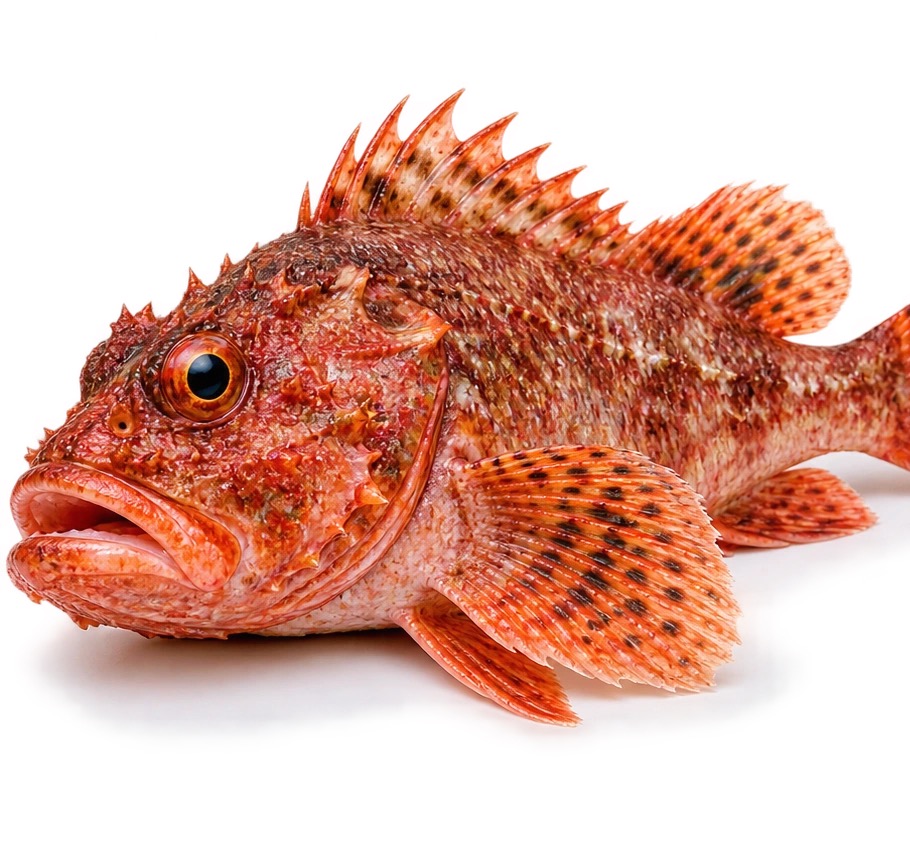
The Tuscany Cuisine ingredient identity for this page is Scorpaena scrofa, the red scorpionfish known in Italy as scorfano rosso or simply scorfano. In the United States, the FDA Seafood List recognizes Scorpionfish as an acceptable market name for this species. The broad word “rockfish” can refer to other unrelated fish in different markets, so scientific identity is important for purchasing and inventory accuracy.
Scorpaena scrofa is a sedentary demersal fish associated with rocky, sandy and muddy bottoms. Its distribution extends through the Mediterranean and into the eastern Atlantic. FishBase lists a depth range of approximately 20–500 m and a maximum reported length of about 50 cm.
The fish is strongly associated with Mediterranean coastal cooking and is known by numerous regional Italian names, including scorfano rosso and scorfano maggiore.
Because “rockfish” is used for many different species internationally, professional purchasing should confirm the scientific or supplier identity whenever possible.
The head, bones and trimmings provide excellent flavor and gelatin for fish fumet, brodetto and sauce bases, improving whole-fish utilization.
Scorfano is a lean, protein-rich fish. Published food-composition references for Scorpaena scrofa show approximately 18.8–19.4 g protein per 100 g of raw edible muscle. FishBase also provides model-based median estimates for several micronutrients and omega-3 fatty acids.
| Nutrient | Reference value per 100 g wet/raw muscle |
|---|---|
| Protein | 18.8–19.4 g |
| Energy | Approx. 77 kcal |
| Total fat | Approx. 0.2 g |
| Omega-3 PUFA | 0.655 g median predicted |
| Calcium | 53 mg median predicted |
| Iron | 0.883 mg median predicted |
| Selenium | 36.4 µg median predicted |
| Zinc | 0.797 mg median predicted |
Nutrition varies by individual fish, capture area, season, preparation and edible portion. FishBase values marked “predicted” are model-based estimates; the 77 kcal, 18.8 g protein and 0.2 g fat values come from a published food-composition table for Scorpaena scrofa.
Scorfano is a non-migratory demersal species, so there is no single universal “season” that applies to every Mediterranean market. Availability changes by coast, fishery, weather, fishing effort, local regulations and supplier network.
Scale, eviscerate and rinse only as required by your operation, then dry carefully. The head and armored exterior require controlled knife work.
Work around the prominent spines and bony structure. Remove pin bones and trim membrane carefully while preserving as much usable flesh as possible.
Clean bones and head are valuable for fish fumet or brodetto. Record yield so Live Inventory and recipe costing can distinguish purchased whole weight from usable filet weight.
Scorfano works especially well in methods that preserve moisture while taking advantage of its firm texture and flavorful bones.
Fillets or portions can be fried in a light batter for crisp texture while the firm flesh remains moist. Fry to order for best quality.
Roast whole fish or thick portions with olive oil, herbs, citrus and aromatic vegetables. The firm flesh tolerates oven heat well when not overcooked.
Sear portioned fillets for controlled color, then finish gently. Deglaze the pan with wine, stock or citrus for a clean seafood sauce.
One of the fish’s strongest culinary applications. The head and bones release body and flavor, while the flesh remains suitable for rustic Mediterranean soups.
Gentle poaching in court bouillon, fish fumet or aromatic broth preserves moisture and allows the fish’s subtle marine character to remain clear.
Thick portions or whole cleaned fish can be grilled with controlled heat. Olive oil, lemon, parsley, rosemary and Mediterranean herbs are natural partners.
Scorfano is particularly useful in mixed fish soups because its bones and head contribute gelatin, depth and marine character.
Pair with tomato, garlic, white wine, olive oil, olives, capers, fennel, parsley and potatoes.
Use a clean filet portion with citrus, finger lime, microgreens, aromatic oil, vegetable purée, shellfish sauce or concentrated fish fumet.
Scorpionfish are venomous fishes. Their prominent dorsal spines can injure kitchen staff during receiving, scaling and fabrication, even though the flesh itself is used as food.
Inspect carefully before unpacking and warn staff that the fish carries sharp venomous spines.
Store under proper refrigeration and prevent raw-fish contact with ready-to-eat foods.
Use dedicated sanitized tools and surfaces, then clean and sanitize immediately after fabrication.

Crispy Scorfano tempura served with finger lime pearls and microgreens. The recipe connects this fish identity to Secondi production, Menu Builder, Live Inventory, labor and costing.