A professional culinary reference for gilthead seabream — one of the defining fish of Mediterranean
cuisine. Learn its history, identifying characteristics, flavor, texture, nutrition, purchasing standards,
fabrication and classical as well as contemporary cooking methods.
Mediterranean FishSparidae FamilyMild · Sweet · CleanWhole Fish & Fillet
Tuscany Cuisine species icon: Orata.webp. Published path: /academy/culinary-foundations/fishes/Orata.webp
Identity & Culinary Profile
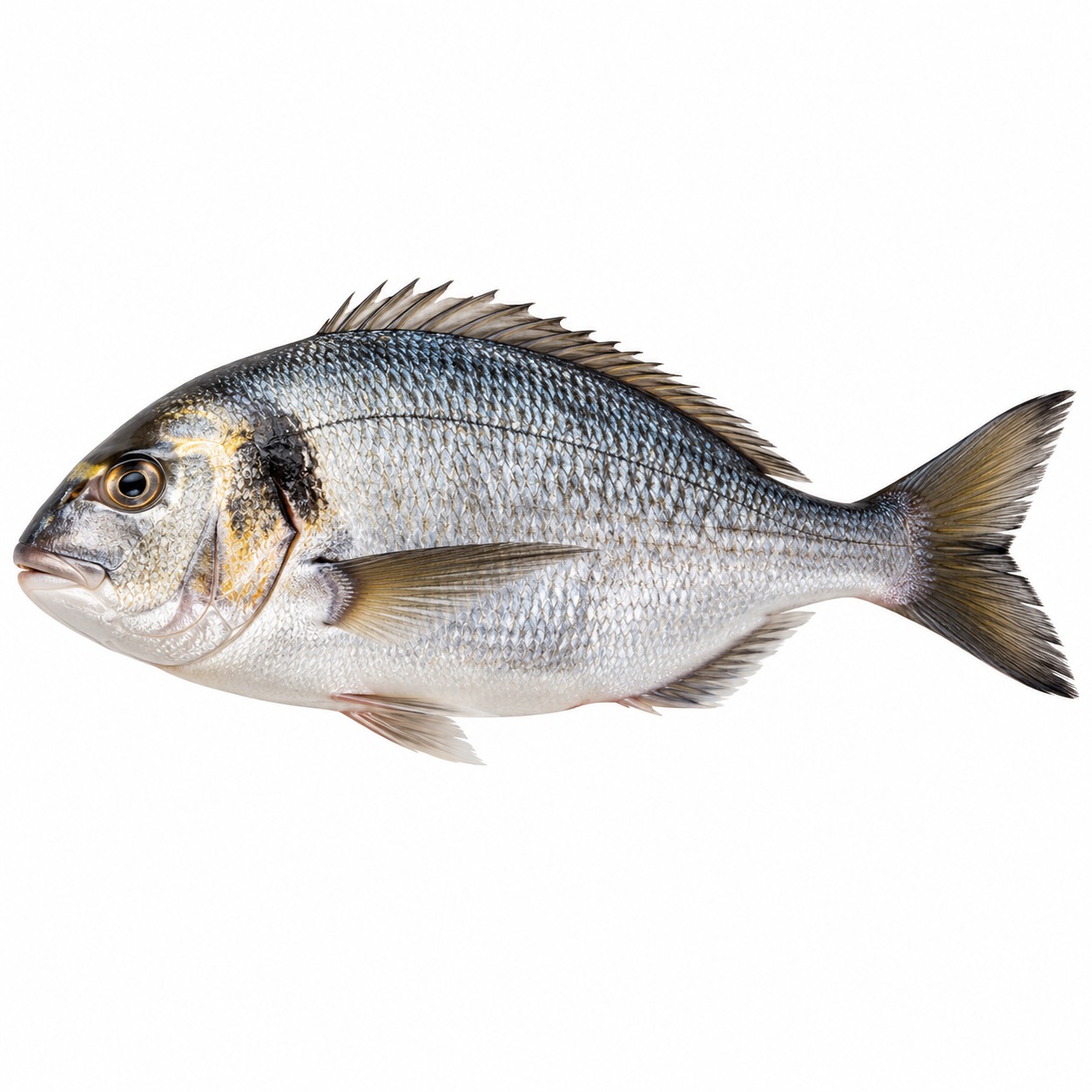
Orata is the Italian culinary name for gilthead seabream, Sparus aurata,
a member of the Sparidae family. It is recognized by its silvery body, dark mark near the gill cover,
and characteristic golden band across the forehead that gives the fish its English name.
In professional kitchens, Orata is appreciated for its fine, moist flesh, moderate firmness,
clean marine aroma and mild sweetness. The structure is delicate enough for elegant plating but
sufficiently resilient for grilling, roasting, pan cooking and whole-fish service.
Mediterranean History & Italian Tradition
Gilthead seabream has been part of Mediterranean coastal food culture for centuries. The species
naturally inhabits the Mediterranean and eastern Atlantic and adapts readily to both marine and brackish
environments, including coastal lagoons and estuaries.
In Italy, traditional lagoon culture known as vallicoltura used the natural migration
of young fish into coastal lagoons. These fish could grow in productive brackish environments before
being harvested as they moved back toward open water. The species later became one of the major successes
of modern Mediterranean aquaculture, with intensive hatchery and cage systems expanding dramatically
from the 1980s.
In Italian cooking, Orata appears in preparations ranging from simple whole roasted fish with olive oil,
lemon and herbs to refined restaurant plates with vegetable purées, shellfish, aromatic foams and light sauces.
Its clean flavor makes it especially compatible with Mediterranean ingredients rather than heavy masking sauces.
Habitat & Biological Characteristics
Sparus aurata occurs in the Mediterranean and eastern Atlantic and can move between marine and
brackish habitats. Juveniles often use protected coastal lagoons and estuaries, while adults occupy coastal
sandy grounds, rocky areas and seagrass environments. The fish is a protandrous hermaphrodite: individuals
typically mature first as males and some later become females.
The body is deep and laterally compressed, with silvery-grey coloration, a golden frontal band and a dark
mark near the operculum. These visual characteristics are useful when identifying whole fish in a seafood market.
Flavor Profile
Primary flavorMild, clean marine flavor
SweetnessGentle natural sweetness
RichnessModerate; richer than very lean white fish
TextureFine flakes with moderate firmness
SkinExcellent for crisping when properly dried
Whole fishWell suited to roasting, grilling and salt crust
Best aromaticsGarlic, parsley, thyme, fennel, rosemary
Best acidsLemon, white wine, tomato, light vinegar
Nutrition
Gilthead seabream is a high-protein fish with useful omega-3 fatty acids. Composition varies with origin,
farming conditions, season and cut. The reference values below are for approximately 100 g fresh fillet.
Nutrient
Approximate amount per 100 g
Energy
128 kcal
Protein
20.8 g
Total fat
4.8 g
Carbohydrate
0.3 g
Cholesterol
63.5 mg
Total omega-3
1,239 mg
EPA
327 mg
DHA
555 mg
Other seafood nutrition references also identify sea bream as a useful source of niacin, vitamin B6,
vitamin B12 and phosphorus. The final nutrition of a dish changes significantly with cooking fat,
sauce, breading and portion size.
Purchasing & Freshness Evaluation
Whole fish should have bright, clear, convex eyes rather than dull or sunken eyes.
Gills should look red to pink and smell clean rather than sour or strongly ammonia-like.
Skin should appear bright and metallic with firmly attached scales.
Flesh should spring back when lightly pressed.
The abdominal cavity should be clean and free of excessive discoloration or off-odors.
Fillets should look moist and translucent, not dry, chalky or excessively gaping.
Maintain continuous refrigeration and avoid unnecessary time at room temperature.
Fabrication & Yield Considerations
Orata may be sold whole, gutted, scaled, butterflied or as skin-on fillets. Whole-fish service provides
strong visual appeal and protects moisture during roasting or grilling. Skin-on fillets are especially useful
for pan-searing because the skin can become crisp while shielding the flesh from direct heat.
Professional Fabrication Sequence
Scale the fish carefully from tail toward head.
Remove viscera and rinse the cavity only as needed, then dry thoroughly.
Trim fins if required for the chosen presentation.
For fillets, cut behind the head and follow the backbone toward the tail.
Remove rib bones and pin bones cleanly.
Portion consistently according to recipe yield and costing standards.
Professional Cooking Methods
Whole Roasting
One of the classic Mediterranean approaches. Stuff the cavity lightly with herbs, garlic and citrus,
oil the skin and roast until the flesh separates cleanly from the bone.
Pan-Seared Fillet
Dry the skin thoroughly, season lightly and begin skin-side down. Maintain even pressure early in the
cooking process to prevent curling and produce crisp skin.
Grilling
Excellent for whole fish or robust skin-on portions. Oil the surface, use a clean grate and avoid moving
the fish before the skin releases naturally.
Baking
Gentle oven cooking suits composed plates and banquet production. Vegetables, aromatics and light sauces
can be built around the fish without overpowering it.
Salt Crust
A traditional whole-fish technique that traps steam and protects moisture. The crust is removed at service
and the fish is filleted from the bone.
Steaming / Poaching
These methods preserve delicacy and are useful when paired with herb broth, citrus, fennel, white wine,
tomato or restrained shellfish flavors.
Culinary Usage
Application
Professional use
Pairing direction
Whole roasted Orata
Classic Mediterranean plated or shared service
Lemon, rosemary, garlic, olive oil
Skin-on fillet
Fine dining and à la carte
Fennel, tomato, parsley, white wine
Grilled whole fish
Rustic coastal presentation
Herb oil, citrus, grilled vegetables
Salt-crusted fish
Table-side or premium presentation
Simple olive oil and lemon
Contemporary seafood plate
Chef-driven tasting or refined Secondi
Calamari, squid ink, coulis, herb foam
Light broth / acqua pazza style
Mediterranean comfort preparation
Tomato, garlic, parsley, white wine
Kitchen Handling & Food Safety
Keep raw seafood properly refrigerated, maintain clean cutting boards and knives, and separate raw fish
from ready-to-eat ingredients. For standard fully cooked service, follow applicable food-safety requirements
for cooking and hot/cold holding. Raw or undercooked preparations require separate seafood safety procedures
and should not be treated as equivalent to normal cooked service.
Species identity, habitat, biological characteristics and Mediterranean aquaculture history are based on
FAO gilthead seabream references and FishBase. Nutrition values are based on current EUMOFA fresh-fillet
reference data and are presented as approximate values per 100 g. Culinary flavor, fabrication, pairing and
service guidance is presented as professional kitchen interpretation for Tuscany Cuisine.
Sea Bream. Orata. Gilthead seabream. Sparus aurata.
Mediterranean fish. Italian seafood. Tuscany Cuisine Culinary Foundations.
Orata history. Sea bream nutrition. Sea bream flavor profile.
Sea bream cooking methods. Whole roasted sea bream. Grilled Orata.
Pan seared sea bream. Salt crust fish. Sea bream fillet.
Mediterranean aquaculture. Italian vallicoltura. Orata culinary usage.
Connected to Orata Secondi recipe, Fish and Seafood Foundations,
Ingredients Library, Live Inventory and Culinary Academy.