A professional culinary reference for one of the most recognizable warm-water pelagic fish:
its identity, history, flavor, nutritional profile, purchasing characteristics, kitchen handling,
cooking methods and relationship to the tuna family.
Tuscany Cuisine ingredient icon: Mahi.webp. Published path: /academy/culinary-foundations/fishes/Mahi.webp
Identity & Culinary Profile
Mahi Mahi is the common culinary name for Coryphaena hippurus. It is also widely known as
dolphinfish or dorado. The name “dolphinfish” refers to the fish and not to the marine mammal.
Mahi Mahi lives offshore in tropical, subtropical and warm temperate waters and is commercially
and recreationally important in both the Atlantic and Pacific.
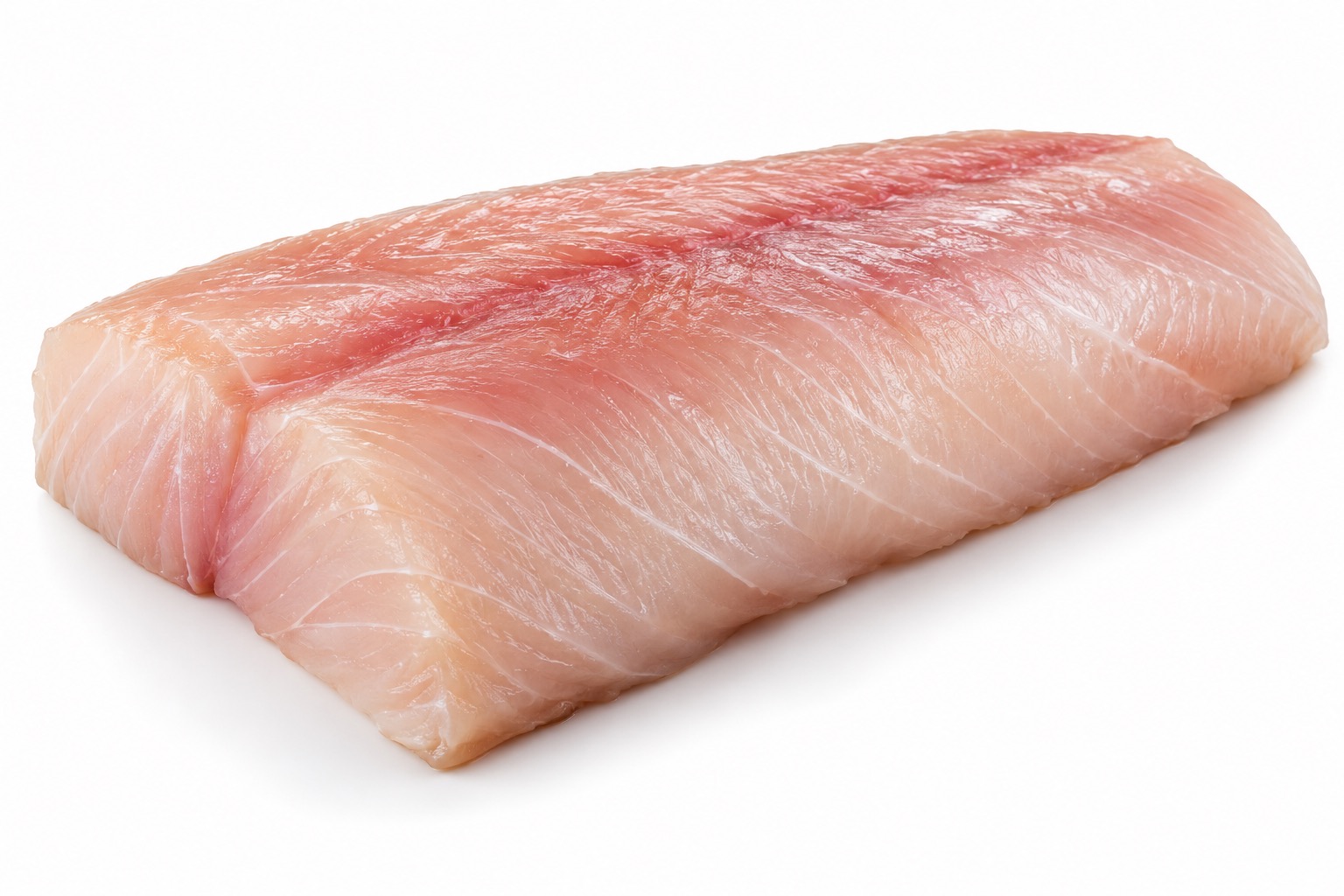
In the kitchen, the fish is valued for a lean but firm texture, large moist flakes and a mild,
gently sweet flavor. Raw flesh ranges from pinkish to gray-white, with a darker bloodline;
the cooked flesh becomes off-white.
History, Geography & Culinary Tradition
Mahi Mahi has long been associated with warm ocean fisheries. Its distribution spans tropical,
subtropical and warm temperate waters around the world. In the eastern Pacific it occurs from waters
off Mexico through Central and South America and around oceanic islands, while U.S. fisheries include
Hawaii, California and Pacific territories. Atlantic fisheries extend through warm offshore waters
of the western Atlantic.
The Hawaiian name mahimahi became widely established in modern seafood marketing,
helping distinguish the fish from the unrelated marine mammal suggested by the English name
“dolphinfish.” The Spanish name dorado, meaning “golden,” reflects the vivid gold,
green and blue coloration of a freshly caught fish.
Culinary traditions vary by region. Mahi Mahi works naturally with citrus, olive oil, herbs,
peppers, tropical fruits, garlic, chiles and aromatic marinades. Its firm structure makes it useful
across Mediterranean, Caribbean, Pacific Island, Latin American and contemporary American kitchens.
Mahi Mahi Is Not Tuna
Mahi Mahi belongs to the family Coryphaenidae, while the major tunas belong principally
to the mackerel family Scombridae. They may share offshore habitat and similar menu
positioning, but they are different fish biologically and culinarily.
Fish
Scientific name
Culinary character
Typical raw color
Mahi Mahi
Coryphaena hippurus
Mild, slightly sweet, lean, firm and flaky
Pinkish to gray-white
Yellowfin Tuna
Thunnus albacares
Mild but distinctly meaty; leaner than bluefin
Bright red
Albacore Tuna
Thunnus alalunga
Mild, lighter-colored tuna; commonly sold as white tuna
Pale pink to light red
Bigeye Tuna
Thunnus obesus
Rich, firm tuna often used for high-quality raw and seared preparations
Deep red
Skipjack Tuna
Katsuwonus pelamis
Pronounced tuna flavor; widely used for canned light tuna
Dark pink to red
Bluefin Tuna
Thunnus spp.
Rich, fatty, prized for sashimi and premium raw applications
Deep red
Nutrition
Mahi Mahi is a lean, protein-rich fish. NOAA reports the following approximate values for
100 g raw Mahi Mahi. Nutrition varies with portion size, harvest location and preparation.
Nutrient
Approximate amount per 100 g raw
Calories
85 kcal
Protein
18.5 g
Total fat
0.7 g
Saturated fat
0.188 g
Carbohydrate
0 g
Cholesterol
73 mg
Sodium
88 mg
Selenium
36.5 mcg
It is also recognized as a source of vitamin B12, niacin, vitamin B6, phosphorus, potassium,
selenium and high-quality protein.
Professional Cooking Methods
Because Mahi Mahi is lean and firm, the principal culinary goal is to build surface flavor while
protecting moisture. Avoid aggressive overcooking, especially with thin portions.
Grilling
Oil the fish lightly and use a clean, well-heated grate. Firm fillets tolerate grilling better
than delicate flatfish. Citrus-herb marinades work especially well.
Pan Searing
Dry the surface thoroughly before searing. Finish gently once a golden crust develops.
Butter, olive oil, garlic and herbs are natural finishing elements.
Roasting / Baking
Excellent for restaurant production because portions cook evenly with relatively little handling.
Roasted peppers, tomato, olives and aromatic vegetables complement the fish.
Broiling
High radiant heat creates fast browning. Use appropriately thick portions and monitor closely
because lean fish can dry rapidly.
Steaming
A gentle technique that protects moisture. Citrus, ginger, aromatic herbs, star anise and vegetables
can flavor the steaming environment.
Poaching
Use a flavorful court bouillon, broth, olive-oil preparation or lightly aromatic liquid.
Keep the cooking medium below a hard boil.
Purchasing & Quality Evaluation
Choose fillets with a fresh, clean marine aroma and moist surface.
Flesh should appear resilient and not excessively soft, dry or gaping.
Expect pinkish to gray-white raw flesh and a darker lateral bloodline.
Trim dark portions when a milder flavor and cleaner presentation are desired.
Keep seafood properly refrigerated and protect it from cross-contamination.
For frozen product, evaluate package integrity, excessive ice crystals and signs of thaw-refreeze damage.
Food Safety & Mercury Guidance
For standard cooked fish service, follow applicable food-safety requirements for cold holding,
cross-contamination control and final cooking. FDA consumer guidance currently categorizes
Mahi Mahi / dolphinfish as a “Good Choice” in its mercury-based fish advice.
Specialized raw or undercooked service requires additional seafood safety controls and should not
be treated as equivalent to standard cooked service.
Species identity, distribution, flavor, texture and nutrition are based primarily on current NOAA Fisheries
Pacific and Atlantic Mahi Mahi references. FDA fish-consumption guidance is used for the mercury-choice
classification. Tuna names and scientific identities follow NOAA Fisheries tuna resources.
Culinary technique commentary is presented as professional kitchen guidance by Tuscany Cuisine.
Mahi Mahi. Coryphaena hippurus. Mahimahi. Dolphinfish. Dorado.
Culinary Foundations fish and seafood guide. Mild sweet flavor. Firm moist large flakes.
Mahi Mahi nutrition. Mahi Mahi history. Mahi Mahi cooking methods.
Grilled Mahi Mahi. Pan seared Mahi Mahi. Roasted Mahi Mahi. Baked Mahi Mahi.
Steamed Mahi Mahi. Poached Mahi Mahi. Mahi Mahi versus tuna.
Yellowfin tuna. Albacore tuna. Bigeye tuna. Skipjack tuna. Bluefin tuna.
Connected to Baked Mahi Mahi Secondi recipe, Tuscany Cuisine Culinary Academy,
Ingredients Library, Menu Builder and Fish and Seafood Culinary Foundations.