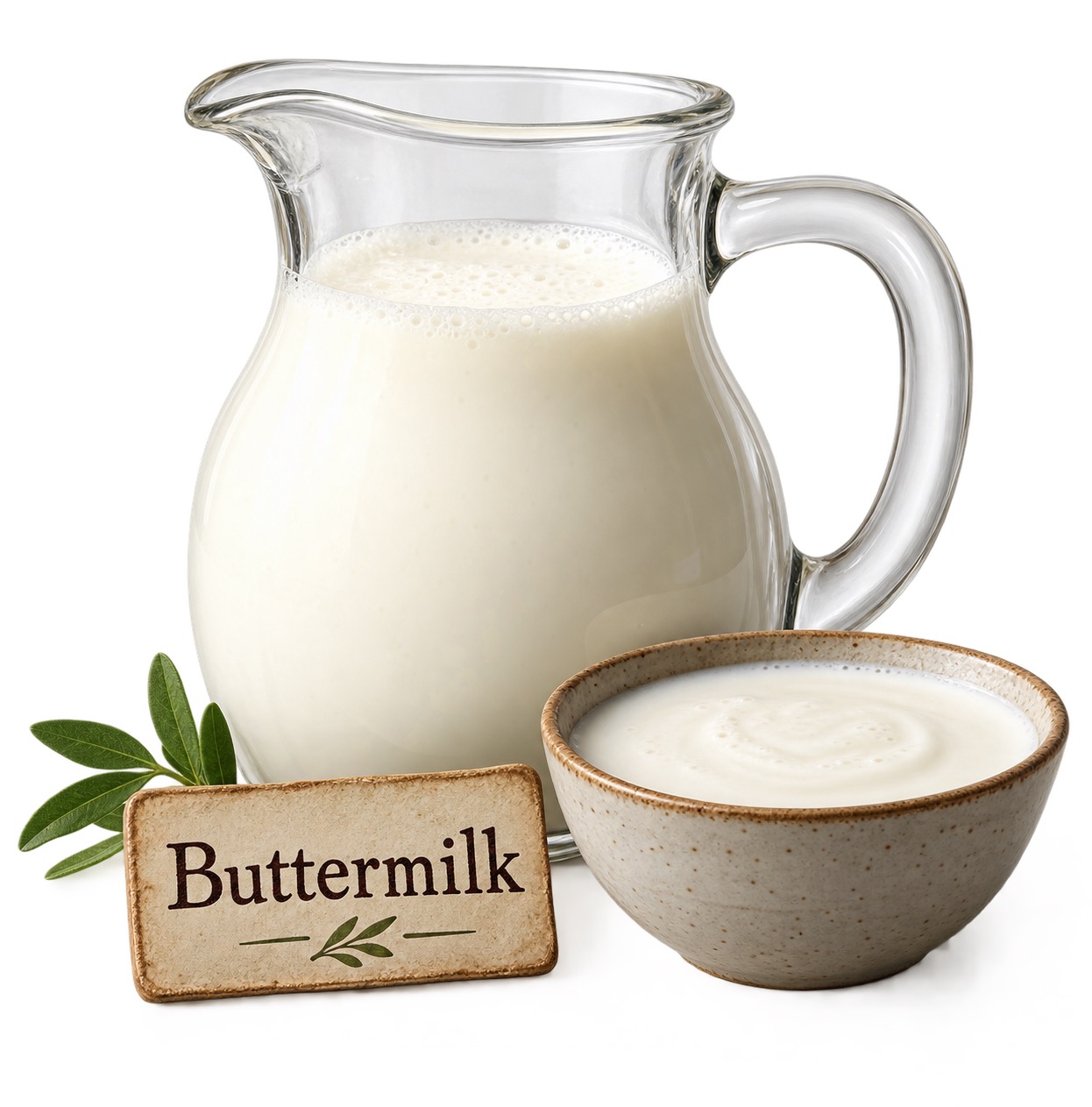
Ingredient Identity
Buttermilk · Cultured Dairy
Buttermilk has two important culinary meanings. Traditional buttermilk is the liquid released when cream is churned into butter. Modern supermarket cultured buttermilk is typically a milk base fermented with mesophilic lactic cultures until it develops a mild acidity, smooth body and characteristic buttery aroma.
Definition
What Buttermilk Is
Historically, buttermilk was literally the liquid left behind after churning butter from cream. When cultured or naturally soured cream was churned, that liquid already carried lactic acidity and a distinctive dairy aroma.
In modern U.S. retail use, cultured buttermilk is generally a beverage-style fermented dairy product. USDA regulatory language distinguishes cultured buttermilk from the buttermilk by-product of butter churning. This distinction matters in professional recipes because the two products can differ in acidity, body, flavor and solids.
Professional Production
How It Is Obtained
- Traditional / churned: cream is churned until butterfat separates into butter grains; the remaining aqueous phase is buttermilk.
- Cultured: a milk base is pasteurized, standardized for fat and solids, cooled, inoculated with selected mesophilic starter cultures and fermented until tart, aromatic and lightly thickened.
- Finishing: cultured buttermilk is cooled to slow fermentation and gently agitated for a smooth pourable consistency.
Chef note: milk acidified with lemon juice or vinegar can imitate acidity in emergency baking, but it is not the same ingredient as cultured buttermilk because it lacks the culture-built flavor, aroma and texture.
History & Tradition
From Butter Churn to Cultured Dairy Staple
Buttermilk began as a practical result of traditional butter making. In farm and household dairying, cream was churned and the remaining liquid was consumed fresh, used in breads and batters, or incorporated into other dishes rather than wasted. Naturally ripened or cultured cream produced a pleasantly acidic buttermilk with a more complex flavor than sweet-cream churning.
Industrial butter production created a second pathway: sweet-cream buttermilk as a butter-making by-product. Modern cultured buttermilk developed into a standardized fermented milk product designed to reproduce the tang, viscosity and buttery aroma associated with older cultured dairy traditions.
In the United States, buttermilk became especially important in Southern cooking, where its acidity is valued in biscuits, cornbread, pancakes, fried chicken and dressings. In professional kitchens today, it also functions as a controlled acidic dairy medium for seafood and poultry marinades, cold sauces, slaws and frying systems.
Types & Varieties
Traditional, Cultured and Dry Forms
| Type | How it is made | Professional character | Best uses |
|---|
| Traditional cultured-churn buttermilk | Liquid remaining after churning cultured or naturally ripened cream. | Complex dairy aroma, light body, natural butter-making character. | Beverage, baking, dressings, sauces. |
| Sweet-cream buttermilk | Liquid by-product from churning uncultured sweet cream. | Milder and less tangy unless fermented later. | Food manufacturing, baking, further culturing. |
| Cultured buttermilk | Milk base fermented with mesophilic lactic cultures. | Tangy, smooth, lightly viscous, buttery aroma from culture metabolism. | Marinades, dressings, batters, biscuits, pancakes, sauces. |
| Whole / richer cultured buttermilk | Cultured product standardized with more milkfat or cream. | Richer mouthfeel and softer acidity. | Premium dressings, sauces, chilled soups. |
| Dry buttermilk powder | Liquid buttermilk dried for storage and manufacturing. | Concentrated dairy solids; shelf-stable when dry. | Dry mixes, bakery production, seasoning systems. |
Starter Cultures
Culture Types & Flavor Development
High-quality cultured buttermilk is commonly produced with mesophilic lactic acid bacteria. Acid-producing cultures build lactic acidity and protein structure, while aroma-producing cultures help create the characteristic buttery note.
- Lactococcus lactis subsp. lactis — major acid producer.
- Lactococcus lactis subsp. cremoris — acid development and smooth cultured character.
- Lactococcus lactis biovar diacetylactis — citrate metabolism and aroma contribution.
- Leuconostoc mesenteroides subsp. cremoris — important for diacetyl and cultured-butter aroma.
Diacetyl is a key aroma compound associated with desirable buttery flavor. Too much acid without enough aroma can taste harsh; excess acetaldehyde can push the flavor toward a green or yogurt-like note.
Quality Selection
What Good Buttermilk Should Be Like
- Aroma: clean, fresh, lightly buttery and cultured; never stale, yeasty or rancid.
- Acidity: pleasantly tart, not aggressively sour.
- Texture: smooth and lightly viscous, not ropey, excessively lumpy or watery.
- Appearance: clean white to cream color with no unusual discoloration.
- Cold chain: keep refrigerated and follow the manufacturer's use-by guidance.
- Separation: a small amount of whey separation can occur; gentle shaking may restore consistency if the product is otherwise sound.
Year-round availability: unlike field produce, cultured buttermilk has no meaningful harvest season. Freshness, culture activity, packaging and refrigeration are the main quality variables.
Professional Culinary Applications
Why Chefs Keep Buttermilk in the Kitchen
MarinadesProvides mild dairy acidity and moisture. Excellent for poultry and useful for short seafood marinades when the goal is flavor, light tenderization and better coating adhesion.
Fried FoodsClings to seafood or poultry and gives dry dredges a hydrated surface to grab, helping form an irregular crisp crust.
DressingsClassic base for ranch-style, herb, blue-cheese and green-goddess-style dressings; acidity balances mayonnaise, cream and rich cheese.
BakingWorks with baking soda to create carbon dioxide, contributing lift and tenderness in biscuits, pancakes, muffins, cakes and cornbread.
Sauces & SoupsAdds tang and a light creamy body to chilled soups, sauces and vegetable preparations without the heaviness of cream.
Flavor BalancingUseful wherever a dish needs dairy richness plus acidity—especially with fried foods, herbs, cucumbers, beets, potatoes and peppery greens.
Nutrition Reference
Nutrition — Cultured Low-Fat Buttermilk
Approximate values per 100 g; commercial products vary with fat level, added milk solids and formulation.
| Energy | ~40 kcal |
| Protein | ~3.3 g |
| Carbohydrate | ~4.8 g |
| Fat | ~0.9 g |
| Calcium | ~116 mg |
| Potassium | ~151 mg |
| Sodium | ~105 mg |
Reference pattern: USDA FoodData Central values for cultured low-fat buttermilk; use the package label for exact menu nutrition.
Handling & Storage
Professional Storage
- Keep refrigerated at 40°F / 4°C or below as a kitchen best practice.
- Store tightly covered to limit odor pickup and contamination.
- Use clean, sanitized measuring vessels and return the container promptly to refrigeration.
- Do not return used marinade to the original container.
- Discard if odor, color, gas production, mold, package swelling or texture becomes abnormal.
- For production, date the container when opened and follow the manufacturer's shelf-life guidance.
Tuscany Cuisine Platform Record
Ingredient Identity & Live Usage
Ingredient code: TC-DAIRY-BUTTERMILK-001
Inventory ID: buttermilk
Icon: /academy/ibrary/dairy/buttermilk.webp
Ingredient page: /academy/ibrary/dairy/Buttermilk.html
Category: Dairy · Subcategory: Cultured Dairy / Buttermilk · Base unit: g · Allergen: Milk
This record is designed to synchronize the Ingredient Library, recipe ingredient schema, Menu Builder, Salad Station, Live Inventory, Purchasing and dashboard ingredient-icon systems through one shared identity.
Professional References
Sources & Further Reading
Buttermilk ingredient library. Cultured buttermilk, traditional churn buttermilk, sweet cream buttermilk, dry buttermilk powder. Mesophilic lactic cultures including Lactococcus lactis and Leuconostoc. Diacetyl buttery aroma. Professional uses include marinades, calamari marinade, fried foods, dressings, biscuits, pancakes, cornbread, cakes, sauces and chilled soups. Contains milk. Tuscany Cuisine ingredient code TC-DAIRY-BUTTERMILK-001, inventory ID buttermilk, icon buttermilk.webp, Recipe 346 Fried Calamari and Arugula Salad.