Tuscany Cuisine Ingredient Library · Professional culinary knowledge by Chef David Giani
Dairy Ingredient · Culinary Foundation

Cream

Cream is the milk-fat-rich portion of milk and one of the most important ingredients in professional savory cooking, pastry and restaurant production. Its fat level determines whether it behaves best as a coffee cream, sauce cream, whipping cream, finishing cream or base for cultured and frozen dairy products.

Dairy Milk Allergen Sauce Foundation Whipping Pastry Emulsion
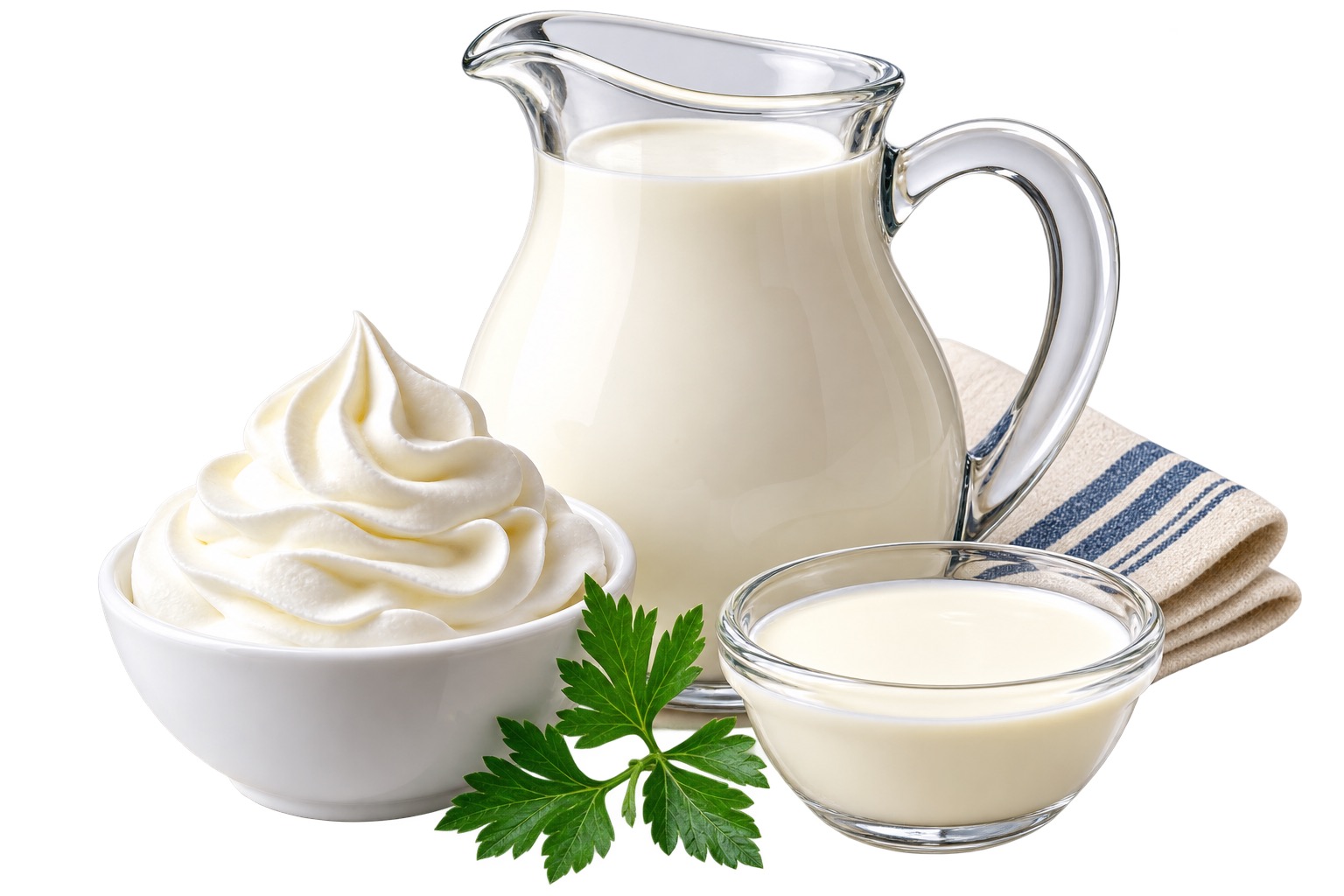
Cream ingredient graphic with liquid cream and whipped cream
Category Dairy · Cream Milk-fat-rich dairy ingredient separated from milk.
Professional Recipe Form Heavy Cream Primary Tuscany Cuisine recipe variant for sauces, pastry and finishing.
Base Unit Gram (g) Preferred recipe and inventory unit for precise costing and scaling.
Allergen Milk Cream is a dairy ingredient and must remain allergen-visible.
Ingredient Identity

What Is Cream?

Cream is the portion of milk comparatively rich in milk fat. Traditionally it rises toward the surface of non-homogenized milk; modern dairies separate it rapidly and efficiently with centrifugal separators.

Milk Fat Changes the Function

Cream is not one single culinary product. As milk-fat concentration increases, richness, body, whipping ability and sauce performance change. Lower-fat cream is useful for beverages and lighter preparations, while higher-fat cream is more reliable for whipping, reduction and rich sauce work.

The names used for cream vary by country, so professional cooks should read the actual milk-fat percentage whenever a formula depends on structure or whipping.

Professional Kitchen Importance

Cream carries fat-soluble aromas, softens acidity and bitterness, adds body, enriches purées and sauces, helps create stable whipped foams and contributes tenderness and richness to pastry, custards and frozen desserts.

Chef principle: choose cream by fat percentage and technique rather than by name alone. A cream that works perfectly in coffee may not whip, while heavy cream can withstand reduction and produce a richer, more stable foam.
Culinary History

From Natural Creaming to Modern Separation

Cream has been collected wherever humans processed animal milk. Its history is inseparable from the history of milk, butter, cultured dairy and early pastoral food systems.

Before modern dairy machinery, fresh milk was allowed to stand so the less-dense fat globules could rise toward the surface. The resulting cream layer could be skimmed for direct use, cultured, churned into butter or incorporated into other foods.

Cream became especially important in European dairy traditions, including French, British, Central European, Alpine and northern Italian cookery. Regional styles developed around available milk, climate, fermentation practices and the desired richness of sauces, soups, desserts and table service.

Industrial dairy production changed dramatically in the late nineteenth century as centrifugal separation made it possible to separate cream from milk quickly and consistently. Modern pasteurization, refrigeration, homogenization and standardized milk-fat levels later made commercial cream more predictable for both chefs and consumers.

U.S. Standards of Identity

Understanding Cream by Milk-Fat Percentage

The following percentages use current U.S. federal standards. Other countries may use different names, minimum fat levels or commercial categories.

Product U.S. Milk-Fat Standard Professional Uses Chef Notes
Half-and-Half 10.5% to less than 18% milkfat Coffee, beverages, lighter soups and preparations where modest richness is desired. Not a reliable substitute for heavy cream in whipping or highly reduced sauces.
Light Cream / Table Cream / Coffee Cream 18% to less than 30% milkfat Table service, coffee, soups, lighter sauces and finishing. Provides more richness than half-and-half but usually lacks the fat needed for classic whipped cream.
Light Whipping Cream / Whipping Cream 30% to less than 36% milkfat Whipping, desserts, sauces, pastry and general culinary applications. Whips, but may be somewhat less stable and rich than heavy whipping cream.
Heavy Cream / Heavy Whipping Cream At least 36% milkfat Reduction sauces, whipped cream, ganache, custards, pastry, soups, finishing and frozen desserts. Preferred professional all-purpose cream when richness, reduction stability and whipping performance matter.
Sour Cream Generally at least 18% milkfat before certain flavoring adjustments under the U.S. standard Cold sauces, dressings, baking, garnishing, dips and cultured dairy applications. A cultured product made by lactic-acid-producing bacteria; it should be treated as a related but distinct culinary identity.
Crème Fraîche Varies by country and manufacturer Finishing sauces, soups, desserts and preparations where a cultured, gently tangy cream is desired. Read the label for fat level and culture. It is not identical to standardized U.S. sour cream.
Production

How Cream Is Produced

Modern commercial cream production begins with high-quality milk and controls separation, heat treatment, fat percentage, texture and packaging.

1

Receive & Test Milk

Milk is received under controlled sanitary conditions and evaluated for composition, quality, temperature and food-safety requirements.

2

Separate the Cream

Centrifugal separators divide milk into a fat-rich cream stream and a lower-fat skim-milk stream.

3

Standardize & Heat Treat

Producers adjust the milk-fat concentration to the target product, then pasteurize or ultra-pasteurize as required.

4

Homogenize / Culture / Package

Depending on the product, cream may be homogenized, cultured, stabilized or packaged directly under refrigeration.

Culinary Science

Why Cream Behaves Differently in the Kitchen

Whipping & Foam

Chilling high-fat cream and mechanically whipping it creates a foam in which partially coalesced fat helps stabilize air bubbles. Temperature and fat level strongly influence volume, stability and texture.

Reduction & Sauce Body

Reducing cream removes water and concentrates milk fat, proteins, lactose and flavor. Heavy cream generally tolerates reduction better than lower-fat cream and develops body without requiring flour or starch.

Heat, Acid & Curdling

Dairy proteins can destabilize under combinations of high heat and acidity. Higher-fat cream is often more forgiving, but acidic sauces should still be controlled carefully and not boiled aggressively after final adjustment.

Global Dairy Production

Cream Around the World

Cream production follows the geography of milk production and dairy processing. Unlike butter, cheese or milk powder, cream is not always reported internationally as one simple comparable production category because it is frequently processed into butter, cultured cream, desserts and other dairy products.

European Union France, Germany, Ireland, the Netherlands, Italy and other European countries maintain major dairy industries and long culinary traditions of fresh and cultured creams.
United States Large-scale dairy production supports standardized light cream, whipping cream, heavy cream, half-and-half and cultured products for retail and foodservice.
India As the world's largest milk-producing country, India has extensive milk-fat traditions and a major market for cream, butter and clarified milk-fat products.
New Zealand & Oceania Pasture-based dairy systems make New Zealand a globally important supplier of dairy ingredients and milk-fat products for international markets.

Product terminology, fat percentages and processing standards differ around the world. For purchasing, Tuscany Cuisine should store the exact product name, manufacturer specification and milk-fat percentage when performance is technique-critical.

Professional Culinary Uses

How Chefs Use Cream

Cream can function as a cooking liquid, fat source, foam, emulsifying aid, finishing ingredient, pastry component and texture modifier.

🥣

Reduction Sauces

Heavy cream reduces into a naturally thick sauce base for meat, poultry, seafood, vegetables and pasta without relying entirely on starch.

🍝

Pasta & Risotto

Cream can add richness and emulsion stability, but should be used intentionally so it supports rather than masks the principal ingredient.

🍲

Soups & Purées

A controlled amount of cream rounds acidity, carries aroma and creates a smooth, luxurious finish in vegetable, mushroom, seafood and poultry soups.

🍰

Pastry & Custards

Cream contributes fat, flavor and tenderness to custards, pastry creams, ganache, panna cotta, fillings and baked desserts.

🍫

Ganache

Heated cream combines with chocolate to create emulsified fillings, glazes, truffles and dessert components. Ratio controls final texture.

🍦

Ice Cream & Gelato

Cream contributes milk fat and body to frozen dairy formulas, where total fat, milk solids, sugar and freezing control determine texture.

☁️

Whipped Cream

Cold whipping cream or heavy cream incorporates air into a light foam used for dessert finishing, plated garnishes, fillings and pastry production.

🧄

Infusion

Cream readily carries flavors from garlic, herbs, spices, coffee, vanilla, citrus peel and other aromatics for savory and sweet applications.

Finishing

A small final addition can soften acidity, add sheen and round the flavor of sauces, soups and vegetable preparations without making the dish excessively heavy.

Storage & Food Safety

Professional Handling

Cold Storage

Keep cream refrigerated according to its package label and applicable food-safety requirements. Return opened containers to refrigeration promptly and prevent cross-contamination from utensils, squeeze bottles and service containers.

Cream is highly perishable. Date opened containers according to the kitchen's approved policy and discard product showing sour, rancid or otherwise abnormal aroma, flavor, texture or appearance unless the product is intentionally cultured.

Quality & Purchasing

Purchase cream according to the intended technique. For whipping and reduction, verify the milk-fat percentage. For delicate sauces, also evaluate flavor, age, heat treatment and whether stabilizers or emulsifiers are present.

Ultra-pasteurized cream can provide longer refrigerated shelf life, while chefs may prefer different sensory characteristics depending on the application. The package specification should remain part of the purchasing record.

Nutrition & Health

Understanding Heavy Cream in the Diet

Cream is energy-dense because of its high milk-fat content. Its role in a menu should be evaluated by portion size, total saturated fat and the overall dietary pattern.

Nutrition Facts

Approximate reference · 1 tablespoon (about 15 g) heavy cream

Calories about 50
Total Fat about 5–6 g
Saturated Fat about 3–4 g
Cholesterol about 15–20 mg
Sodium generally low; brand dependent
Carbohydrate less than 1 g
Protein less than 1 g
Rounded educational estimates. Actual nutrition varies according to milk-fat percentage, manufacturer and serving size. Use the current package label or applicable USDA FoodData Central record for recipe nutrition calculations.
Saturated fat: cream is a concentrated source of milk fat and can contribute significant saturated fat in a small portion. FDA guidance identifies saturated fat as a nutrient to limit, and the Daily Value is 20 g on a 2,000-calorie diet.
Lactose: cream contains lactose, although the exact amount depends on the product and fat level. Lactose intolerance is different from milk allergy. Individual tolerance varies.
Milk allergy: cream is a milk-derived ingredient and must remain identified as a milk allergen wherever allergen declarations are required. Do not treat lactose-free and milk-allergen-free as equivalent concepts.
Tuscany Cuisine Platform

Ingredient System Record

Cream is the professional knowledge identity for the cream family. Tuscany Cuisine recipes currently using Heavy Cream can connect to this page and `cream.png` while preserving the exact purchased or recipe variant in the inventory and preparation record. Cultured products such as sour cream and crème fraîche may receive their own inventory identities when recipes require them.

🧾 Master Ingredient Registry Knowledge identity: Cream · Active recipe variant: Heavy Cream.
🥛 Ingredient Icon /academy/ibrary/dairy/cream.png
📖 Ingredient Page /academy/ibrary/dairy/cream.html
🍽 Recipe Library Heavy Cream and other appropriate cream variants can link to this professional ingredient guide.
📦 Live Inventory Current recipe inventory alias: heavy_cream · track in grams for recipe scaling and costing.
💲 Recipe Costing Purchased pack cost can be converted into the canonical recipe base unit for recipe and menu calculations.
🚚 Purchasing & Receiving Record brand, pack size, milk-fat percentage, pasteurization type, lot/date information and storage temperature.
⚠️ Allergen System Milk allergen remains attached to cream and all recipes containing it.
👨‍🍳 Station Pick Lists Recipe quantities can aggregate into station and production requirements through the shared ingredient identity.
System Field Cream Record
Knowledge Name Cream
Preferred Recipe Variant Heavy Cream
Suggested Ingredient Code TC-DAIRY-CREAM-001
Current Inventory Alias heavy_cream
Category Dairy
Suggested Subcategory Cream & Milk Fat
Canonical Recipe Base Unit g
Primary Allergen Milk
Storage Zone Refrigerated Dairy
Ingredient Page /academy/ibrary/dairy/cream.html
Icon Path /academy/ibrary/dairy/cream.png
Registry API /MENUS1/api/inventory/ingredients/registry.php
Recipe Usage Count Dynamic / Registry Linked Allow the platform to calculate usage as recipe records are connected.
One Ingredient · One Identity: the ingredient page provides the shared culinary knowledge for Cream, while the recipe and purchasing record should preserve performance-critical details such as “Heavy Cream,” “36% milkfat,” “ultra-pasteurized,” or a specific manufacturer. Cultured cream products can remain separate inventory identities when functionally necessary.

Sources & Further Study