Capers
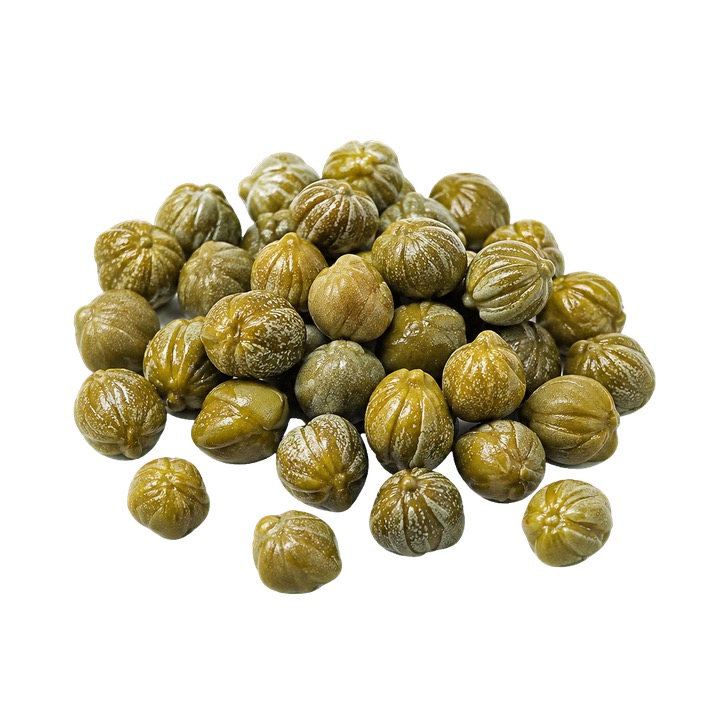
Unopened flower buds harvested before bloom, then preserved. Small Nonpareil buds are the active form used by the Ahi Tuna Tartare Tower.
CONDIMENT-CAPER-NONPAREIL-BRINEDA tiny unopened flower bud can sharpen tuna, fish, pasta, sauces and relishes with saline acidity and botanical depth. This guide separates capers from caper berries, explains size and preservation, and begins with one fully synchronized brined Nonpareil caper record.
 Active caper-bud icon
The caper bush gives the kitchen more than one edible product. Correct naming protects the recipe, purchasing specification, inventory count and the icon shown to the cook.
Unopened flower buds harvested before bloom, then preserved. Small Nonpareil buds are the active form used by the Ahi Tuna Tartare Tower.
CONDIMENT-CAPER-NONPAREIL-BRINEDThe mature elongated fruit that develops after flowering. Larger, seeded and often stemmed; useful for antipasti and garnish, but not interchangeable with caper buds.
Icon planned when a recipe uses itDry salt, salt brine, vinegar and mixed acid media create different salt, acidity, aroma, texture and usable yield.
Capparis spinosa is a drought-adapted shrub associated with Mediterranean and arid landscapes. Its deep-rooted, spreading habit allows established plants to tolerate exposed, rocky and well-drained sites.
The buds are harvested by hand before they open. Fresh buds are naturally sharp and bitter; salting, brining or acid preservation transforms them into the pungent, saline condiment recognized in Mediterranean kitchens. If a bud remains on the plant and the flower is pollinated, an elongated fruit—the caper berry—can develop.
Capers have long been used around the Mediterranean, the Middle East and nearby regions with fish, meats, grains, vegetables and sauces. Italy preserves especially strong island traditions, including protected products from Pantelleria and the Aeolian Islands.
Capers do not simply add salt. Good capers contribute a layered combination of acidity, mustard-like pungency, floral-herbal aroma and a clean saline finish. Taste the packing style before adjusting the dish.
Nonpareil is the smallest familiar commercial size name and is prized for tenderness, tight bud structure and quick flavor release. The term describes a trade size, not one botanical cultivar.
Small, compact olive-to-khaki buds with visible seams. Natural shade variation is normal; bright artificial-looking color is not automatically a quality advantage.
Firm-tender and intact, not woody, mushy or slimy. Smaller buds disperse easily through tartare, piccata, salsa verde and pan sauces.
Saline, tangy, botanical and lightly bitter with a mustard-like lift. Brine and vinegar choice strongly influence the finish.
Names and millimeter bands can vary by producer and market. Treat the sequence below as a common buying guide, then make the vendor specification and actual label authoritative.
| Trade name | Common relative size | Culinary character | Best use |
|---|---|---|---|
| Nonpareil / Non-pareil | Smallest; often listed up to about 7 mm | Tender, compact, quick flavor release | Tartare, fine sauces, garnish, composed salads |
| Surfines | Small; often around 7–8 mm | Delicate with slightly more bite | Fish, chicken, beurre noisette, vinaigrettes |
| Capucines | Small-medium; often around 8–9 mm | Firm, visible and versatile | Pasta, sauces, vegetables, relish |
| Capotes | Medium; often around 9–11 mm | More texture and pronounced bud presence | Braises, tomato sauces, rustic preparations |
| Fines | Large; often around 11–13 mm | Meatier and assertive | Chopped condiments, cooked sauces, roasting |
| Grosses / Grusas | Largest commercial buds; band varies | Robust, substantial bite | Rustic dishes where capers remain visible |
Purchasing note: these ranges are common trade guidance, not a universal legal grading table. Record the supplier's declared count or millimeter specification and do not silently substitute one size for another.
Caper berries are elongated fruits, commonly sold with a stem and containing seeds. Their greater size, softer flesh and milder, fruitier flavor make them a different culinary tool.
Capers are flower buds; caper berries are fruit. Berries are much larger, often stemmed and seeded, with a crunch that changes as the fruit matures and preserves.
Serve as an antipasto, cocktail garnish or accompaniment to cheese, salumi and fish. Slice or halve for salads and relish when the seeds and texture suit the dish.
When a Tuscany Cuisine recipe first uses caper berries, create `caper-berries.png` and a new inventory identity. Do not deduct berries from the active `capers` bud record.
Freshly harvested buds need processing. Salt concentration, acid type, time and producer method influence keeping quality, sodium, aroma, color, texture and recipe performance.
| Style | Typical result | Kitchen handling | Inventory basis |
|---|---|---|---|
| Dry salt-packed | Concentrated caper aroma, firm texture, pronounced salinity | Brush, rinse or soak only as the recipe requires; taste repeatedly and dry before frying | Net received weight converted through measured desalting yield |
| Salt brine | Rounded saline acidity and hydrated texture | Drain; rinse when needed; keep opened buds covered in approved brine | Drained edible weight, with rinse loss recorded separately |
| Vinegar-packed | Sharper, brighter acid profile; vinegar aroma can lead | Choose vinegar character to suit the dish; rinse only if the acidity would dominate | Drained edible weight |
| Mixed acid / preserved pack | Producer-controlled acidity, color and shelf stability | Read acidulants and preservatives on the label; never assume two jars behave alike | Approved vendor SKU and measured drained yield |
Place names are more than romantic menu language. Protected European names apply only to products that meet their registered geographical and production specifications.
The protected Pantelleria specification is associated with Capparis spinosa, variety inermis, cultivar Nocellara, and requires dry salting with sea salt. Verify the PGI wording on the supplier label.
The registered PDO covers capers and caper berries produced to its island specification, with firm texture, green-to-mustard color with purple streaks, intense pungent taste and strong aroma.
Italy, Spain, France, Greece, Turkey, Morocco and neighboring regions produce capers in different species selections, sizes and preservation styles. Buy from the specification, not from a vague origin impression.
Never attach a PGI or PDO claim to generic capers. Record the exact protected name, certification shown on the label, producer, lot, size and preservation method.
Taste the capers before adding salt or acid. Their packing medium may already supply both, and a small quantity can change the balance of an entire sauce.
Fold into tartare, tuna salad, potato salad, tomato relish, vinaigrette, salsa verde and remoulade. Chop evenly so every portion receives controlled acidity.
Add to piccata-style pan sauces, brown butter, tomato sauces, puttanesca, fish sauces and braises. Add late for brightness or earlier for a rounder integrated taste.
Drain, rinse if needed and dry exceptionally well before frying. The buds open and crisp, becoming a concentrated garnish for fish, vegetables and pasta.
Exact timing depends on location, climate, species and producer. In Northern Hemisphere Mediterranean conditions, bud picking generally builds from late spring through summer; repeated passes collect buds before they open.
Young unopened buds are collected frequently, commonly by hand. Smaller buds demand more labor and careful sorting.
Buds left unpicked open into striking flowers. Their short display leads into fruit set when pollination succeeds.
Fruit is harvested later than the buds. Size, seed development and firmness should match the final preserved product.
A professional caper order names bud or berry, size grade, origin claim, preservation style, acid type, pack, net and drained weight, sodium/additives and intended use.
| Checkpoint | Accept | Reject or flag | Record |
|---|---|---|---|
| Identity | Correct bud size, caper-not-berry form, pack style and verified origin claim | Unapproved grade, caper berries substituted for buds or vague product | Code, vendor SKU, size, origin, process |
| Container | Sound seal, clear label, correct lot, net and drained weight | Bulging, leaking, rust, damaged closure or missing lot code | Lot, date, pack, drained yield |
| Aroma | Clean saline, tangy, botanical and product-appropriate vinegar notes | Musty, putrid, moldy, chemical or otherwise foreign odor | Condition and receiving temperature |
| Buds | Compact, firm-tender, intact and reasonably uniform for grade | Slime, mold, gas, severe discoloration or uncontrolled softening | Size range, color, texture, defect rate |
| Kitchen yield | Drain, rinse or desalting yield meets the recipe specification | Excess packing liquid or unexpected loss makes cost inaccurate | Measured edible yield and preparation loss |
Store exactly as the manufacturer label directs. Rotate by lot and date, and protect jars, pails and closures from damage or temperature abuse.
Keep brined capers covered in their original approved medium in a clean container. Refrigerate and date-mark when directed by the label and operation plan.
Remove only the required amount with clean utensils. Drain consistently; rinse only as specified; never return exposed capers to the master container.
Capers contribute very little energy in typical culinary portions and contain plant compounds, but preserved products can carry substantial sodium. The actual jar label and measured serving are the correct basis for menu nutrition.
Capers are normally used as a seasoning rather than a vegetable serving. A spoonful can season a sauce, relish or plated appetizer.
Research reports flavonoids and other phytochemicals in Capparis tissues, but amounts and health relevance vary with species, plant part and processing.
Compare Nutrition Facts labels across brands. Draining, rinsing or soaking changes salt and flavor but must also be reflected in recipe yield and food handling.
Educational notice: this page provides culinary and general nutrition education, not medical advice. Use the actual supplier label for nutrition, allergens, preservatives and serving size.
Only confirmed Tuscany Cuisine connections appear here. Future recipes should use the same code and state whether the quantity is net, drained, rinsed, desalinated or prepared weight.
Thirty grams of drained, rinsed and chopped capers sharpen the bell pepper relish with Niçoise olives, fresh lemon, parsley and extra-virgin olive oil.
Open RecipeContinue with the olive, citrus and extra-virgin olive oil libraries used beside capers in the Ahi Tuna Tartare Tower.
Open Olive LibraryThe active record supplies the same code, icon and inventory identity to recipes, Menu Builder calculations, production, station pick lists, Live Inventory, vendor requirements, purchasing and receiving.
TC-ICON-CAPER-NONPAREILMatch capers, caper buds and Nonpareil aliases to one code while preserving the exact drain, rinse and preparation basis.
Receive net and drained weight. Convert recipe edible weight through the operation's measured drain, rinse or desalting yield.
Specify bud-not-berry, size grade, origin claim, salt or acid process, pack, sodium/additives and target drained weight.
Confirm label, seal, lot, date, aroma, texture, pack medium and icon before routing to Pantry or Garde Manger.
Botany, harvest, preservation, protected-origin, quality and nutrition context was cross-checked against university, intergovernmental, government and peer-reviewed resources.
Professional notice: species, harvest timing, size grade, salt, acidity, preservatives, shelf life and usable yield vary by producer and lot. Follow supplier labels, local food regulations and the operation's HACCP procedures. Protected-origin names require verified labeling.