Pistacia vera
A deciduous, dioecious tree: male and female flowers grow on separate trees and wind carries the pollen. Trees are adapted to climates with hot, dry summers and sufficient winter chill.
Pistacia vera L. · Anacardiaceae
A chef-focused guide to one of the world's most expressive culinary nuts: its ancient West and Central Asian roots, Sicilian, Iranian, Turkish, American and Greek traditions, major cultivars, quality markers, nutrition, storage, processing, purchasing and professional kitchen applications.
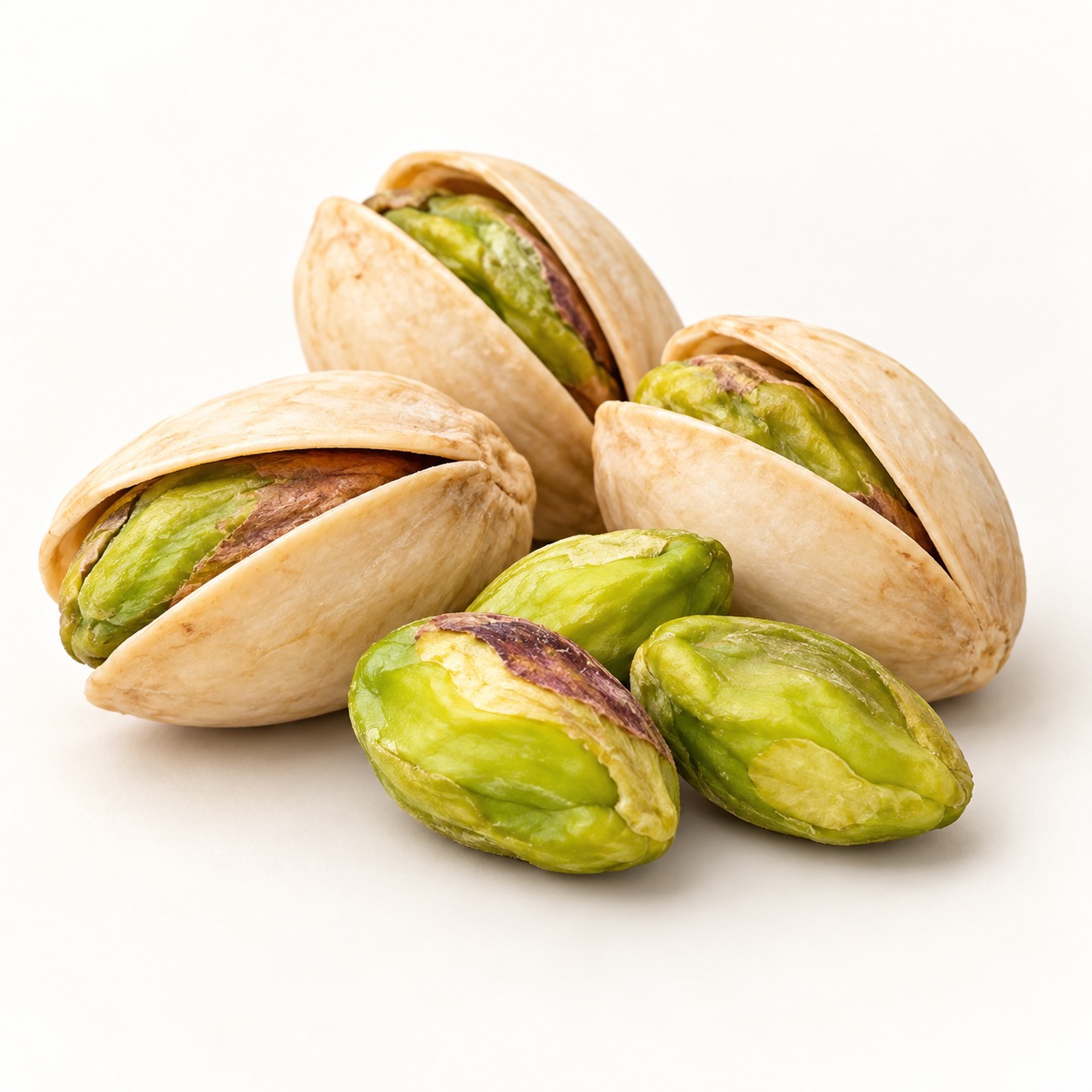 PIsto.webp · Active
The pistachio tree is native to western Asia and Asia Minor. Over centuries it became deeply associated with Persian, Levantine, Anatolian and Mediterranean food cultures, later developing major commercial industries in California and other dry-climate regions.
A deciduous, dioecious tree: male and female flowers grow on separate trees and wind carries the pollen. Trees are adapted to climates with hot, dry summers and sufficient winter chill.
Pistachios became valued because the kernel combines concentrated fat, protein, color and aroma. They moved easily through trade routes and became embedded in sweets, pastries, rice dishes, meat preparations and festive foods.
In Sicily, pistachio culture is especially associated with Bronte and Etna. The protected Bronte product is prized for intense green color, aromatic character and use in pastry and gastronomy.
For professional kitchens, quality should be judged by the intended application. Color, aroma, kernel size, split percentage, sweetness, roast response, oil freshness and price all matter differently for gelato, pastry, pesto, garnish, snacking or production-scale foodservice.
The protected product uses the Napoletana cultivar, also called Bianca or Nostrale. It is recognized for intense green cotyledons and a strong aromatic taste. For premium gelato, pastry cream, pesto and finishing, its color and perfume can justify the cost.
Iran's commercial pistachios include round and long types such as Fandoghi, Kalleh Ghouchi, Akbari and Ahmad Aghaei. Buyers can select for size, kernel-to-shell value, shape, appearance and flavor.
Gaziantep culinary tradition prizes early-harvest pistachios known as boziç for especially green kernels used in pastry and confectionery. The ingredient is inseparable from the region's baklava culture.
Kerman has long been a benchmark cultivar, with Golden Hills and Lost Hills developed for earlier maturity and strong split-nut performance. California offers dependable specifications for foodservice, roasting, kernels, paste and snack applications.
Greek cultivars include Aegina and Pontikis. Their regional identity and distinctive physical and sensory traits make them valuable both for direct eating and culinary use.
Sirora is an Australian cultivar and has shown high split percentages in comparative variety research. It is a useful example of how cultivar selection is adapted to local climate and production goals.
Cultivar and harvest maturity shape size, split, color, aroma and use. A professional buyer should ask for origin, cultivar when available, crop year, raw or roasted status, salt level, kernel grade and any blanching or skin-removal treatment.
| Origin | Type / Cultivar | Typical Strength | Professional Use |
|---|---|---|---|
| Sicily, Italy | Napoletana / Bianca / Nostrale | Intense green color, aromatic profile, protected Bronte identity when certified | Gelato, pastry, creams, pesto, finishing |
| California, USA | Kerman | Large commercial nut, established benchmark | Foodservice, snack, roast, kernels, paste |
| California, USA | Golden Hills / Lost Hills | Earlier harvest, good edible split-nut performance | Commercial kernels, roasting, broad production |
| Iran | Fandoghi | Widely available round commercial type | Roasting, snack, kernels, value purchasing |
| Iran | Akbari | Long nut, large size, strong kernel-to-shell value | Premium presentation and export grades |
| Iran | Ahmad Aghaei | Long form, attractive appearance and taste | Premium snack and culinary garnish |
| Iran | Kalleh Ghouchi | Very large "jumbo" nut | Presentation, premium in-shell applications |
| Greece | Aegina / Pontikis | Regional cultivars with distinctive physical and sensory traits | Direct eating, pastry, regional cuisine |
| Australia | Sirora | Strong split performance in comparative research | Regional commercial production |
Fresh high-quality pistachio should taste clean and naturally sweet with green, buttery and lightly resinous notes. Roasting increases toast, caramel and savory aromas but can reduce the vivid green perception prized in premium pastry.
Best when you want fresh color, delicate sweetness, pastry paste, pistachio cream, gelato base, pesto or a vivid garnish.
Best for pronounced nuttiness, savory crusts, snack mixes, praline, roasted sauces and applications where toasted aroma matters more than bright green color.
Nutrition varies with cultivar, moisture, roasting, salt and database method. The values below use the current USDA FoodData Central Foundation record for raw pistachios as a practical reference.
| Nutrient | Per 100 g raw | Approx. per 28 g | Culinary / nutrition note |
|---|---|---|---|
| Energy | 598 kcal | 167 kcal | Energy-dense ingredient; portion control matters. |
| Protein | 20.5 g | 5.7 g | Useful plant protein contribution. |
| Total fat | 45.0 g | 12.6 g | Natural oils carry flavor but are susceptible to oxidation. |
| Carbohydrate | 27.7 g | 7.8 g | Includes fiber and naturally occurring carbohydrate. |
| Dietary fiber | 7.0 g | 2.0 g | Meaningful fiber contribution. |
| Potassium | 947 mg | 265 mg | One of the notable minerals in pistachio. |
| Phosphorus | 500 mg | 140 mg | Substantial mineral concentration. |
| Magnesium | 110 mg | 31 mg | Contributes to the nut's mineral density. |
Nutrition is an educational estimate, not medical advice. For menu labeling, use the exact product specification and the nutrition system required by your operation.
In the United States, labels must declare the specific type of tree nut when it is used as an ingredient. Professional kitchens should also control cross-contact through storage, utensils, prep surfaces, containers and production sequencing.
Processing choices affect freshness, color, food safety, flavor and cost. The best kitchens understand whether they are buying in-shell product, shelled kernels, peeled kernels, roasted kernels, meal or a finished pistachio paste.
The strongest indicator is freshness. A famous origin cannot compensate for oxidized oils, poor storage or an old crop. Evaluate aroma and flavor before evaluating the label.
For pastry and garnish, vivid natural green is highly desirable. Some cultivars are greener than others.
Fresh, sweet, green and nutty. Reject stale, paint-like, cardboard, moldy or sour aromas.
Crisp and dense, not rubbery, damp or unusually soft.
Ask for crop year, pack date, origin, raw/roasted status and packaging atmosphere when relevant.
Pistachios contain a high level of fat, which gives them richness but also makes them vulnerable to rancidity. Heat, light, oxygen and moisture shorten quality life.
Keep sealed in a cool, dry, dark area away from ovens, steam and strong-smelling products. Use airtight food-safe containers after opening.
For slower-moving shelled kernels and premium pistachios, refrigeration helps protect flavor and color. Seal well to prevent moisture and odor absorption.
Freezing is useful for longer storage. Package airtight, portion before freezing and allow sealed product to temper before opening to limit condensation.
Pistachio moves easily from garde manger to hot line and pastry. Its best use depends on whether the dish needs color, crunch, fat, body, aroma or a smooth paste.
Lightly crushed kernels add color and crunch to pear, citrus, beet, fennel, grain and cheese salads.
Blend with herbs, cheese, citrus, garlic and olive oil for pesto-style sauces or use as a thickener and flavor base.
Use chopped pistachio on fish, lamb, poultry and vegetables, or fold into forcemeat and stuffing.
Grind into 100% paste, sweet praline, pastry cream flavoring, ganache, mousse, frangipane-style fillings and confections.
Premium pistachio paste creates one of Italy's classic gelato flavors; kernel color and roast level strongly influence the final appearance and perfume.
Use chopped nuts, meal or paste in biscotti, cakes, laminated pastries, brioche, cookies and decorative finishes.
For a restaurant or production kitchen, a repeatable vendor specification is more valuable than a vague request for "good pistachios." Record origin, form, treatment, pack size and usable yield.
| Specification | Recommended record | Why it matters |
|---|---|---|
| Origin | Country / region / protected designation | Flavor, color, price and storytelling |
| Form | In-shell, shelled, peeled, chopped, meal, paste | Usable yield and labor |
| Raw / roasted | Raw, dry-roasted, oil-roasted | Flavor intensity and recipe behavior |
| Salt | Unsalted or declared salt level | Recipe control |
| Crop / pack | Crop year, lot, pack date | Freshness and rotation |
| Allergen handling | Vendor allergen statement | Food safety and menu communication |
| Pack size | lb / kg / bag / case | Purchasing conversion and par levels |
This record establishes the identity that recipes, Menu Builder, production stations, live inventory, purchasing, receiving and dashboard icon systems should share.
PIsto.webp
Recipe connections should use the exact ingredient code and inventory ID above so ingredient icons, scaling and live deductions stay aligned.
Balsamic-poached Bosc pear, arugula, Pecorino Toscano and lightly crushed pistachios. The pistachio row should map to TC-NUT-PISTACHIO-RAW-001, inventory ID pistachios and icon PIsto.webp.
Open RecipePistachio paste, sweet pistachio cream, pistachio praline and pistachio oil should receive their own ingredient records when they become active inventory items. Do not deduct them as raw pistachio unless the kitchen produces them as a documented sub-recipe.
Ingredient LibraryThis page combines Tuscany Cuisine operational structure with authoritative and industry sources for cultivar, protected-origin, allergen, market and nutrition information.
Page prepared for culinary education and professional kitchen operations. Protected-origin names should only be used on menus or purchasing records when the actual purchased product is certified accordingly.