Germinated seed commonly eaten with seed, stem and root. Production and food-safety rules differ from microgreens.
Ingredient identity
More developed than a sprout, younger than a baby green
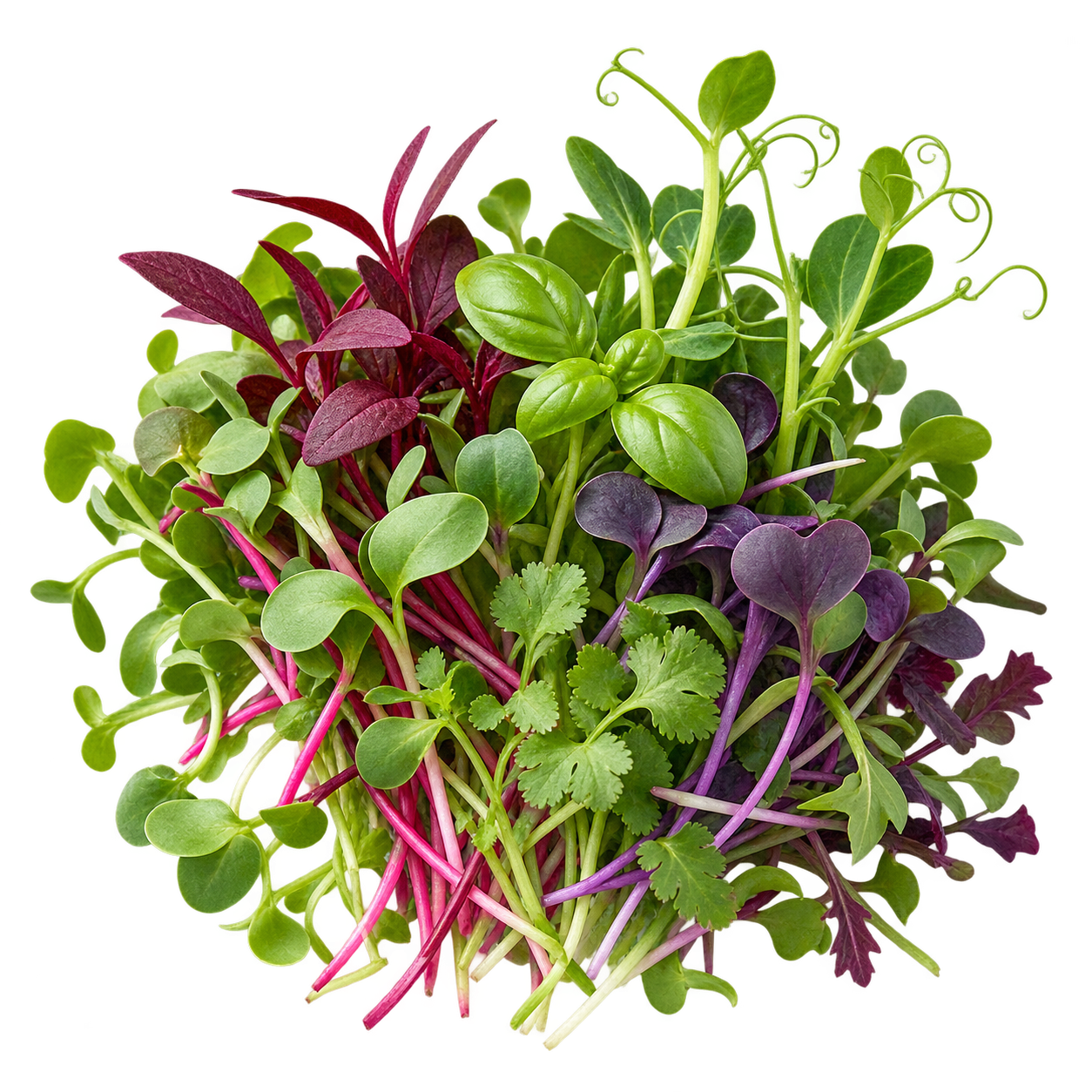
Microgreens are edible seedlings of selected herbs, vegetables and other food crops. They are grown with light and harvested above the growing medium when the cotyledons are open, sometimes after the first true leaves appear.
Cut above the medium after the seed leaves open. Tender stems and cotyledons carry concentrated varietal color and flavor.
A more mature leaf harvested later, usually larger and sturdier enough to form the body of a salad.
Catalog rule: this page represents the purchased mixed microgreens item. A recipe that depends on one exact variety—micro basil, shiso, cilantro, amaranth or mustard—should eventually use its own ingredient identity so flavor, allergens, yield, vendor and cost remain accurate.
From seedling to modern menu language
A young plant with a modern culinary identity
People have eaten young shoots and seedlings for centuries, but the modern restaurant category called “microgreens” is much newer.
Older roots
Cress, young herbs, tender shoots and seedlings long existed in gardens and regional cuisines. The modern category gathered these young plants into a purpose-grown premium product.
1980s chef culture
USDA reports that microgreens appeared on chefs' menus in San Francisco as early as the 1980s, where their flavor, scale and color suited an emerging produce-driven fine-dining style.
Global expansion
Small farms, urban agriculture, hydroponics, controlled-environment growing and restaurant demand expanded the palette from a few greens to dozens of herbs, brassicas, shoots and colorful leaves.
Important distinction: the history of eating seedlings is ancient; the commercial and chef-facing term microgreens belongs to the late twentieth-century specialty-produce movement.
Variety spectrum
Choose the leaf for its flavor—not only its color
Almost every successful menu use begins with one question: what should this tiny leaf contribute to the bite?
| Microgreen family | Examples | Flavor and aroma | Visual / texture | Best chef uses |
|---|---|---|---|---|
| Micro herbs | Micro basil, cilantro, chervil, dill, fennel, parsley | Highly varietal: sweet basil, citrus-cilantro, anise, fresh herb | Fine leaves; basil is glossy, dill and fennel feathery | Tomato, seafood, pasta, consommé, composed salad, fruit |
| Amaranth & beet | Red amaranth, beet, Swiss chard | Mild earthy, mineral, gently vegetal | Burgundy leaves and vivid pink or red stems | White fish, chèvre, root vegetables, modern plating |
| Brassicas | Broccoli, cabbage, kale, kohlrabi, mizuna, tatsoi, bok choy | Clean cabbage notes, mild mustard, nutty or peppery | Round or heart-shaped leaves; green to purple stems | Meat, fish, vegetable courses, bowls and savory garnishes |
| Radish | Daikon, red radish, purple radish | Direct peppery heat and crisp radish character | Strong stems, open cotyledons, excellent height | Crudo, cured meat, eggs, tacos, sandwiches, rich sauces |
| Mustard & cress | Mustard, garden cress, watercress-type micros | Pungent, sharp, horseradish-like or peppery | Small bright leaves; intensity varies by cultivar | Beef, pork, cheese, smoked fish, vinaigrettes |
| Pea & sunflower shoots | Pea tendrils, pea shoots, sunflower shoots | Sweet pea, fresh green, juicy or nutty | Larger, succulent and structural; pea tendrils add movement | Salads, spring dishes, grains, vegetables and sandwiches |
| Asian aromatic leaves | Green shiso, red shiso, perilla, chrysanthemum greens | Anise, mint, cinnamon, citrus or resinous notes | Distinct serrated leaves and strong color | Sushi, crudo, noodles, duck, fruit and aromatic sauces |
| Tangy & specialty | Sorrel, nasturtium, buckwheat and approved edible specialties | Lemony, peppery, earthy or nutty depending on crop | Unusual shapes add a clear signature | Dessert, seafood, cheese, tasting menus and signature plates |
Sweet & aromaticPepperyMustardyCitrusyEarthyNuttyAnise-likeFresh pea
Seed and species safety: use seed and cultivars sold for edible microgreen production. Do not assume every young plant is edible; avoid chemically treated planting seed and never improvise with seedlings from toxic-leaf crops.
World culinary palette
One growing method, many culinary languages
Microgreens are grown around the world in soil-based, soilless and hydroponic systems. Their strongest value comes from connecting each variety to the flavor logic of the cuisine.
Italian & Mediterranean
Micro basil, arugula, fennel, parsley and chard can echo tomatoes, fresh cheese, seafood, olive oil, citrus, pasta and risotto without overwhelming the plate.
Japanese & East Asian
Shiso, mizuna, tatsoi, daikon radish, mustard and chrysanthemum greens contribute aromatic lift, peppery heat and precise visual structure to raw and cooked dishes.
South Asian
Micro cilantro, mustard, fenugreek and amaranth can reinforce spice, acid and herb layers in chaat-inspired plates, seafood, vegetables, yogurt preparations and chutneys.
Latin American
Cilantro, amaranth, radish and specialty acidic leaves work naturally with chile, lime, corn, beans, seafood, avocado and grilled meats.
Northern European
Cress, dill, pea shoots, beet and mustard complement cured fish, rye, potato, dairy, pickles and clean seasonal presentations.
Contemporary global kitchens
Urban farms and controlled environments let chefs specify leaf shape, stem color, intensity and harvest stage for tasting menus, hotels, catering, fast-casual bowls and pastry work.
Creative responsibility: a global ingredient does not erase regional identity. Use microgreens to clarify the dish's flavor story, not to apply the same anonymous mix to every plate.
Seasonality & production
Year-round availability with seasonal intelligence
Because the crop is young and fast-growing, controlled environments can produce microgreens in every season. Temperature, light, crop family and local energy conditions still shape flavor, color, speed and cost.
Spring
Pea shoots, radish, mustard, cress and tender brassicas reinforce asparagus, peas, lamb, fresh cheese and early seafood menus.
Summer
Micro basil, shiso, amaranth and warm-season herbs align with tomatoes, stone fruit, melon, grilled fish and chilled preparations.
Autumn
Beet, chard, mustard, kale and red-leaf mixes bring earthy color and peppery contrast to squash, mushrooms, game and grains.
Winter
Indoor brassicas, cress, radish, pea shoots and robust herbs supply freshness when outdoor tender herbs are limited.
Northern Hemisphere
Outdoor and minimally heated production generally follows spring through autumn. Winter supply is commonly supported by greenhouses, indoor farms and protected local systems.
Southern Hemisphere
Seasonal patterns reverse by roughly six months, while controlled-environment growers can schedule continuous short crop cycles near major cities and hospitality markets.
Typical rhythm: many microgreens are ready in about 7–14 days, while slower herbs and varieties may require 15–21 days or more. Grow varieties separately when their germination and harvest speeds differ, then blend after harvest for better uniformity.
Receiving, quality & storage
Tender greens demand a disciplined cold chain
Microgreens have high surface area, fine stems and limited stored energy. Quality falls quickly when they are warm, wet, compressed or held under heavy condensation.
Accept at receiving
- Vivid varietal color
- Upright, turgid stems
- Fresh, clean aroma
- Dry leaf surfaces
- Clean cut above the medium
- Intact protected packaging
- Correct named mix or variety
- Lot, harvest or traceability data
Reject or investigate
- Slime or sticky leaves
- Yellowing or collapse
- Musty, sour or decayed odor
- Heavy condensation
- Excess soil, roots or hulls
- Mold or dark lesions
- Crushed and heated product
- Unknown seed or allergen mix
Chill promptly
Hold at approximately 1–4°C / 34–39°F or according to the supplier label and local food code. Avoid warm station storage.
Keep dry
Moisture trapped on leaves accelerates collapse. Do not soak in a water bath. Wash only under the operation's food-safety plan and dry completely.
Protect structure
Use the original ventilated clamshell or a clean protected container. Do not stack heavy items on top of delicate stems.
Finish at service
For live trays, harvest with clean sanitized tools in a controlled area. For cut greens, handle minimally and garnish at the last moment.
Usable life: species, harvest age, packaging and cold-chain performance vary. Some references describe only a few days for cut microgreens, while well-managed products may retain acceptable quality longer. Use supplier dating, inspect every service and never extend life by appearance alone when traceability or temperature control is uncertain.
Nutrition & food safety
Small leaves, highly variable composition
Nutrient levels differ dramatically by species, cultivar, light, growing method, harvest stage and storage. A colorful garnish is valuable, but it is not a medical treatment or a replacement for dietary variety.
Species matters
A USDA-supported study of 25 commercial varieties found wide variation in vitamin C, vitamin K, vitamin E and carotenoids. The name of the variety matters more than the generic word “microgreens.”
Portion matters
Research often reports nutrients per 100 g, while a plated garnish may weigh only a few grams. Calculate the actual recipe portion before making menu nutrition claims.
Freshness matters
Time, temperature, light and packaging influence appearance and nutrient retention. Purchase close to service and protect the cold chain.
Raw-produce control: microgreens are not the same product as sprouts, but they are commonly served raw and cannot be made risk-free by appearance. Source from an approved grower, maintain traceability and refrigeration, prevent cross-contamination, use potable water and clean tools, and follow local health rules and the operation's HACCP or food-safety plan.
Allergen control: identify every species in a mixed pack. Mustard is a regulated allergen in some jurisdictions, and sesame or other allergenic seed crops may require declaration. The supplier label and the actual recipe record are authoritative.
Tuscany Cuisine ingredient engine
Microgreens usage record across the platform
The same permanent identity carries the icon, quantity and purchased product through recipes, Menu Builder, Production, stations, Live Inventory, vendors, purchasing and receiving.
 TC-ICON-MICROGREENS-MIXED
- Ingredient ID
- ING-MICROGREENS-MIXED
- Ingredient code
- PRODUCE-MICROGREENS-MIXED
- Inventory ID
- microgreens
- Catalog name
- Mixed Microgreens
- Base unit
- Gram (g)
- Vendor group
- Produce / Specialty Greens
- Storage zone
- Refrigerated produce
- Known usage
- Recipe 145 · 30 g
1Confirmed recipes
1Systems with records
ING-MICROGREENS-MIXEDPermanent ingredient ID
Recipe Library
1 confirmed recipe record.
ConnectedMenu Builder
Ready for menu quantity records.
ReadyProduction
Ready for production records.
ReadyStation Pick Lists
Ready for Antipasti station picks.
ReadyLive Inventory
Ready for gram deductions.
ReadyVendor & Purchasing
Ready for pack specifications.
ReadyReceiving
Ready for quality and traceability checks.
ReadyRecipes using mixed microgreens
Substitution control: do not silently replace a specified micro basil, shiso, amaranth, cilantro or mustard record with a generic mix. The visual effect may be similar while flavor, allergen status, cost and yield change.
Frequently asked questions
Microgreens in the professional kitchen
Clear answers for purchasing, prep, plating and menu design.
Are microgreens the same as sprouts?
No. Sprouts are usually germinated without a growing medium and may be eaten with seed and root. Microgreens grow with light and are cut above their medium after the cotyledons develop, sometimes with the first true leaves.
Are microgreens available all year?
Yes, indoor and protected growing can produce them year-round. Outdoor and low-energy systems still follow crop preferences: basil and amaranth favor warmth, while peas, brassicas, mustard, radish and cress tolerate cooler cycles.
Should microgreens be washed before storage?
Follow the supplier label and your operation's food-safety plan. Unnecessary moisture can shorten usable life. When washing is required, use potable water, handle gently and dry completely before cold storage or immediate service.
Can a chef use the same mix on every dish?
Technically yes, but it usually weakens the menu. A better approach selects one variety or blend for flavor, color and structure that belong to the dish. Microgreens should not become an automatic decoration.
Why should micro basil have a separate future record?
Micro basil has a specific aroma, vendor specification, crop cycle and culinary role. A separate identity allows accurate purchasing, recipe cost, substitution control and ingredient education instead of hiding it inside a generic mix.
Research & references
Sources behind this guide
History, harvest stage, variety, nutrient, storage and growing guidance were checked against government, extension and culinary-education sources.
- USDA Agricultural Research Service — Specialty Greens Pack a Nutritional Punch
- Penn State Extension — The ABCs of Microgreens
- Penn State Extension — Growing Microgreens
- University of Illinois Extension — Microgreens: Year-Round Edible Greens
- Colorado State University Extension — Growing Microgreens
- Institute of Culinary Education — Tiny, Delicate, Flavorful: Microgreens
Educational and safety notice: product formulations, varieties, seed treatments, allergens, shelf life and regulatory requirements vary. Use approved suppliers, read the actual label, follow local food code and apply your operation's receiving, traceability, sanitation and HACCP procedures.